Artwork
The Cascate di Tivoli
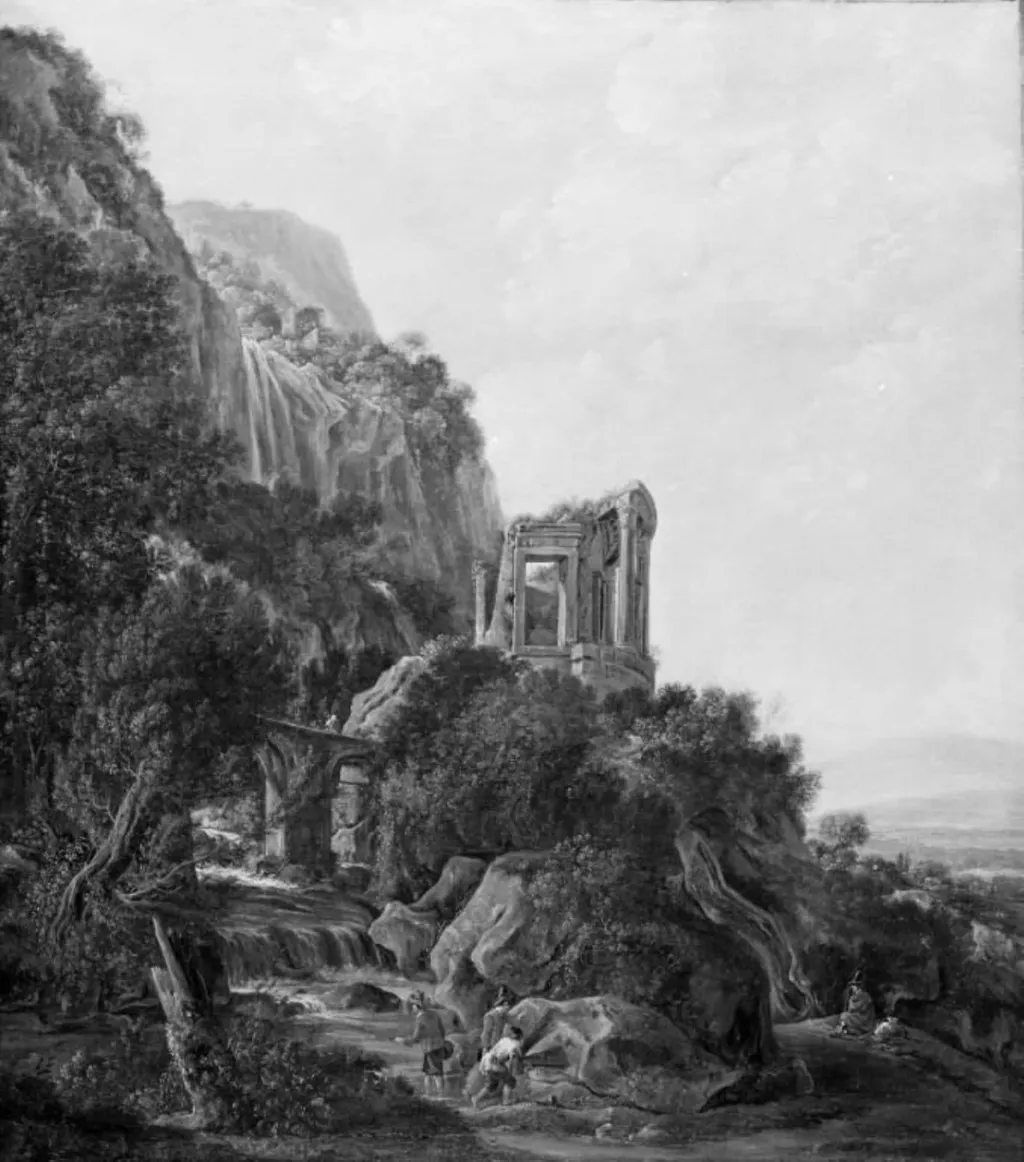
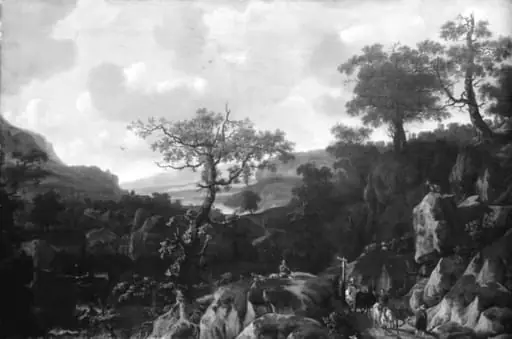
The Cascate di Tivoli is a photography by the Romanticist artist Unknown. It dates from 1809 and is held in the collection of the Statens Museum for Kunst. Created in 1809, this image depicts the waterfalls of Tivoli, a site known for its natural beauty and ancient ruins.
About this work
Overview
It is currently held in the collection of the Museum of Ethnography, where it is presented as a record of a culturally significant natural site.
Created in 1809, this image depicts the waterfalls of Tivoli, a site known for its natural beauty and ancient ruins. The work captures a dramatic landscape where water cascades over a rugged cliff, framed by dense vegetation. Though labeled as an image, its composition suggests a painted or drawn study rather than a photograph. It is currently held in the collection of the Museum of Ethnography, where it is presented as a record of a culturally significant natural site.
Subject & Meaning
The scene centers on a decaying temple perched atop the cliff, partially swallowed by vines and foliage. Below, a solitary figure stands near the stream, gazing upward, suggesting contemplation or reverence. The juxtaposition of human architecture in decay and the vigorous growth of nature implies a meditation on time, impermanence, and the quiet reclamation of the earth over human endeavors.
Technique & Style
The artist employs pronounced contrasts between light and dark to model the cliff face and foliage, enhancing the sense of depth and volume. Shadows cling to crevices and under overhanging branches, while sunlight catches the spray of the waterfall and the temple’s weathered stone. This use of chiaroscuro lends the scene a theatrical gravity, drawing attention to the interplay between structure and wilderness.
History & Provenance
The work was produced in 1809, during a period when European artists and travelers frequently documented classical ruins in Italy. It entered the Museum of Ethnography’s collection, likely as part of a broader effort to record cultural landscapes. Its classification as an image rather than a painting suggests it may have been a preparatory sketch, a lithograph, or a photographic reproduction from the early 19th century.
Context
Tivoli’s waterfalls and ruins were popular subjects for Romantic-era artists drawn to the sublime in nature and the melancholy of antiquity. This image aligns with broader trends in early 19th-century European art that valued emotional response to landscape over idealized classical forms. The presence of a lone human figure reflects a growing interest in individual experience within vast, untamed environments.
Legacy
Though not widely reproduced, the work contributes to a visual archive of Italy’s natural and architectural heritage during a time of shifting cultural values. Its preservation in an ethnographic museum underscores its role as a document of place and perception, rather than purely aesthetic expression. It remains a quiet example of how landscape imagery was used to convey historical and emotional resonance.
Artist & collection

 Domestic Scene
 Giacomo and Cardinal Marco, investing Andrea, Abbot of San Zeno, with his Benefice
 The Nymph of Fontainebleau
 Portrait of a Woman
 Madonna and Child with Saints in the Enclosed Garden
 Venus and Minerva
 Family Group of Four on Sofa
 Wall painting from Room H of the Villa of P. Fannius Synistor at Boscoreale
 Landscape with the Temple of Sibyl in Tivoli
 Landscape with the Temple of Sibyl in Tivoli
 Southern Landscape with Angler
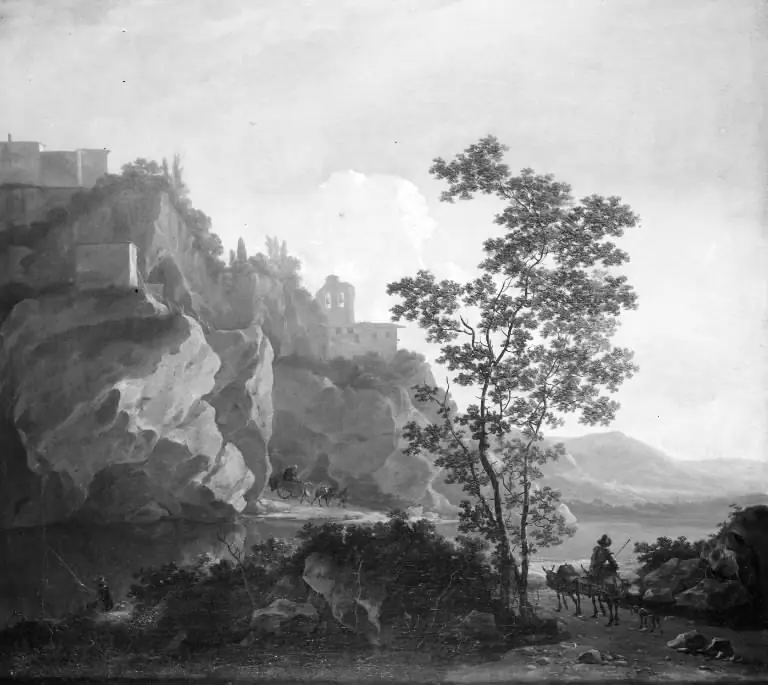 Southern Landscape with Angler
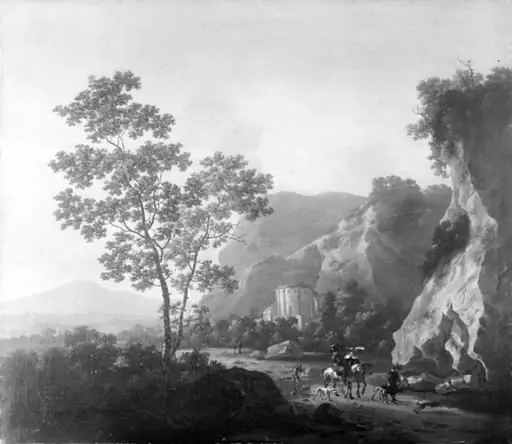 Southern Landscape
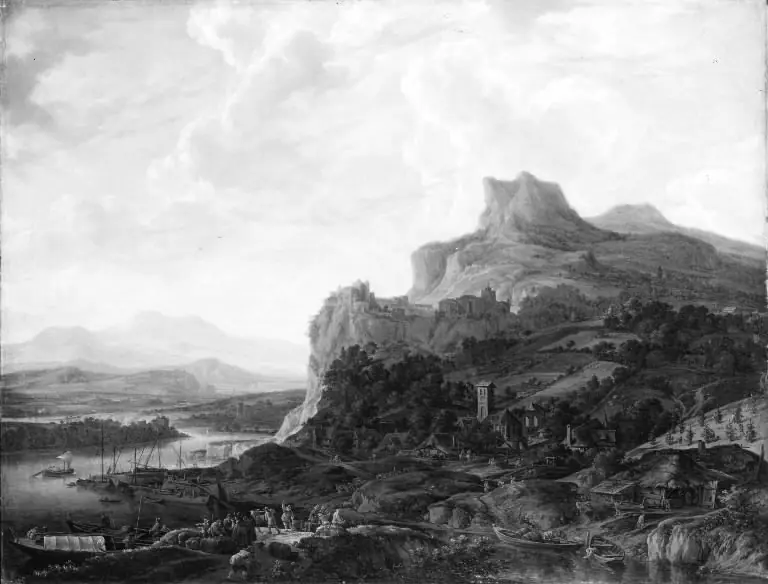 Landscape by the Rhine
 Landscape by the Rhine
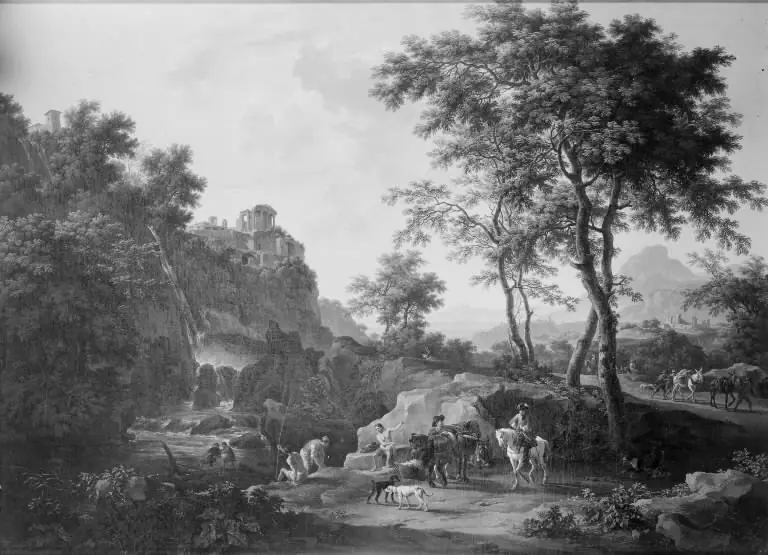 Southern Landscape
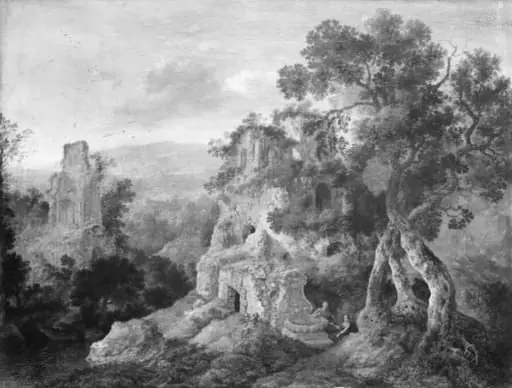 Fantasy of Mountain Scenery
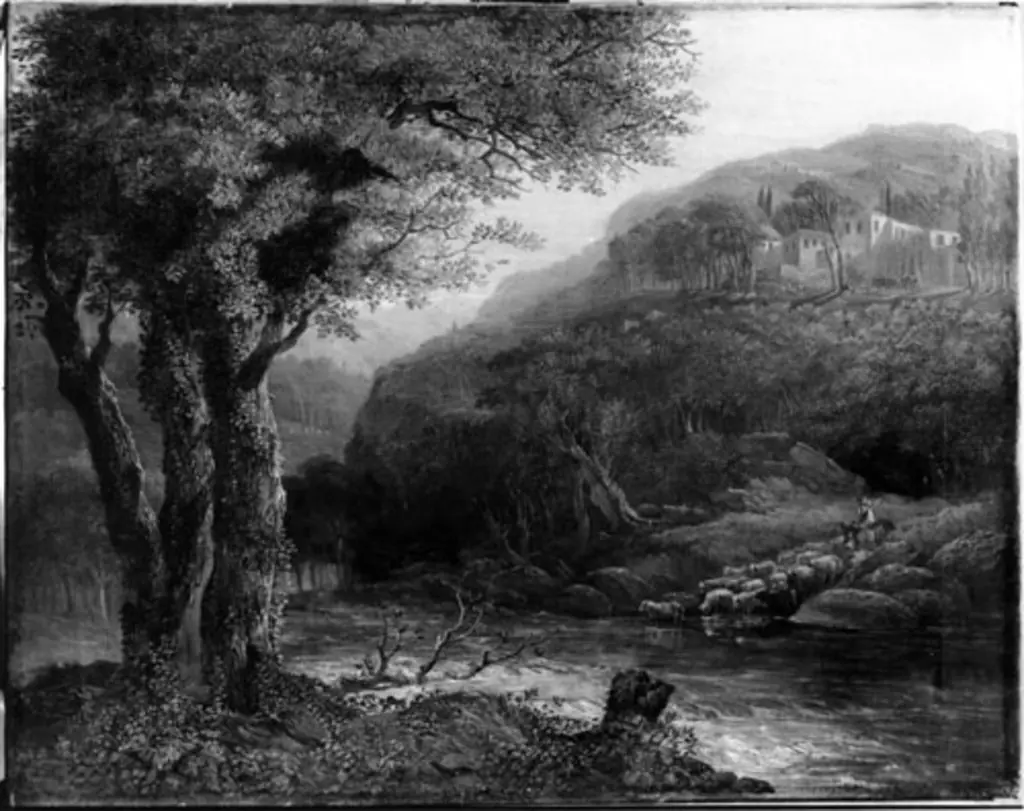 Idyllische Landschaft
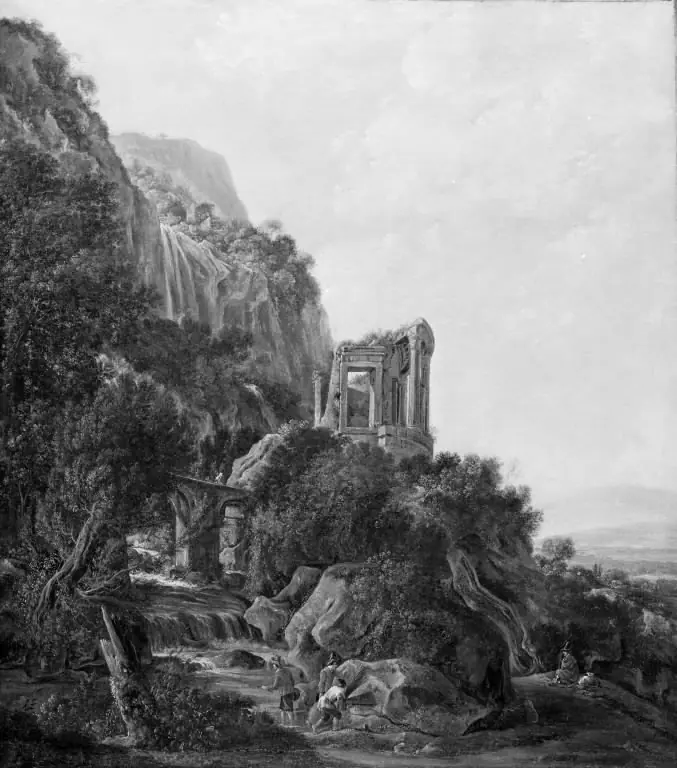 Cascatellen ved Tivoli
 Mountain Landscape