Artwork
Collegium Politicum. From Ludvig Holberg’s The Political Tinker, Act I, Scene 2.
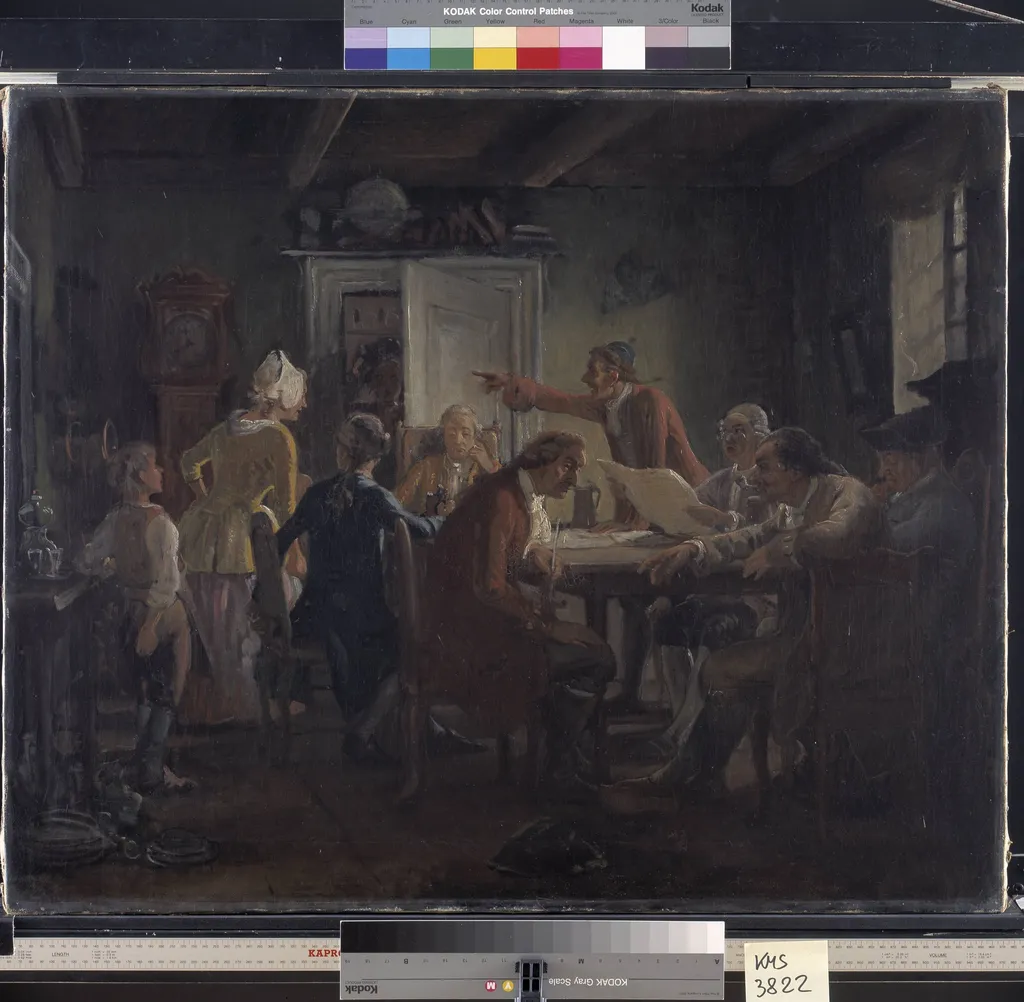
Collegium Politicum. From Ludvig Holberg’s The Political Tinker, Act I, Scene 2. is a photography by Unknown. It dates from 1850 and is held in the collection of the Statens Museum for Kunst. Collegium Politicum, taken from Act I, Scene 2 of Ludvig Holberg’s comedy The Political Tinker, is an image dating to around 1850.
About this work
Overview
Collegium Politicum, taken from Act I, Scene 2 of Ludvig Holberg’s comedy The Political Tinker, is an image dating to around 1850. The work is part of the collection of the Museum of Ethnography and depicts a staged interior that references the play’s satirical treatment of public debate.
Subject & Meaning
The composition shows a densely packed chamber in which a group of figures congregates around a table. A man in a vivid red coat gestures toward an empty wall, suggesting a mock‑serious lecture about something that does not exist, thereby underscoring the farcical nature of the political discourse being lampooned.
Technique & Style
The image employs strong contrasts of light and shadow, a chiaroscuro effect that heightens the sense of tension within the dimly lit space. Darkened walls and limited illumination focus attention on the central figures, while the period costume details convey a nineteenth‑century aesthetic.
History & Provenance
Created circa 1850, the work was later acquired by the Museum of Ethnography, where it remains on display. Its provenance traces back to an era when visual representations of theatrical scenes were used to document and critique contemporary social issues.
Context
Holberg’s play, first performed in the early eighteenth century, satirized the pretensions of political assemblies. This image, produced over a century later, reflects the continued relevance of the play’s commentary on the performative aspects of governance and public persuasion.
Artist & collection

 Domestic Scene
 Giacomo and Cardinal Marco, investing Andrea, Abbot of San Zeno, with his Benefice
 The Nymph of Fontainebleau
 Portrait of a Woman
 Madonna and Child with Saints in the Enclosed Garden
 Venus and Minerva
 Family Group of Four on Sofa
 Wall painting from Room H of the Villa of P. Fannius Synistor at Boscoreale
 The Royal Academy of Arts
 The Royal Academy of Arts
 Reading the Will
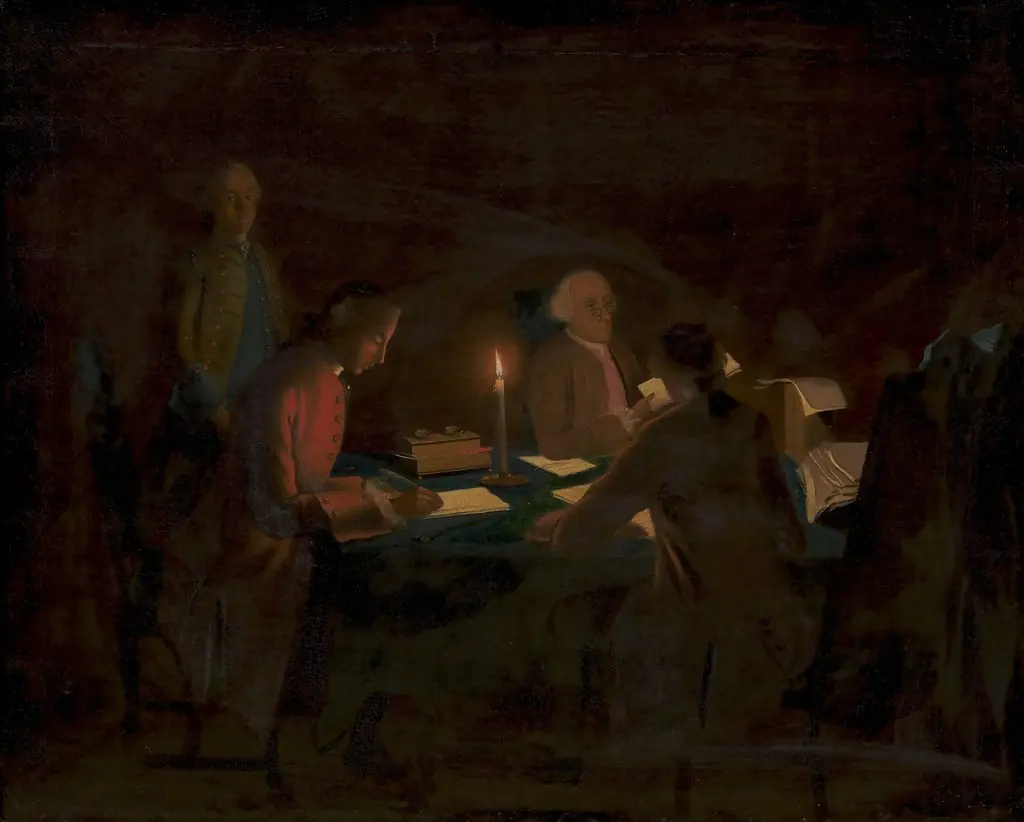 Interiør med en regnskabsfører og nogle skrivere ved stearinlys
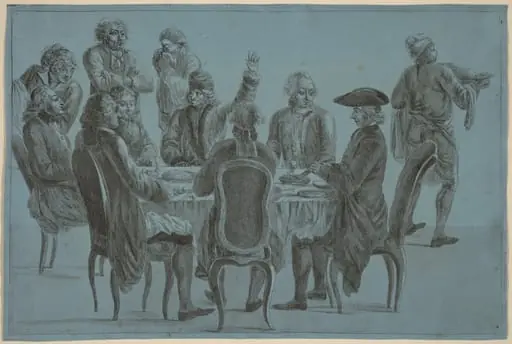 The Philosophers' Meal
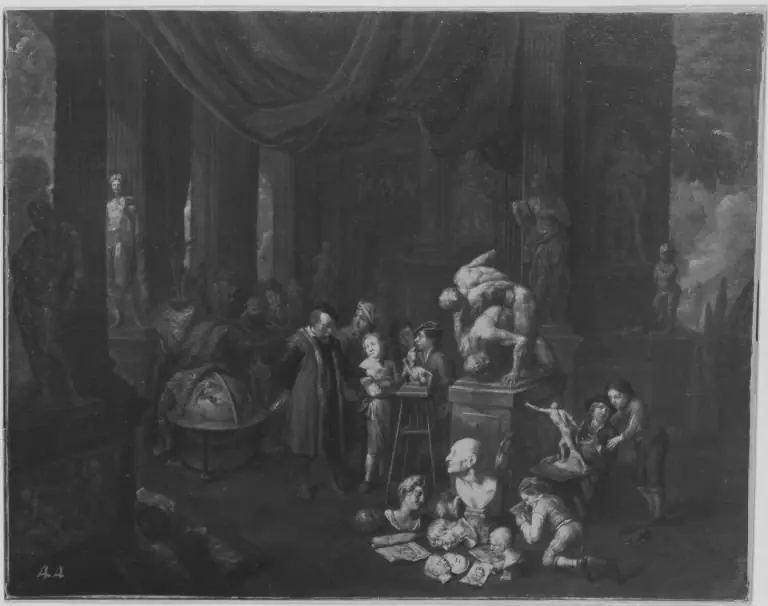 Bildhaueratelier
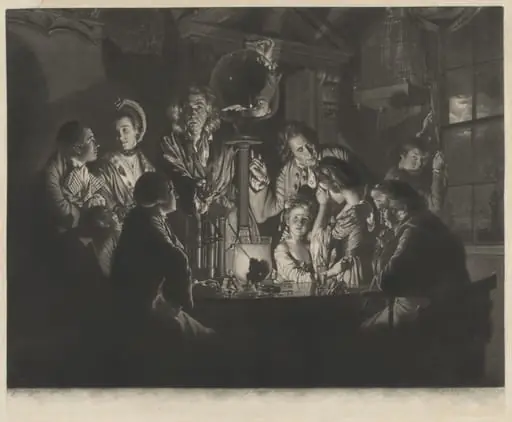 A Philosopher Shewing an Experiment on the Air Pump
 Interiør med en regnskabsfører og nogle skrivere ved stearinlys
 The Drawing Gallery of the Felix Meritis Society
 Fra Ludvig Holbergs "Erasmus Montanus", III akt, 3. scene