Artwork
The Philosophers' Meal
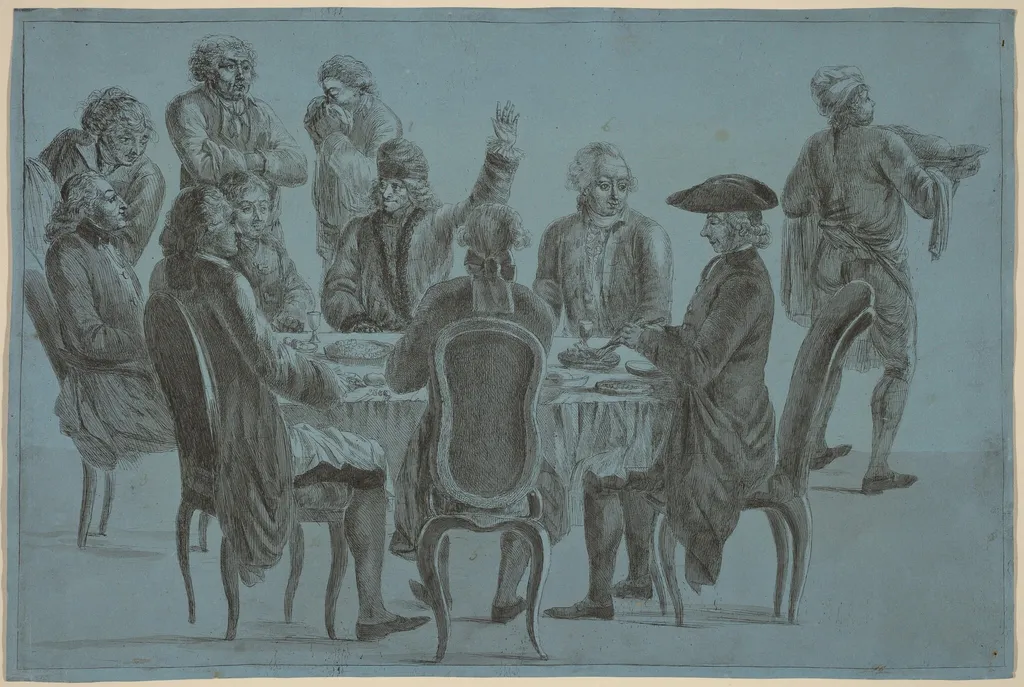
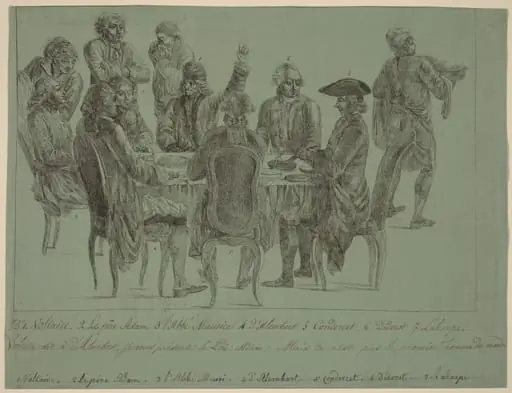
The Philosophers' Meal is an ink print by the Romanticist artist French 18th Century. It dates from 1772 and is held in the collection of the National Gallery of Art. This etching with gray wash on blue wove paper depicts a group of men gathered at a table, engaged in conversation and mealtime.
About this work
Overview
The artist’s quick, scratchy strokes convey motion and individual expression, emphasizing the liveliness of the moment over precise detail.
This etching with gray wash on blue wove paper depicts a group of men gathered at a table, engaged in conversation and mealtime. The scene is rendered with loose, energetic lines and a light blue ground, suggesting spontaneity rather than formal composition. Figures are dressed in 18th-century attire—wigs, coats, and hats—indicating a scholarly or aristocratic setting. The artist’s quick, scratchy strokes convey motion and individual expression, emphasizing the liveliness of the moment over precise detail.
Subject & Meaning
The scene captures an informal gathering of men, likely intellectuals or philosophers, sharing food and debate. One figure raises a hand mid-gesture, suggesting an argument or insight being offered. The casual posture of seated and standing figures implies an atmosphere of open discourse, common in Enlightenment-era salons. The meal serves as both literal and metaphorical context for exchange, where ideas are as nourishing as the food on the table.
Technique & Style
The artist employed etching with gray wash to achieve tonal variation and texture. Fine, scratchy lines define forms and movement, while diluted ink washes soften shadows and suggest depth without heavy modeling. The blue paper provides a cool underlayer, enhancing the gray ink’s luminosity. The sketchlike quality reflects a rapid, observational approach, prioritizing expression over finish, typical of preparatory or informal studies in printmaking.
History & Provenance
The work’s origin is not definitively documented, but its style and subject align with 18th-century European printmaking traditions, particularly those associated with intellectual circles in France or the Netherlands. Similar compositions appear in the oeuvres of artists who documented philosophical gatherings. Its survival as a single impression suggests it was likely a private study rather than a published print, preserved for its informal insight into contemporary discourse.
Context
In the 1700s, philosophical debate flourished in salons and cafés, where thinkers exchanged ideas over meals. This print reflects that culture, where intellectual life was intertwined with daily ritual. The depiction of wigs and formal dress signals the social status of the participants, while the relaxed setting contrasts with the formality of official portraiture. Such images reveal how ideas were cultivated not only in lecture halls but in intimate, everyday spaces.
Legacy
Though not widely reproduced, this work exemplifies how printmakers captured the spirit of Enlightenment thought through informal, human-centered imagery. Its sketchlike technique influenced later artists who valued immediacy over polish in depicting intellectual life. As a record of social interaction among thinkers, it contributes to the visual history of how philosophy was lived—not just written—during a transformative era.
Artist & collection

Artist
This artist worked in late 18th-century France, making portrait paintings and etched prints.

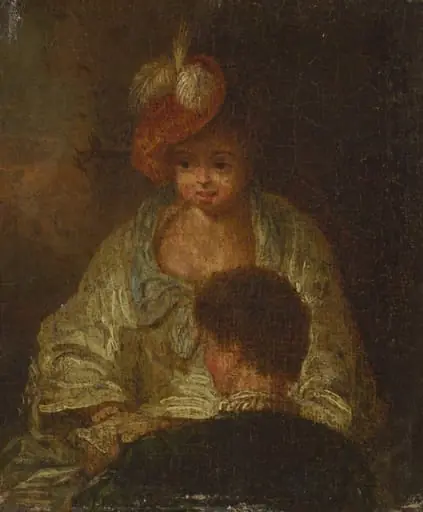
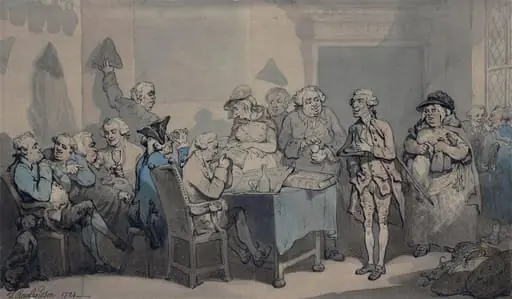 The Parish Vestry
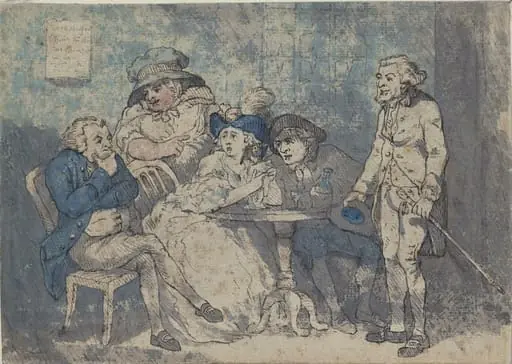 The Guilty Couple
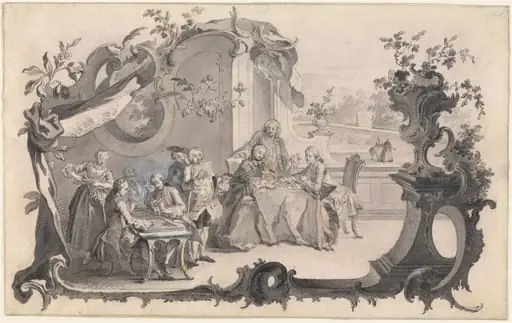 An Elegant Company Playing Board Games
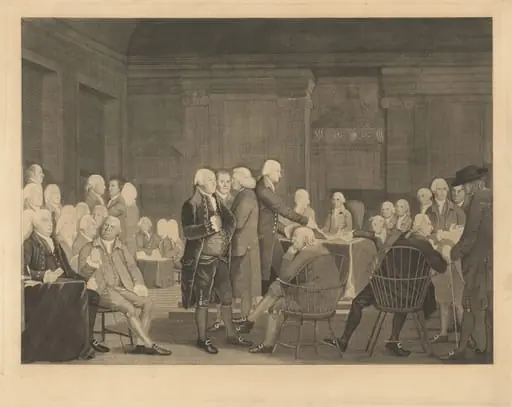 Congress Voting Independence
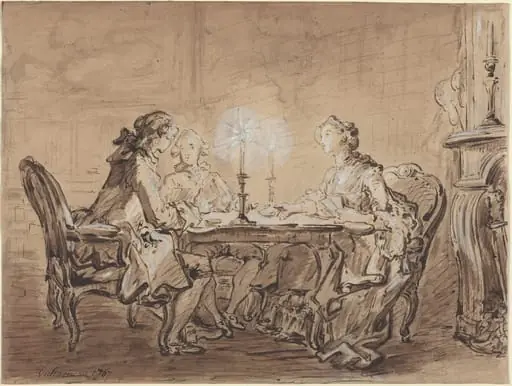 A Game of Cards
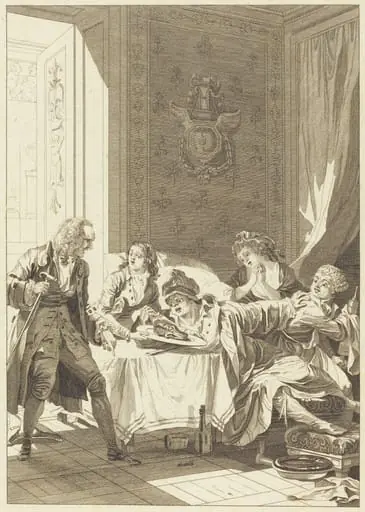 Le glouton
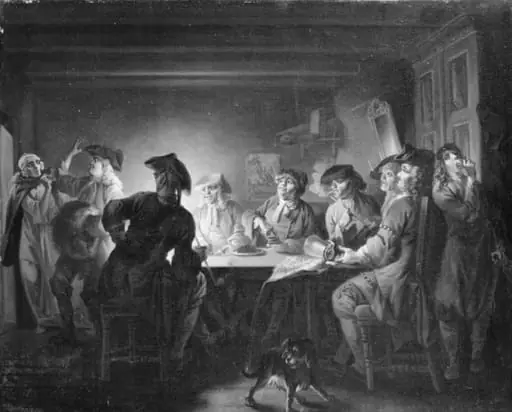 Den politiske Kandestøber, II akt, 2. scene
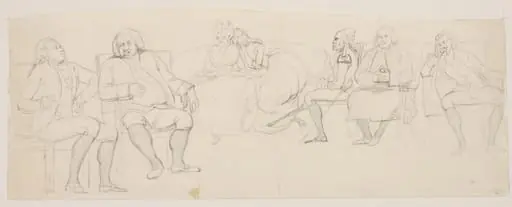 Interior of a drawing room
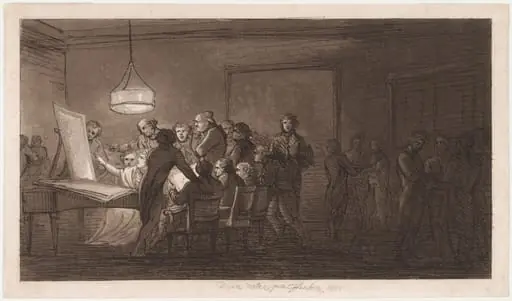 Evening Gathering in the Palais Fries
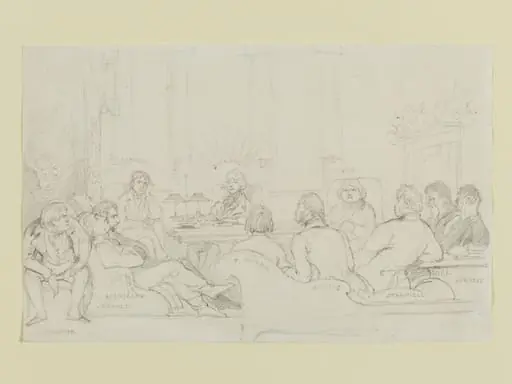 Charles Dickens reading 'The Chimes' to his friends in John Foster's chambers
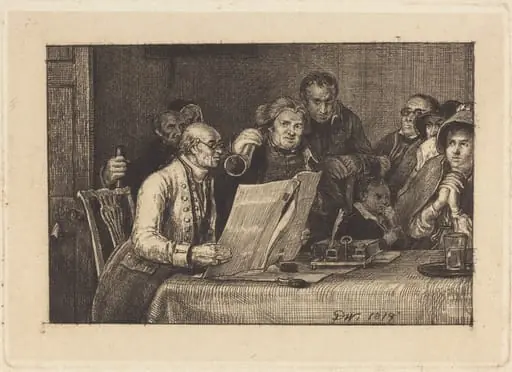 Reading the Will
 The Philosophers' Meal