Artwork
Lignelsen om de betroede pund
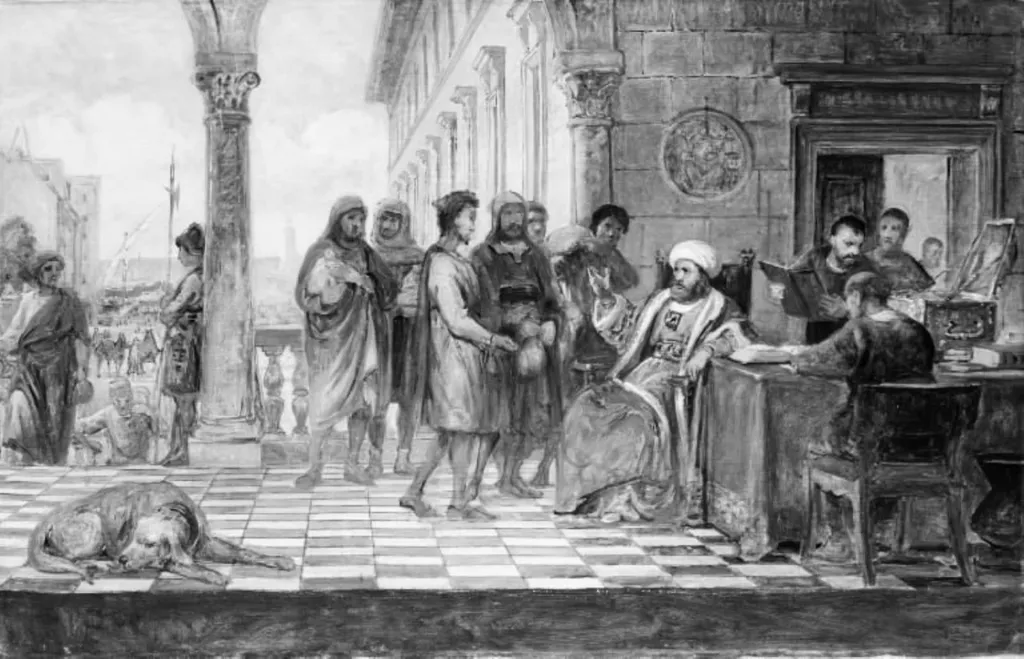
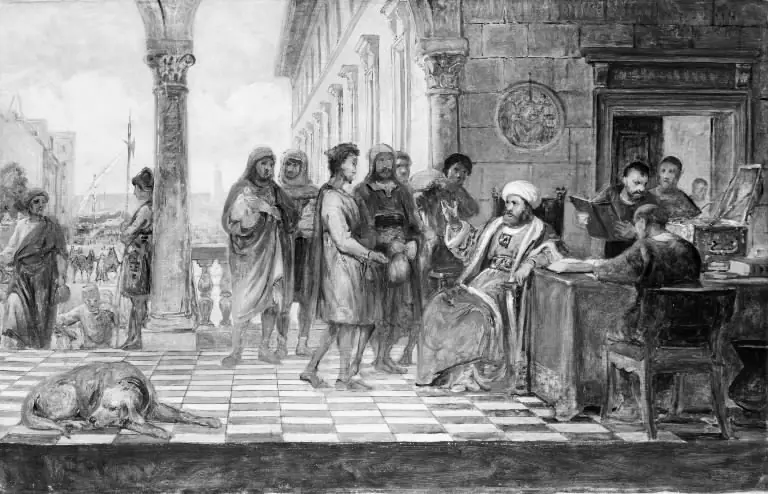
Lignelsen om de betroede pund is a photography by Unknown. It dates from 1850 and is held in the collection of the Statens Museum for Kunst. Created around 1850, this painting illustrates the Parable of the Talents, a biblical narrative about stewardship and responsibility.
About this work
Overview
It resides in the Museum of Ethnography, where it is contextualized within 19th-century religious visual culture rather than fine art traditions.
Created around 1850, this painting illustrates the Parable of the Talents, a biblical narrative about stewardship and responsibility. The artist, identified only by a catalog number, rendered the scene with careful attention to spatial depth and social hierarchy. It resides in the Museum of Ethnography, where it is contextualized within 19th-century religious visual culture rather than fine art traditions.
Subject & Meaning
The scene depicts figures gathered around a table, engaged in what appears to be an accounting or judgment. Some hold documents, suggesting transaction or review, while others observe in silence. The composition reflects moral themes of accountability and reward, drawn from the Gospel of Matthew. The setting, neither explicitly biblical nor contemporary, invites a universal reading of duty and consequence.
Technique & Style
The artist employs chiaroscuro to distinguish foreground from background, illuminating central figures while receding forms fade into muted tones. Clothing and architecture are rendered with modest detail, emphasizing group dynamics over individual expression. The brushwork is restrained, favoring clarity over ornamentation, aligning with didactic visual practices common in religious illustrations of the period.
History & Provenance
The work entered the Museum of Ethnography’s collection in the late 19th century, likely acquired as part of a broader effort to document religious narratives in vernacular art. Its attribution remains tentative, identified only by a catalog number. No documentation exists regarding its original commission, patronage, or exhibition history prior to museum acquisition.
Context
In mid-19th-century Denmark, biblical parables were frequently depicted in educational and devotional imagery, especially in non-elite contexts. This painting reflects a trend of visualizing scripture for moral instruction, distinct from academic religious painting. Its inclusion in an ethnographic museum suggests its perceived value as cultural artifact rather than artistic achievement.
Legacy
The painting remains a quiet example of religious illustration from a period when such imagery was widespread but rarely preserved as fine art. It contributes to scholarly understanding of how biblical stories were visually transmitted outside ecclesiastical settings. No direct influence on later artists is documented, but it endures as a record of popular visual piety.
Artist & collection

 Domestic Scene
 Giacomo and Cardinal Marco, investing Andrea, Abbot of San Zeno, with his Benefice
 The Nymph of Fontainebleau
 Portrait of a Woman
 Madonna and Child with Saints in the Enclosed Garden
 Venus and Minerva
 Family Group of Four on Sofa
 Wall painting from Room H of the Villa of P. Fannius Synistor at Boscoreale
 Knights of the Order of St. John of Jerusalem Restoring Religion in Armenia in 1347
 Bürgermeister Waldmanns Abschied von seinen Mitgefangenen
 Jephta's Daughter Being Led to the Altar
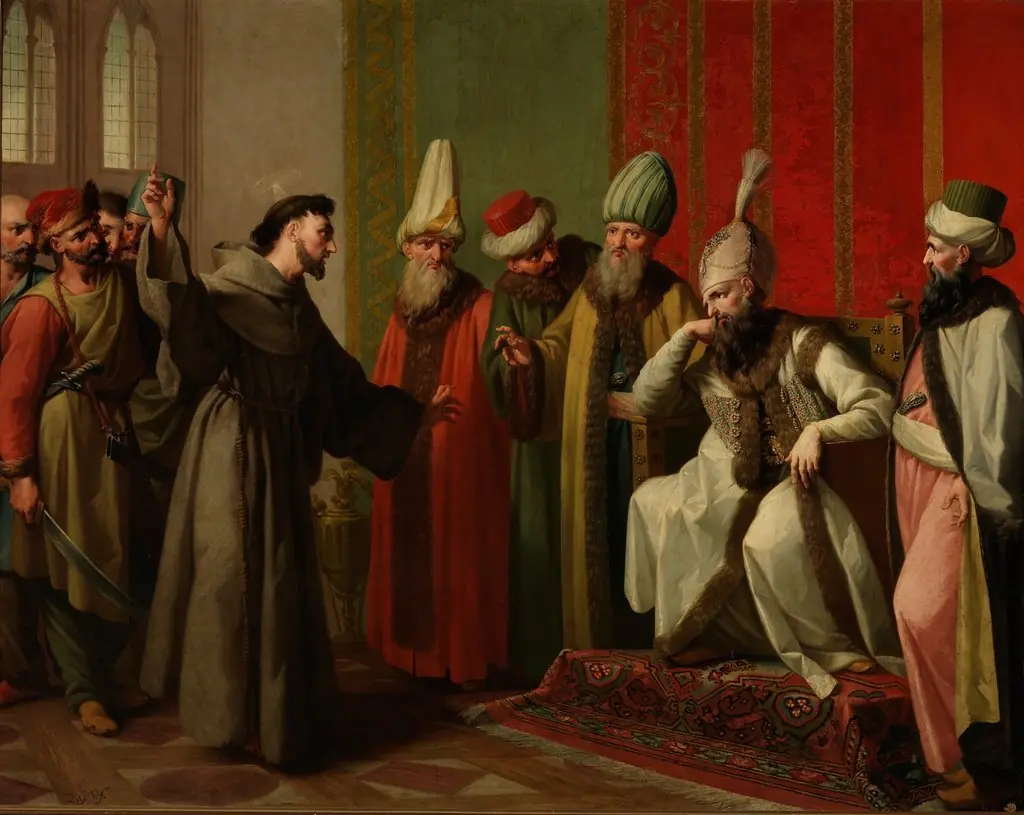 San Francisco ante el sultán de Egipto Malec-el-Kamal
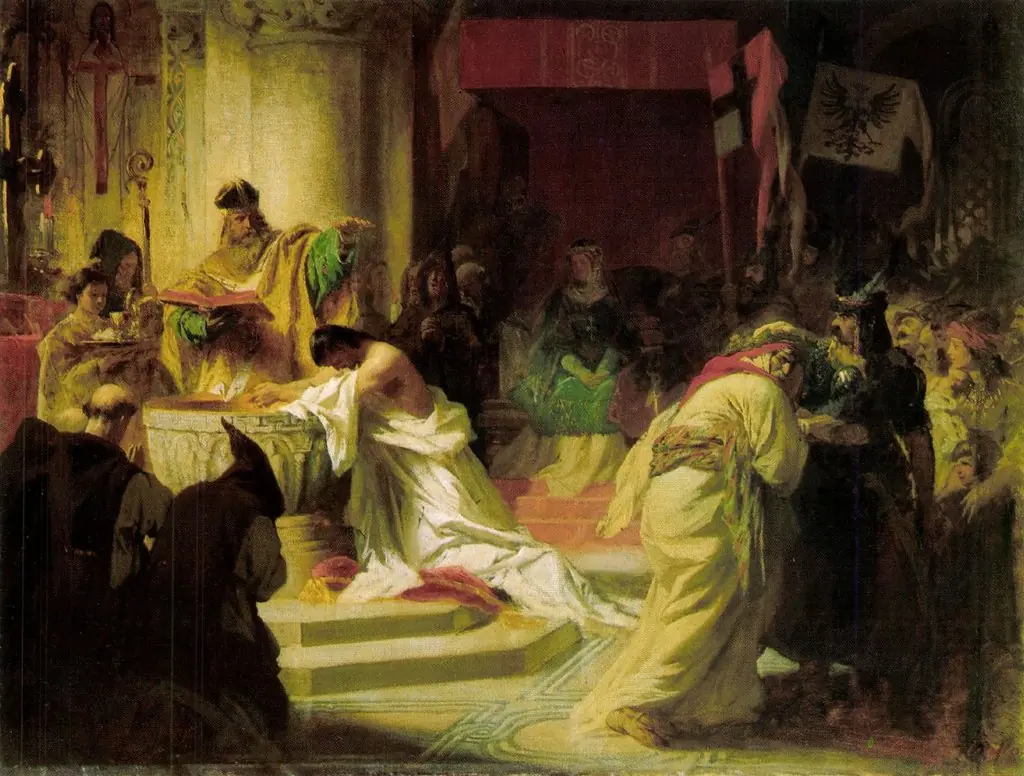 The Baptism of Vajk
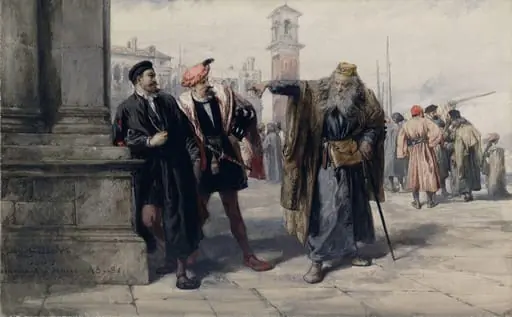 Shylock, Salanio and Salarino
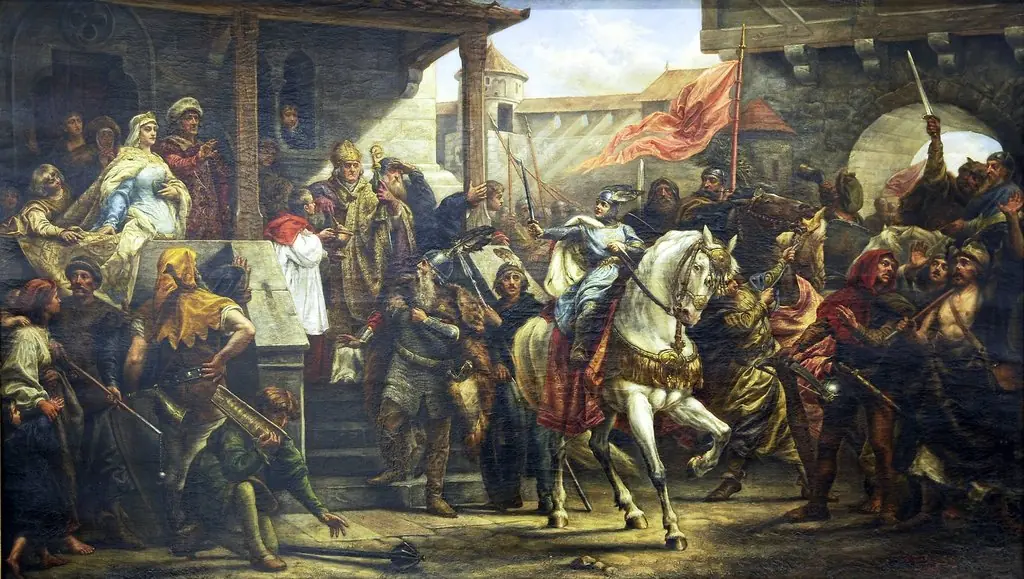 Władysław Herman blesses Bolesław the Wry-Mouthed before a war campaign
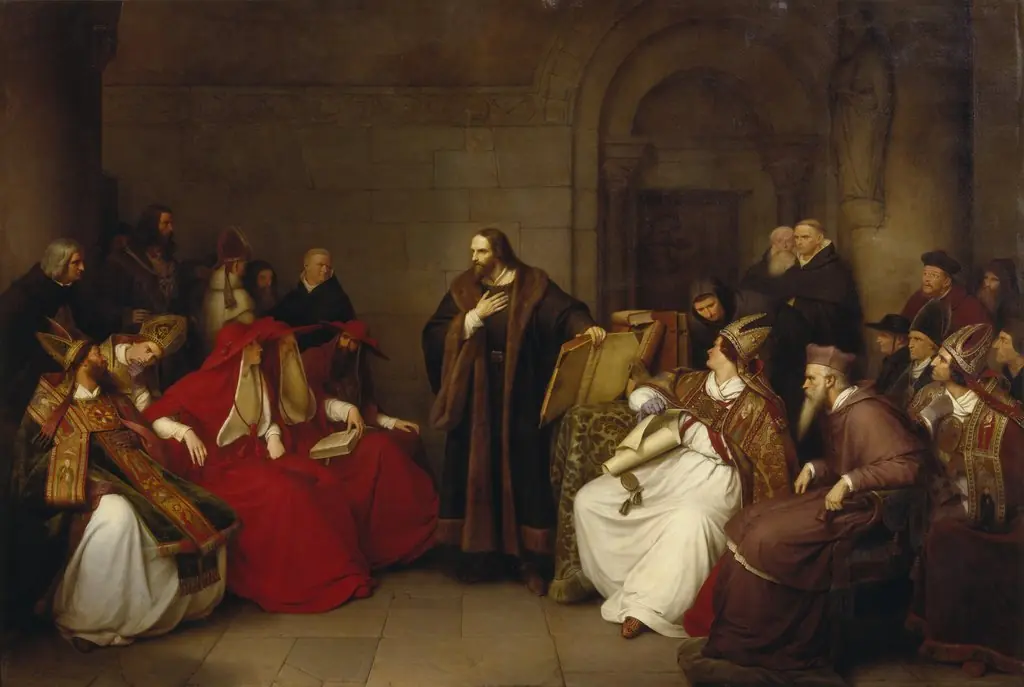 Jan Hus at Constance
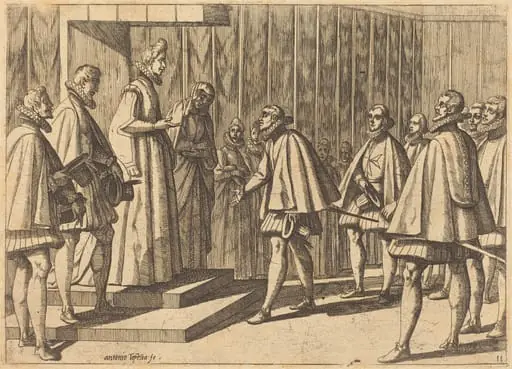 Italian Prince before Margaret of Austria
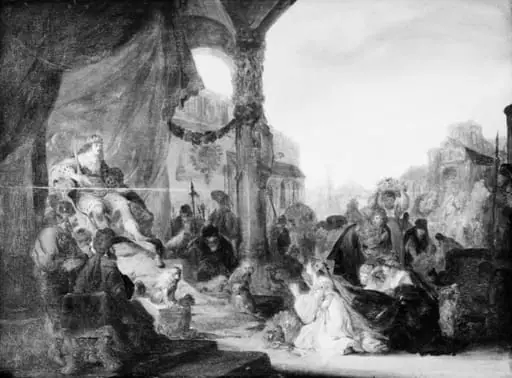 The Queen of Sheba's Visit to Solomon
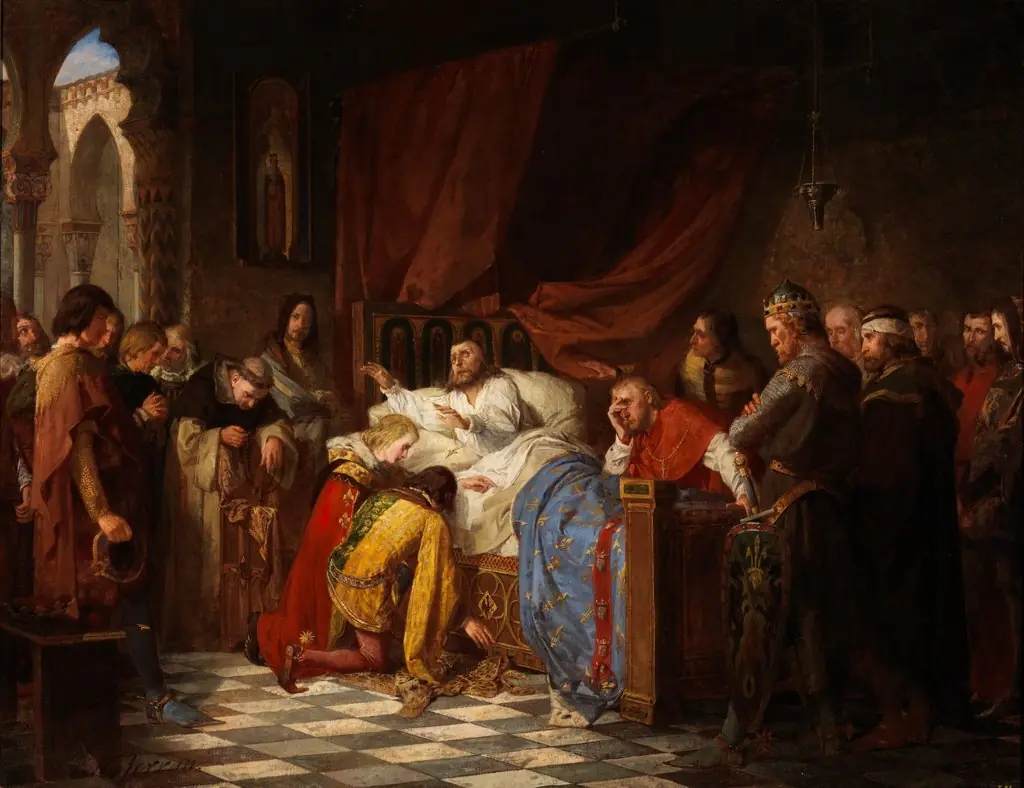 Felipe III de Francia moribundo bendiciendo a sus hijos
 Lignelsen om de betroede pund