Artwork
Jan Hus at Constance
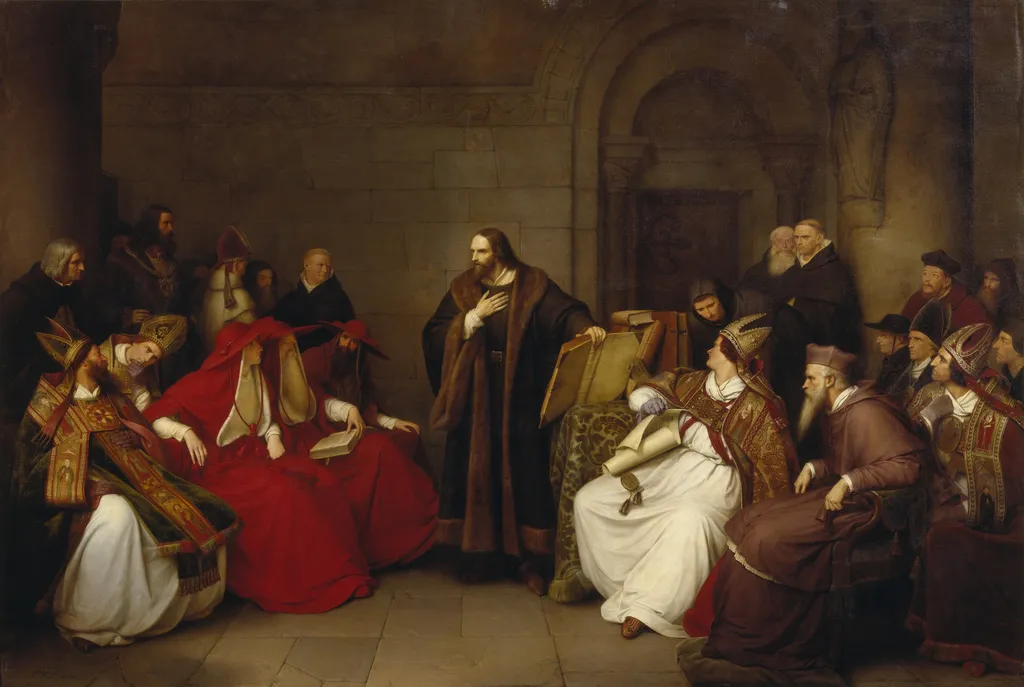
Jan Hus at Constance is an oil painting by the German Romanticist artist Karl Friedrich Lessing. It dates from 1842 and is held in the collection of the Städel Museum.
About this work
Overview
Created in 1842 by German painter Karl Friedrich Lessing, this oil on canvas portrays a solemn gathering within a vaulted ecclesiastical space. The composition centers on a robed figure holding a book, surrounded by attendants in varied garments, all rendered with a dignified, contemplative atmosphere. The work exemplifies the Romantic fascination with historic episodes and moral gravity.
Subject & Meaning
The central character represents Jan Hus, the Bohemian reformer who faced condemnation at the Council of Constance. By placing him at the heart of the scene, the artist underscores Hus’s role as a vocal challenger of ecclesiastical authority, while the surrounding clerics convey the institutional opposition he encountered.
Technique & Style
Lessing employs pronounced chiaroscuro, using strong contrasts of light and shadow to model the stone arches and figures, thereby enhancing spatial depth. The palette is restrained, dominated by earth tones that reinforce the solemn mood. The brushwork balances detailed rendering of fabrics with broader, atmospheric treatment of the architectural setting, reflecting German Romantic ideals.
History & Provenance
After its completion, the painting entered the collection of Frankfurt’s Städel Museum, where it remains on display. As a product of the Düsseldorf school, it illustrates the 19th‑century German interest in national history and religious reform, contributing to the museum’s representation of Romantic historical narrative.
Own this work as a print
Artist & collection
Artist
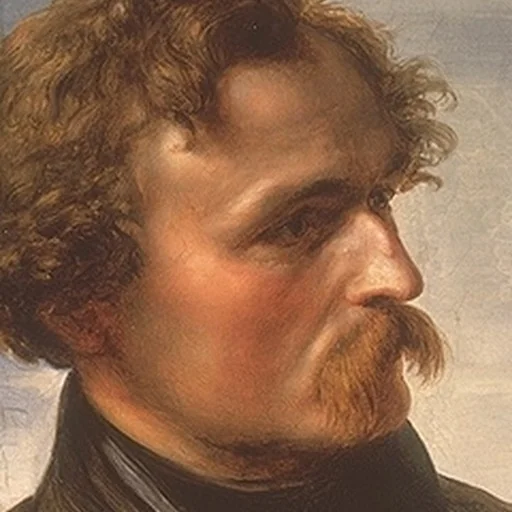
Karl Friedrich Lessing, also known by Carl Friedrich Lessing (15 February 1808 – 4 January 1880), was a German historical and landscape painter, grandnephew of Gotthold Ephraim Lessing and one of the main exponents of the Düsseldorf school…

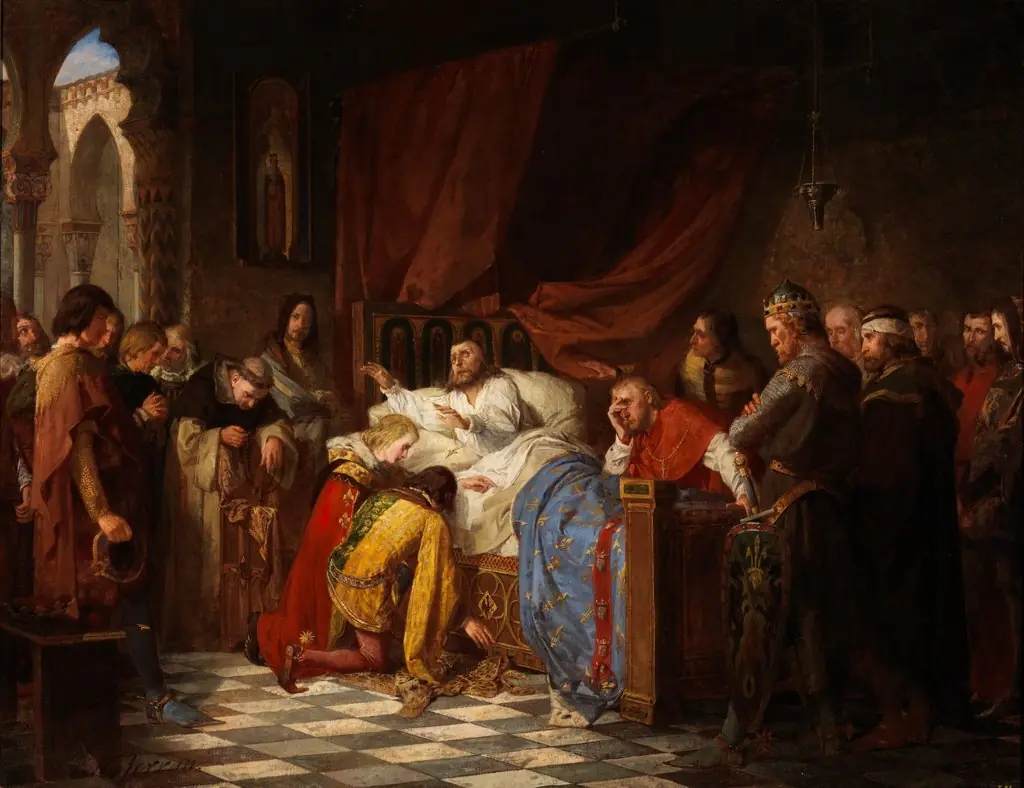 Felipe III de Francia moribundo bendiciendo a sus hijos
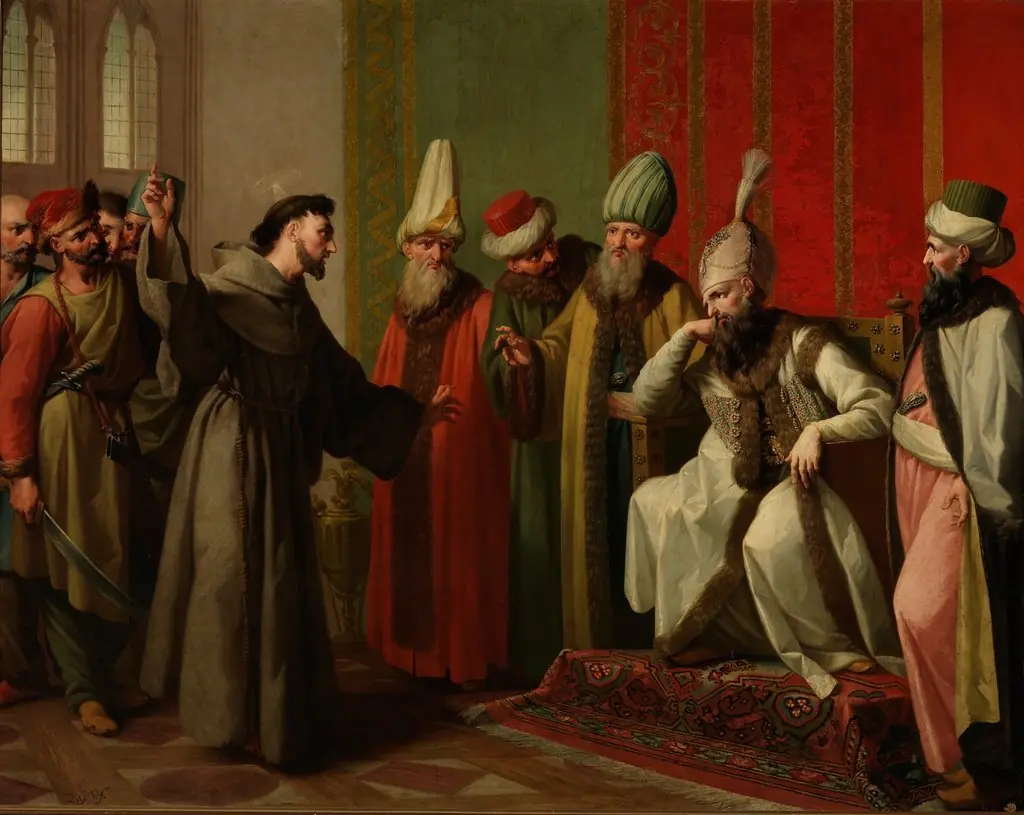 San Francisco ante el sultán de Egipto Malec-el-Kamal
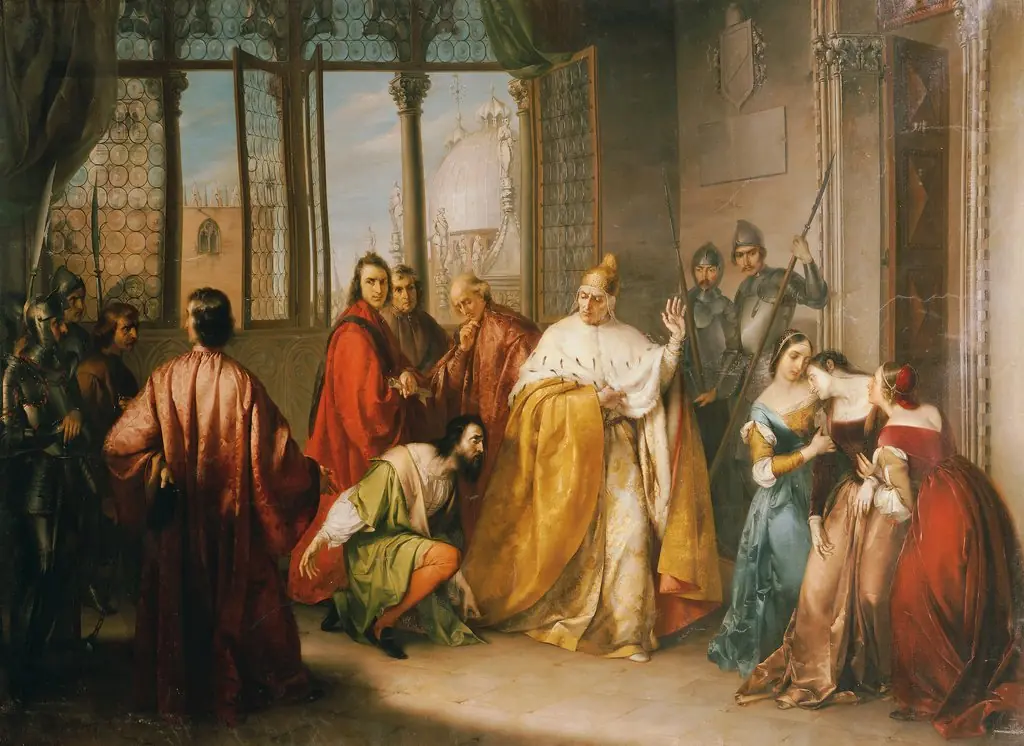 Der Doge Francesco Foscari schickt seinen Sohn Giacomo in die Verbannung ("I due Foscari")
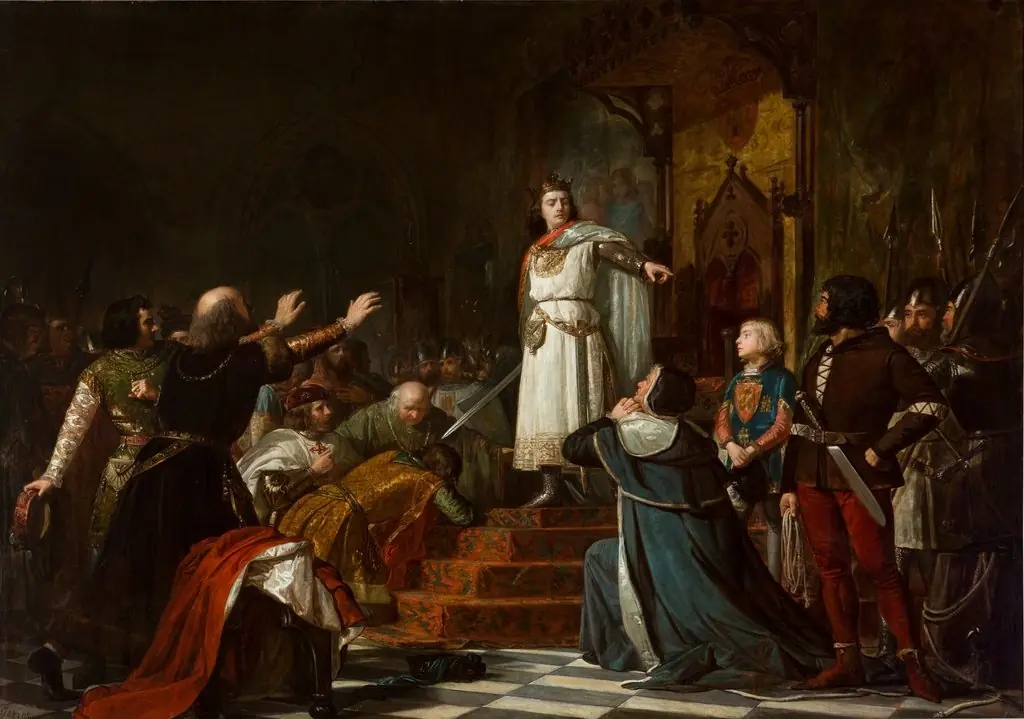 Episodio del reinado de don Enrique III de Castilla llamado el Doliente cuando al día siguiente de haber tenido que empeñar su gabán para comer corrige el orgullo y desmanes de los señores y ricoshomes de Castilla
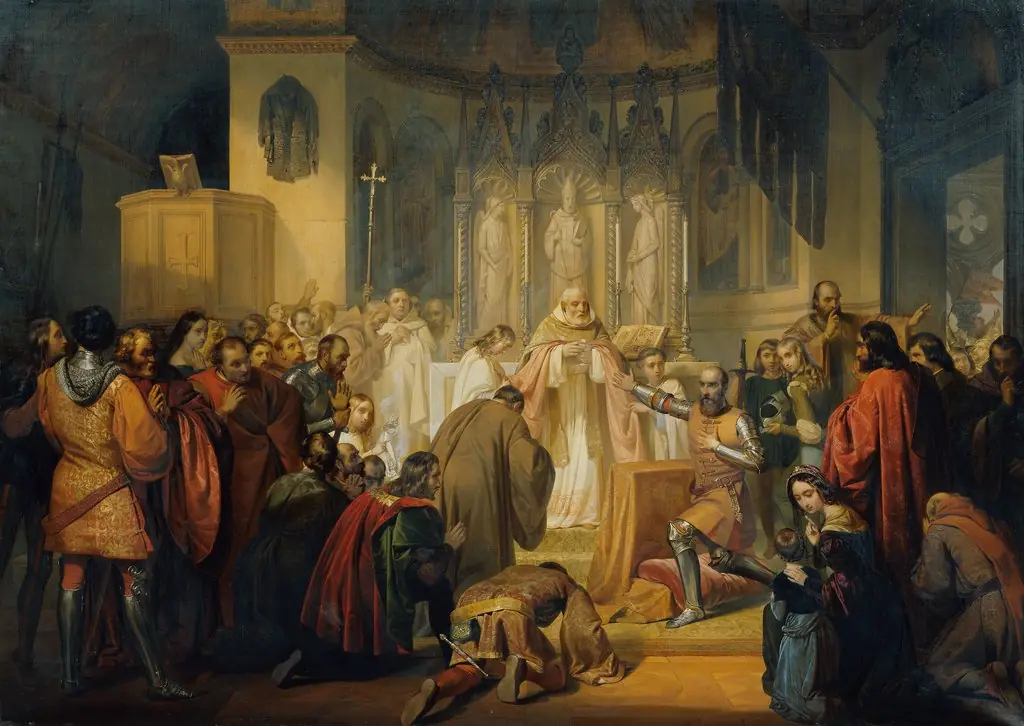 Vittore Pisani receives Holy Communion before taking command of an expedition against the Genoese
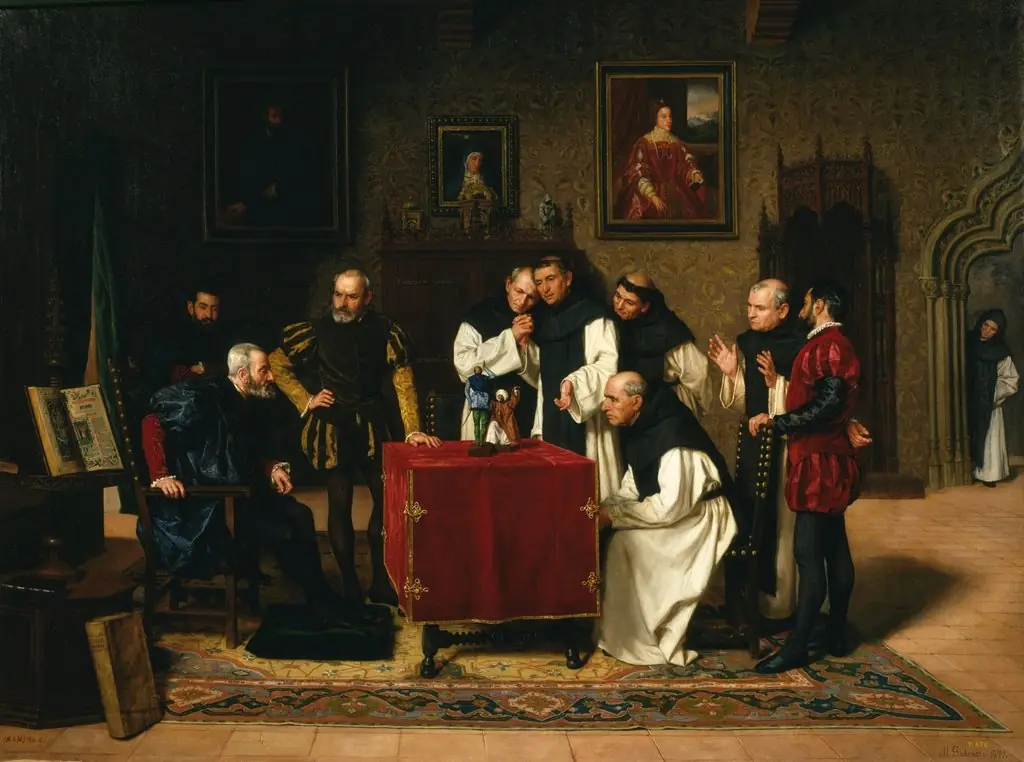 Charles V at Yuste
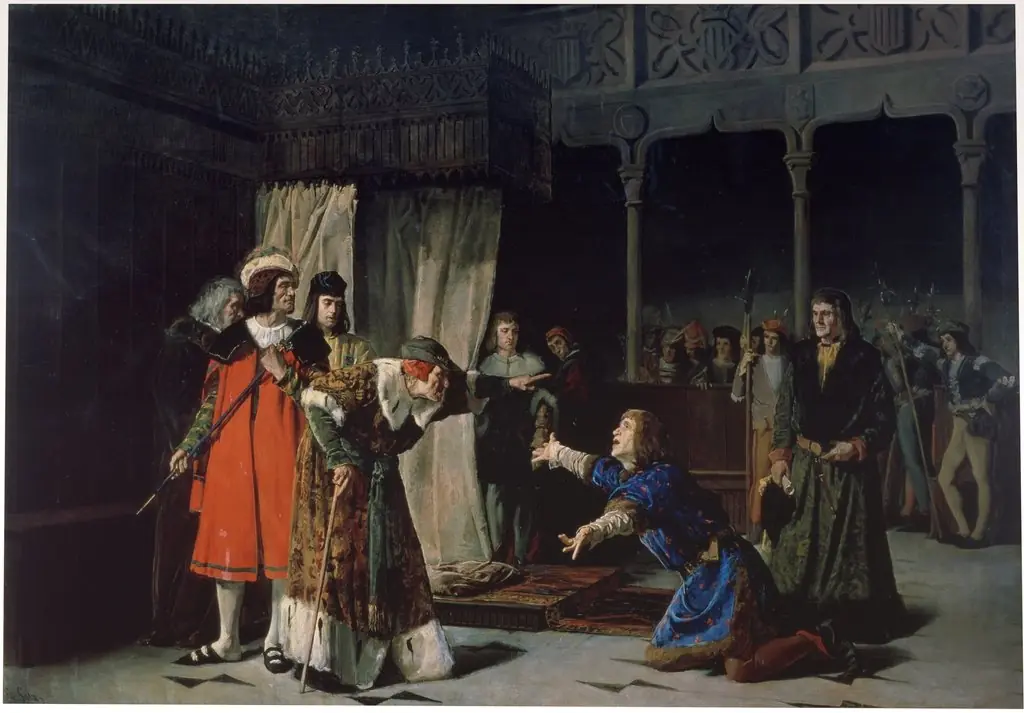 La prisión del príncipe de Viana
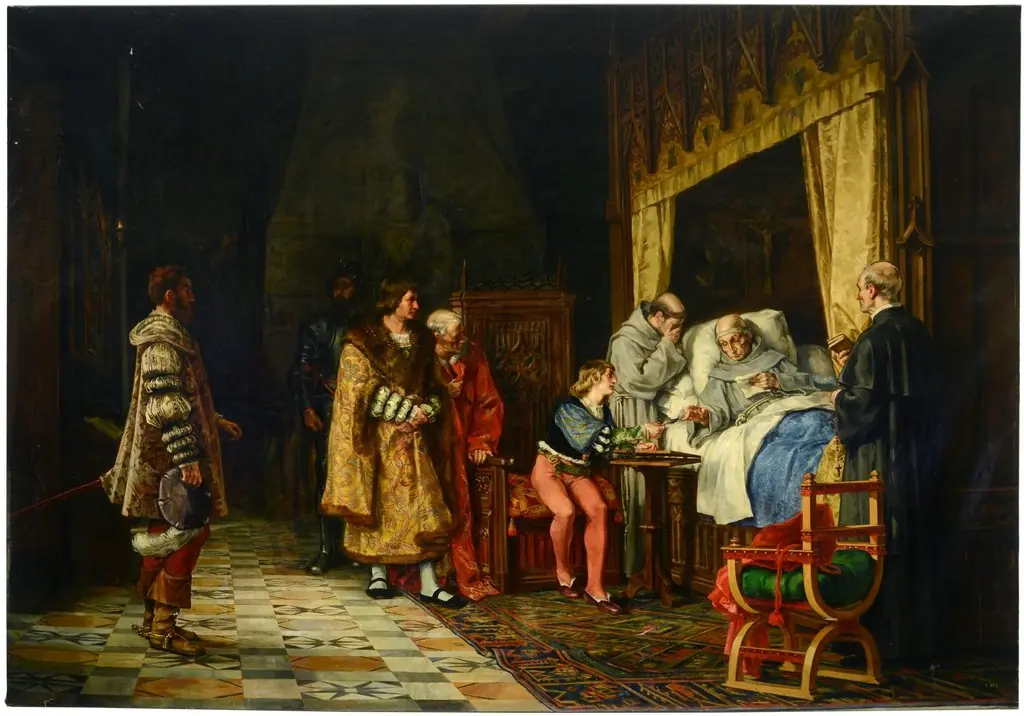 Mensaje de Carlos I al cardenal Cisneros (1517)
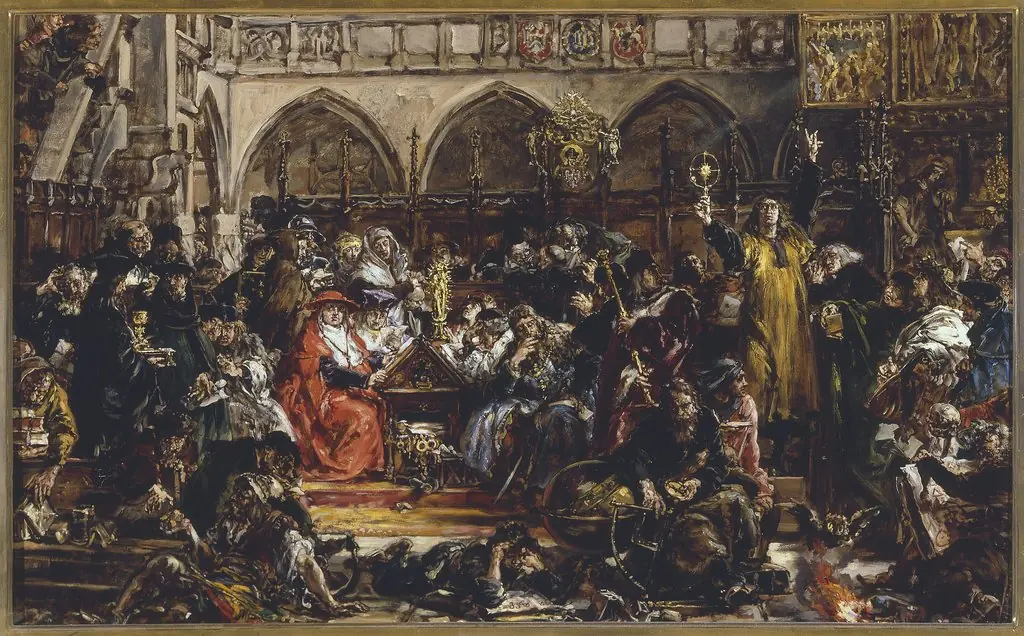 Influence of the university on the country, from the series “History of Civilization in Poland”
 Maria Stuard condotta al patibolo (Mary Stuart Being Led to the Scaffold)
 Bishop Stanisław Szczepanowski Putting a Curse on King Bolesław Śmiały
 Ein Astrologe weissagt Rudolf von Habsburg