Artwork
Women Working in the Kitchen of a Farmhouse near Olevano, Italy
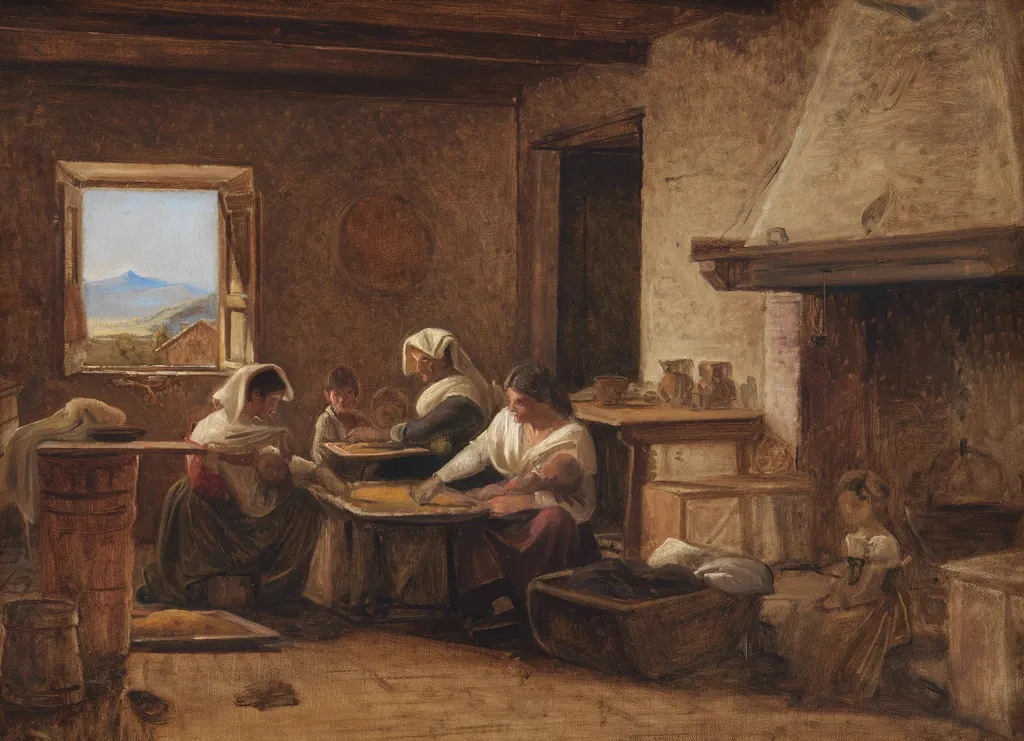
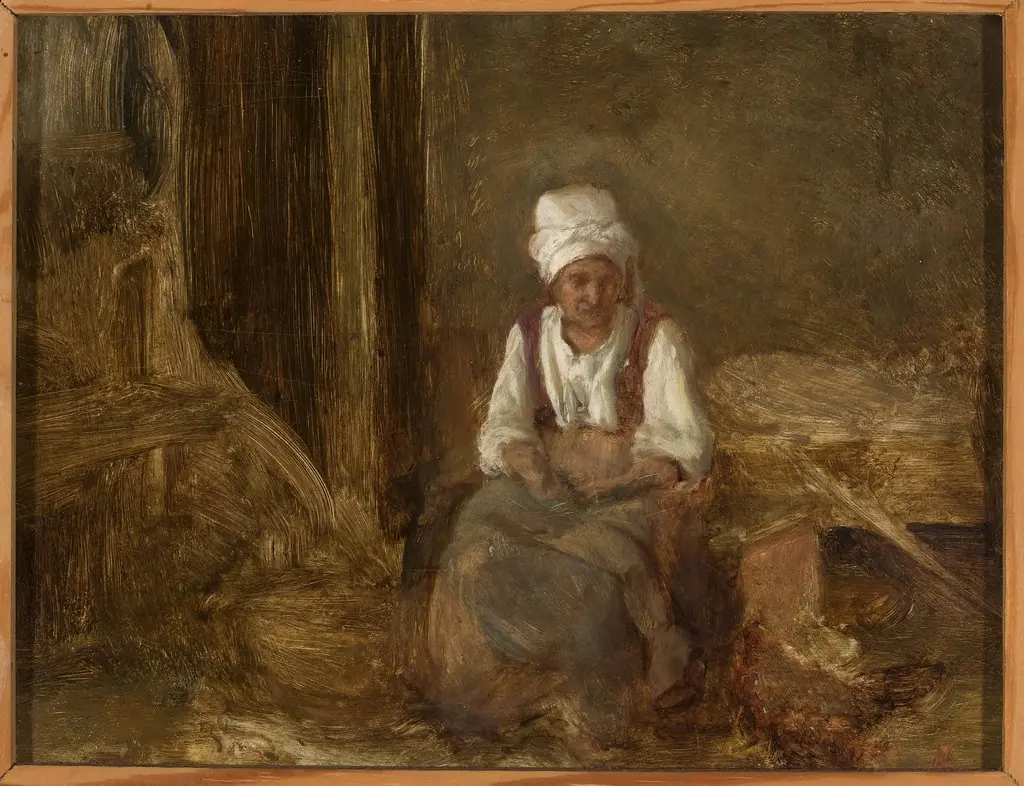
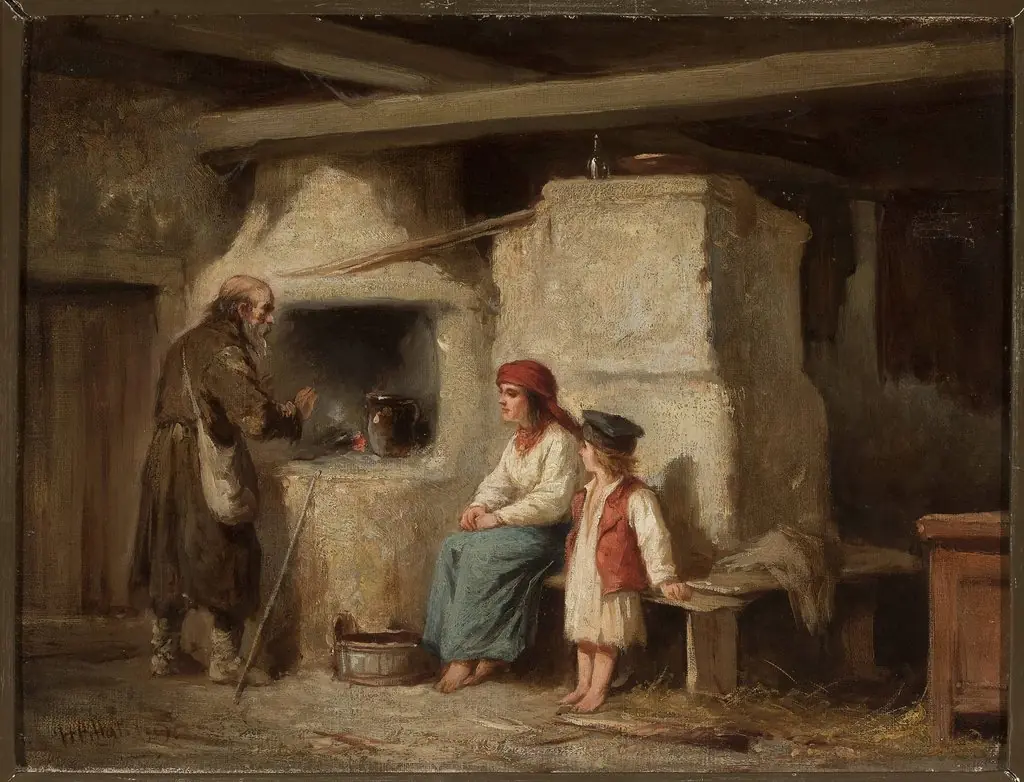
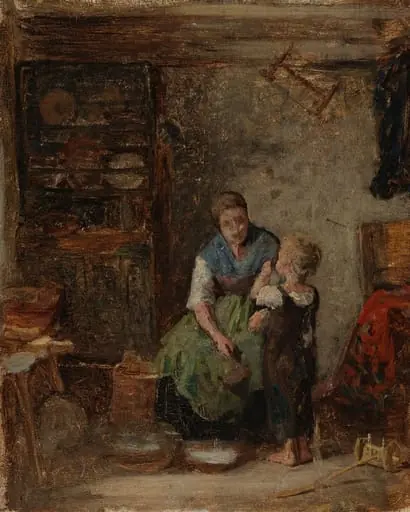
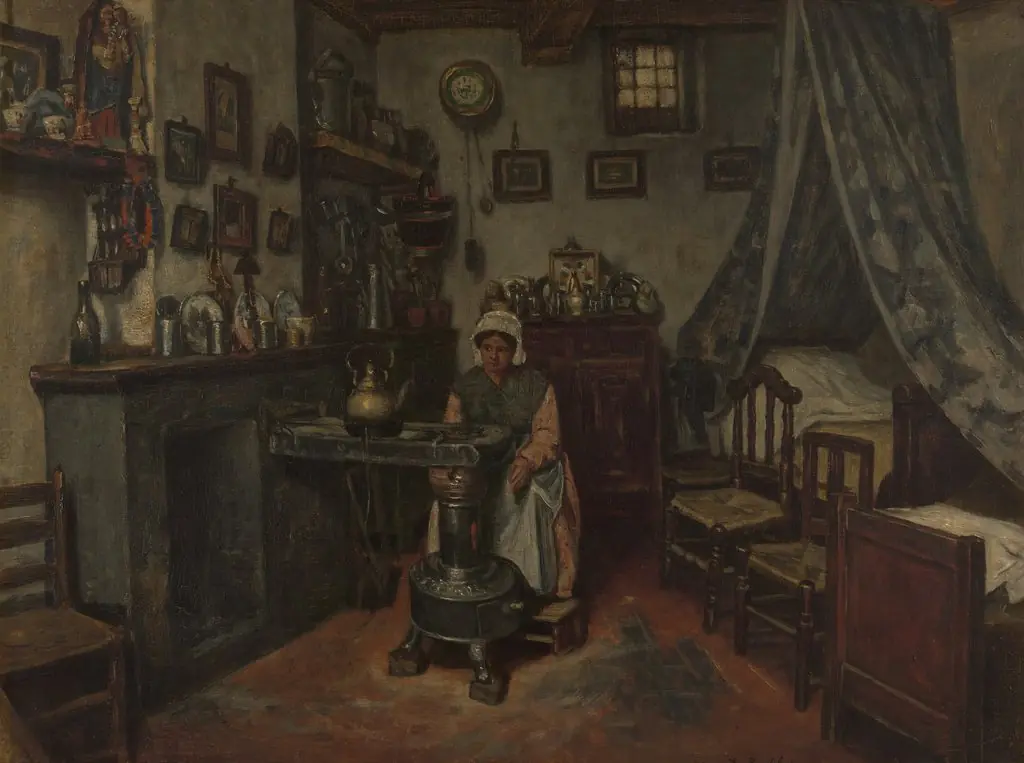
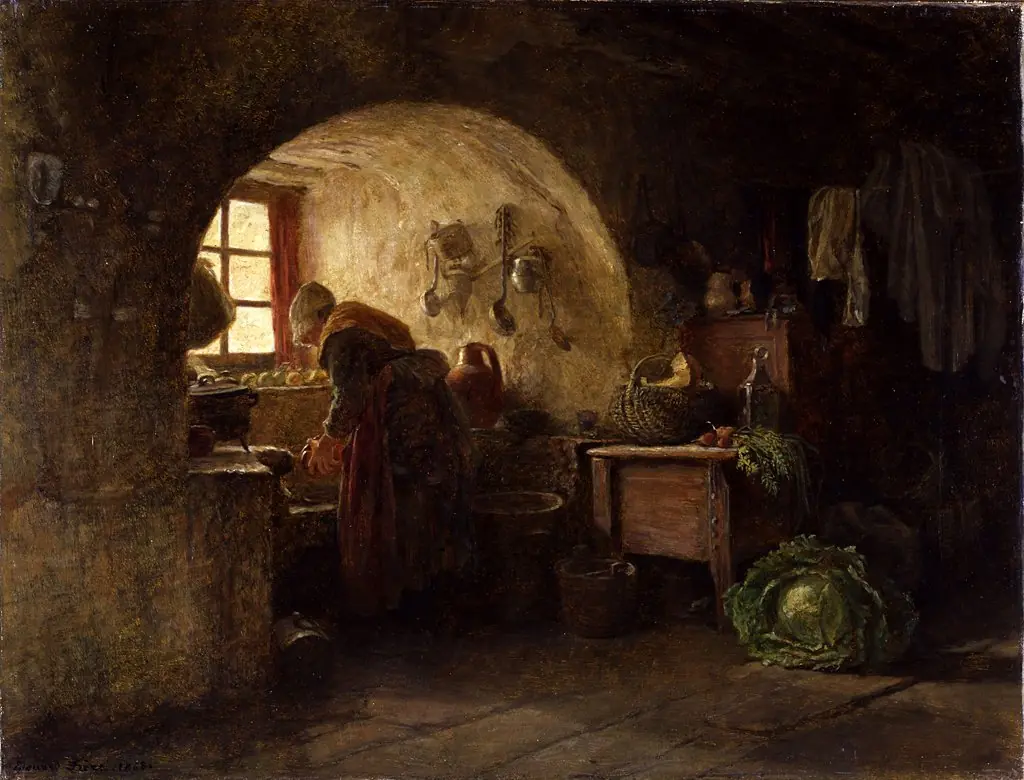
Women Working in the Kitchen of a Farmhouse near Olevano, Italy is a photography by Unknown. It dates from 1850 and is held in the collection of the Statens Museum for Kunst. Painted around 1850, this work depicts a group of women engaged in daily tasks within a rural kitchen near Olevano, Italy.
About this work
Overview
The scene captures ordinary labor without idealization, focusing on the quiet rhythm of domestic life in a peasant household.
Painted around 1850, this work depicts a group of women engaged in daily tasks within a rural kitchen near Olevano, Italy. Executed in oil on canvas, it is part of the Museum of Ethnography’s collection. The scene captures ordinary labor without idealization, focusing on the quiet rhythm of domestic life in a peasant household. The artist’s attention to detail reflects an interest in ethnographic observation rather than narrative drama.
Subject & Meaning
The painting portrays women performing routine chores—preparing food, caring for a child, and tending to the hearth. Their postures and interactions suggest a shared, unspoken rhythm of labor. The presence of the infant and the seated figure on the floor imply generational continuity and the physical demands of rural domesticity. No figures are shown facing the viewer, reinforcing the sense of private, unperformed life.
Technique & Style
The artist uses muted earth tones and soft chiaroscuro to convey the dim interior lit by a single window. Brushwork is restrained, emphasizing texture over flourish—the roughness of woolen garments, the grain of wooden surfaces, the soot-stained walls. The composition is tightly framed, drawing focus to the group’s physical proximity and the functional layout of the kitchen, avoiding theatricality.
History & Provenance
The painting entered the Museum of Ethnography’s holdings in the late 19th century, likely acquired during a period of growing interest in documenting regional European customs. Its origin as a private commission or field study remains undocumented. No records of exhibition prior to its museum acquisition are known, suggesting it was valued more for its ethnographic record than its artistic merit at the time.
Context
Created during a time when Italian rural life was undergoing gradual change due to economic shifts and unification movements, the painting reflects a vanishing way of life. Similar works by contemporaries sought to preserve the appearance of peasant traditions, often for scholarly or nationalist purposes. This image aligns with a broader 19th-century trend of documenting everyday labor as cultural heritage.
Legacy
Though not widely exhibited or reproduced, the painting remains a quiet example of 19th-century ethnographic realism in Italian art. It contributes to scholarly understanding of domestic labor and gender roles in pre-industrial southern Italy. Its preservation in a museum of ethnography underscores its role as a document of social history rather than a celebrated artistic achievement.
Artist & collection

 Domestic Scene
 Giacomo and Cardinal Marco, investing Andrea, Abbot of San Zeno, with his Benefice
 The Nymph of Fontainebleau
 Portrait of a Woman
 Madonna and Child with Saints in the Enclosed Garden
 Venus and Minerva
 Family Group of Four on Sofa
 Wall painting from Room H of the Villa of P. Fannius Synistor at Boscoreale