Artwork
Last Judgement
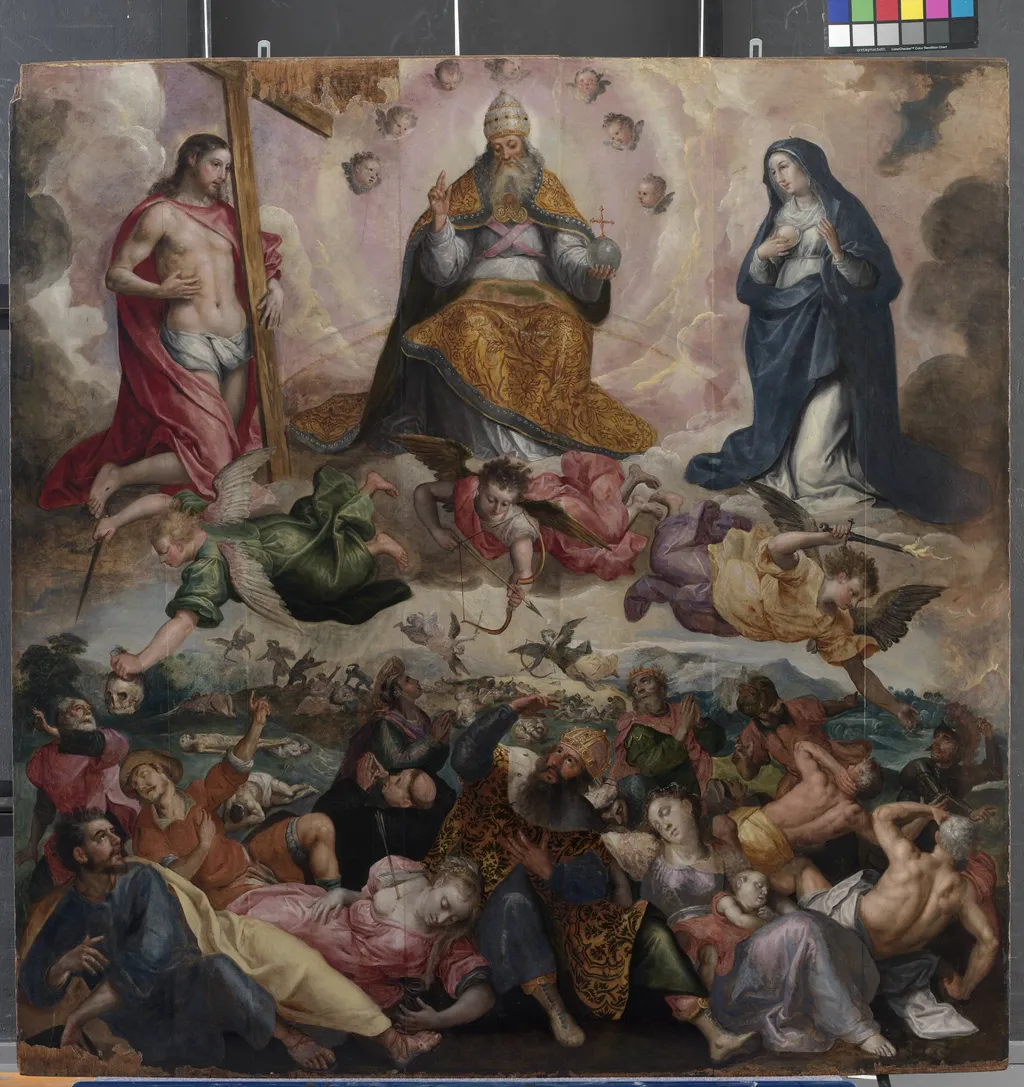
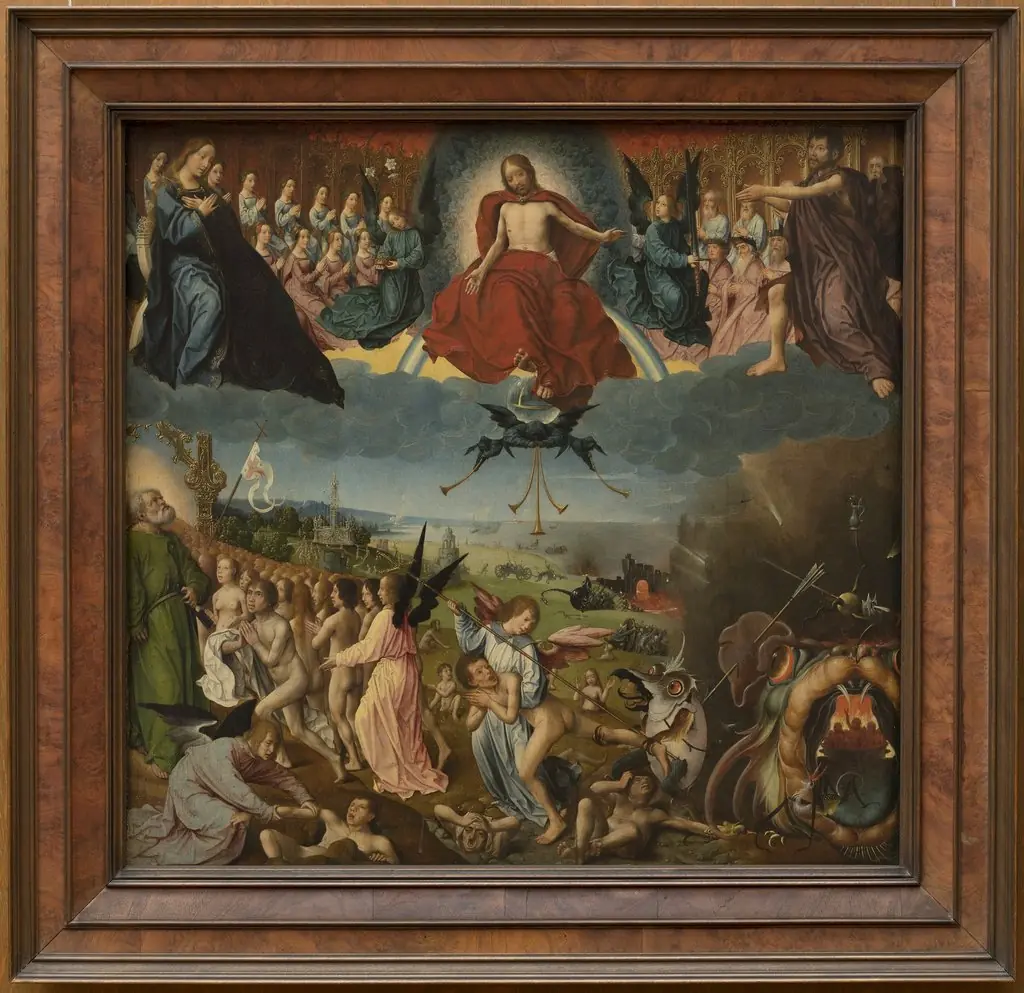
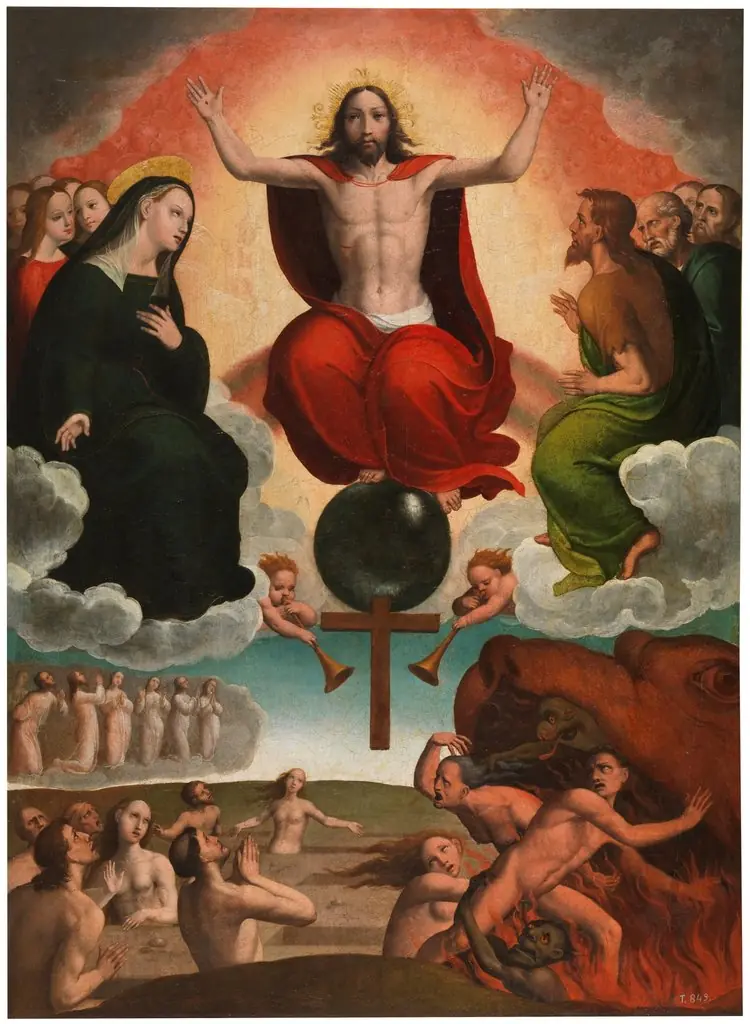
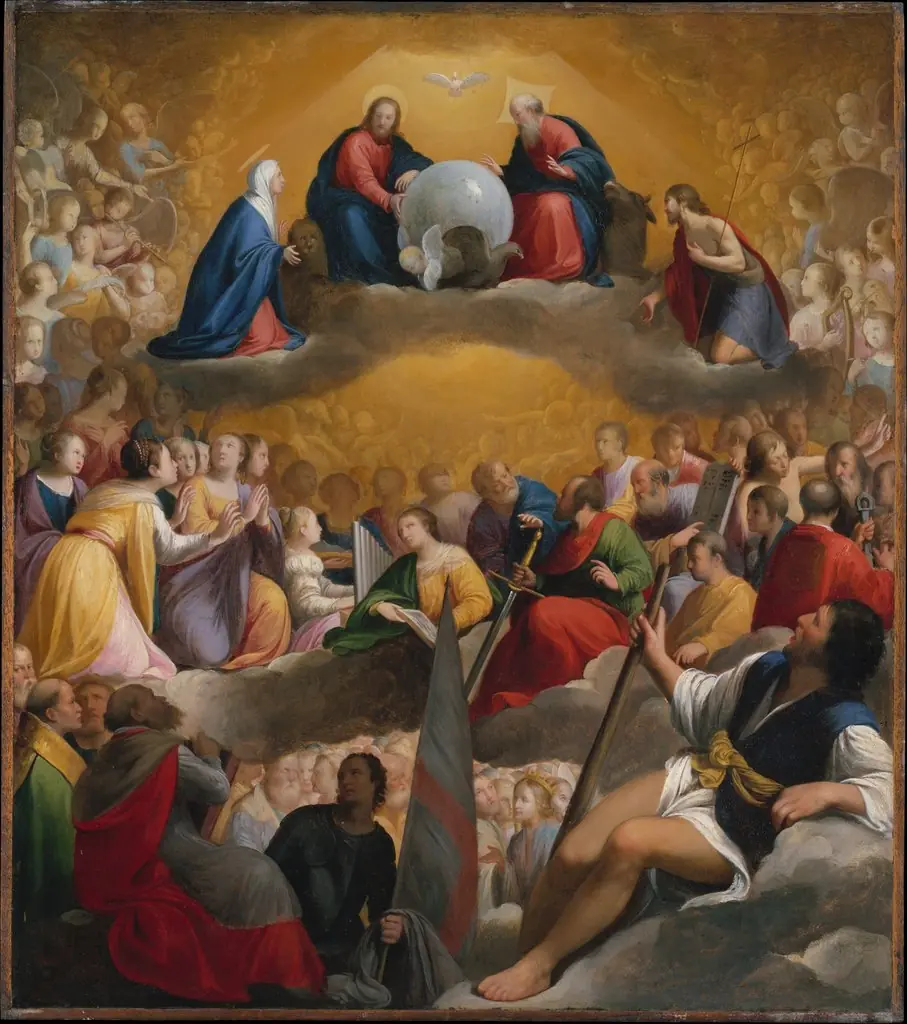
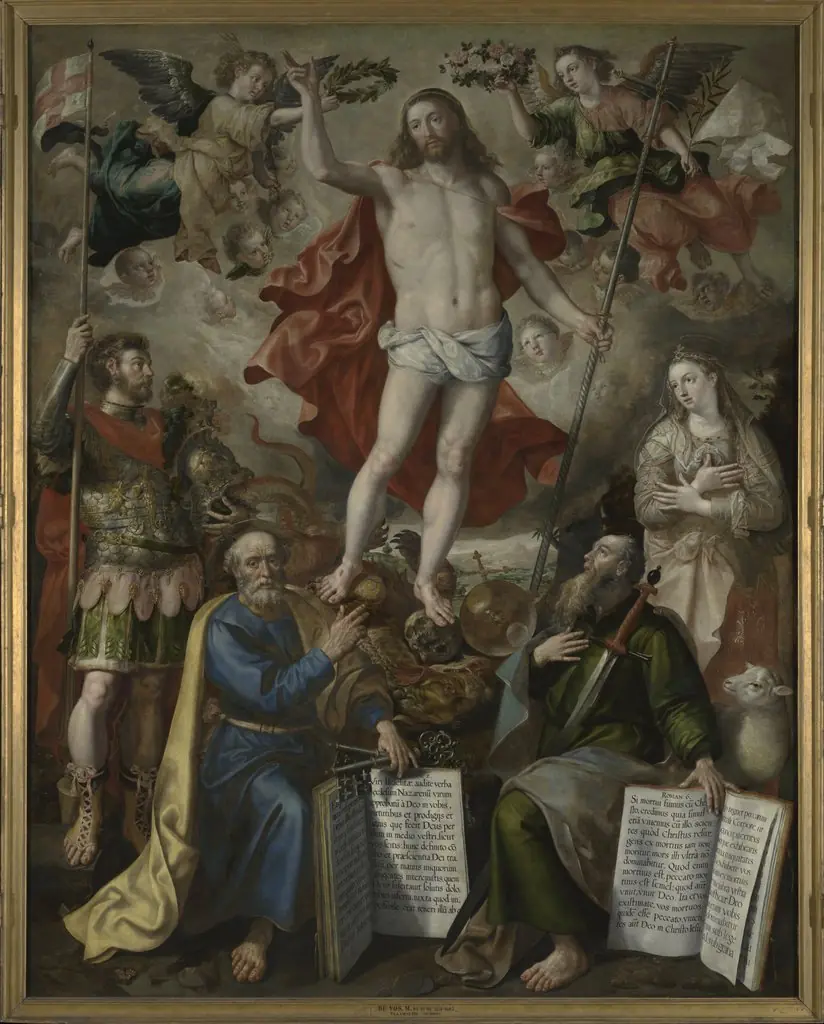
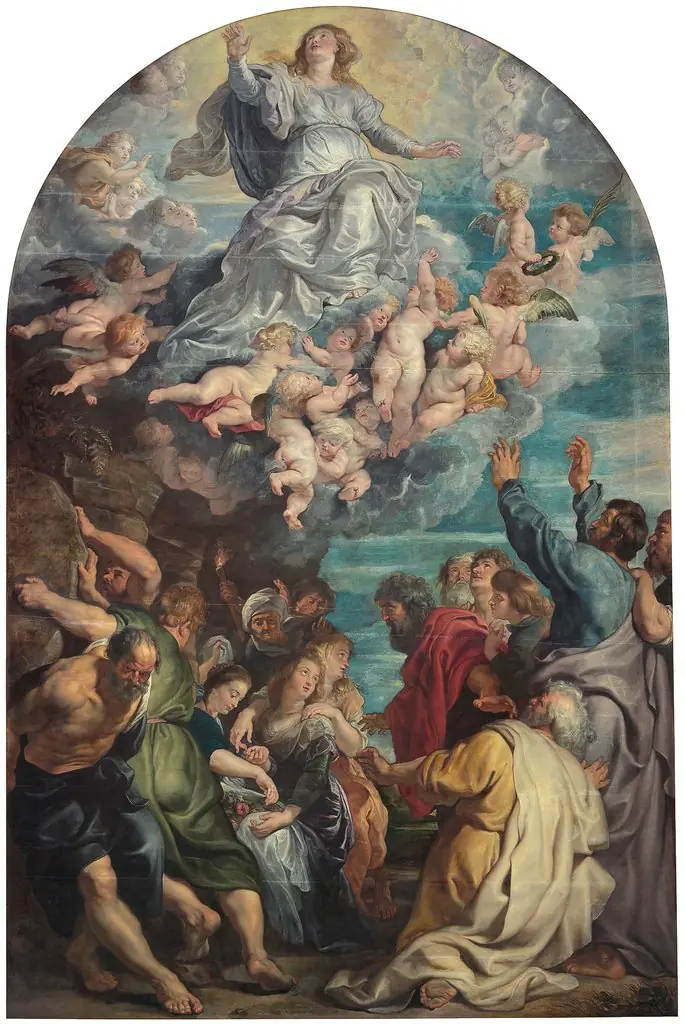
Last Judgement is a photography by Unknown. It dates from 1550 and is held in the collection of the Statens Museum for Kunst. Created around 1550, this large-scale painting depicts the Last Judgment, a biblical theme of divine reckoning.
About this work
Overview
Created around 1550, this large-scale painting depicts the Last Judgment, a biblical theme of divine reckoning. It is held in the Museum of Ethnography and is attributed to an artist identified only by a numerical designation. The composition is densely packed with figures arranged vertically, from celestial beings above to tormented souls below, conveying a sense of cosmic order and chaos.
Subject & Meaning
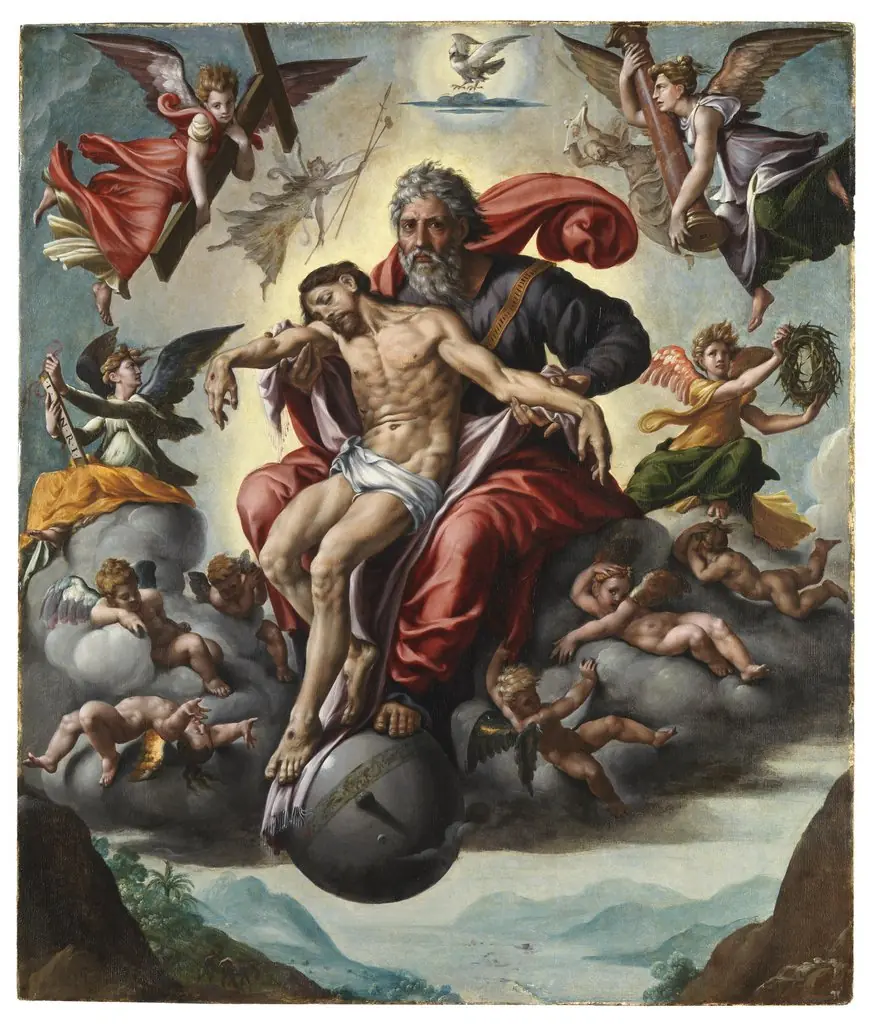
At the summit, a robed figure seated on a cloud, adorned in gold and purple, represents divine authority, holding a globe symbolizing dominion over creation.
The scene illustrates the final separation of the saved and the damned. At the summit, a robed figure seated on a cloud, adorned in gold and purple, represents divine authority, holding a globe symbolizing dominion over creation. To his left, a bare-chested figure bears a cross, evoking sacrifice; to the right, a woman in dark garments cradles a child, possibly symbolizing innocence or mourning. Below, angels and demons clash as humans react with fear or despair.
Technique & Style
The artist employs strong chiaroscuro to heighten emotional intensity, using stark contrasts between light and shadow to define muscular forms and dramatic gestures. Pigments are applied thickly in places, particularly in robes and halos, lending texture and weight. Bold hues of crimson, ultramarine, and gold dominate, creating visual urgency, while the lack of spatial depth emphasizes the spiritual over the earthly.
History & Provenance
The painting entered the Museum of Ethnography’s collection in the late 19th century, though its earlier history remains undocumented. Its attribution to a numbered artist suggests it may have been produced in a workshop or under anonymous conditions common in certain religious art traditions. No records of commission or original location have been identified, leaving its origins obscure.
Context
Made during a period of religious upheaval in Europe, the painting reflects enduring visual traditions of eschatological imagery, even as Reformation debates reshaped theological expression. Its emphasis on divine judgment and bodily torment aligns with pre-Reformation Catholic iconography, yet its stylistic intensity may also respond to broader Mannerist trends favoring emotional dynamism over classical harmony.
Legacy
Though not widely exhibited outside its current institution, the work remains a significant example of late Renaissance religious painting in a non-Western museum context. Its preservation offers insight into how universal religious themes were rendered locally, and its stylistic choices continue to inform studies of devotional art beyond mainstream European canons.
Artist & collection

 Domestic Scene
 Giacomo and Cardinal Marco, investing Andrea, Abbot of San Zeno, with his Benefice
 The Nymph of Fontainebleau
 Portrait of a Woman
 Madonna and Child with Saints in the Enclosed Garden
 Venus and Minerva
 Family Group of Four on Sofa
 Wall painting from Room H of the Villa of P. Fannius Synistor at Boscoreale