Artwork
The Good Thief (Saint Dismas)
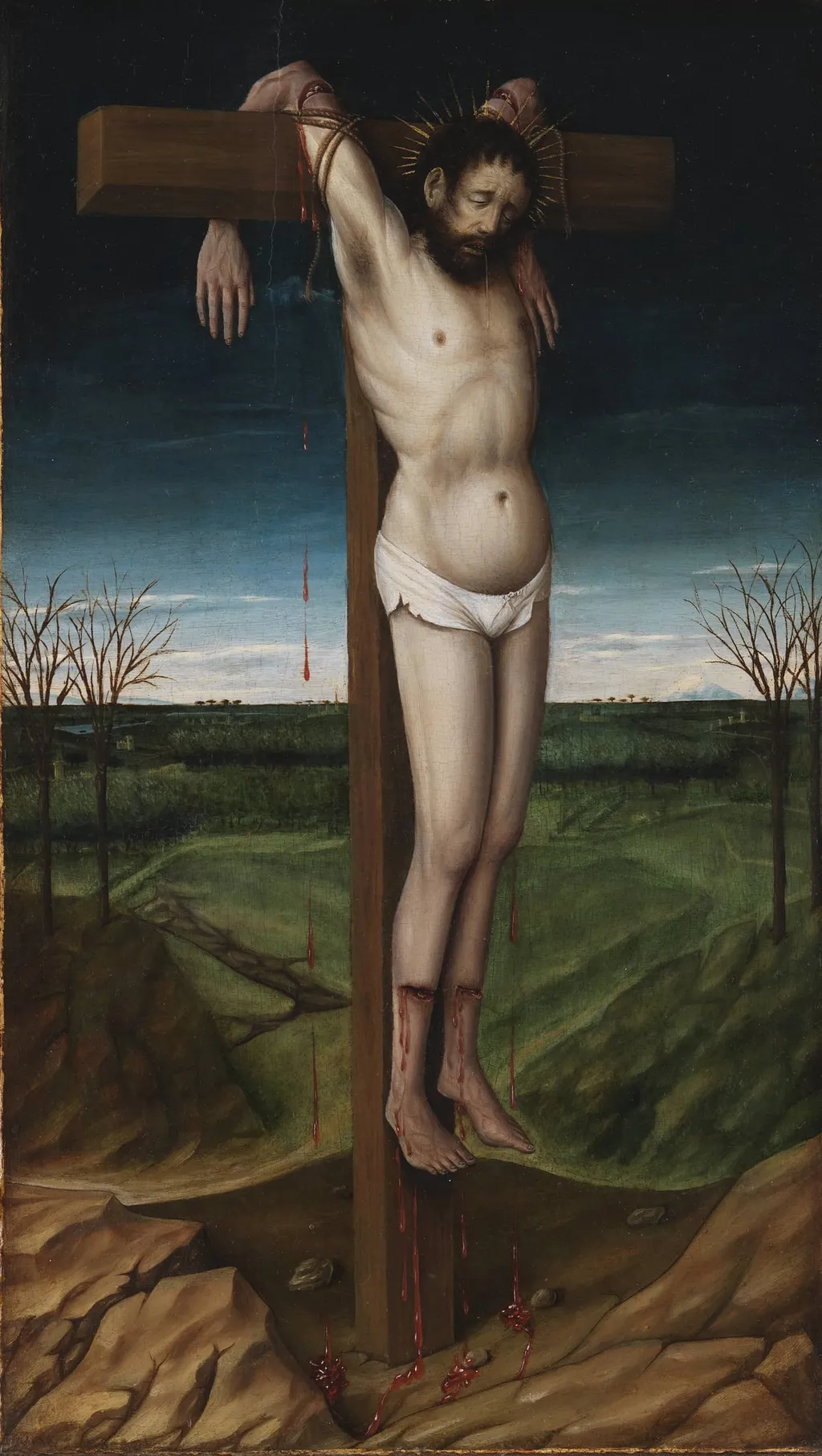
The Good Thief (Saint Dismas) is a photography by Unknown. It dates from 1450 and is held in the collection of the Statens Museum for Kunst.
About this work
Overview
The Good Thief (Saint Dismas) is a 15th-century religious painting, circa 1450, attributed to 33981_person, now part of the Museum of Ethnography's collection.
Subject & Meaning
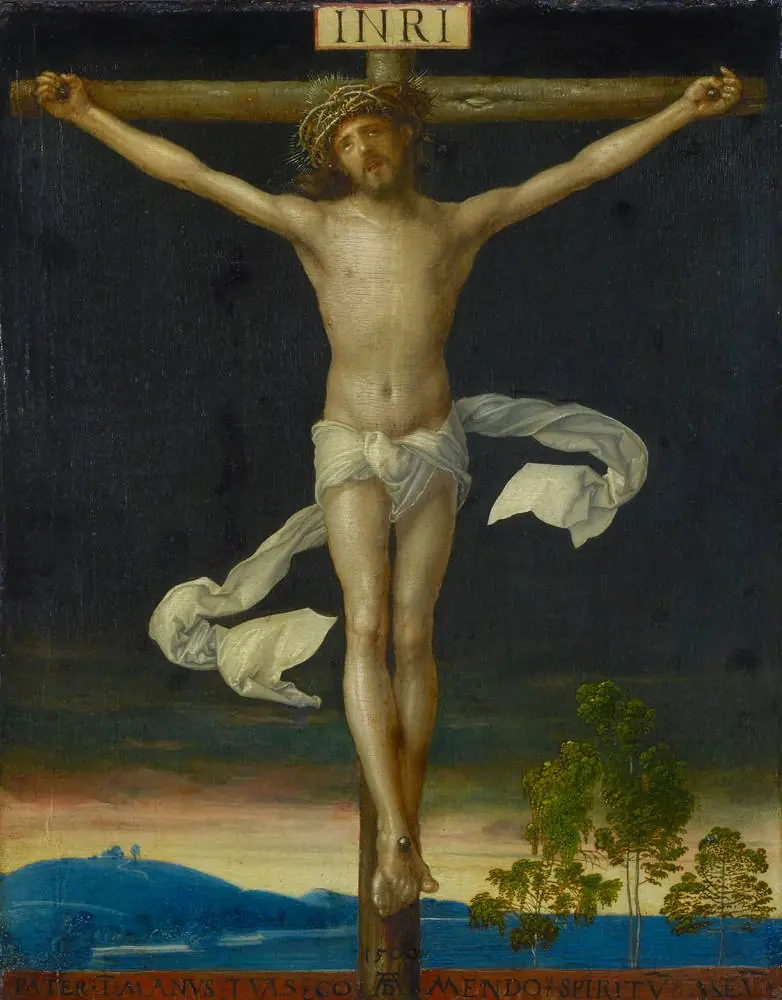
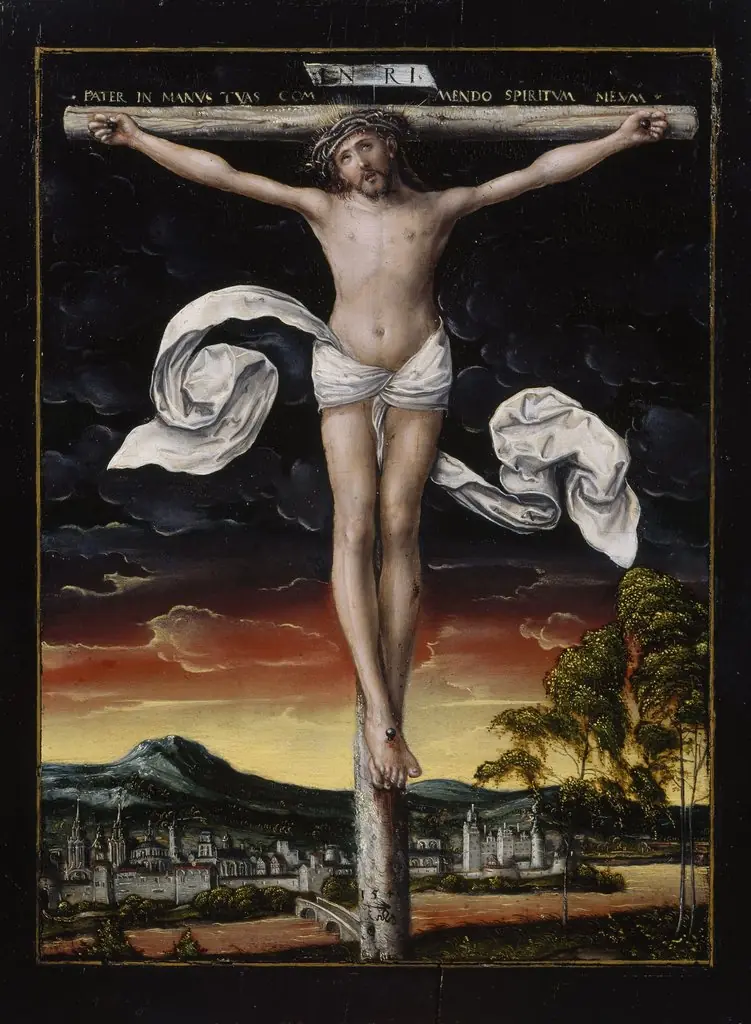
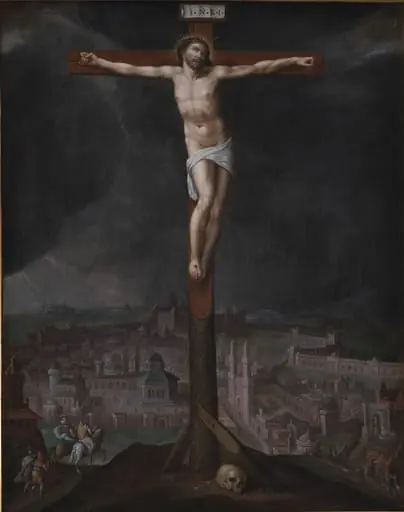
His body, clad in a white loincloth, shows the intense physical suffering of crucifixion, with detailed depictions of blood, muscles, and veins.
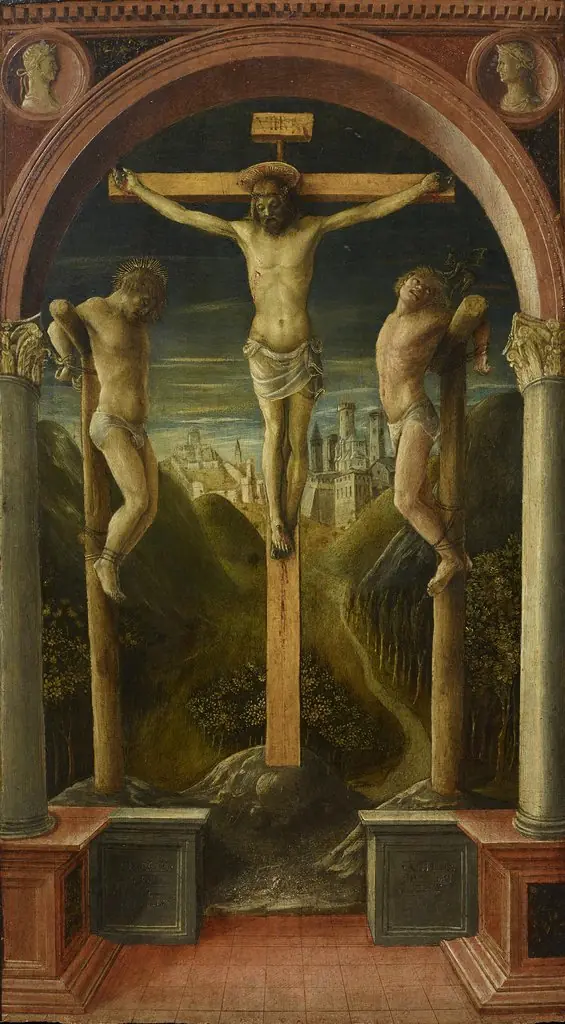
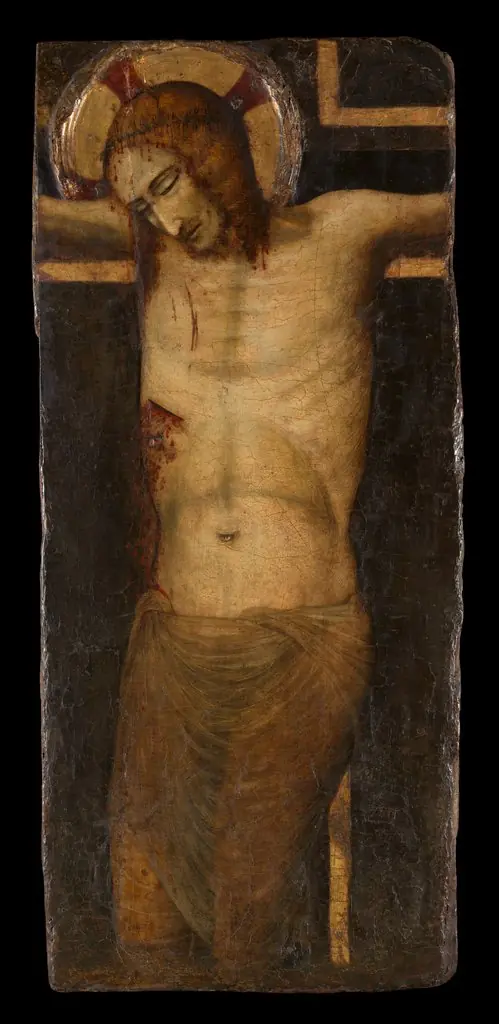
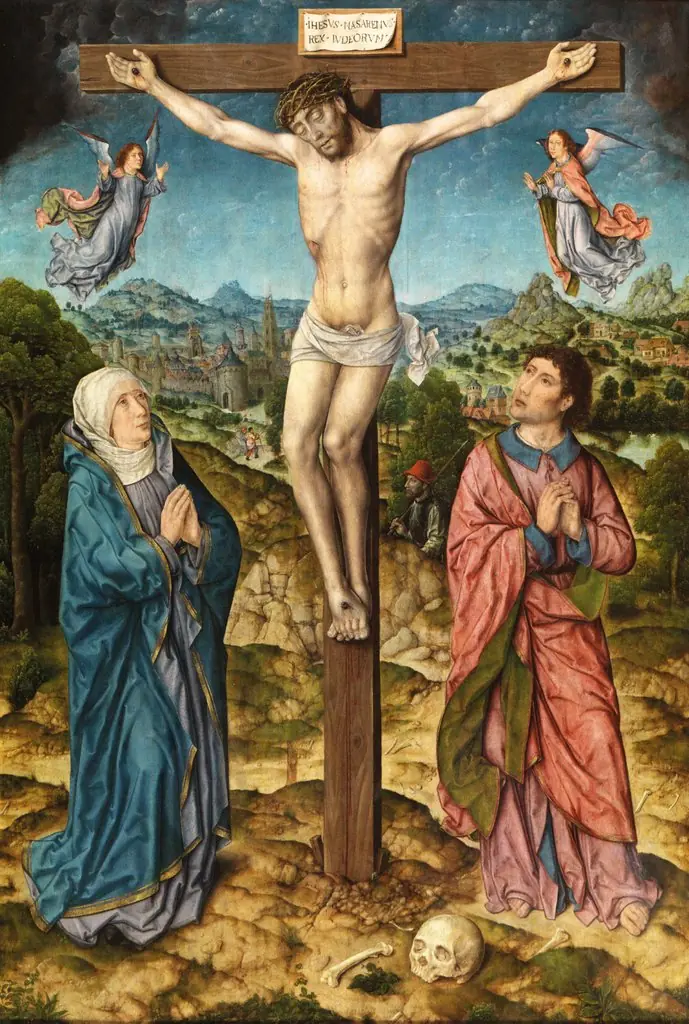
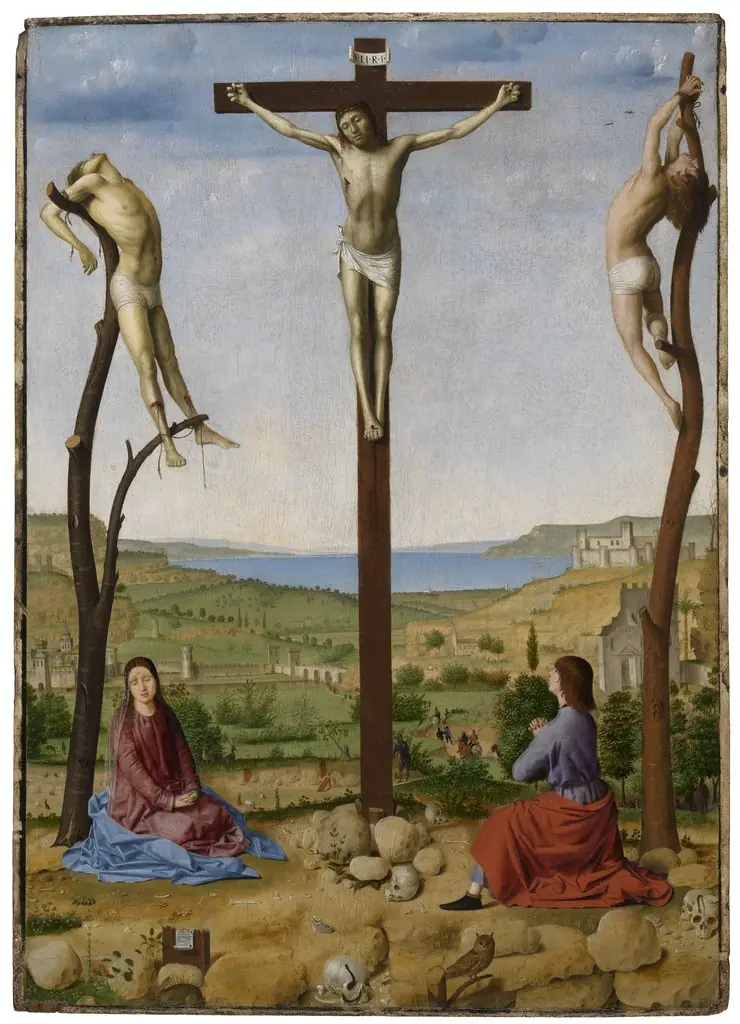
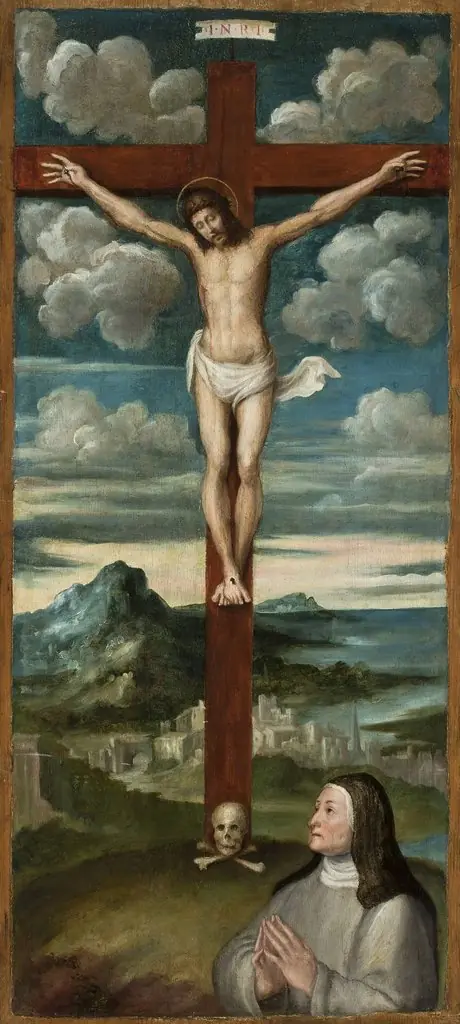
The painting portrays Saint Dismas, known as the Good Thief, crucified on a cross. His body, clad in a white loincloth, shows the intense physical suffering of crucifixion, with detailed depictions of blood, muscles, and veins. The subject is based on the biblical account of the thief who expressed repentance and was promised paradise by Jesus during their shared crucifixion (Luke 23:39-43). The artwork conveys a somber mood, emphasizing the themes of suffering, redemption, and religious devotion.
Technique & Style
The work showcases a realistic rendering of the human form and the cross, with meticulous attention to anatomical detail, wood grain, and texture. The use of chiaroscuro creates deep shadows, particularly against the dark, cloudy sky, enhancing the emotional intensity and realism of the scene.
History & Provenance
Created around 1450 by 33981_person, the painting's history prior to its current residence at the Museum of Ethnography is not detailed here.
Context
Commissioned in the mid-15th century, this piece reflects the religious art trends of its time, focusing on the emotional and physical aspects of biblical narratives to engage the viewer spiritually.
Legacy
While specific influences or subsequent artworks directly inspired by 'The Good Thief' are not highlighted, it contributes to the broader tradition of depicting crucifixion scenes in Western religious art, emphasizing the suffering of saints.
Artist & collection

 Domestic Scene
 Giacomo and Cardinal Marco, investing Andrea, Abbot of San Zeno, with his Benefice
 The Nymph of Fontainebleau
 Portrait of a Woman
 Madonna and Child with Saints in the Enclosed Garden
 Venus and Minerva
 Family Group of Four on Sofa
 Wall painting from Room H of the Villa of P. Fannius Synistor at Boscoreale