Artwork
Pietà
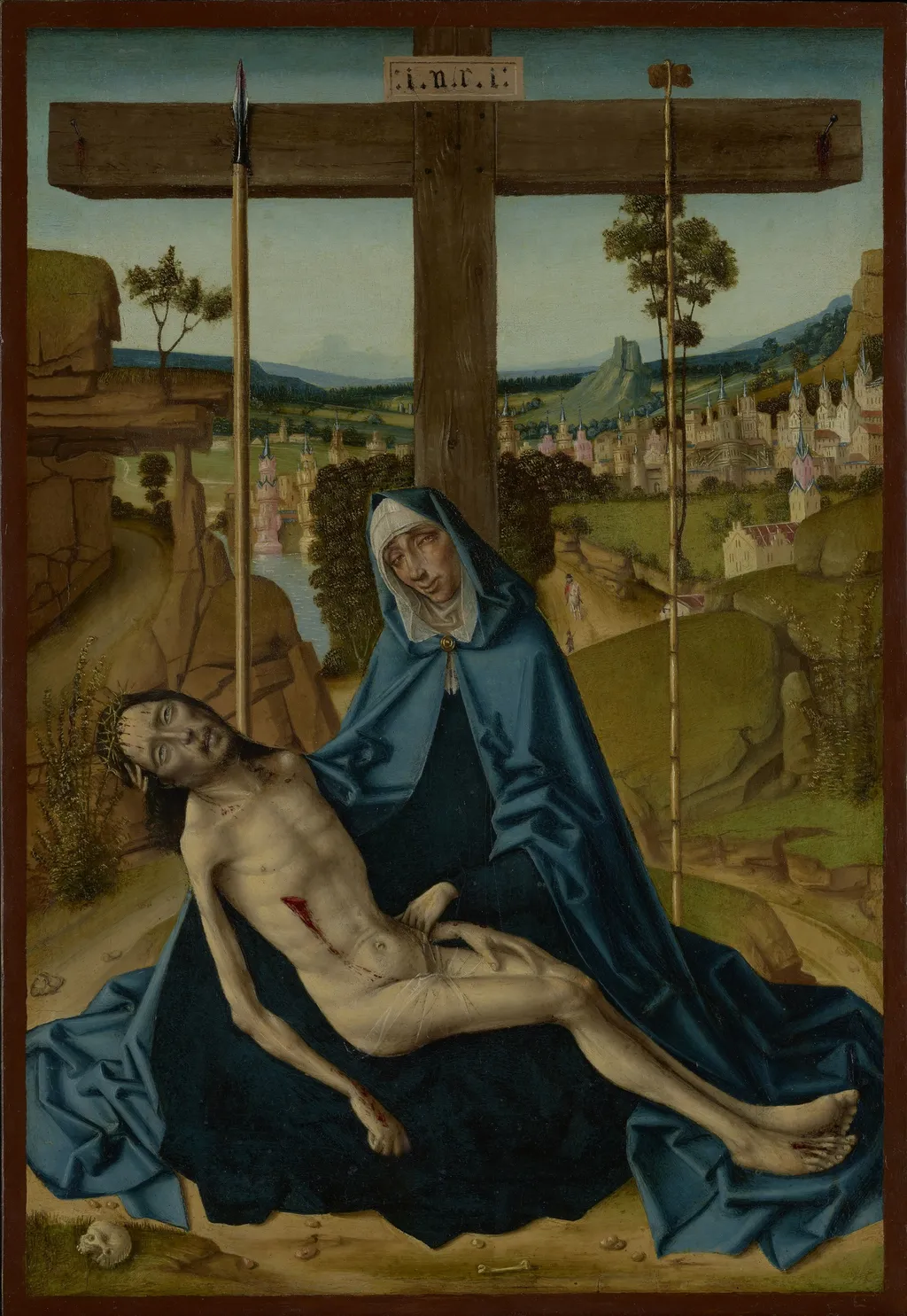
Pietà is an oil painting by the Early Renaissance artist Unknown. It dates from 1496 and is held in the collection of the J. Paul Getty Museum.
About this work
Overview
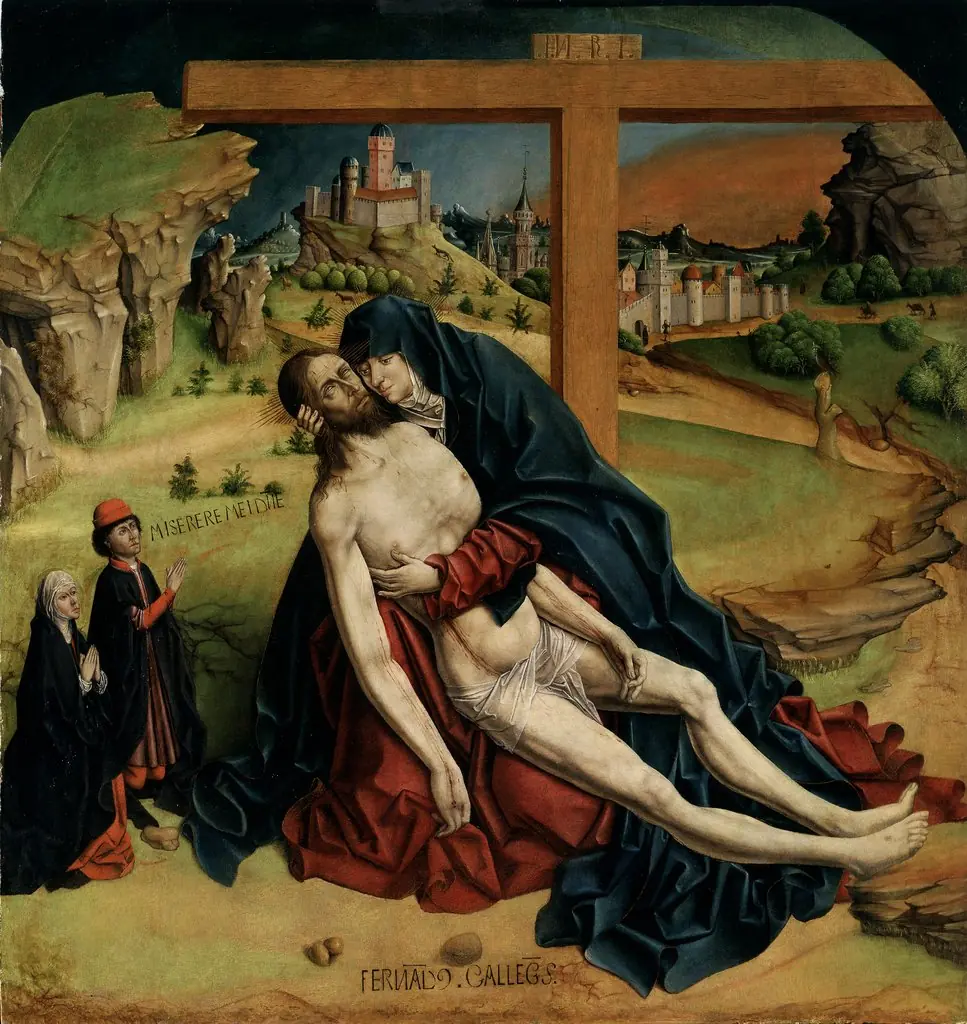
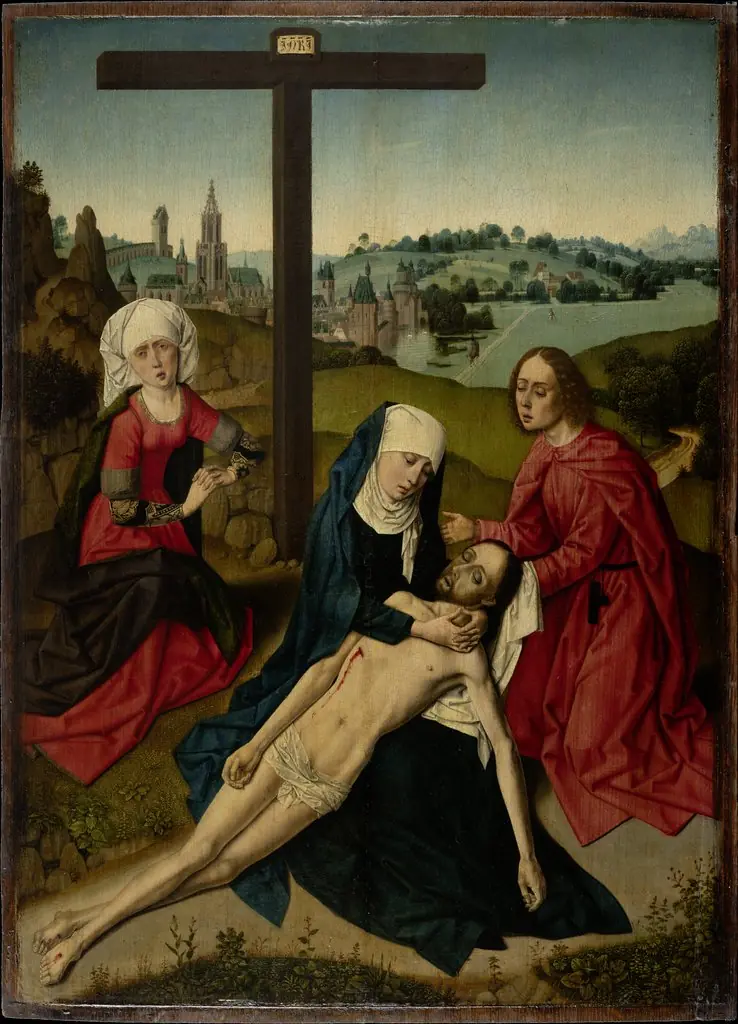
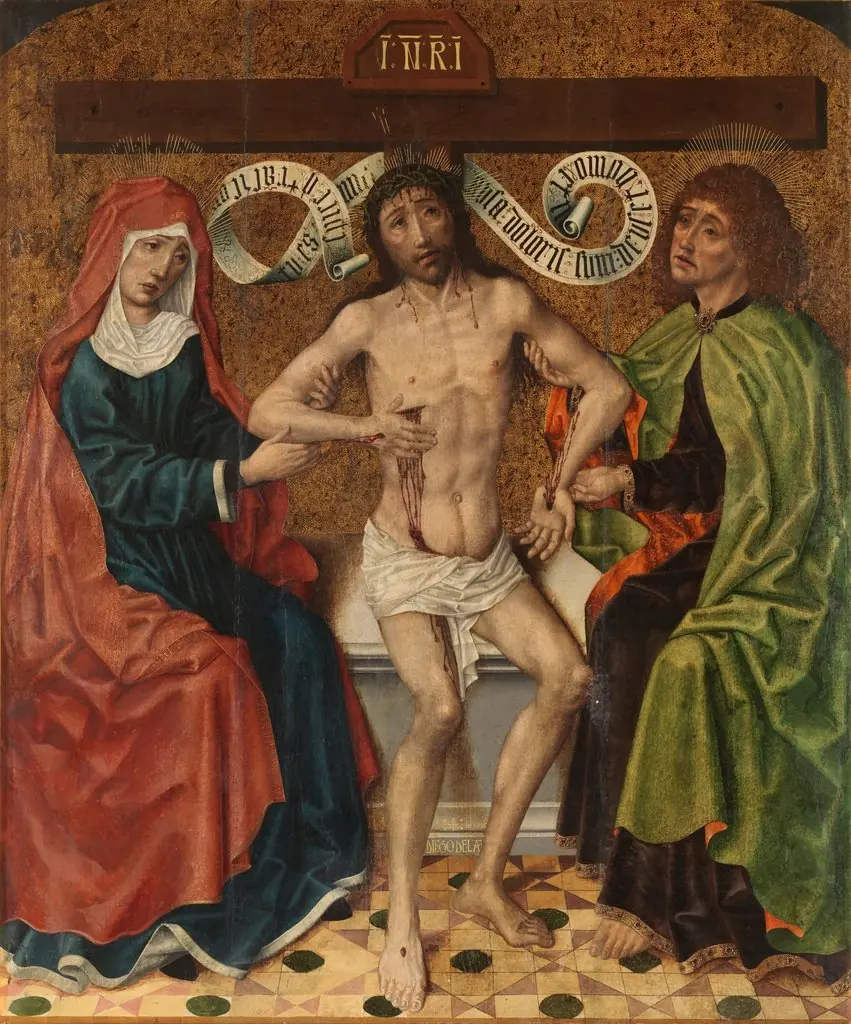
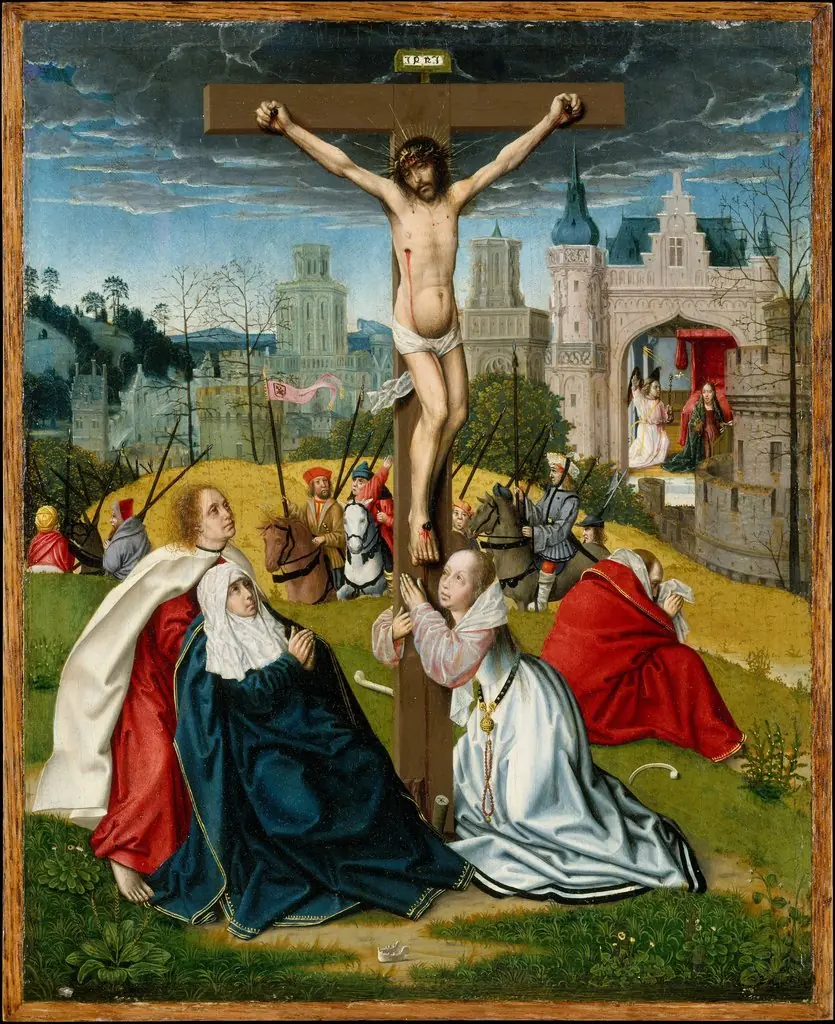
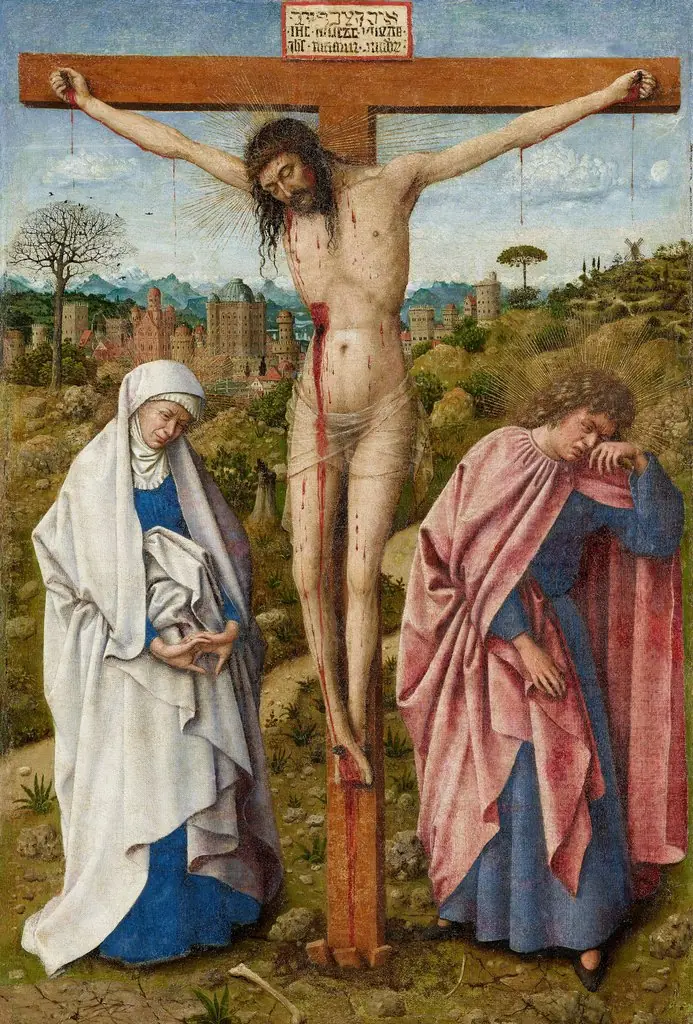
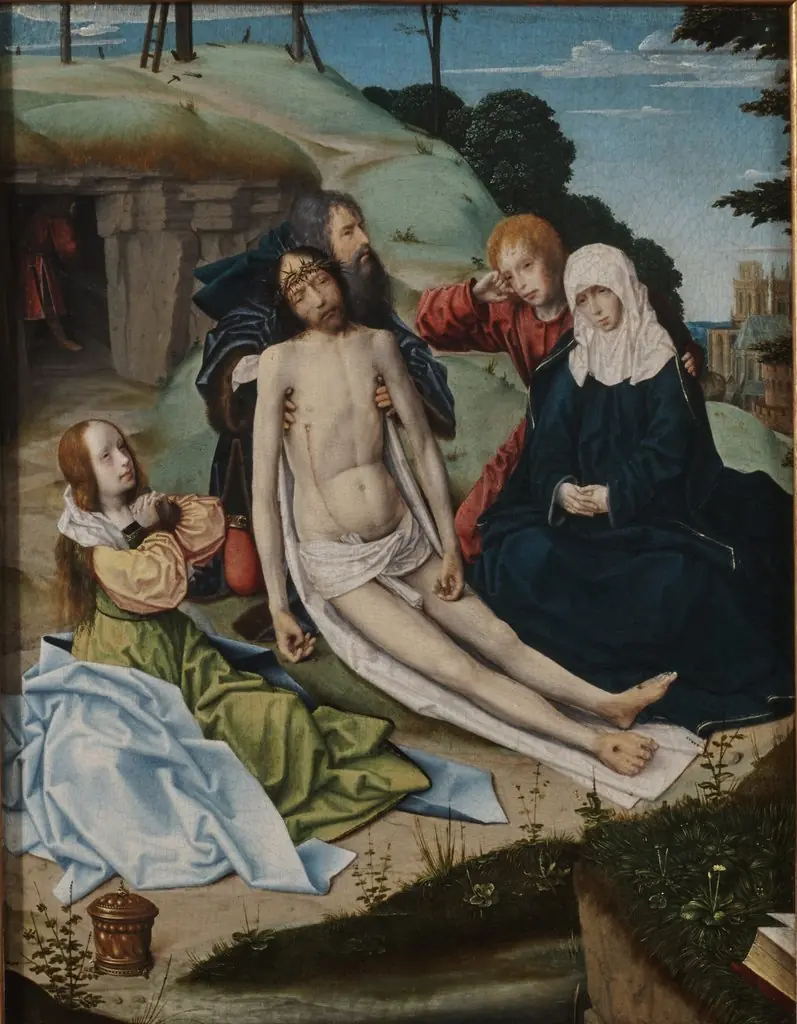
This oil painting depicts a sorrowful scene of a woman cradling the body of a dead man, set against a quiet urban landscape and a distant cross. The composition centers on their intimate physical connection, with the woman seated on the ground and the man resting across her lap. The medium allows for fine detail in skin, fabric, and texture, enhancing the emotional gravity of the moment.
Subject & Meaning
The figures represent the Virgin Mary mourning the dead Christ after the Crucifixion. The wounds on his body and the blood on his chest and legs reference the Passion, while the cross in the background confirms the religious narrative. Her downward gaze conveys quiet grief rather than dramatic anguish, emphasizing contemplative loss over theatrical sorrow.
Technique & Style
The artist employed oil paint to achieve smooth transitions and precise detail, particularly in the folds of the blue cloak and the texture of skin. Chiaroscuro is used to model the forms, casting deep shadows that define the figures against a dimmer background. The lighting draws focus to the central pair, isolating them emotionally and visually from the distant cityscape.
History & Provenance
The painting’s origin and early ownership are not documented in the provided details. Its style and subject align with devotional works from the late medieval or early Renaissance periods, though the specific artist and commission remain unidentified. No record of its movement through collections is available here.
Context
In Christian art of the period, the Pietà served as a focus for meditation on Christ’s sacrifice and Mary’s suffering. Such images were often used in private devotion or chapels, encouraging empathy and spiritual reflection. The inclusion of a city and cross situates the moment within a broader sacred history, linking personal grief to cosmic redemption.
Legacy
This work contributes to a longstanding tradition of Marian lamentation in Western art. While not widely known today, its quiet intensity reflects a shift toward humanized religious emotion, moving away from rigid iconography toward psychological depth. Its preservation allows continued study of how grief was visually rendered in pre-modern devotional contexts.
Artist & collection

 Domestic Scene
 Giacomo and Cardinal Marco, investing Andrea, Abbot of San Zeno, with his Benefice
 The Nymph of Fontainebleau
 Portrait of a Woman
 Madonna and Child with Saints in the Enclosed Garden
 Venus and Minerva
 Family Group of Four on Sofa
 Wall painting from Room H of the Villa of P. Fannius Synistor at Boscoreale