Artwork
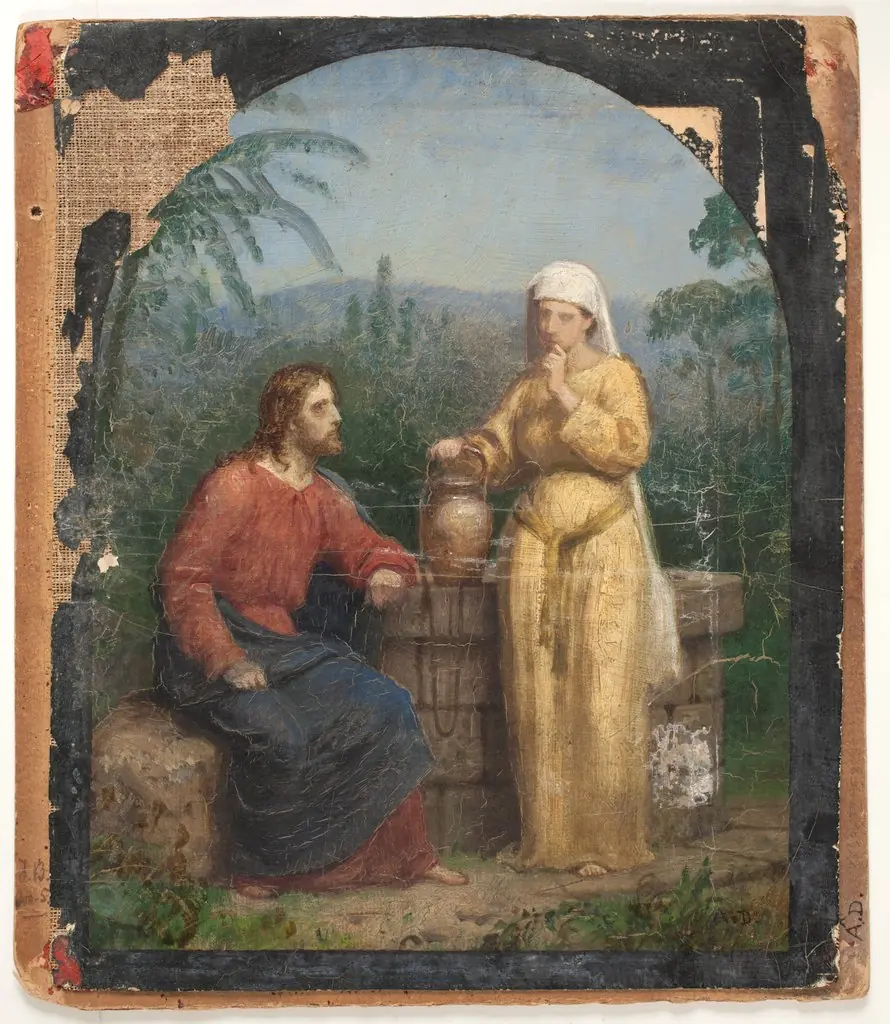
Olieskitse til Jesus og Samaritanerinden ved brønden
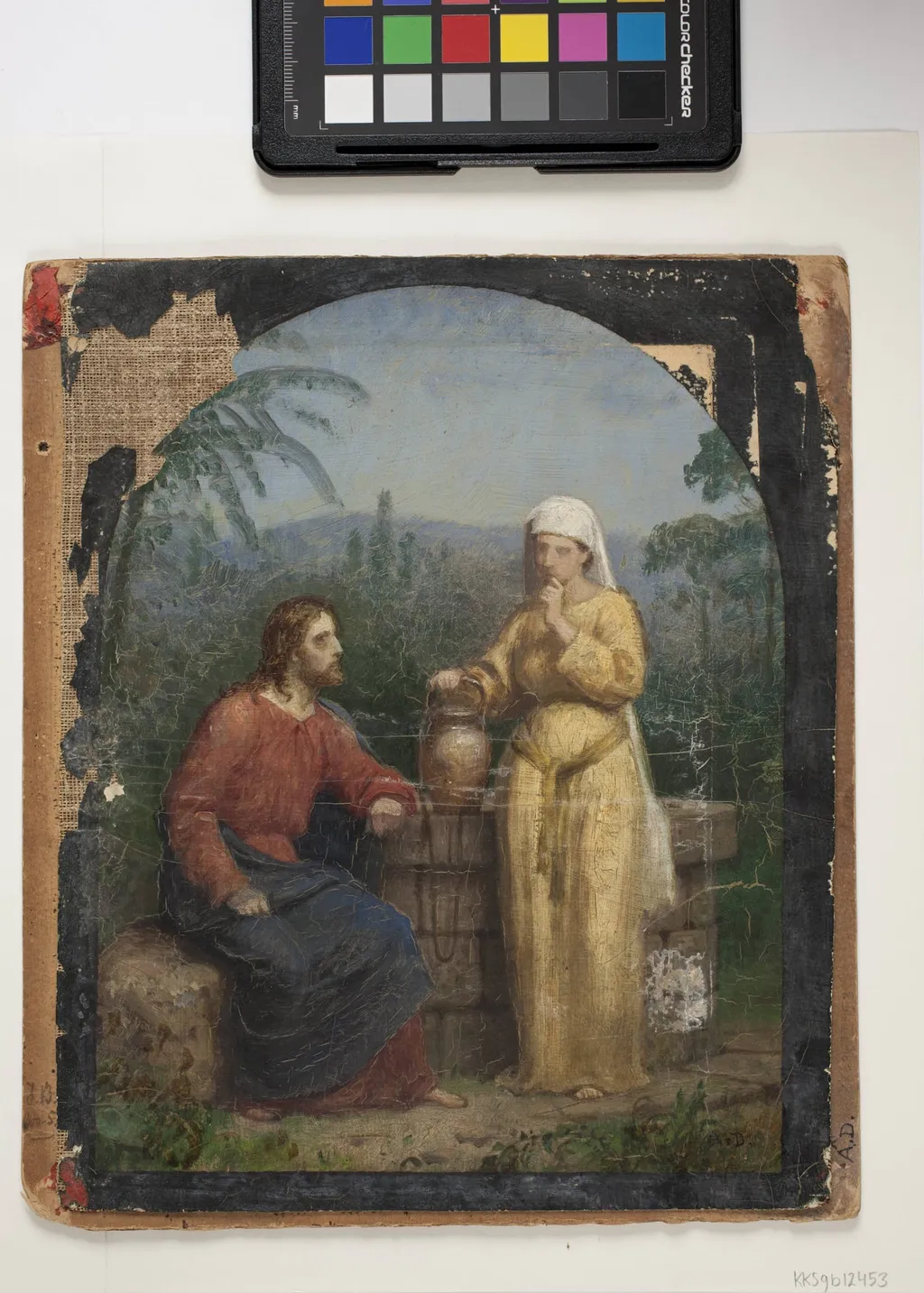
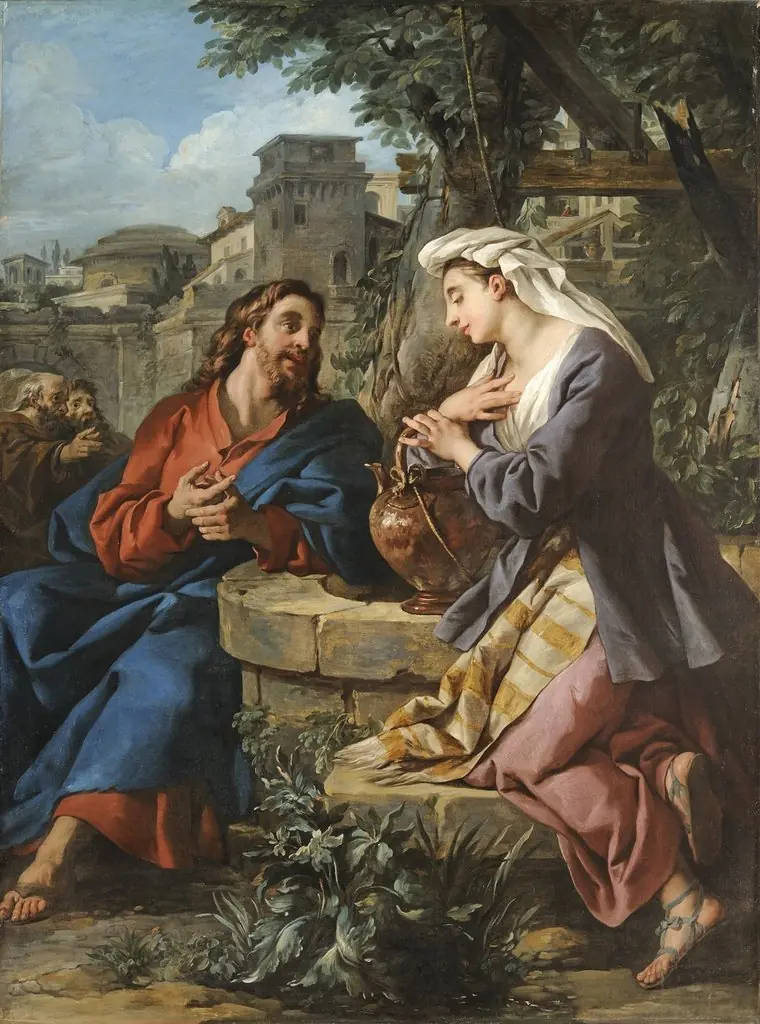
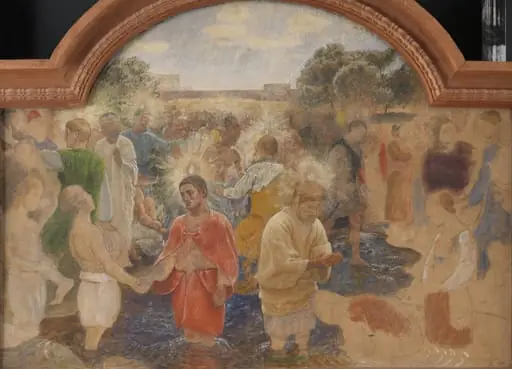
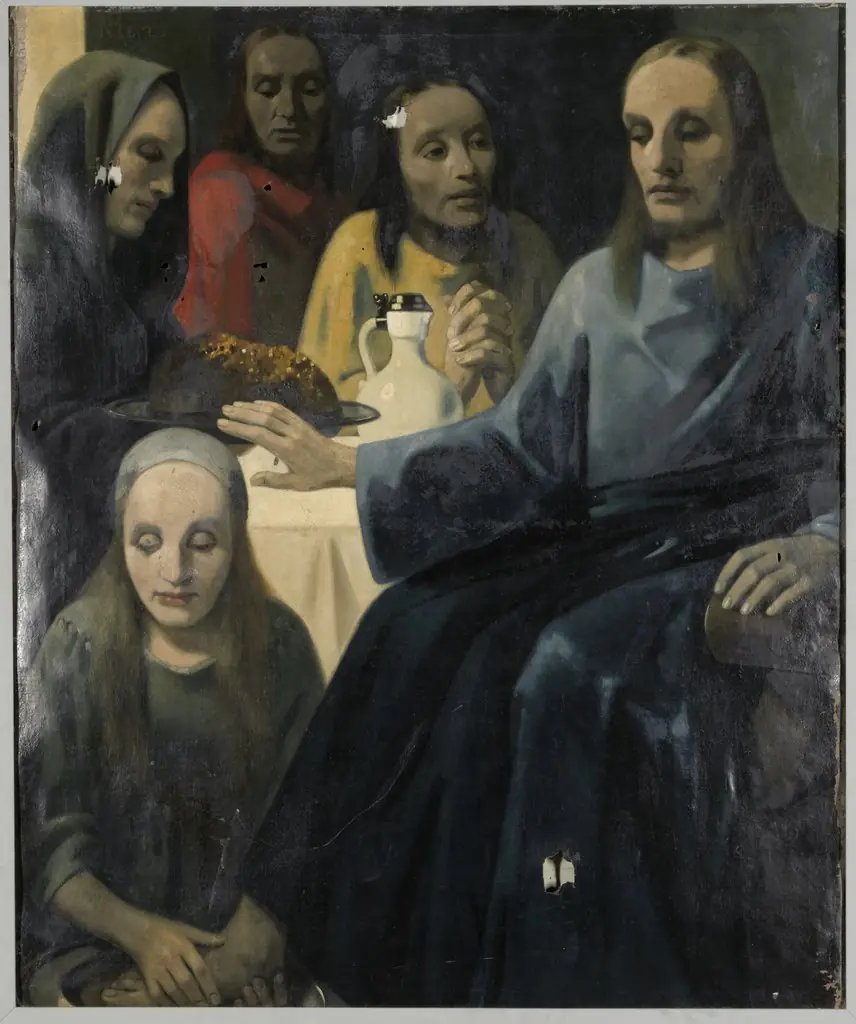
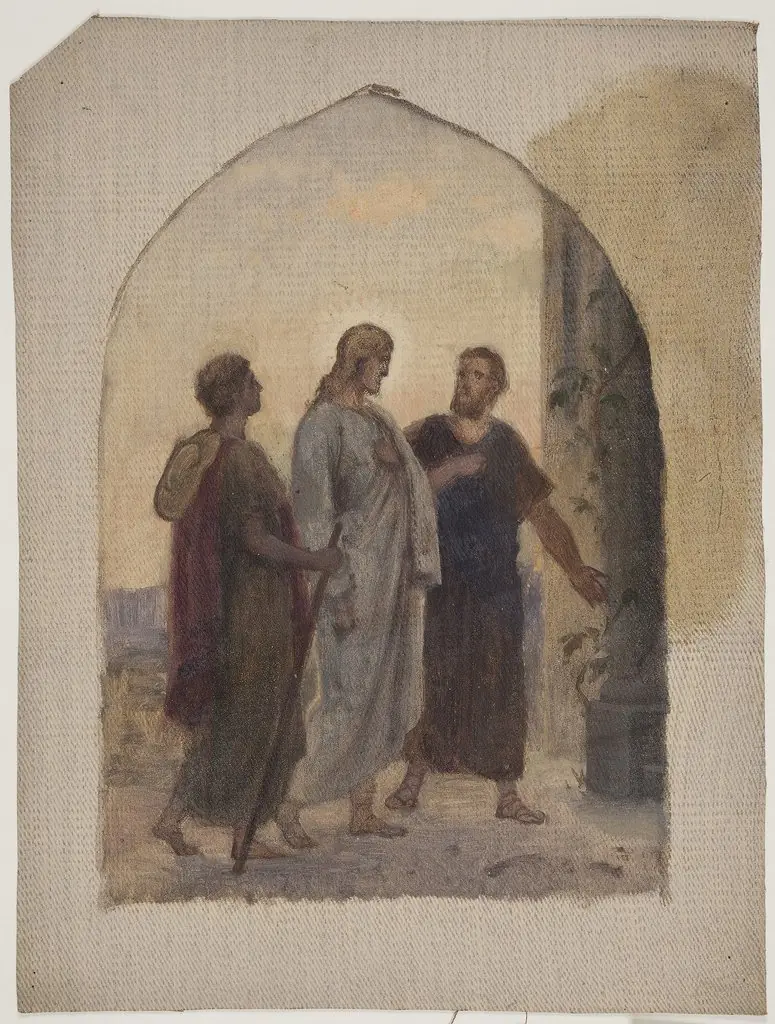
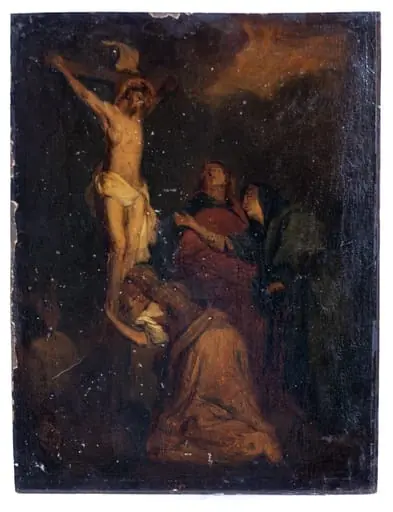
Olieskitse til Jesus og Samaritanerinden ved brønden is a photography by Unknown. It dates from 1850 and is held in the collection of the Statens Museum for Kunst. This oil sketch, dated around 1850, depicts a biblical encounter between Jesus and the Samaritan woman at a well.
About this work
Overview
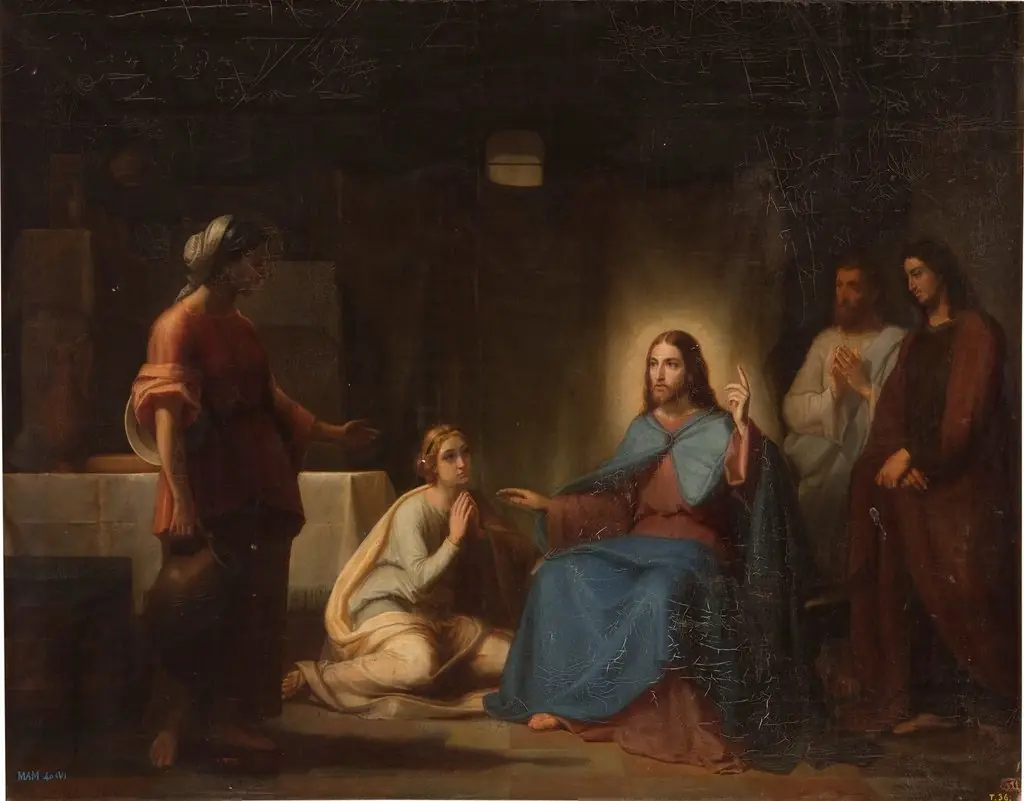
This oil sketch, dated around 1850, depicts a biblical encounter between Jesus and the Samaritan woman at a well.
This oil sketch, dated around 1850, depicts a biblical encounter between Jesus and the Samaritan woman at a well. Created by an artist identified as 34522_person, the work is part of the collection at the Museum of Ethnography. Its modest scale and unfinished appearance suggest it was a preparatory study rather than a final composition, with visible signs of aging including minor paint flaking along the edges.
Subject & Meaning
The scene illustrates the moment from the Gospel of John when Jesus, resting by a well, speaks with a Samaritan woman—a figure socially marginalized in her time. The woman’s contemplative posture, hand resting on her chin, conveys a moment of introspection, while Jesus, seated calmly, embodies quiet authority. The setting emphasizes a cross-cultural dialogue, subtly challenging social and religious boundaries of the period.
Technique & Style
The artist employs loose brushwork and a restrained palette of earth tones, with the woman’s yellow headscarf and Jesus’ red robe providing subtle focal points. Light falls evenly across the figures, avoiding dramatic chiaroscuro, instead favoring naturalistic clarity. The landscape is rendered with soft, blended strokes, suggesting distance through muted greens and blues, reinforcing the sketch’s informal, observational character.
History & Provenance
The work entered the Museum of Ethnography’s collection in the late 19th or early 20th century, likely through acquisition or donation. Its classification under ethnographic materials may reflect contemporary interest in biblical scenes as cultural artifacts rather than purely religious imagery. The artist’s identity remains obscure, with no documented exhibition history prior to its museum acquisition.
Context
In mid-19th-century Denmark, biblical subjects were frequently explored by artists seeking moral or humanist themes. This sketch aligns with a broader trend of depicting biblical narratives in everyday, naturalistic settings, moving away from grand historical styles. The choice of a Samaritan woman—a figure often overlooked in Christian art—hints at emerging interest in marginalized voices within religious storytelling.
Legacy
Though not widely exhibited or reproduced, the sketch contributes to a quieter lineage of 19th-century religious studies that prioritized emotional nuance over doctrinal spectacle. Its preservation in an ethnographic museum underscores a shift in how religious imagery was contextualized—as cultural expression rather than devotional object—reflecting evolving museum practices of the era.
Artist & collection

 Domestic Scene
 Giacomo and Cardinal Marco, investing Andrea, Abbot of San Zeno, with his Benefice
 The Nymph of Fontainebleau
 Portrait of a Woman
 Madonna and Child with Saints in the Enclosed Garden
 Venus and Minerva
 Family Group of Four on Sofa
 Wall painting from Room H of the Villa of P. Fannius Synistor at Boscoreale