Artwork
Dead Birds
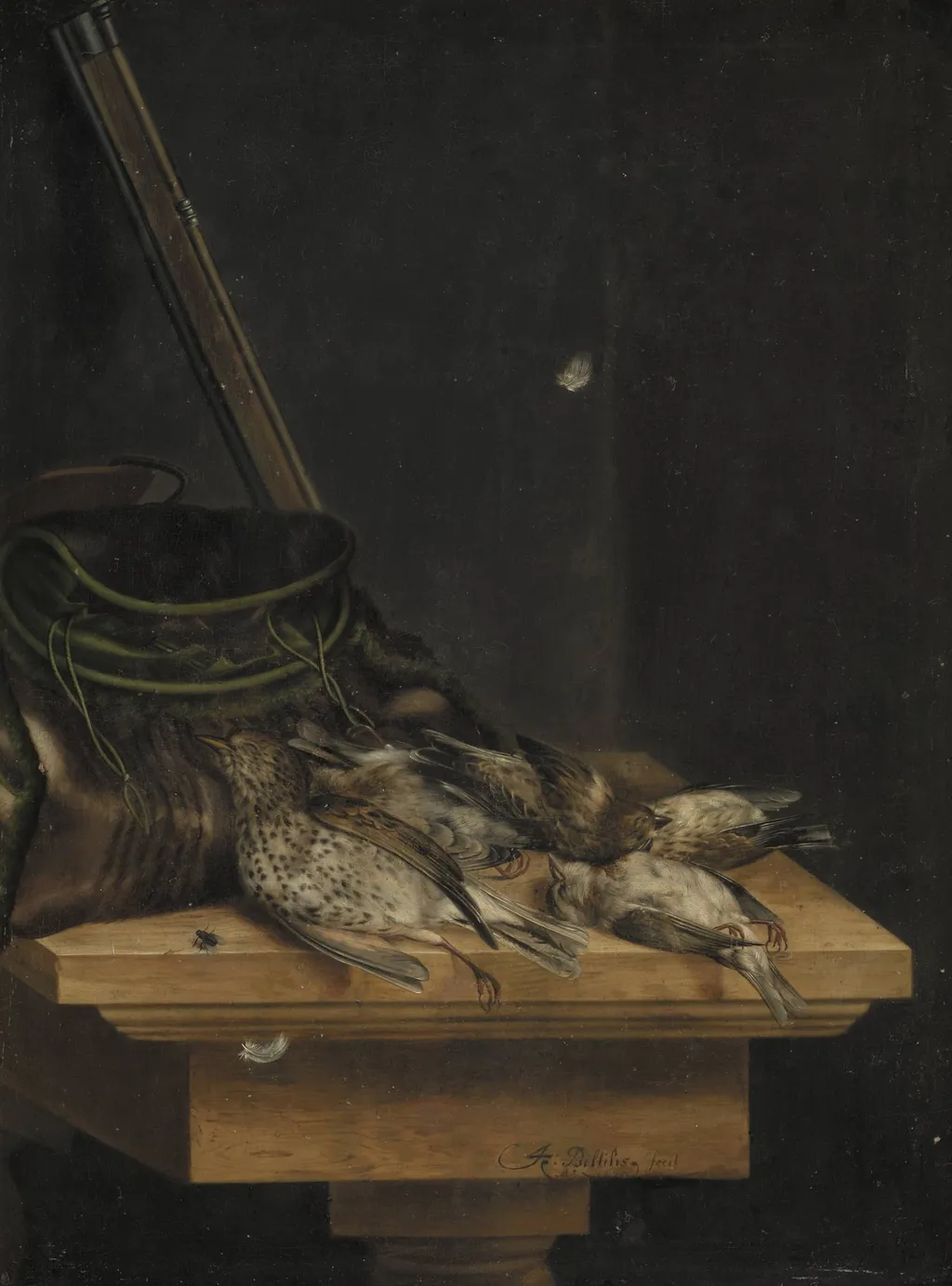
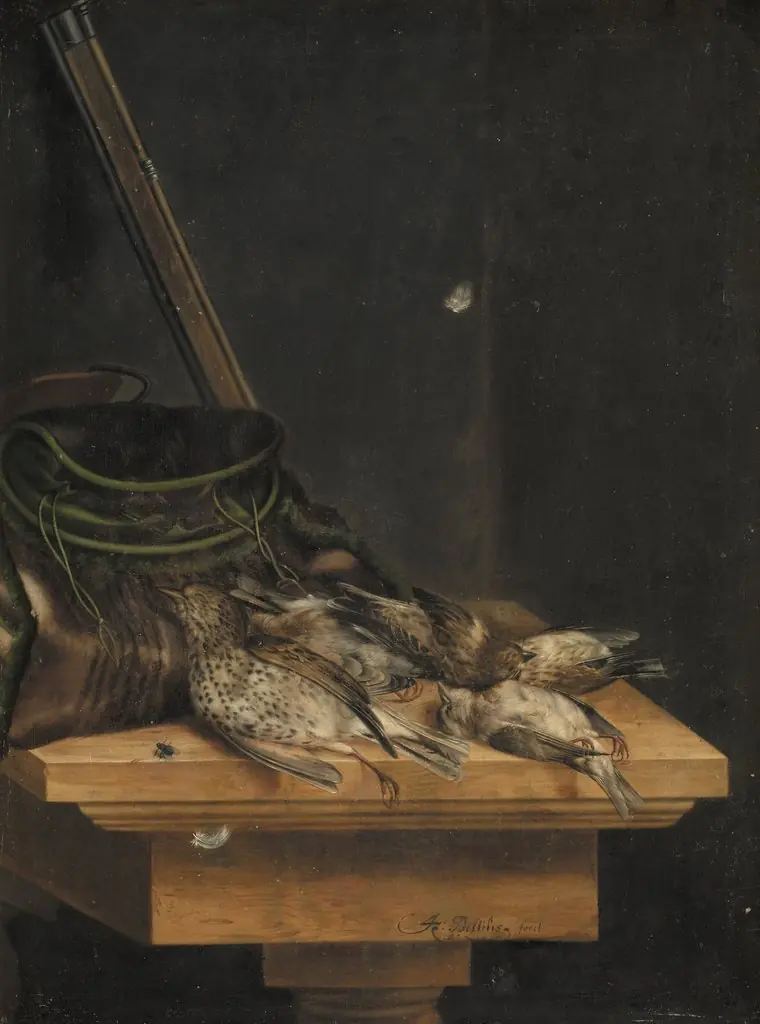
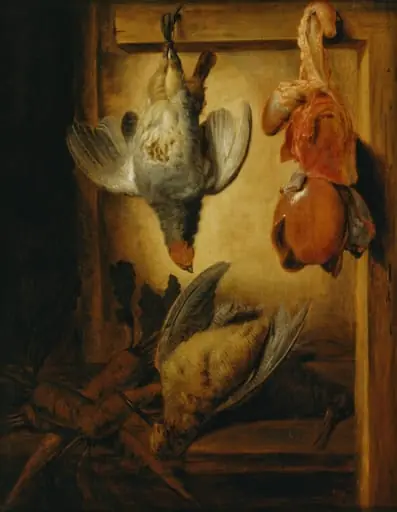
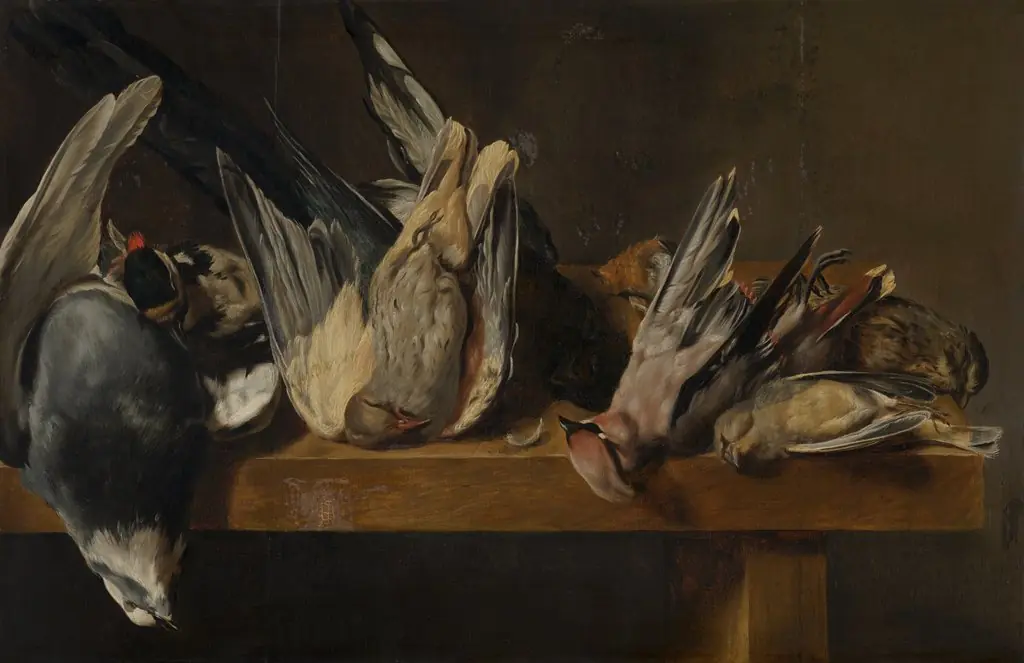
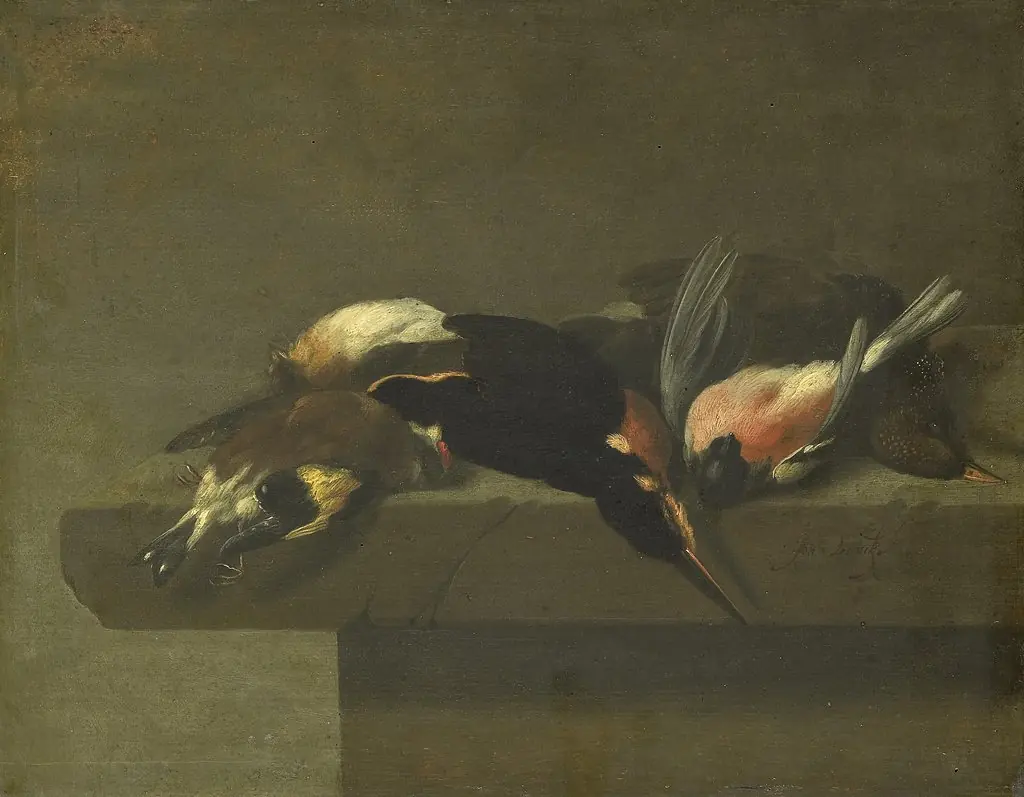
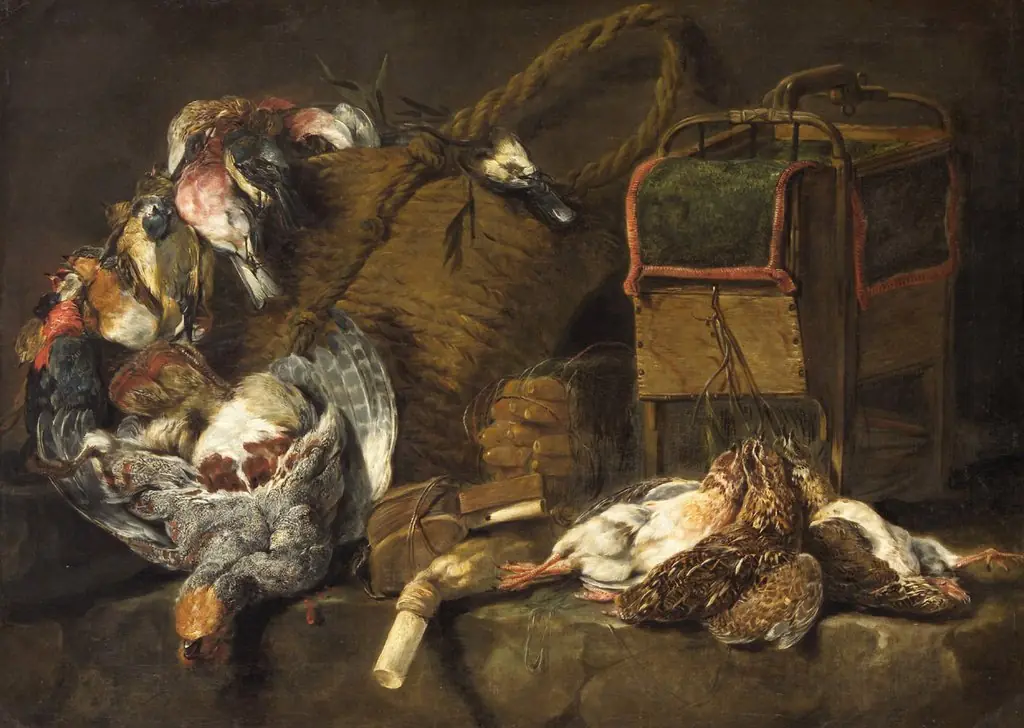
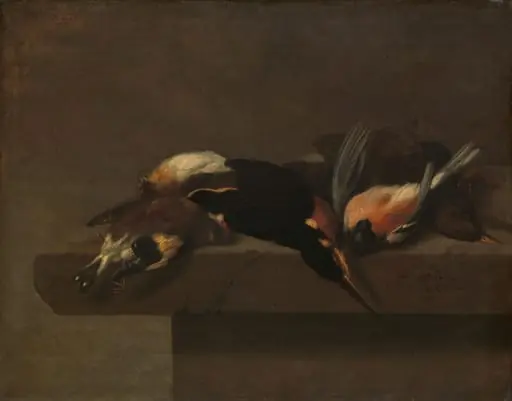
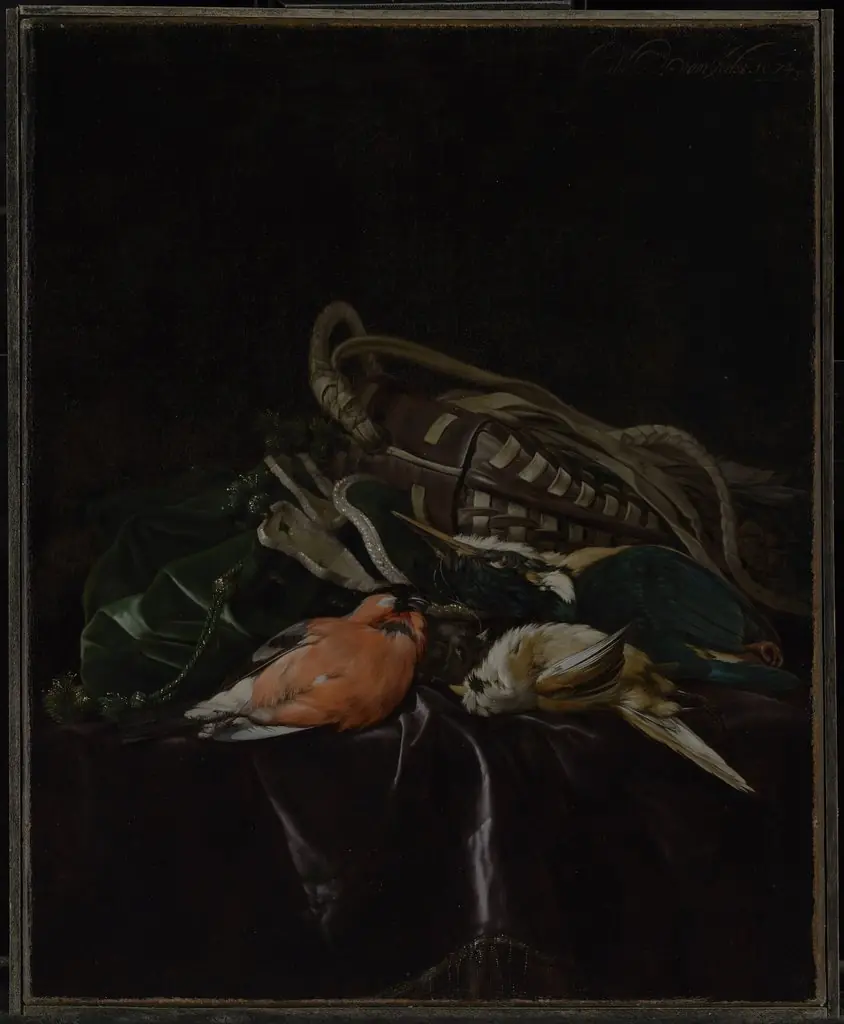
Dead Birds is a photography by the Baroque artist Unknown. It dates from 1670 and is held in the collection of the Statens Museum for Kunst. Created in 1670 by an artist identified only as 34839_person, this still life depicts three deceased birds arranged on a wooden surface.
About this work
Overview
Created in 1670 by an artist identified only as 34839_person, this still life depicts three deceased birds arranged on a wooden surface.
Created in 1670 by an artist identified only as 34839_person, this still life depicts three deceased birds arranged on a wooden surface. The composition is spare yet deliberate, with a hunting rifle resting against a dark background. A beetle crawls near the birds, and scattered feathers suggest recent movement. The work is held in the collection of the Museum of Ethnography, where it is studied for its quiet realism and technical precision.
Subject & Meaning
The painting presents dead birds not as trophies but as quiet remnants of a hunted world. Their stillness, paired with the rifle and loose feathers, implies a recent act of violence now suspended in silence. The presence of a beetle—a scavenger—hints at natural cycles of decay and renewal. The scene avoids overt symbolism, instead inviting contemplation of mortality and the ordinary aftermath of human intervention in nature.
Technique & Style
The artist employs chiaroscuro to define form through sharp contrasts between light and shadow. Feathers are rendered with meticulous detail, capturing individual barbs and texture, while the wooden table gains depth through subtle gradations of tone. The dark background isolates the subject, heightening focus on surface qualities: the roughness of plumage, the smoothness of wood, and the glossy sheen of the rifle’s metal. These choices reflect a close observation of material reality.
History & Provenance
The painting has remained in institutional custody since at least the early 20th century, entering the Museum of Ethnography’s collection through documented acquisition. Its attribution to 34839_person is based on stylistic analysis and archival records, though little is known of the artist’s life. The work’s survival in good condition suggests it was valued early for its technical skill rather than its subject matter.
Context
In late 17th-century Europe, still lifes often conveyed moral or religious themes, but this work avoids overt allegory. Its focus on ordinary, unidealized objects aligns with a growing interest in empirical observation. The inclusion of a hunting rifle situates the scene within domestic or rural life, where hunting was both necessity and pastime. The painting reflects a broader shift toward naturalism in Northern European art.
Legacy
Though not widely exhibited, the painting is cited in studies of early naturalism and the use of chiaroscuro in non-religious contexts. Its restrained composition and attention to texture influenced later still-life painters who sought to elevate everyday subjects through precise observation. It remains a quiet example of how ordinary moments, rendered with care, can hold enduring visual weight.
Artist & collection

 Domestic Scene
 Giacomo and Cardinal Marco, investing Andrea, Abbot of San Zeno, with his Benefice
 The Nymph of Fontainebleau
 Portrait of a Woman
 Madonna and Child with Saints in the Enclosed Garden
 Venus and Minerva
 Family Group of Four on Sofa
 Wall painting from Room H of the Villa of P. Fannius Synistor at Boscoreale