Artwork
Still Life with Dead Birds and Game Bag
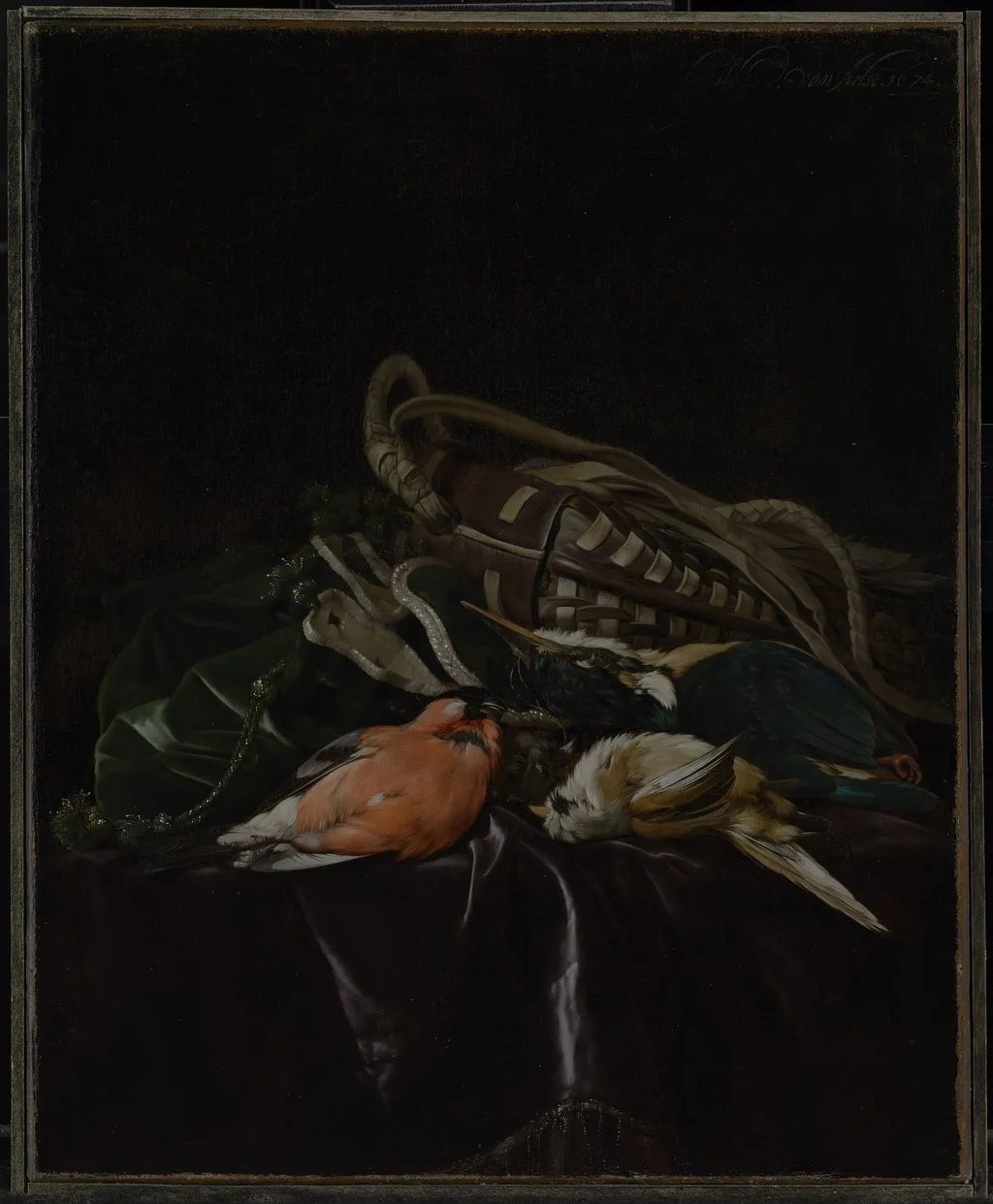
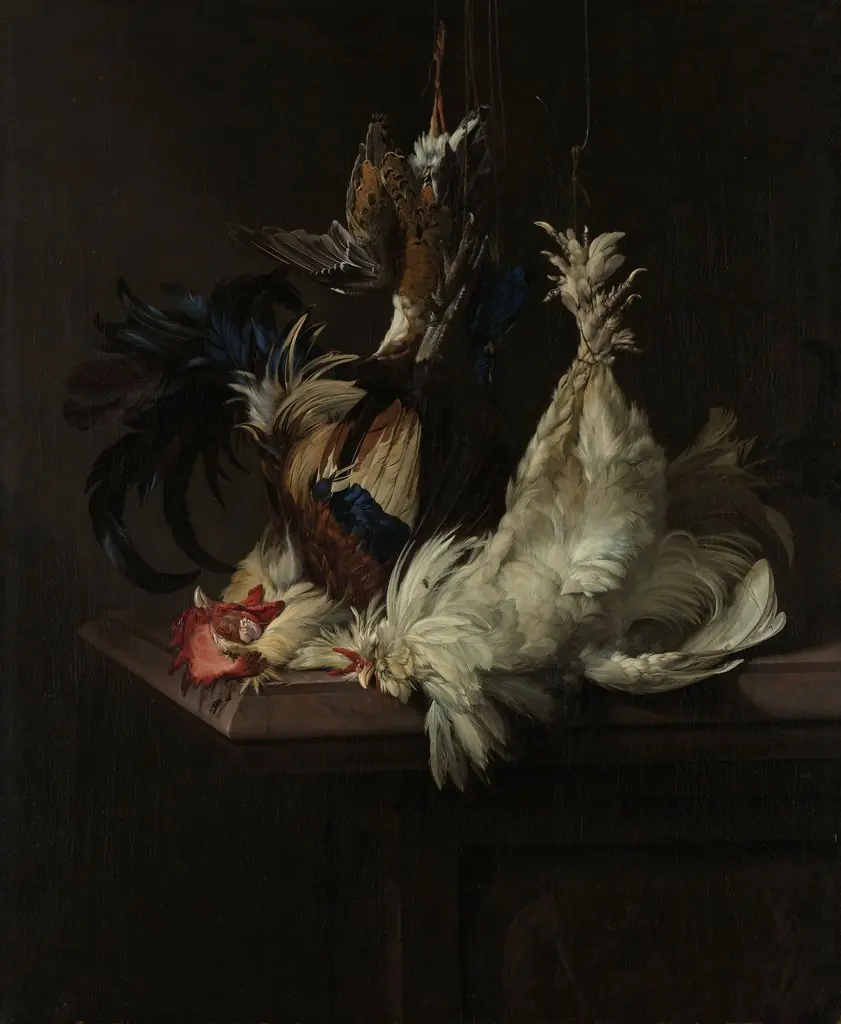
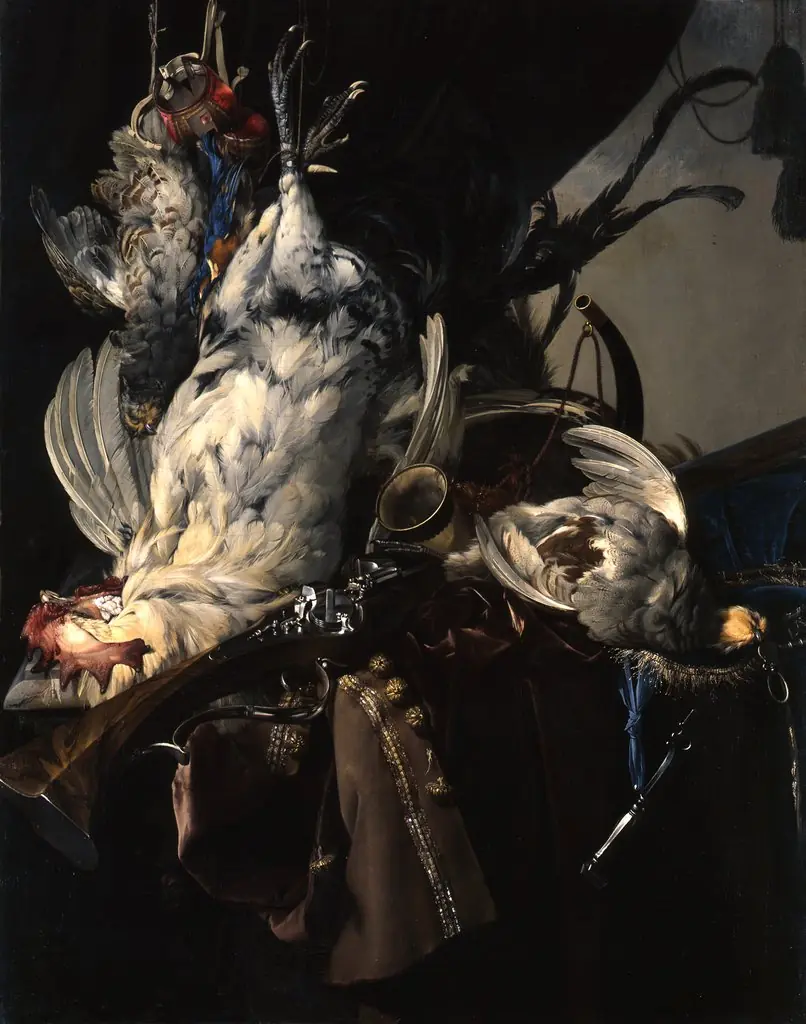
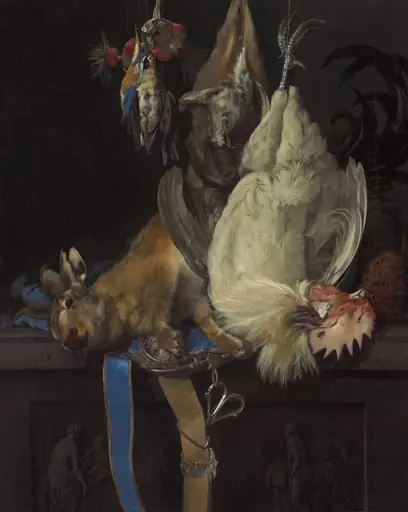
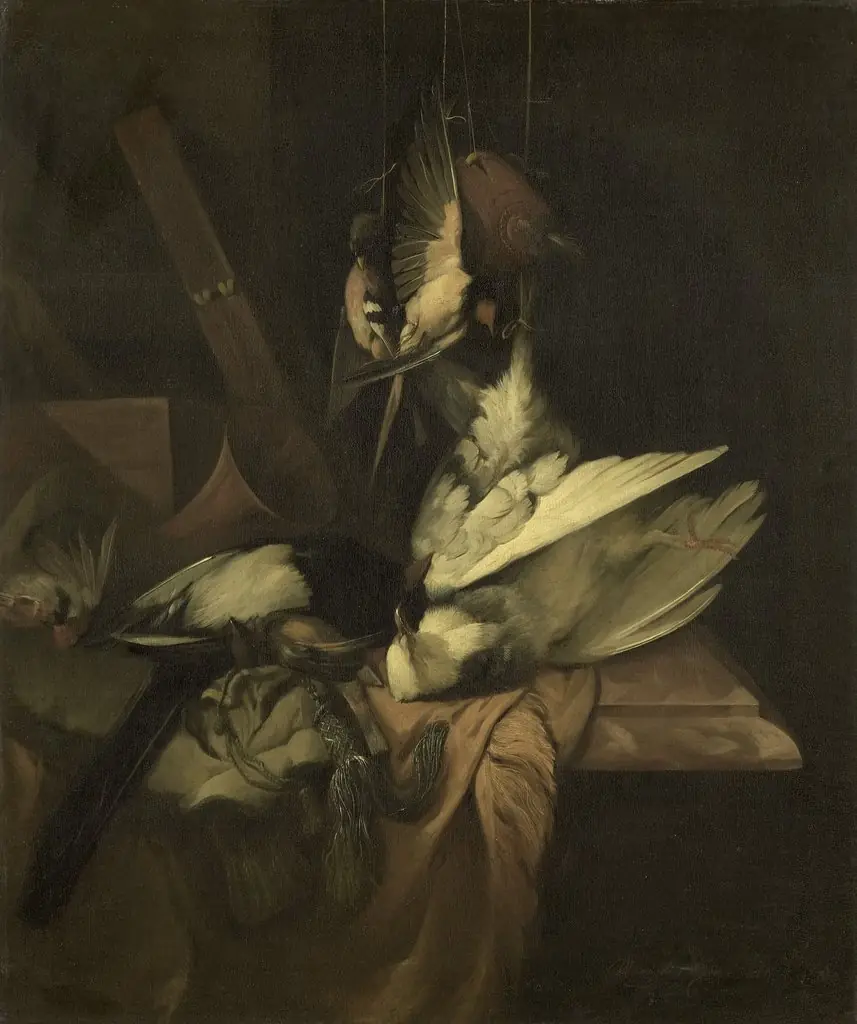
Still Life with Dead Birds and Game Bag is an oil painting by the Dutch Golden Age artist Willem van Aelst. It dates from 1674 and is held in the collection of the Centraal Museum.
About this work
Overview
Painted in 1674 by Willem van Aelst, this oil on canvas still life presents a meticulously arranged assembly of hunted game and hunting accoutrements.
Painted in 1674 by Willem van Aelst, this oil on canvas still life presents a meticulously arranged assembly of hunted game and hunting accoutrements. It reflects the Dutch Golden Age’s fascination with natural detail and material precision. The composition centers on a collection of birds and a leather game bag, rendered with clinical clarity against a dark, unobtrusive backdrop that isolates the subjects and enhances their tactile presence.
Subject & Meaning
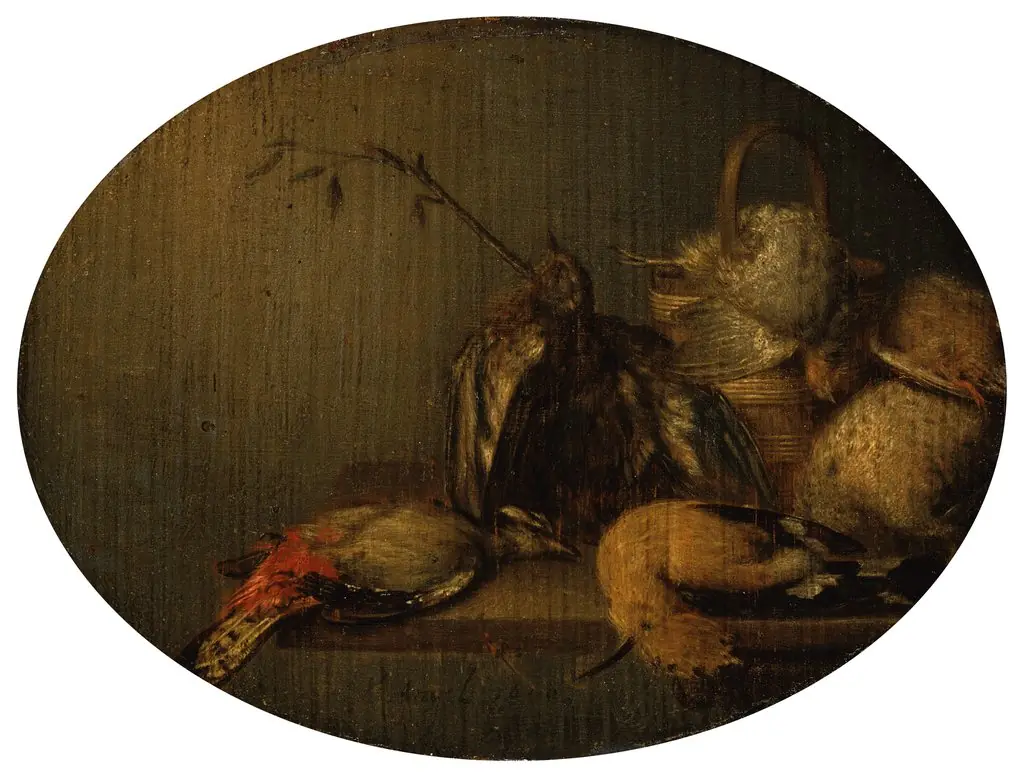
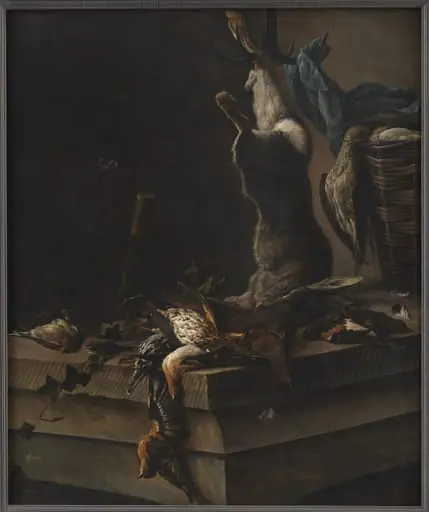
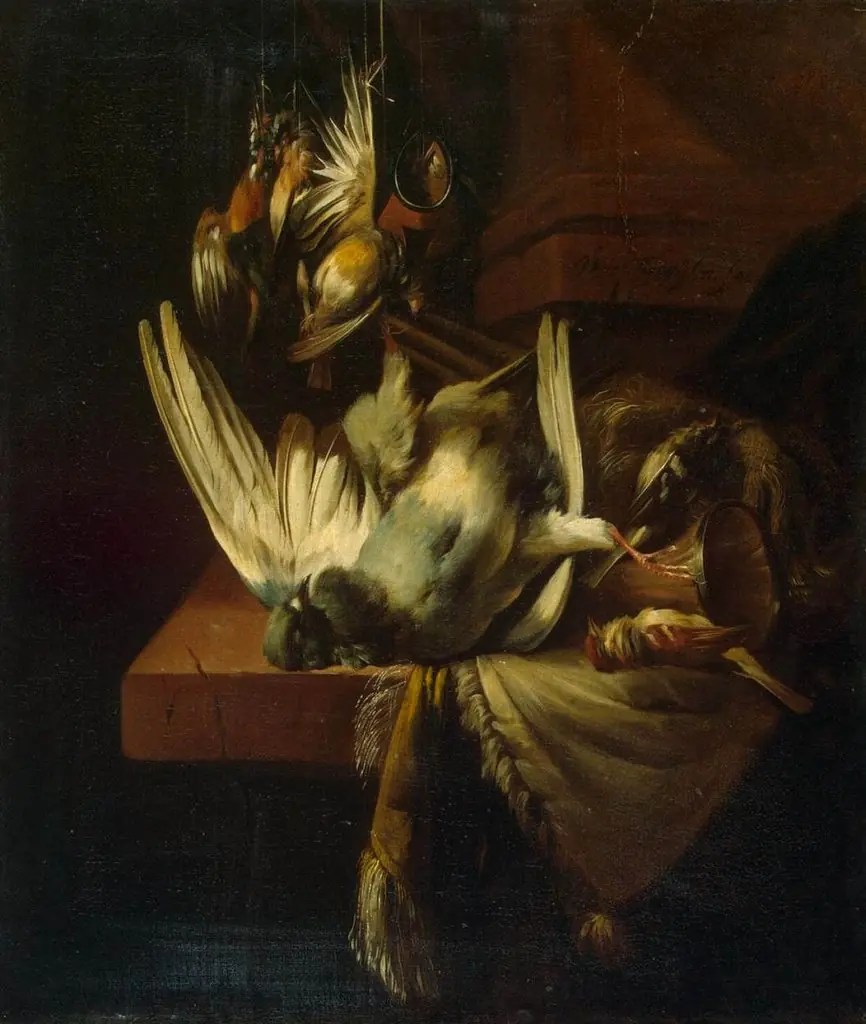
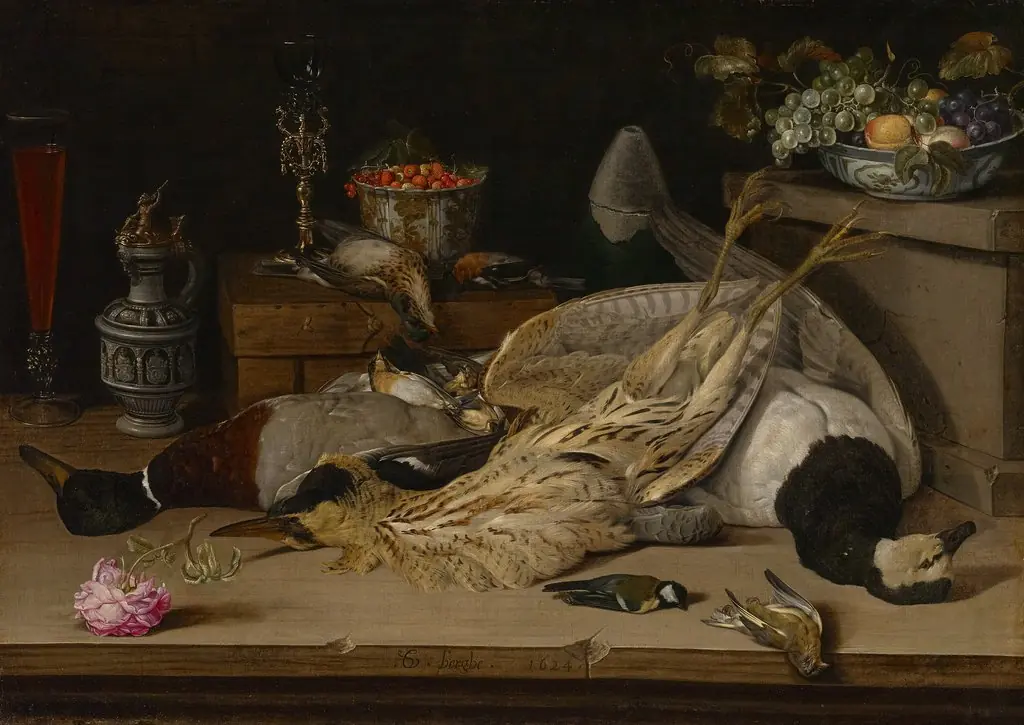
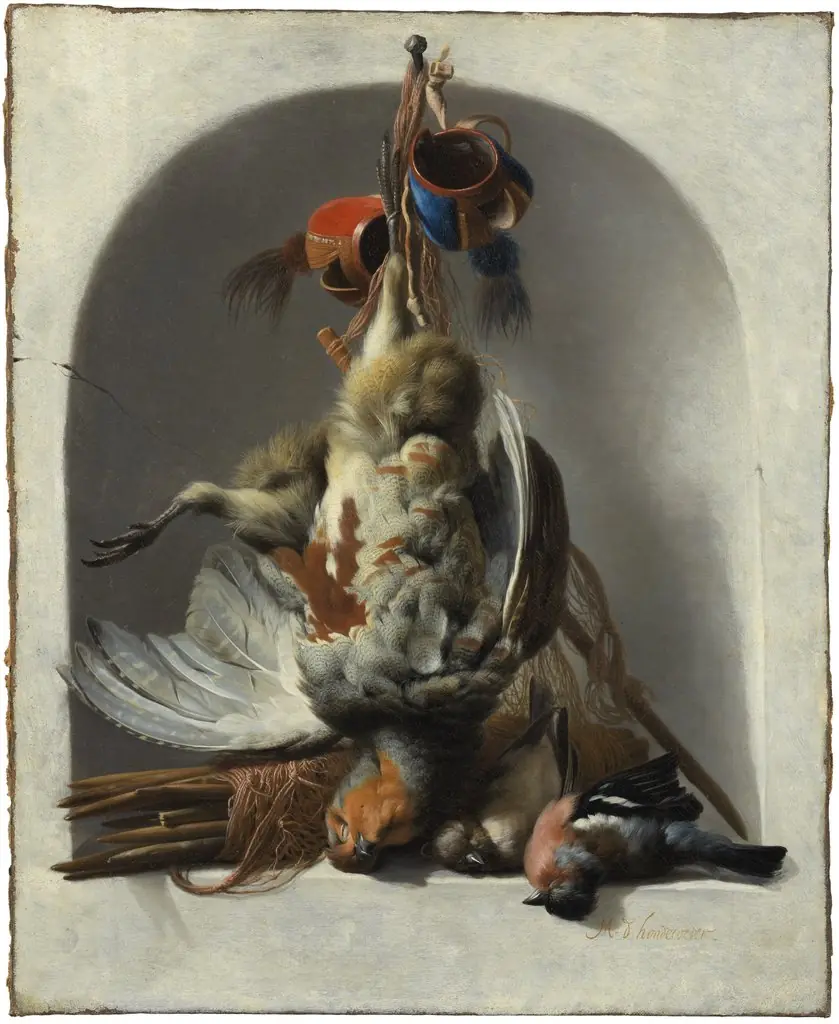
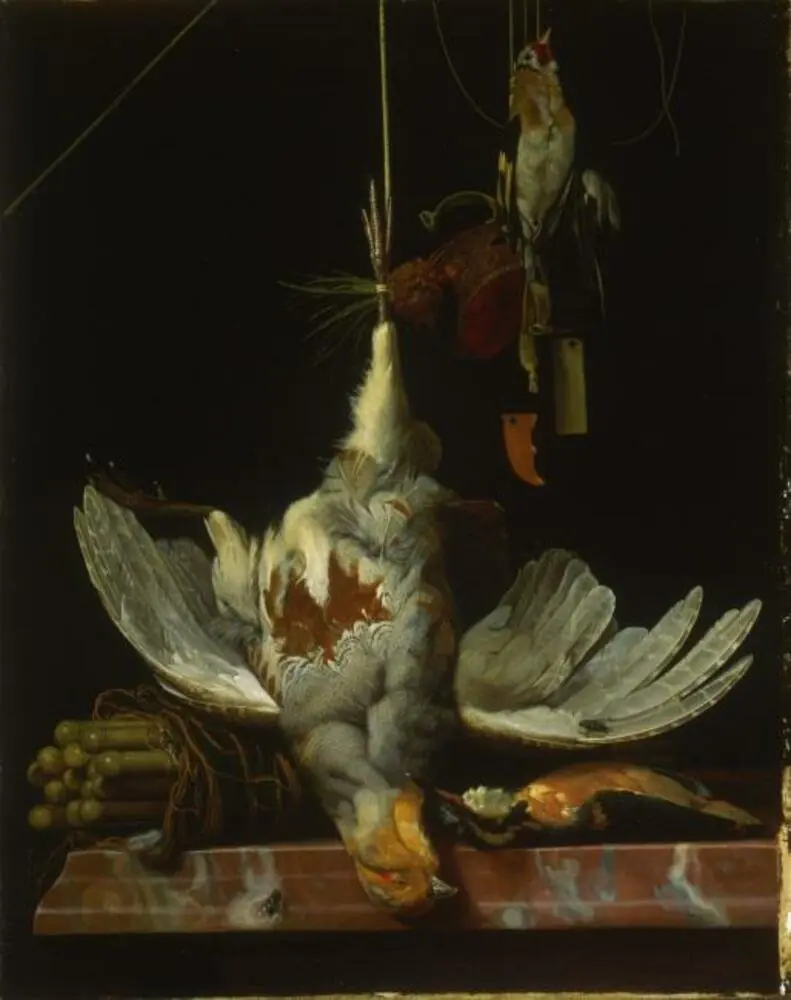
The painting includes specific bird species such as the kingfisher and bullfinch, alongside a game bag fastened with a gold chain and draped in green fabric. These elements suggest the aftermath of a hunt, not as celebration but as quiet documentation. The inclusion of luxury items like the chain may imply the social status of the hunter, while the birds’ stillness evokes themes of mortality and the transience of life, common in Dutch still-life traditions.
Technique & Style
Van Aelst employs chiaroscuro to model the birds’ feathers and the bag’s leather with sharp contrasts between light and shadow. Each feather is rendered with fine brushwork, capturing subtle gradations of color and texture. The fabric of the bag is painted with attention to weave and fold, while the metallic chain reflects ambient light with restrained realism. The background remains void of detail, focusing all visual weight on the objects’ physical presence.
History & Provenance
The painting entered the collection of the J. Paul Getty Museum in the 20th century, having passed through private European collections since its creation. Its attribution to Willem van Aelst is supported by stylistic consistency with his other known works from the 1670s. Documentation traces its ownership to Dutch collectors who favored genre-specific still lifes, though its exact provenance prior to the 1800s remains partially undocumented.
Context
In mid-17th century Holland, still lifes often served as moral or social reflections disguised as decorative art. Hunting scenes, particularly those featuring game, appealed to urban elites who associated the sport with nobility and control over nature. Van Aelst’s work aligns with this trend, balancing realism with symbolic undertones, while avoiding overt religious or allegorical messaging common in earlier Northern European art.
Legacy
Van Aelst’s precision in depicting feathers and textiles influenced later Dutch still-life painters, particularly in the treatment of animal textures. While not widely exhibited during his lifetime, his works gained recognition in the 19th and 20th centuries as exemplars of technical discipline. Today, this painting remains a reference point for studies of material representation and the quiet symbolism embedded in everyday objects of the Dutch Golden Age.
Artist & collection
Artist
Willem van Aelst (16 May 1627 – buried 22 May 1683) was a Dutch Golden Age artist who specialized in still-life painting with flowers or game.