Artwork
Arum italicum (italiensk arum)
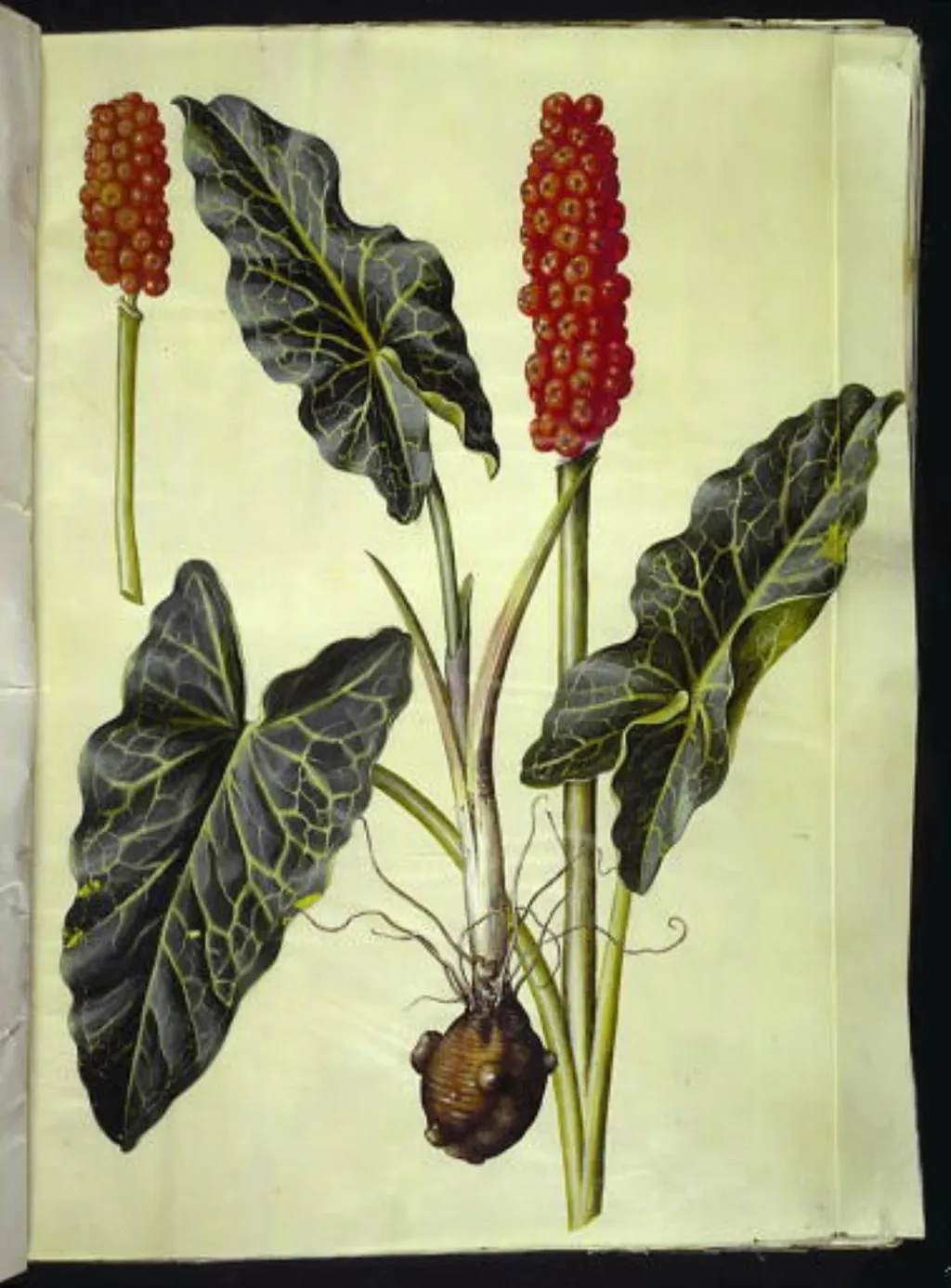
Arum italicum (italiensk arum) is an unspecified work on paper by Unknown. It dates from 1654 and is held in the collection of the Statens Museum for Kunst. This watercolor painting depicts Arum italicum, a flowering plant native to southern Europe, rendered around 1654.
About this work
Overview
Executed with precision, it captures the plant in full botanical detail, emphasizing its structural form rather than decorative flourish.
This watercolor painting depicts Arum italicum, a flowering plant native to southern Europe, rendered around 1654. The work is part of the collection at the Museum of Ethnography. Executed with precision, it captures the plant in full botanical detail, emphasizing its structural form rather than decorative flourish. The medium allows for subtle gradations of color and fine linework, typical of scientific illustration from the period.
Subject & Meaning
The subject is the Italian arum, a perennial herb known for its striking spathe and spadix flower structure. The painting isolates the plant to highlight its morphology, including the prominent red inflorescence, broad leaves, and exposed tuberous roots. This focus suggests an intent to document botanical characteristics, likely for scholarly or educational use rather than aesthetic display alone.
Technique & Style
The artist employed watercolor to achieve delicate tonal transitions and layered textures. Fine brushwork defines the veins of the leaves and the clustered florets of the flower, while transparent washes suggest depth and natural light. The composition is centered and uncluttered, avoiding background elements to direct attention to the plant’s anatomical features, reflecting a tradition of botanical accuracy over artistic embellishment.
History & Provenance
The painting is attributed to an unnamed artist identified in records as 35199_person, active in the mid-17th century. It entered the Museum of Ethnography’s collection through documented acquisitions, possibly as part of a broader collection of natural history studies. Its survival suggests it was valued for its scientific utility, though the artist’s full biography remains largely undocumented.
Context
Created during a period of expanding botanical inquiry in Europe, the work aligns with the rise of illustrated herbals and plant collections. Naturalists and collectors increasingly relied on precise visual records to classify flora, especially as global exploration introduced new species. This painting reflects that shift, serving as a visual reference within a growing network of scientific documentation.
Legacy
Though the artist’s name is not widely recognized, the painting contributes to a broader archive of early modern botanical illustration. Its preservation in a museum dedicated to cultural and scientific heritage underscores its role as a historical record of plant knowledge. It remains a quiet testament to the discipline and observation that underpinned pre-modern natural science.
Artist & collection

 Domestic Scene
 Giacomo and Cardinal Marco, investing Andrea, Abbot of San Zeno, with his Benefice
 The Nymph of Fontainebleau
 Portrait of a Woman
 Madonna and Child with Saints in the Enclosed Garden
 Venus and Minerva
 Family Group of Four on Sofa
 Wall painting from Room H of the Villa of P. Fannius Synistor at Boscoreale
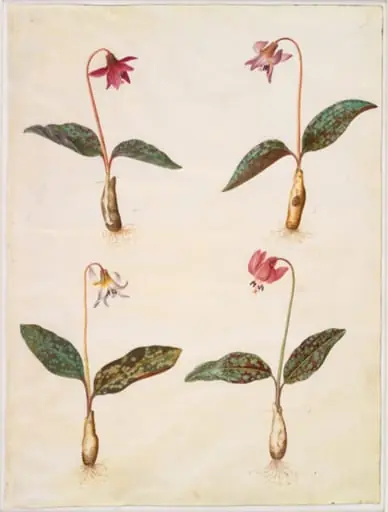 Erythronium dens-canis (ægte hundetand)
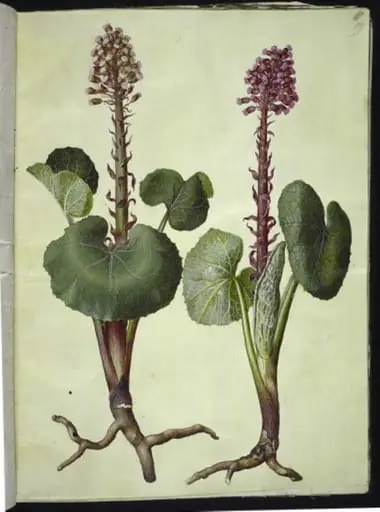 Petasites hybridus (rød hestehov)
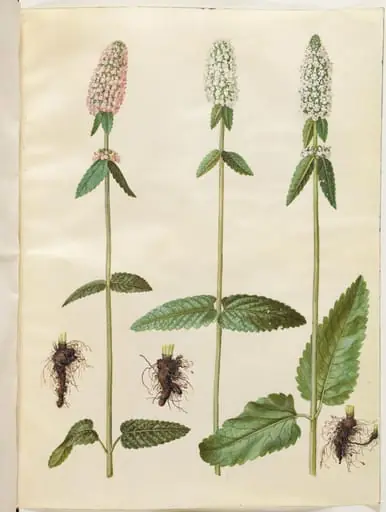 Stachys officinalis (læge-betonie)
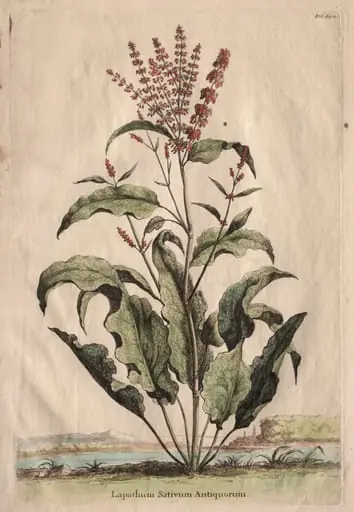 Phytographia Curiosa: Lapathum Sativum Antiquorum
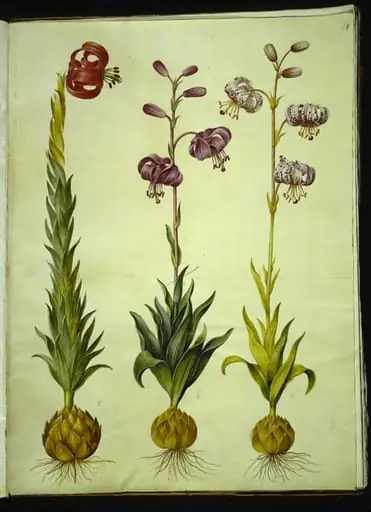 Lilium pomponium (pompon-lilje); Lilium martagon (krans-lilje)
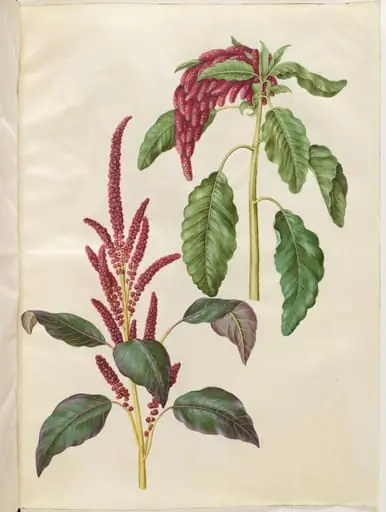 Amaranthus cruentus (rød amarant); Amaranthus caudatus (rævehale-amarant)
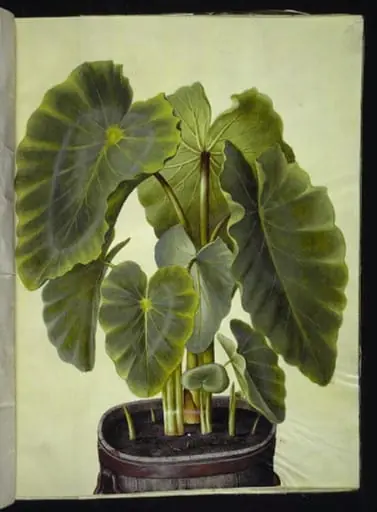 Colocasia esculenta (taro)
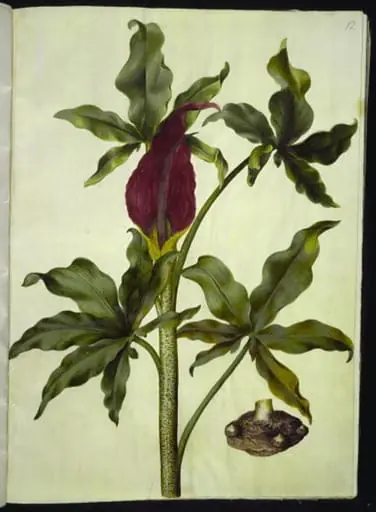 Dracunculus vulgaris (almindelig dragerod)
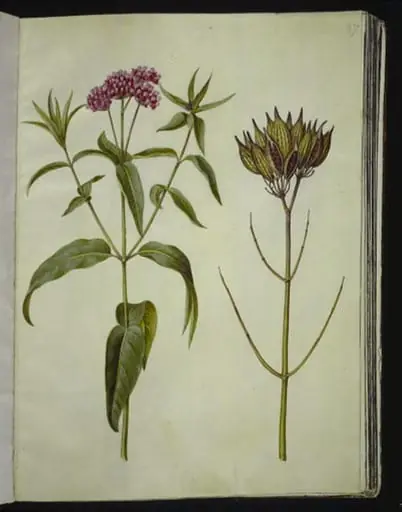 Asclepias incarnata (rosen-silkeplante)
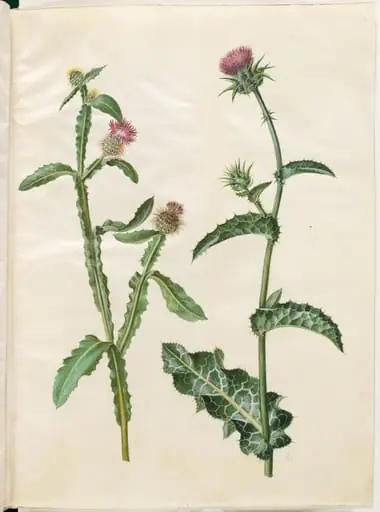 Centaurea seridis; Silybum marianum (almindelig marietidsel)
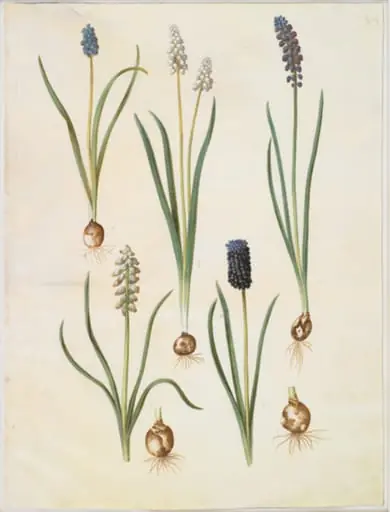 Muscari botryoides (almindelig perlehyacint); Muscari racemosum (muskat-perlehyacint); Muscari neglectum
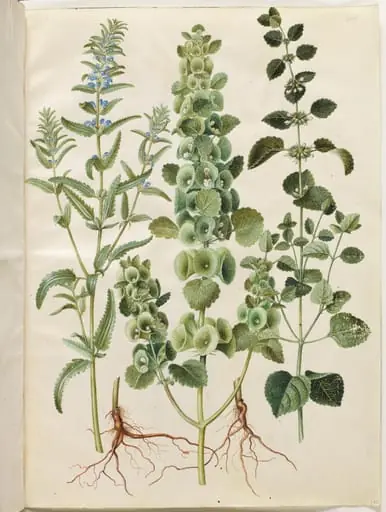 Dracocephalum moldavica (moldavisk dragehoved); Moluccella spinosa (tornet tragtbæger); Melissa officinalis (citron-melisse)