Artwork
Bellis perennis (almindelig tusindfryd)
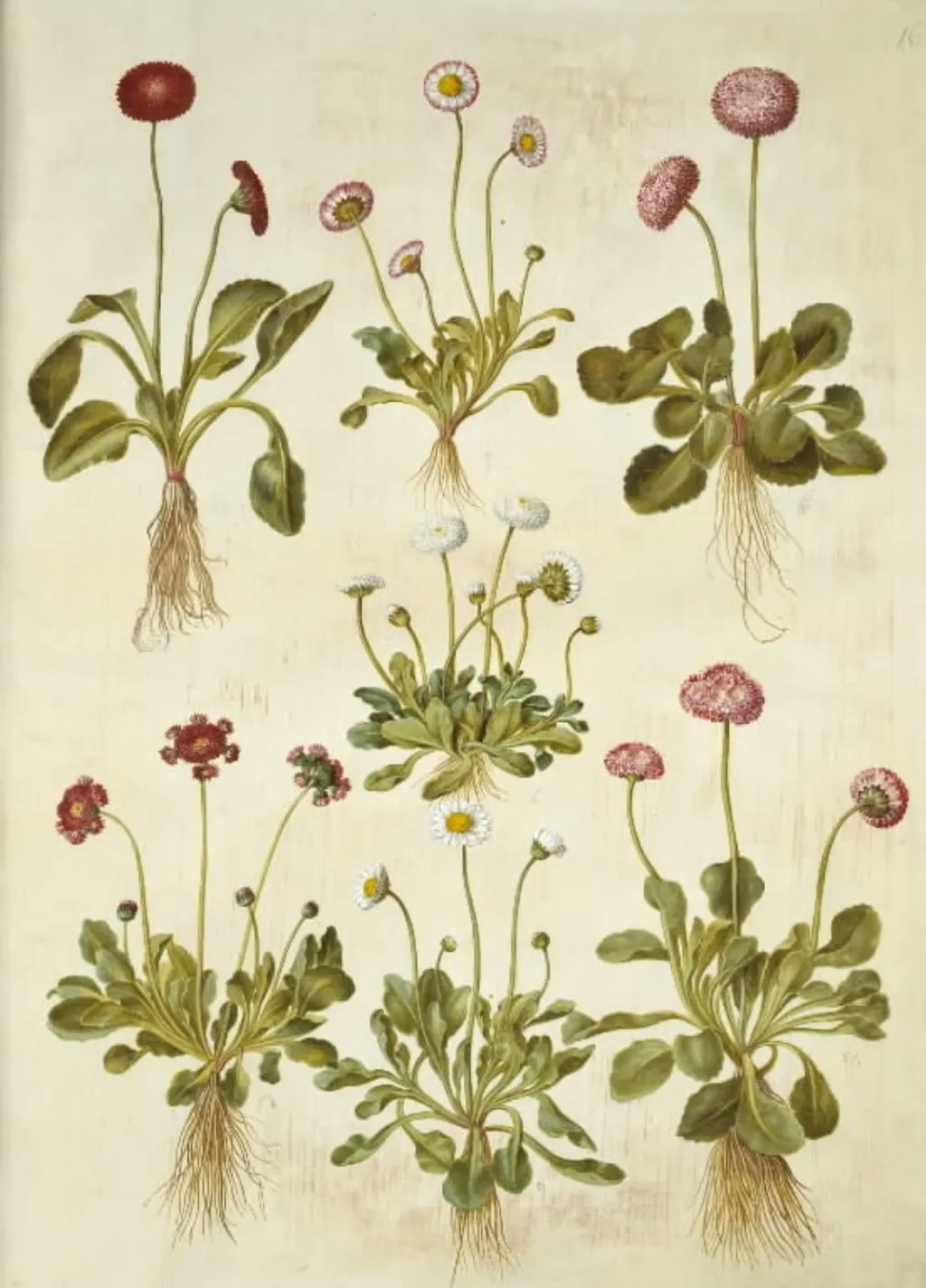
Bellis perennis (almindelig tusindfryd) is an unspecified work on paper by Unknown. It dates from 1654 and is held in the collection of the Statens Museum for Kunst. Created around 1654 by an artist identified as 35199_person, this watercolor depicts Bellis perennis, commonly known as the daisy.
About this work
Overview
Created around 1654 by an artist identified as 35199_person, this watercolor depicts Bellis perennis, commonly known as the daisy. The work is part of the collection at the Museum of Ethnography. Rendered with precision, it captures six flowering stems, each with distinct roots, against a pale, unadorned background. The focus is on botanical accuracy rather than decorative composition.
Subject & Meaning
The painting presents a straightforward study of the common daisy, emphasizing its physical structure. Three flowers display reddish hues, while the others appear white or pale pink. The inclusion of detailed root systems suggests an intent to document the plant’s anatomy, likely for scientific or educational purposes rather than symbolic or aesthetic expression.
Technique & Style
Executed in watercolor, the work demonstrates meticulous brushwork, particularly in rendering the fine hairs along the roots.
Executed in watercolor, the work demonstrates meticulous brushwork, particularly in rendering the fine hairs along the roots. The artist used delicate washes to define petal tones and sharp lines to outline leaves. The plain background isolates the subject, directing attention to botanical features. This restrained style reflects the observational priorities of 17th-century natural history illustration.
History & Provenance
The artwork has been held by the Museum of Ethnography since at least the early 20th century, though its earlier ownership remains undocumented. Its creation date of c. 1654 places it within a period when detailed plant studies were gaining traction among European naturalists. The piece likely originated as part of a broader collection of botanical specimens.
Context
In mid-17th-century Europe, artists and scientists increasingly collaborated to record plant forms with accuracy. This watercolor aligns with a growing tradition of using visual art to support botanical classification. Such works were often compiled into herbals or used by apothecaries and scholars, bridging art and empirical science before the advent of photography.
Legacy
Though unsigned and unattributed beyond a catalog number, the painting contributes to a historical archive of botanical documentation. Its careful depiction of root morphology reflects a methodical approach to natural observation that influenced later scientific illustration. Today, it serves as a quiet testament to the role of visual precision in early biological study.
Artist & collection

 Domestic Scene
 Giacomo and Cardinal Marco, investing Andrea, Abbot of San Zeno, with his Benefice
 The Nymph of Fontainebleau
 Portrait of a Woman
 Madonna and Child with Saints in the Enclosed Garden
 Venus and Minerva
 Family Group of Four on Sofa
 Wall painting from Room H of the Villa of P. Fannius Synistor at Boscoreale
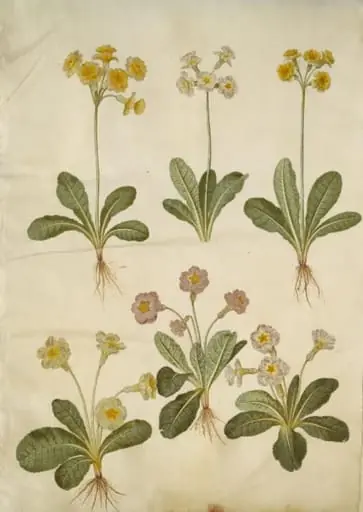 Primula veris (hybrid af hulkravet kodriver); Primula vulgaris (hybrid af storblomstret kodriver)
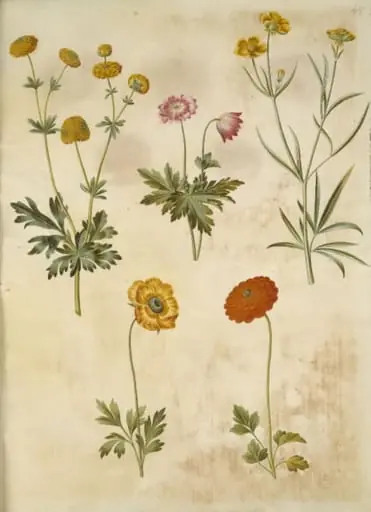 Ranunculus acris (guldknap-ranunkel); Anemone nemorosa (hvid anemone); Ranunculus illyricus (steppe-ranunkel); Ranunculus asiaticus (have-ranunkel)
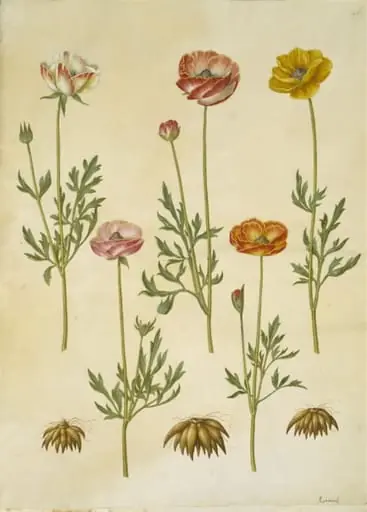 Ranunculus asiaticus (have-ranunkel)
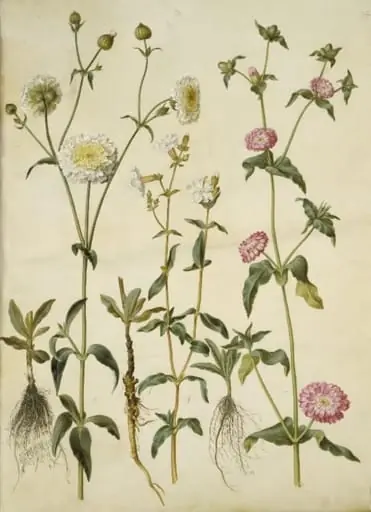 Silene latifolia (aften-pragtstjerne); Silene dioica (dag-pragtstjerne)
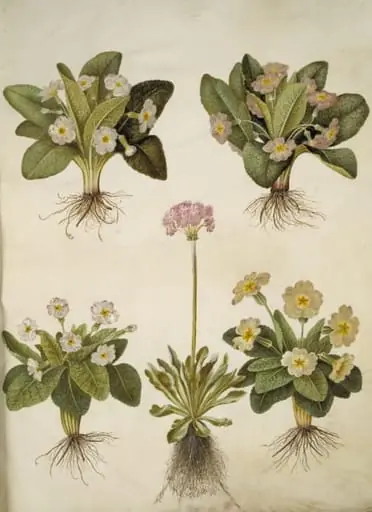 Primula vulgaris (hybrid af storblomstret kodriver); Primula farinosa (melet kodriver)