Artwork
Ranunculus asiaticus (have-ranunkel)
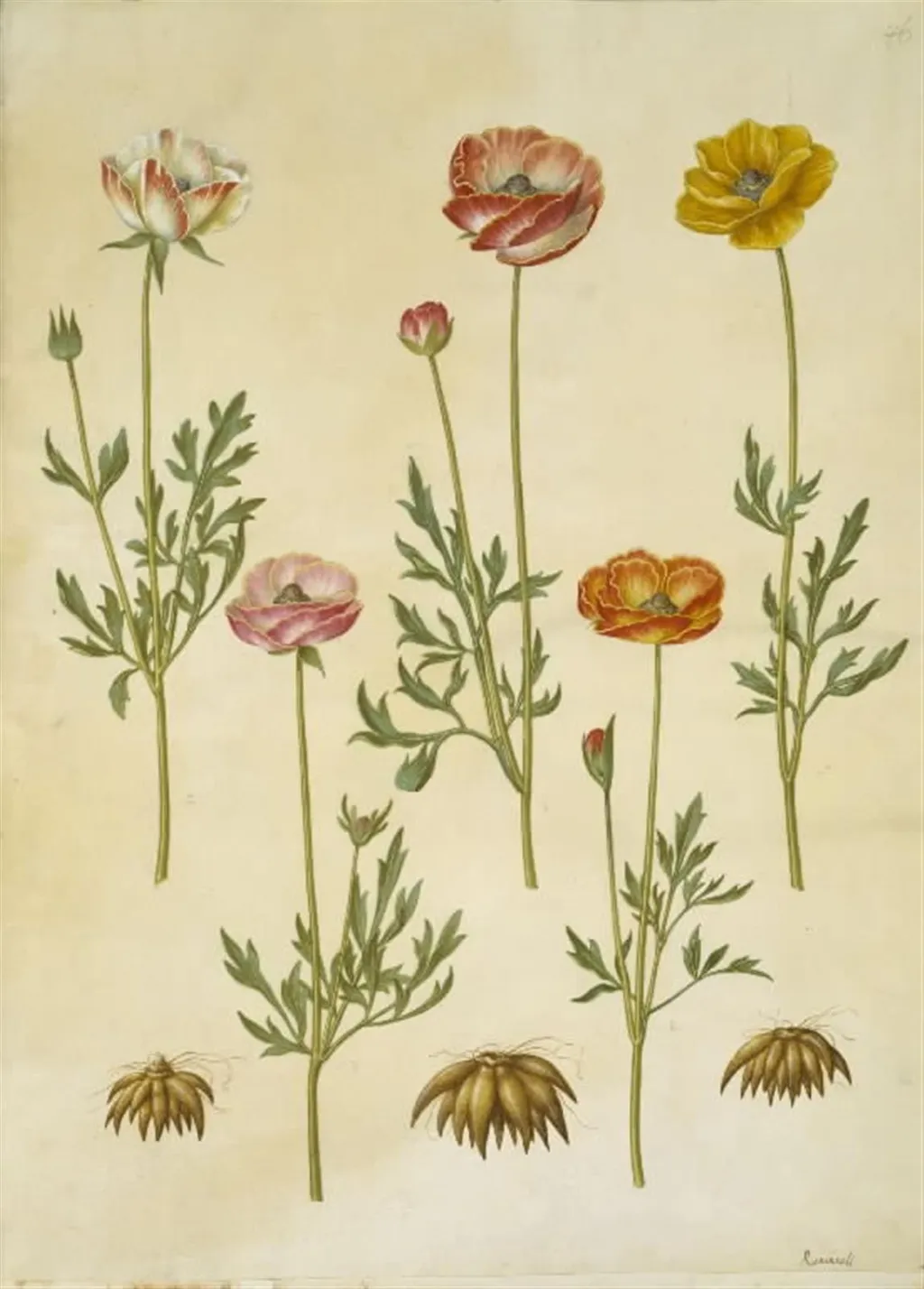
Ranunculus asiaticus (have-ranunkel) is an unspecified work on paper by Unknown. It dates from 1654 and is held in the collection of the Statens Museum for Kunst. Created around 1654, this watercolor depicts six specimens of Ranunculus asiaticus, a flowering plant native to the eastern Mediterranean.
About this work
Overview
Created around 1654, this watercolor depicts six specimens of Ranunculus asiaticus, a flowering plant native to the eastern Mediterranean. The work is held in the collection of the Museum of Ethnography. Rendered with precision, the painting emphasizes botanical accuracy over decorative intent, reflecting a broader 17th-century interest in documenting plant life through visual means.
Subject & Meaning
The painting presents six blooms in varying stages of openness, from tight buds to fully unfurled petals, alongside their distinctive spiky seed pods.
The painting presents six blooms in varying stages of openness, from tight buds to fully unfurled petals, alongside their distinctive spiky seed pods. Each stem is rendered with careful attention to natural posture and growth. The absence of landscape or context suggests the image was intended as a scientific record rather than an ornamental piece, serving as a visual reference for botanical study.
Technique & Style
The artist employed watercolor to build subtle gradations of color—white, pink, red, orange, and yellow—using thin, layered washes that preserve the luminosity of the paper. Fine brushwork captures delicate details: the soft waviness of petals, minute hairs on buds, and the texture of dried seed capsules. The plain background isolates the subjects, enhancing clarity and observational focus.
History & Provenance
The work is attributed to an artist identified only as 35199_person, a designation likely used for an anonymous or unverified creator. It entered the Museum of Ethnography’s collection through documented acquisitions of early modern natural history illustrations. Its survival suggests it was valued for its scientific utility, possibly used in teaching or reference collections of the period.
Context
In mid-17th-century Europe, detailed plant illustrations flourished alongside the rise of natural philosophy and early botany. Artists often worked with scholars to document newly introduced species. This painting aligns with that tradition, where visual precision served as a tool for classification and education, preceding modern botanical photography.
Legacy
Though unsigned and unattributed to a known master, the work remains a representative example of pre-scientific botanical illustration. It contributes to the historical record of how visual culture supported empirical study before standardized photographic methods. Its preservation underscores the enduring value placed on accurate natural observation in museum collections.
Artist & collection

 Domestic Scene
 Giacomo and Cardinal Marco, investing Andrea, Abbot of San Zeno, with his Benefice
 The Nymph of Fontainebleau
 Portrait of a Woman
 Madonna and Child with Saints in the Enclosed Garden
 Venus and Minerva
 Family Group of Four on Sofa
 Wall painting from Room H of the Villa of P. Fannius Synistor at Boscoreale
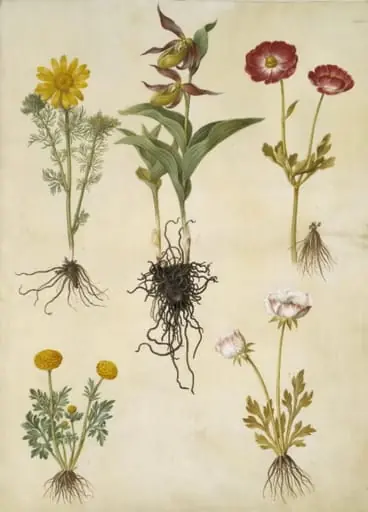 Adonis vernalis (vår-adonis); Cypripedium calceolus (stor fruesko); Ranunculus asiaticus (have-ranunkel); Ranunculus (art af ranunkel)
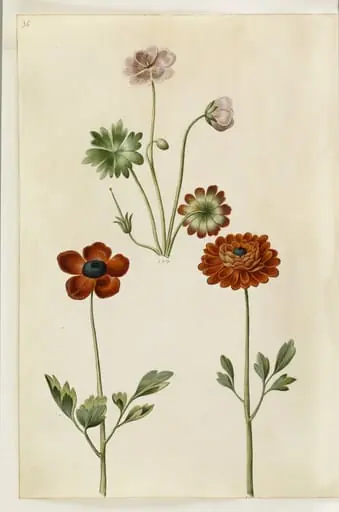 Geranium sanguineum striatum (stribet storkenæb); Ranunculus asiaticus (have-ranunkel)
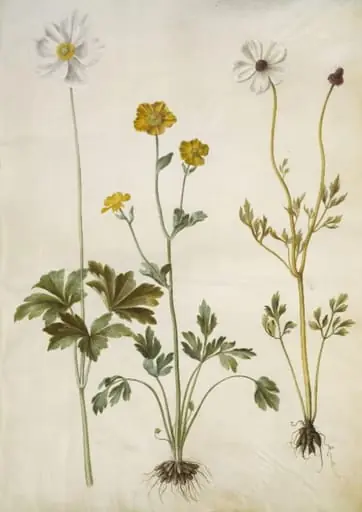 Anemone sylvestris (sommer-anemone); Ranunculus monspeliacus (silke-ranunkel); Ranunculus asiaticus (have-ranunkel)
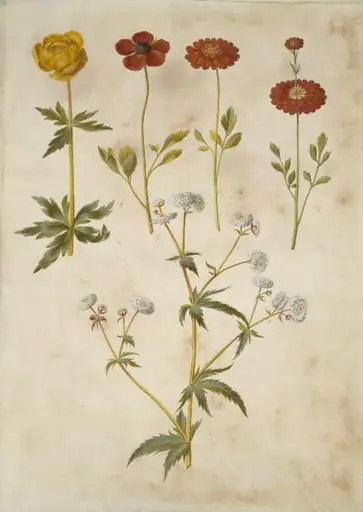 Trollius europaeus (europæisk engblomme); Ranunculus asiaticus (have-ranunkel); Ranunculus aconitifolius (sølvknap-ranunkel)
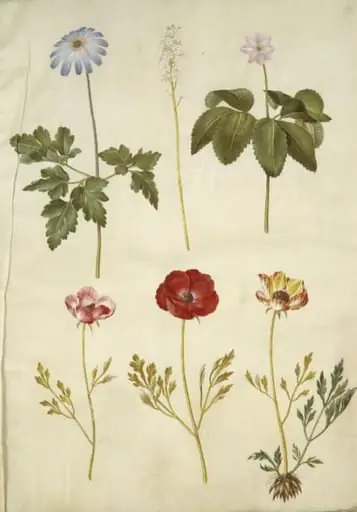 Anemone apennina (appenniner-anemone); Tiarella cordifolia (almindelig skumblomst); Anemone trifolia (trilling-anemone); Ranunculus asiaticus (have-ranunkel)
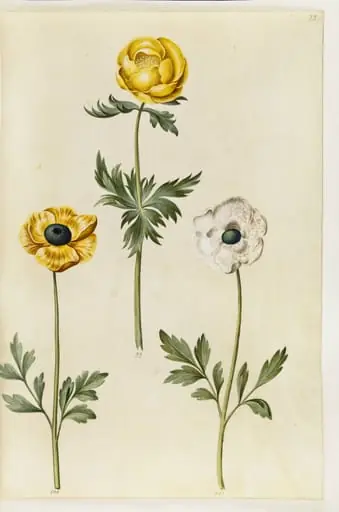 Trollius europaeus (europæisk engblomme); Ranunculus asiaticus (have-ranunkel)
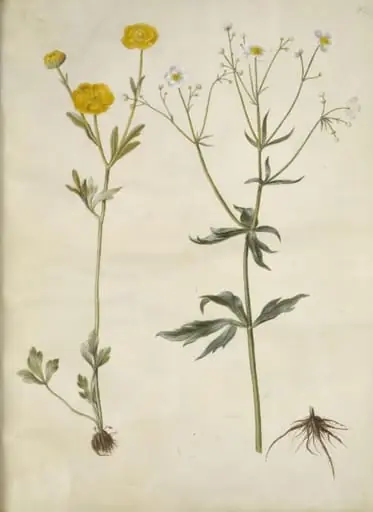 Ranunculus monspeliacus (silke-ranunkel); Ranunculus aconitifolius (stormhatbladet ranunkel)
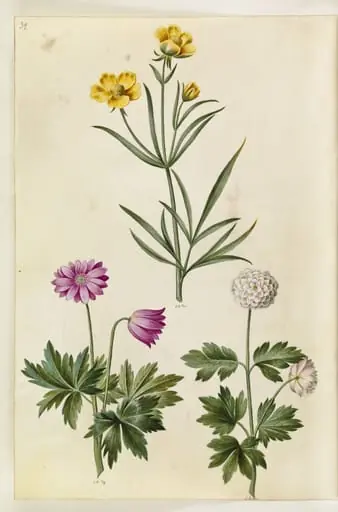 Ranunculus illyricus (steppe-ranunkel); Anemone nemorosa (hvid anemone)
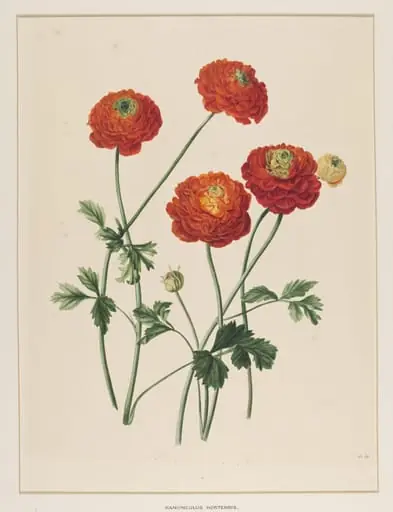 Ranunculus Hortensis
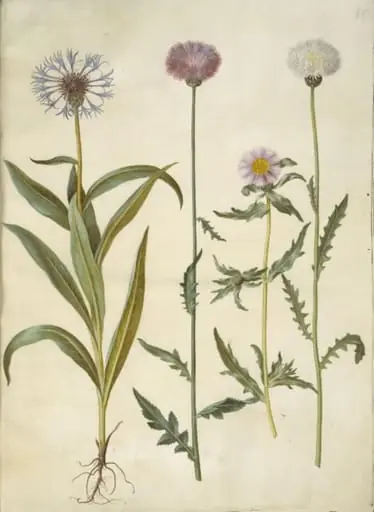 Centaurea montana (bjerg-knopurt); Amberboa moschata (duft-sultan)