Artwork
Ranunculus acris (guldknap-ranunkel); Anemone nemorosa (hvid anemone); Ranunculus illyricus (steppe-ranunkel); Ranunculus asiaticus (have-ranunkel)
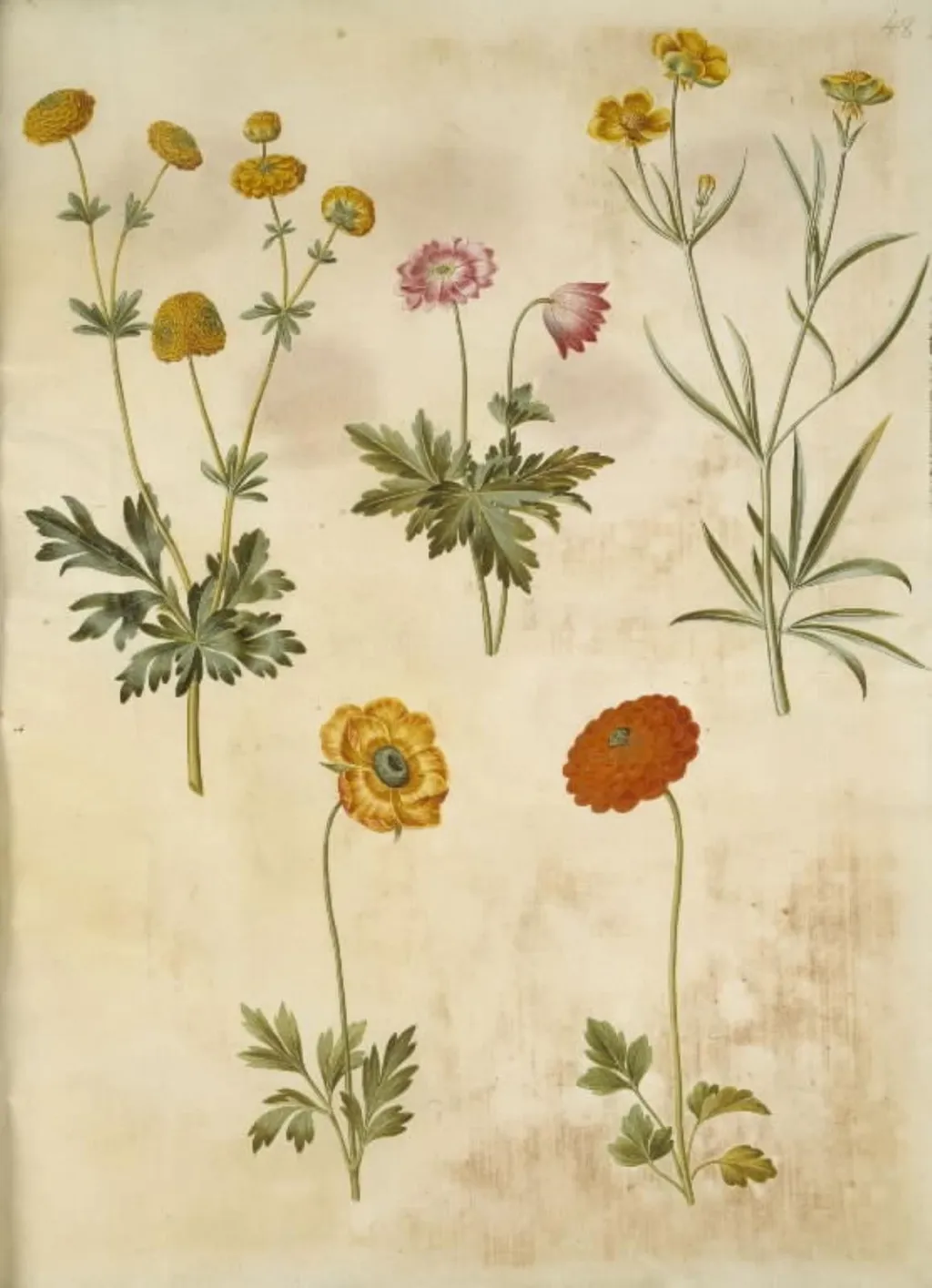
Ranunculus acris (guldknap-ranunkel); Anemone nemorosa (hvid anemone); Ranunculus illyricus (steppe-ranunkel); Ranunculus asiaticus (have-ranunkel) is an unspecified work on paper by Unknown. It dates from 1654 and is held in the collection of the Statens Museum for Kunst.
About this work
Overview
The work, attributed to the artist catalogued as 35199_person, dates to around 1654 and is part of the collection of the Museum of Ethnography. It presents a study of six individual flowers rendered against an unadorned background, allowing each botanical element to be observed without distraction.
Subject & Meaning
Four species are identified: the common buttercup (Ranunculus acris), the wood anemone (Anemone nemorosa), the Illyrian buttercup (Ranunculus illyricus), and the Asian buttercup (Ranunculus asiaticus). The selection showcases a range of colors—from soft yellows to pinks and oranges—highlighting the diversity of temperate flora.
Technique & Style
Rendered with meticulous attention to detail, the image resembles a natural‑history illustration. Each flower is isolated, its petals, stems and foliage delineated with fine lines and subtle shading, producing a gentle palette that avoids deep shadows and emphasizes form over decorative effect.
History & Provenance
Created in the mid‑17th century, the piece entered the Museum of Ethnography’s holdings at an unspecified date. Its attribution to 35199_person reflects the museum’s cataloguing system rather than a widely recognized name, indicating the work’s documentation within a scholarly collection.
Context
During the 1650s, botanical illustration served both scientific and aesthetic purposes, often accompanying herbals and natural‑history texts. This image aligns with that tradition, presenting plants in a manner suitable for study while retaining an artistic sensibility.
Artist & collection

 Domestic Scene
 Giacomo and Cardinal Marco, investing Andrea, Abbot of San Zeno, with his Benefice
 The Nymph of Fontainebleau
 Portrait of a Woman
 Madonna and Child with Saints in the Enclosed Garden
 Venus and Minerva
 Family Group of Four on Sofa
 Wall painting from Room H of the Villa of P. Fannius Synistor at Boscoreale
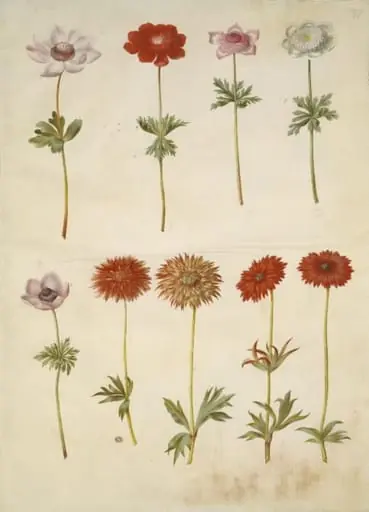 Anemone coronaria (fransk anemone); Anemone ×fulgens (skinnende anemone)
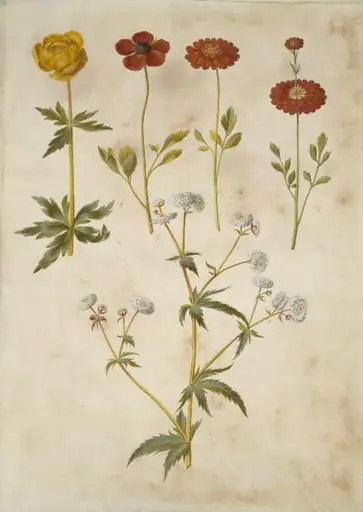 Trollius europaeus (europæisk engblomme); Ranunculus asiaticus (have-ranunkel); Ranunculus aconitifolius (sølvknap-ranunkel)
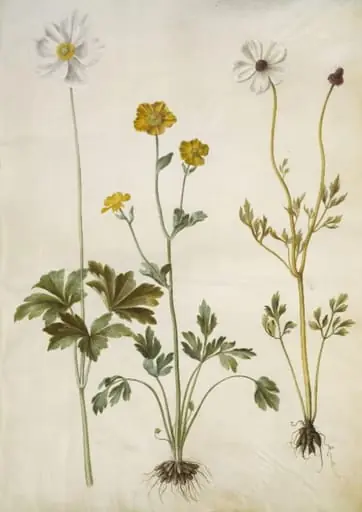 Anemone sylvestris (sommer-anemone); Ranunculus monspeliacus (silke-ranunkel); Ranunculus asiaticus (have-ranunkel)
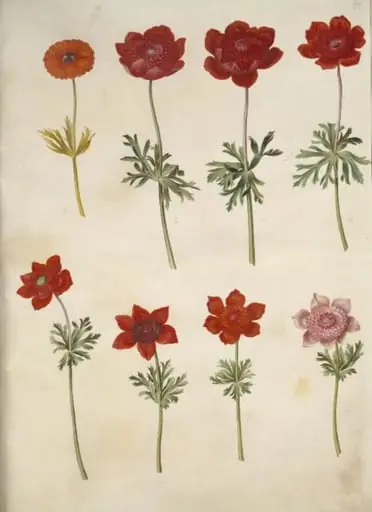 Anemone ×fulgens (skinnende anemone); Anemone coronaria (fransk anemone)
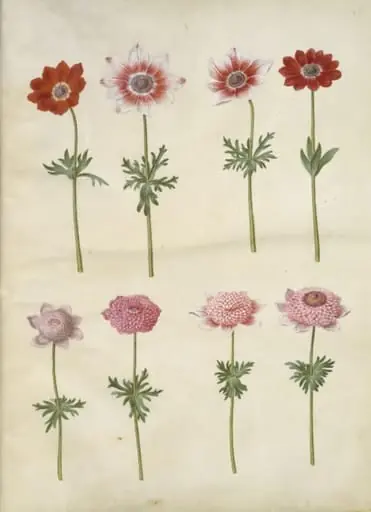 Anemone coronaria L. (fransk anemone); Anemone pavonina (påfugle-anemone)
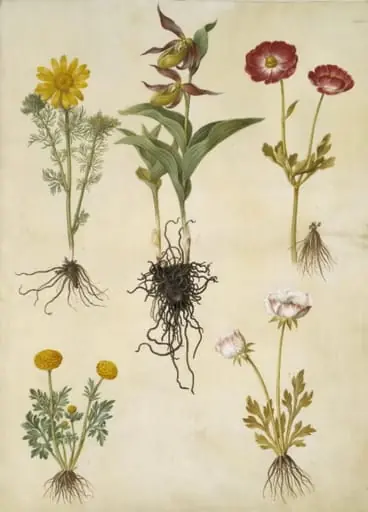 Adonis vernalis (vår-adonis); Cypripedium calceolus (stor fruesko); Ranunculus asiaticus (have-ranunkel); Ranunculus (art af ranunkel)
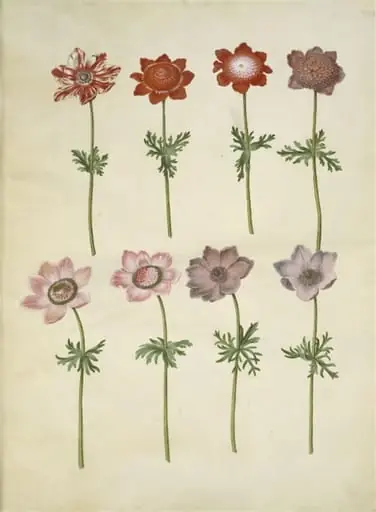 Anemone coronaria (fransk anemone)
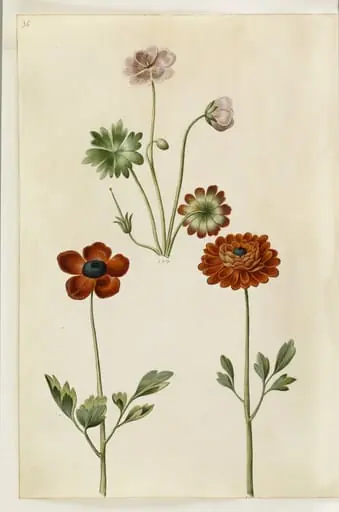 Geranium sanguineum striatum (stribet storkenæb); Ranunculus asiaticus (have-ranunkel)
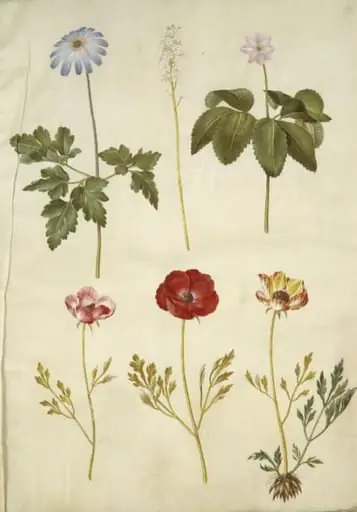 Anemone apennina (appenniner-anemone); Tiarella cordifolia (almindelig skumblomst); Anemone trifolia (trilling-anemone); Ranunculus asiaticus (have-ranunkel)
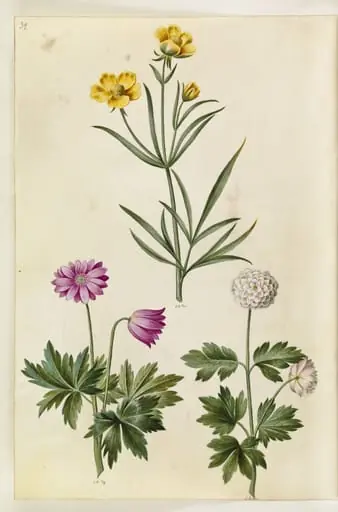 Ranunculus illyricus (steppe-ranunkel); Anemone nemorosa (hvid anemone)
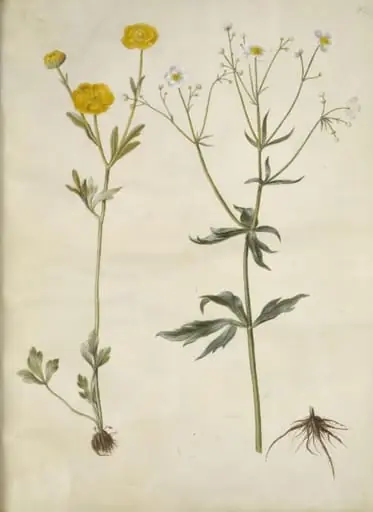 Ranunculus monspeliacus (silke-ranunkel); Ranunculus aconitifolius (stormhatbladet ranunkel)