Artwork
Centaurea cyanus (kornblomst)
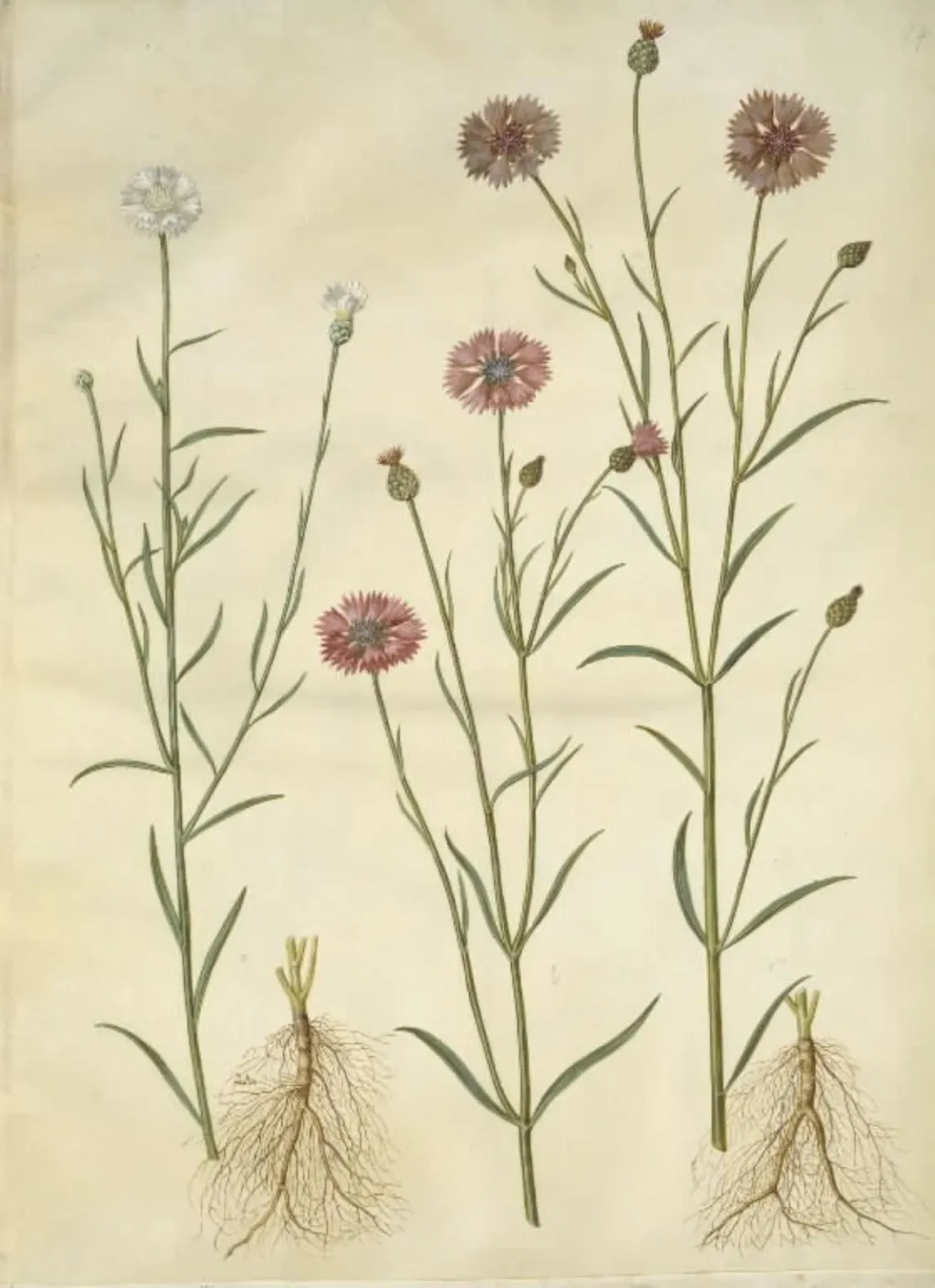
Centaurea cyanus (kornblomst) is an unspecified work on paper by Unknown. It dates from 1654 and is held in the collection of the Statens Museum for Kunst. Created around 1654, this work depicts five cornflower plants rendered in delicate watercolor.
About this work
Overview
Created around 1654, this work depicts five cornflower plants rendered in delicate watercolor. The artist, identified only by a numeric identifier, captured the plants with botanical precision, emphasizing their natural form. The piece is part of the Museum of Ethnography’s collection, where it is preserved as an example of early scientific illustration rooted in observational study.
Subject & Meaning
The subject is Centaurea cyanus, commonly known as cornflower, a wildflower once abundant in European agricultural fields.
The subject is Centaurea cyanus, commonly known as cornflower, a wildflower once abundant in European agricultural fields. Its inclusion suggests an interest in native flora, possibly for educational or cataloging purposes. The depiction avoids symbolic embellishment, focusing instead on the plant’s physical presence, reflecting a growing 17th-century emphasis on empirical observation over allegory.
Technique & Style
The artist employed transparent watercolor washes to build subtle gradations of pink, white, and purple in the flowers. Fine brushwork renders the fuzzy anthers and delicate veins of the petals, while the tangled roots are rendered with careful attention to texture and spatial depth. The composition isolates the plants against a blank background, directing focus entirely to their structural detail.
History & Provenance
The work’s origin is tied to a collector or naturalist active in mid-17th-century Europe, though the artist’s identity remains unverified beyond a numeric designation. It entered the Museum of Ethnography’s holdings through an early 20th-century acquisition, likely as part of a broader collection of botanical studies linked to anthropological or ethnobotanical research.
Context
During the 1650s, European naturalists increasingly documented plant life with scientific rigor, often using watercolor for its ability to capture color and form accurately. This piece aligns with a tradition of illustrated herbaria and field studies, where visual accuracy preceded printed botanical texts. Cornflowers, as common field weeds, were frequently recorded in such works for their ecological and medicinal relevance.
Legacy
Though not widely exhibited, the work contributes to a quiet legacy of pre-modern botanical documentation. Its meticulous detail offers insight into how early naturalists perceived and recorded the natural world without the aid of photography. It remains a reference point for understanding the transition from artistic representation to scientific illustration in European visual culture.
Artist & collection

 Domestic Scene
 Giacomo and Cardinal Marco, investing Andrea, Abbot of San Zeno, with his Benefice
 The Nymph of Fontainebleau
 Portrait of a Woman
 Madonna and Child with Saints in the Enclosed Garden
 Venus and Minerva
 Family Group of Four on Sofa
 Wall painting from Room H of the Villa of P. Fannius Synistor at Boscoreale
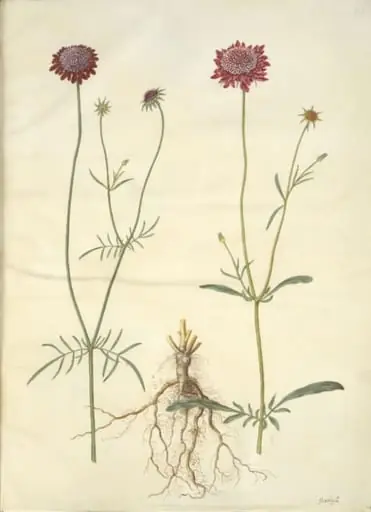 Scabiosa atropurpurea (enkeblomst)
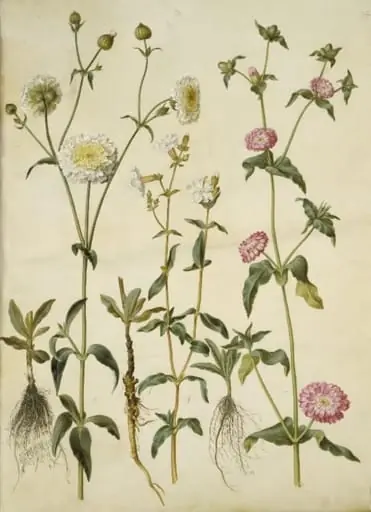 Silene latifolia (aften-pragtstjerne); Silene dioica (dag-pragtstjerne)
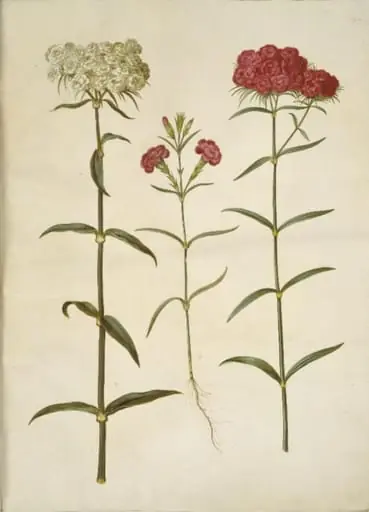 Dianthus barbatus (studenter-nellike); Dianthus (art af nellike)
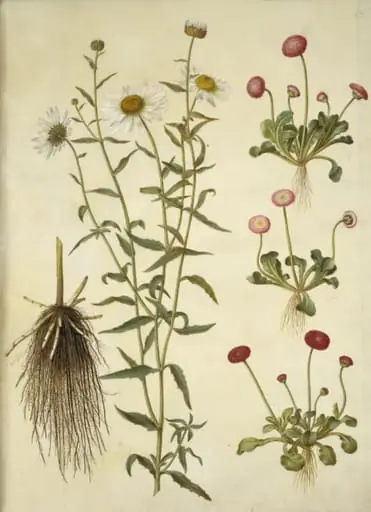 Leucanthemum vulgare (hvid okseøje); Bellis perennis (almindelig tusindfryd)
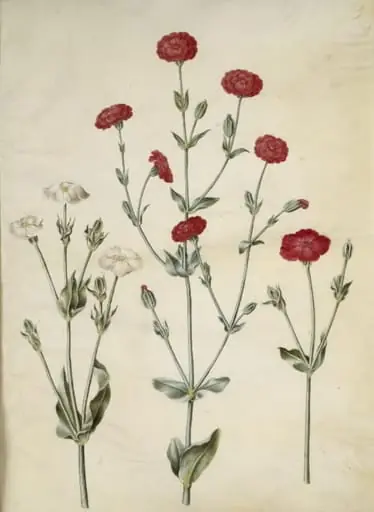 Silene coronaria (krone-limurt)
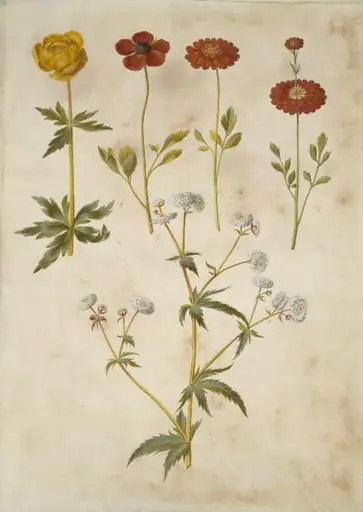 Trollius europaeus (europæisk engblomme); Ranunculus asiaticus (have-ranunkel); Ranunculus aconitifolius (sølvknap-ranunkel)