Artwork
Leucanthemum vulgare (hvid okseøje); Bellis perennis (almindelig tusindfryd)
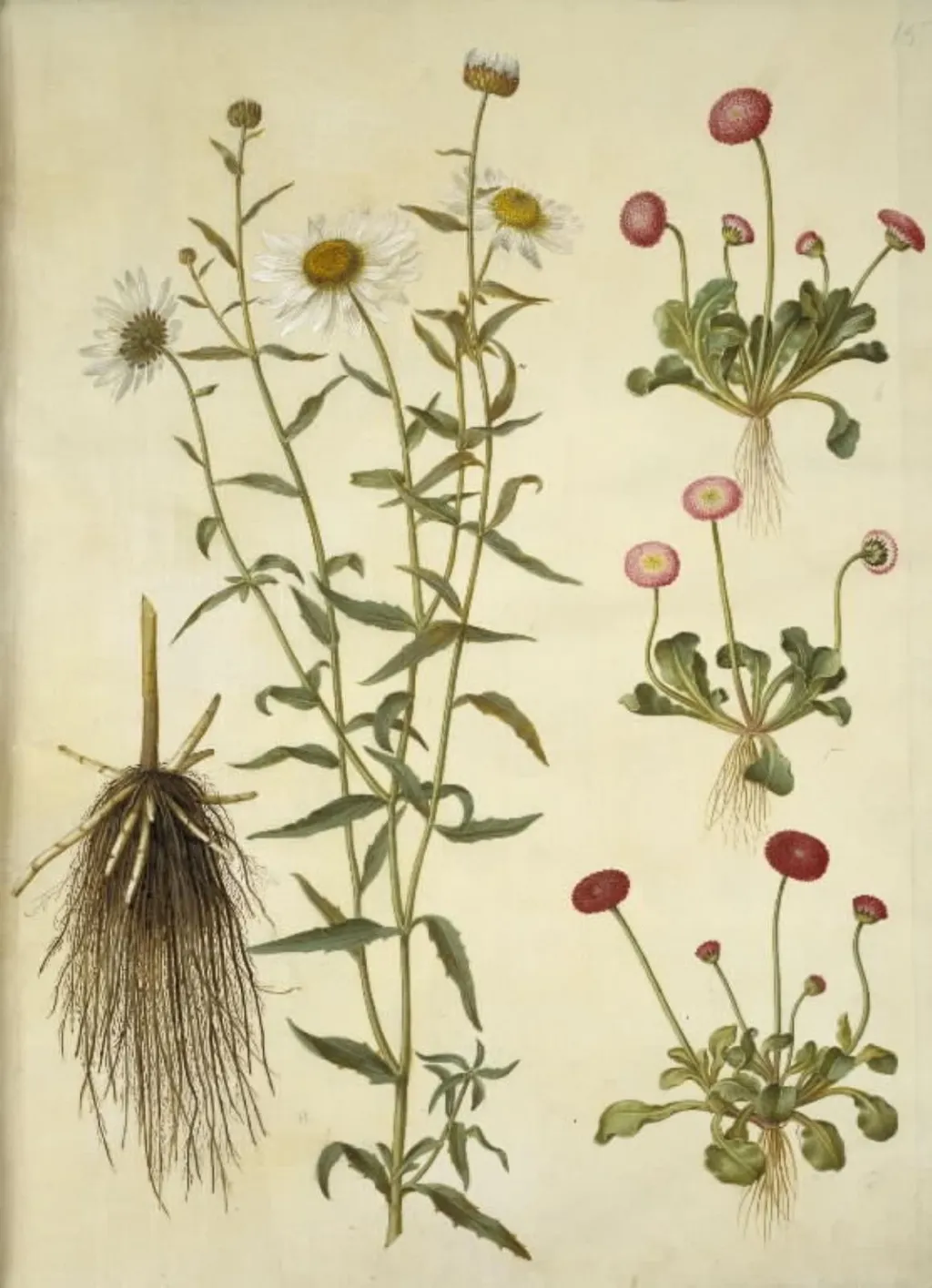
Leucanthemum vulgare (hvid okseøje); Bellis perennis (almindelig tusindfryd) is an unspecified work on paper by Unknown. It dates from 1654 and is held in the collection of the Statens Museum for Kunst. This watercolor painting, dated around 1654, depicts three common European flowering plants with botanical precision.
About this work
Overview
This watercolor painting, dated around 1654, depicts three common European flowering plants with botanical precision. Created by an anonymous artist identified only by a numerical code, the work was produced for scientific documentation rather than decorative purposes. It is part of the collection at the Museum of Ethnography, where it serves as a historical record of early plant observation.
Subject & Meaning
The inclusion of root systems suggests an intent to aid in accurate classification, reflecting the era’s growing interest in systematic natural history.
The painting illustrates Leucanthemum vulgare and Bellis perennis, along with a third, less clearly identified species. Each plant is rendered with attention to its full structure—flowers, stems, and roots—emphasizing identification over aesthetic appeal. The inclusion of root systems suggests an intent to aid in accurate classification, reflecting the era’s growing interest in systematic natural history.
Technique & Style
Executed in watercolor, the work employs fine brushwork and layered washes to capture subtle variations in color and texture. The artist avoided idealization, presenting each plant as it appeared in nature, including irregularities in form and surface detail. This method aligns with the conventions of pre-modern botanical illustration, where clarity and accuracy were prioritized over artistic flourish.
History & Provenance
The painting’s origin is tied to a period when European scholars were compiling illustrated floras to catalog native flora. Its attribution to a numerical identifier rather than a named artist suggests it may have been produced as part of a larger, institutional project. It entered the Museum of Ethnography’s holdings through early 20th-century acquisitions focused on scientific visual records.
Context
Created during the 17th century, this work reflects the rise of empirical observation in natural science. Botanical illustration was becoming a vital tool for medicine, agriculture, and taxonomy, especially as colonial expansion introduced new species to European audiences. Such images were often reproduced in printed herbals, serving as visual references for practitioners and scholars.
Legacy
Though unsigned and unattributed to a known artist, the painting remains a representative example of early scientific visual culture. Its preservation underscores the value placed on accurate plant depiction before the advent of photography. Today, it contributes to studies on the history of botany and the role of imagery in scientific knowledge transmission.
Artist & collection

 Domestic Scene
 Giacomo and Cardinal Marco, investing Andrea, Abbot of San Zeno, with his Benefice
 The Nymph of Fontainebleau
 Portrait of a Woman
 Madonna and Child with Saints in the Enclosed Garden
 Venus and Minerva
 Family Group of Four on Sofa
 Wall painting from Room H of the Villa of P. Fannius Synistor at Boscoreale
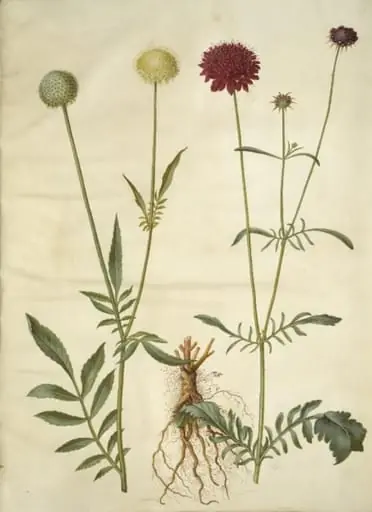 Cephalaria leucantha (hvid skælhoved); Scabiosa atropurpurea (enkeblomst)
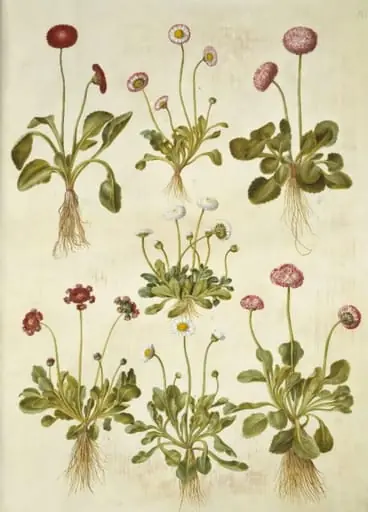 Bellis perennis (almindelig tusindfryd)
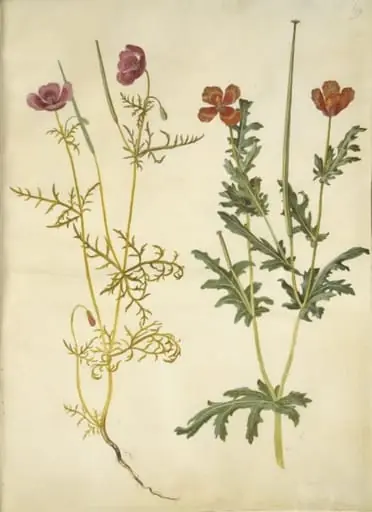 Roemeria hybrida (violet hornvalmue); Glaucium corniculatum (rød hornskulpe)
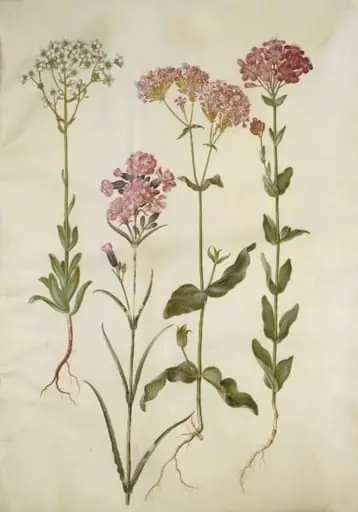 Saxifraga paniculata (klippe-stenbræk); Silene viscaria (almindelig tjærenellike); Silene armeria (knippe-limurt);
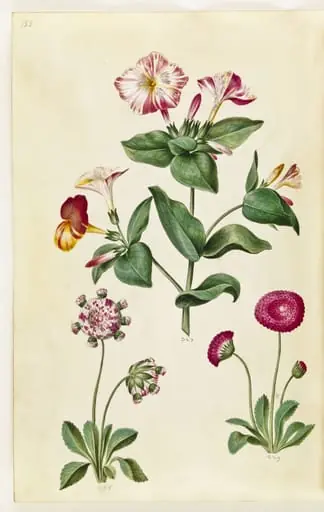 Mirabilis jalapa (vidunderblomst); Bellis perennis (almindelig tusindfryd)
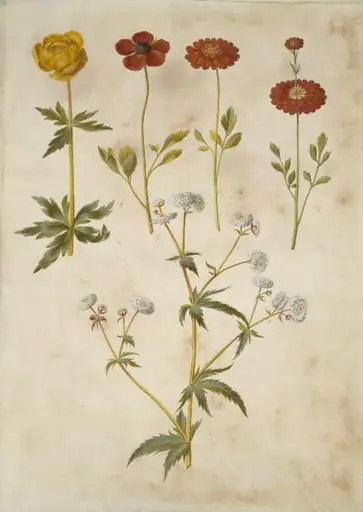 Trollius europaeus (europæisk engblomme); Ranunculus asiaticus (have-ranunkel); Ranunculus aconitifolius (sølvknap-ranunkel)
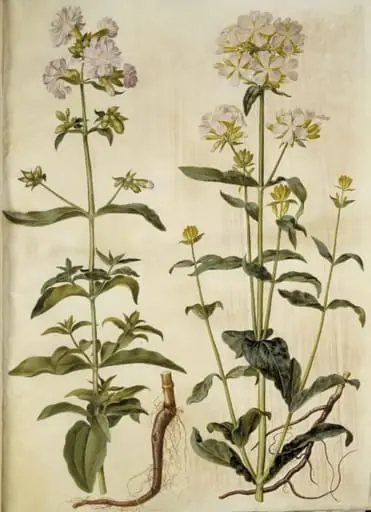 Saponaria officinalis (almindelig sæbeurt)
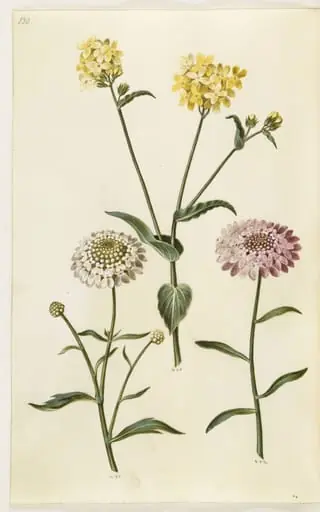 Brassica napus (raps); Iberis amara (bitter sløjfeblomst)
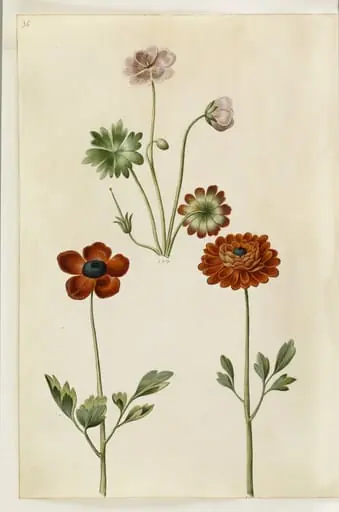 Geranium sanguineum striatum (stribet storkenæb); Ranunculus asiaticus (have-ranunkel)
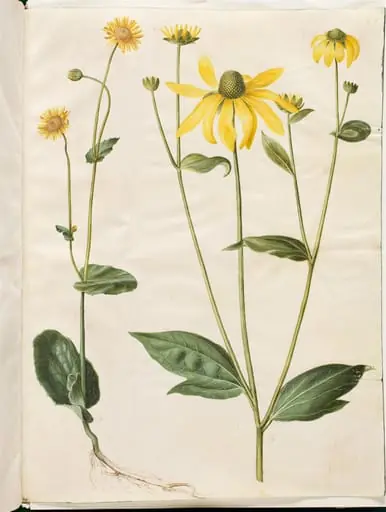 Doronicum pardalianches (hjertebladet gemserod); Rudbeckia laciniata (fliget solhat)
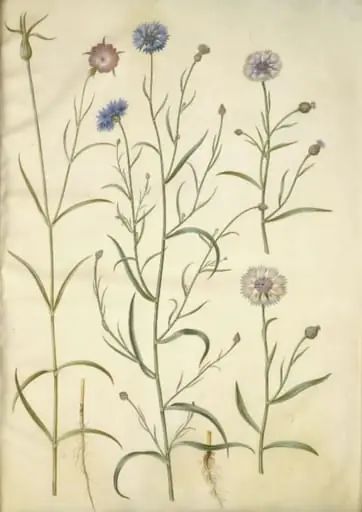 Agrostemma githago (almindelig klinte); Centaurea cyanus (kornblomst)