Artwork
Trollius europaeus (europæisk engblomme); Ranunculus asiaticus (have-ranunkel); Ranunculus aconitifolius (sølvknap-ranunkel)
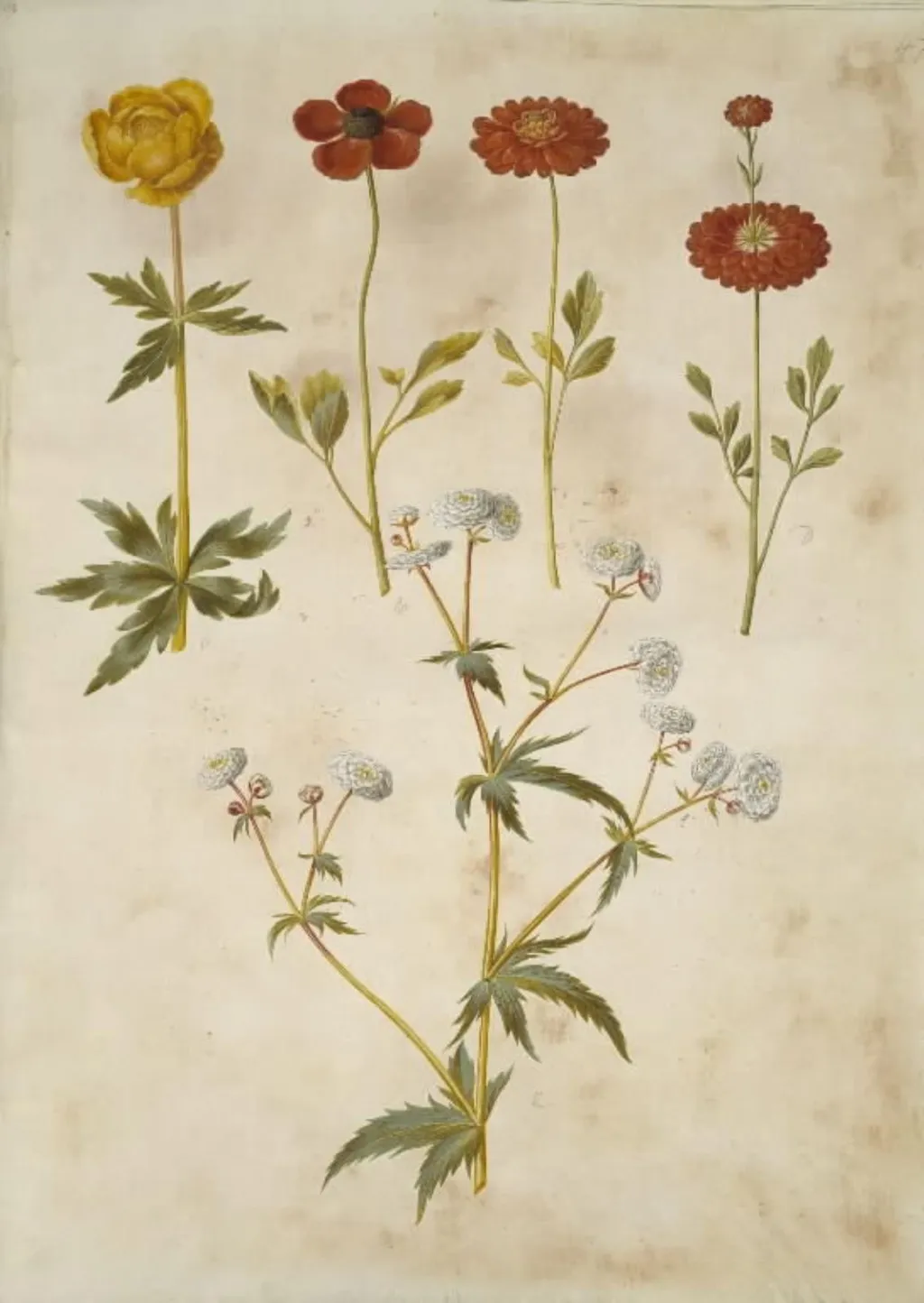
Trollius europaeus (europæisk engblomme); Ranunculus asiaticus (have-ranunkel); Ranunculus aconitifolius (sølvknap-ranunkel) is an unspecified work on paper by Unknown. It dates from 1654 and is held in the collection of the Statens Museum for Kunst.
About this work
Overview
The work, attributed to the artist identified as 35199_person and dated to around 1654, presents a meticulous arrangement of five distinct flowering plants against a neutral, light background. Rendered as an image, the composition isolates each specimen, allowing close observation of form, hue, and foliage. The piece resides in the collection of the Museum of Ethnography.
Subject & Meaning
The selection showcases a range of colors—bright yellow, deep reds, and pale blues with softly textured centers—and varied leaf shapes, from broad to narrow.
The image features Trollius europaeus, Ranunculus asiaticus, and Ranunculus aconitifolius, each labeled with its Latin binomial. The selection showcases a range of colors—bright yellow, deep reds, and pale blues with softly textured centers—and varied leaf shapes, from broad to narrow. The scientific labeling indicates an intent to document rather than merely decorate, suggesting a pedagogical or cataloguing purpose.
Technique & Style
Executed in watercolor, the artist employs transparent washes to build subtle tonal gradations and convey the delicate translucency of petals. Layered applications create depth, while fine brushwork renders the intricate details of veins and surface texture. The restrained background enhances the clarity of each flower, emphasizing accuracy over ornamental flourish.
History & Provenance
Created circa 1654, the image has been part of the Museum of Ethnography’s holdings, though its acquisition path remains undocumented in the available record. Its attribution to 35199_person reflects cataloging conventions used by the institution, linking the work to a specific creator within their database.
Context
During the mid‑17th century, botanical illustration served both scientific inquiry and the growing interest in natural history. Works such as this, combining precise visual representation with Latin nomenclature, were valuable resources for scholars, gardeners, and collectors seeking reliable references for plant identification and study.
Artist & collection

 Domestic Scene
 Giacomo and Cardinal Marco, investing Andrea, Abbot of San Zeno, with his Benefice
 The Nymph of Fontainebleau
 Portrait of a Woman
 Madonna and Child with Saints in the Enclosed Garden
 Venus and Minerva
 Family Group of Four on Sofa
 Wall painting from Room H of the Villa of P. Fannius Synistor at Boscoreale
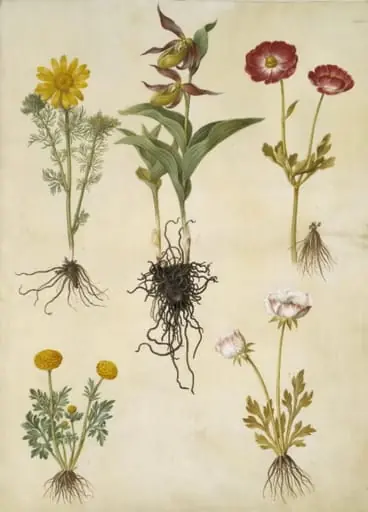 Adonis vernalis (vår-adonis); Cypripedium calceolus (stor fruesko); Ranunculus asiaticus (have-ranunkel); Ranunculus (art af ranunkel)
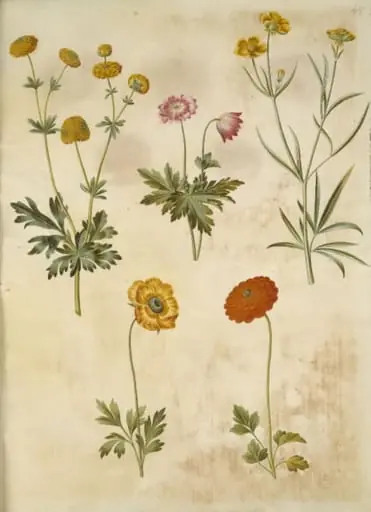 Ranunculus acris (guldknap-ranunkel); Anemone nemorosa (hvid anemone); Ranunculus illyricus (steppe-ranunkel); Ranunculus asiaticus (have-ranunkel)
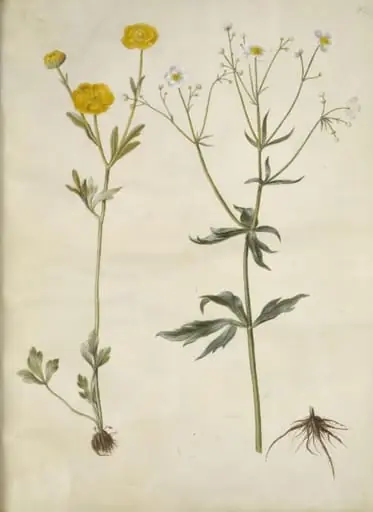 Ranunculus monspeliacus (silke-ranunkel); Ranunculus aconitifolius (stormhatbladet ranunkel)
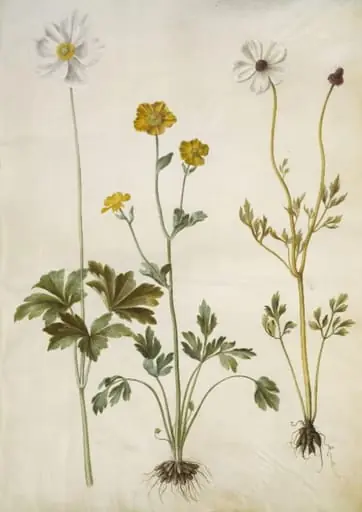 Anemone sylvestris (sommer-anemone); Ranunculus monspeliacus (silke-ranunkel); Ranunculus asiaticus (have-ranunkel)
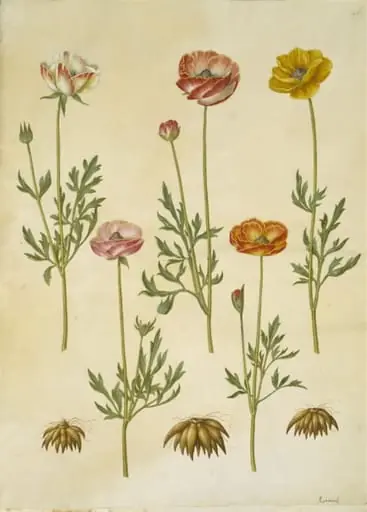 Ranunculus asiaticus (have-ranunkel)
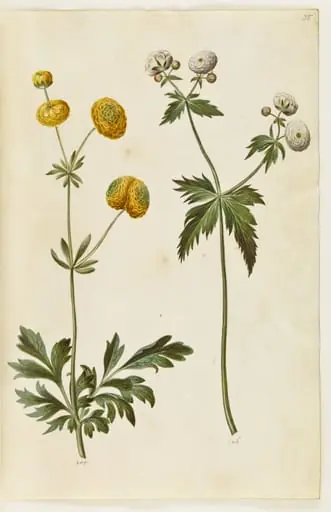 Ranunculus acris (guldknap-ranunkel); Ranunculus aconitifolius (sølvknap-ranunkel)
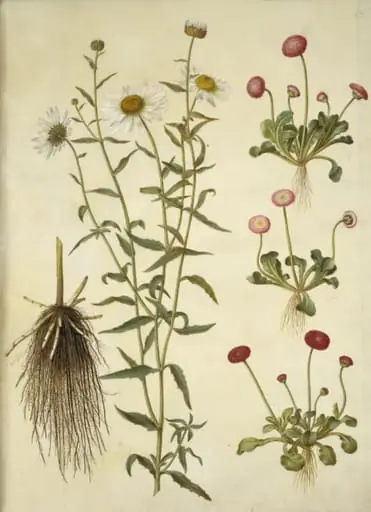 Leucanthemum vulgare (hvid okseøje); Bellis perennis (almindelig tusindfryd)
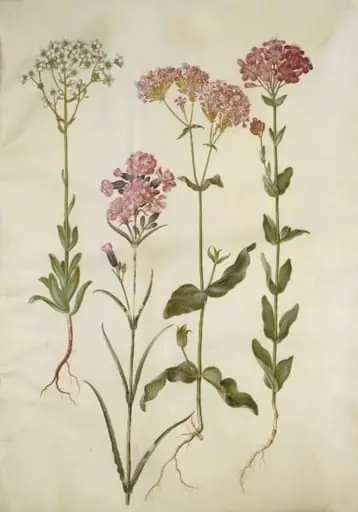 Saxifraga paniculata (klippe-stenbræk); Silene viscaria (almindelig tjærenellike); Silene armeria (knippe-limurt);
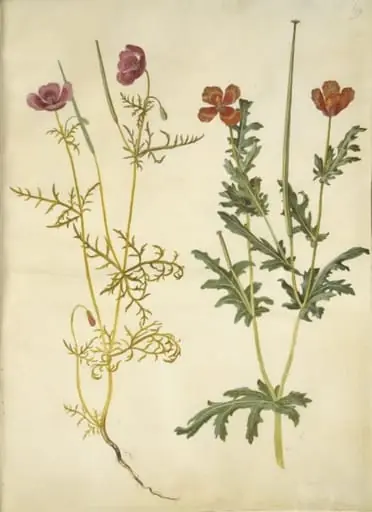 Roemeria hybrida (violet hornvalmue); Glaucium corniculatum (rød hornskulpe)
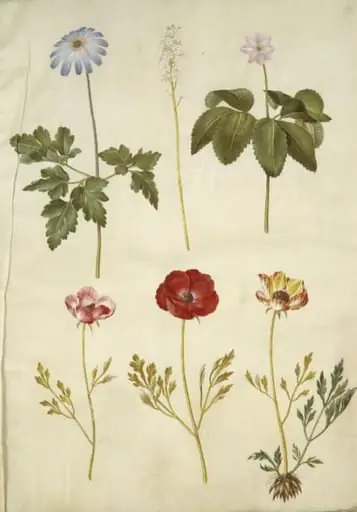 Anemone apennina (appenniner-anemone); Tiarella cordifolia (almindelig skumblomst); Anemone trifolia (trilling-anemone); Ranunculus asiaticus (have-ranunkel)
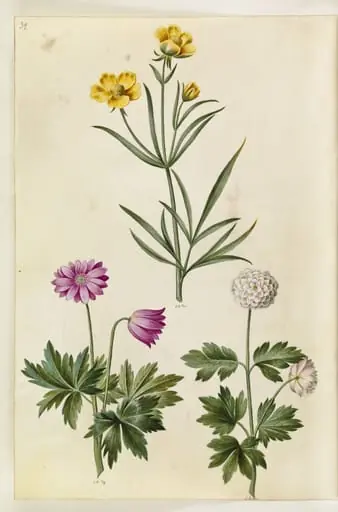 Ranunculus illyricus (steppe-ranunkel); Anemone nemorosa (hvid anemone)