Artwork
Citrus limon (almindelig citron); Citrus maxima (pompelmus)
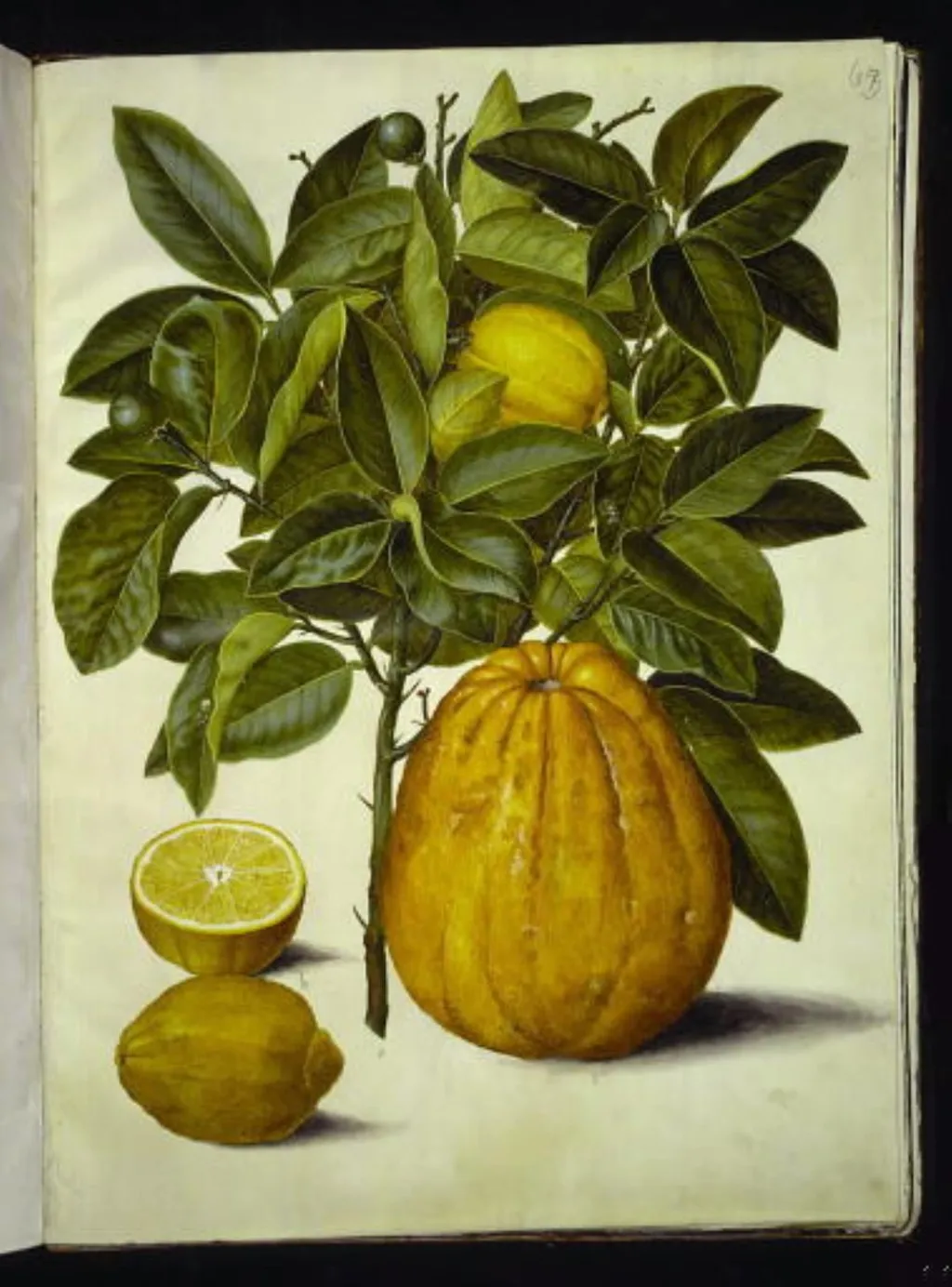
Citrus limon (almindelig citron); Citrus maxima (pompelmus) is an unspecified work on paper by Unknown. It dates from 1654 and is held in the collection of the Statens Museum for Kunst. This botanical illustration, dated around 1654, depicts two citrus species: Citrus limon and Citrus maxima.
About this work
Overview
The composition emphasizes naturalism, focusing on the physical presence of the plants rather than symbolic or decorative elements.
This botanical illustration, dated around 1654, depicts two citrus species: Citrus limon and Citrus maxima. Rendered with precision, the painting captures a single branch bearing leaves and fruit, set against a neutral background. The composition emphasizes naturalism, focusing on the physical presence of the plants rather than symbolic or decorative elements. It resides in the collection of the Museum of Ethnography.
Subject & Meaning
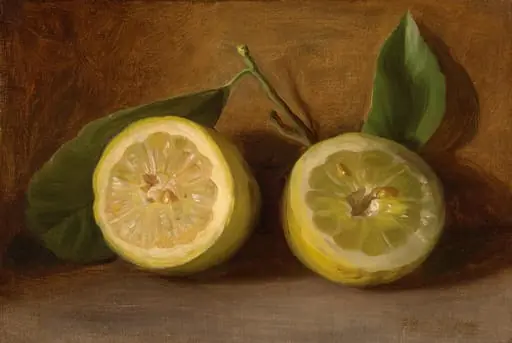
The painting presents two citrus fruits in states of display: one lemon is sliced open, exposing its internal structure, while a whole lemon and a pomelo rest nearby. This arrangement suggests an interest in taxonomy and physical detail, possibly for scientific or educational use. The inclusion of both whole and cut fruit implies an intent to document form, texture, and internal anatomy rather than convey metaphorical meaning.
Technique & Style
The artist employed fine brushwork to render the glossy skin of the fruits and the veined, waxy surfaces of the leaves. Light is carefully modeled to enhance the illusion of volume, particularly on the lemon’s rind. The use of glazing techniques likely contributed to the translucent quality of the fruit’s flesh and the depth of the green foliage, reflecting a method common in Northern European naturalist painting of the period.
History & Provenance
Created circa 1654, the work is attributed to an artist identified only by a numerical designation. It entered the Museum of Ethnography’s collection through documented acquisition, though its original commission or owner remains unrecorded. Its survival suggests it was valued for its accuracy, possibly used in early botanical studies or as part of a private cabinet of curiosities before institutional preservation.
Context
In mid-17th-century Europe, detailed botanical studies flourished alongside expanding global trade. Citrus fruits, imported from warmer regions, were objects of fascination and scientific interest. This painting aligns with a broader trend of documenting exotic flora with empirical rigor, reflecting both curiosity about new species and the growing role of visual records in natural history.
Legacy
The painting endures as a quiet example of pre-modern botanical observation. Its value lies not in artistic fame but in its fidelity to plant morphology. It contributes to the historical record of how European scholars and artists engaged with non-native flora, laying groundwork for later systematic botany and the use of imagery in scientific classification.
Artist & collection

 Domestic Scene
 Giacomo and Cardinal Marco, investing Andrea, Abbot of San Zeno, with his Benefice
 The Nymph of Fontainebleau
 Portrait of a Woman
 Madonna and Child with Saints in the Enclosed Garden
 Venus and Minerva
 Family Group of Four on Sofa
 Wall painting from Room H of the Villa of P. Fannius Synistor at Boscoreale
 Citrus limon (almindelig citron)
 Lemon and orange; Mulberry branch
 Citrus medica (cedrat)
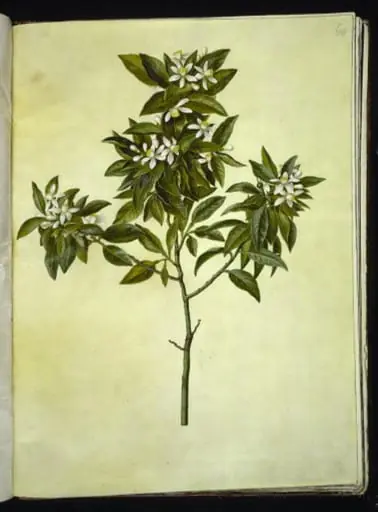 Citrus aurantium (pomerans)
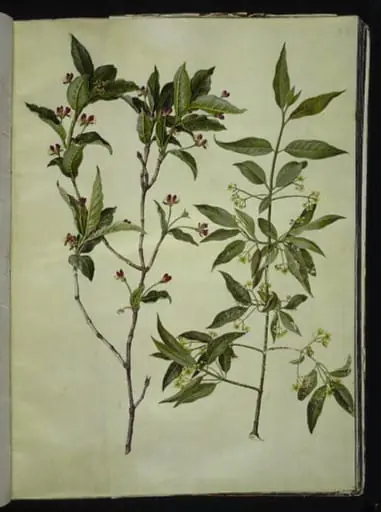 Lonicera alpigena (alpe-gedeblad); Euonymus europaeus (almindelig benved)
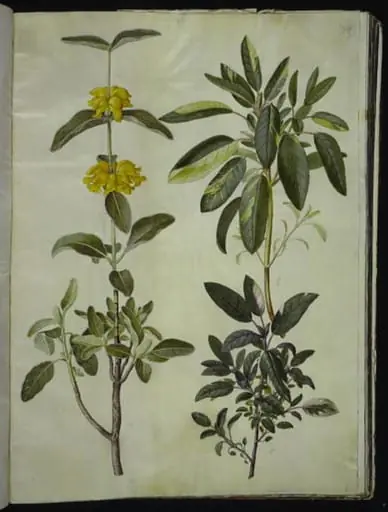 Phlomis fruticosa (almindelig løvehale); Salvia officinalis (læge-salvie)
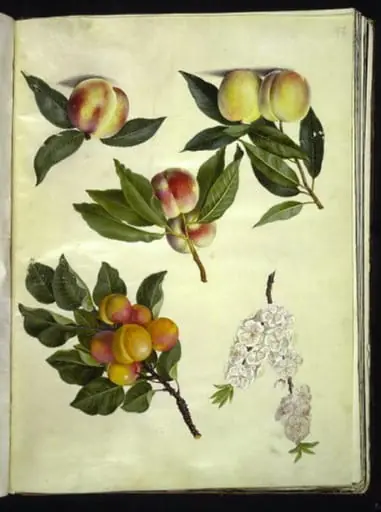 Prunus persica (fersken); Prunus armeniaca (almindelig abrikos)
 Ligustrum vulgare (almindelig liguster)
 Lemons