Artwork
Lemon and orange; Mulberry branch
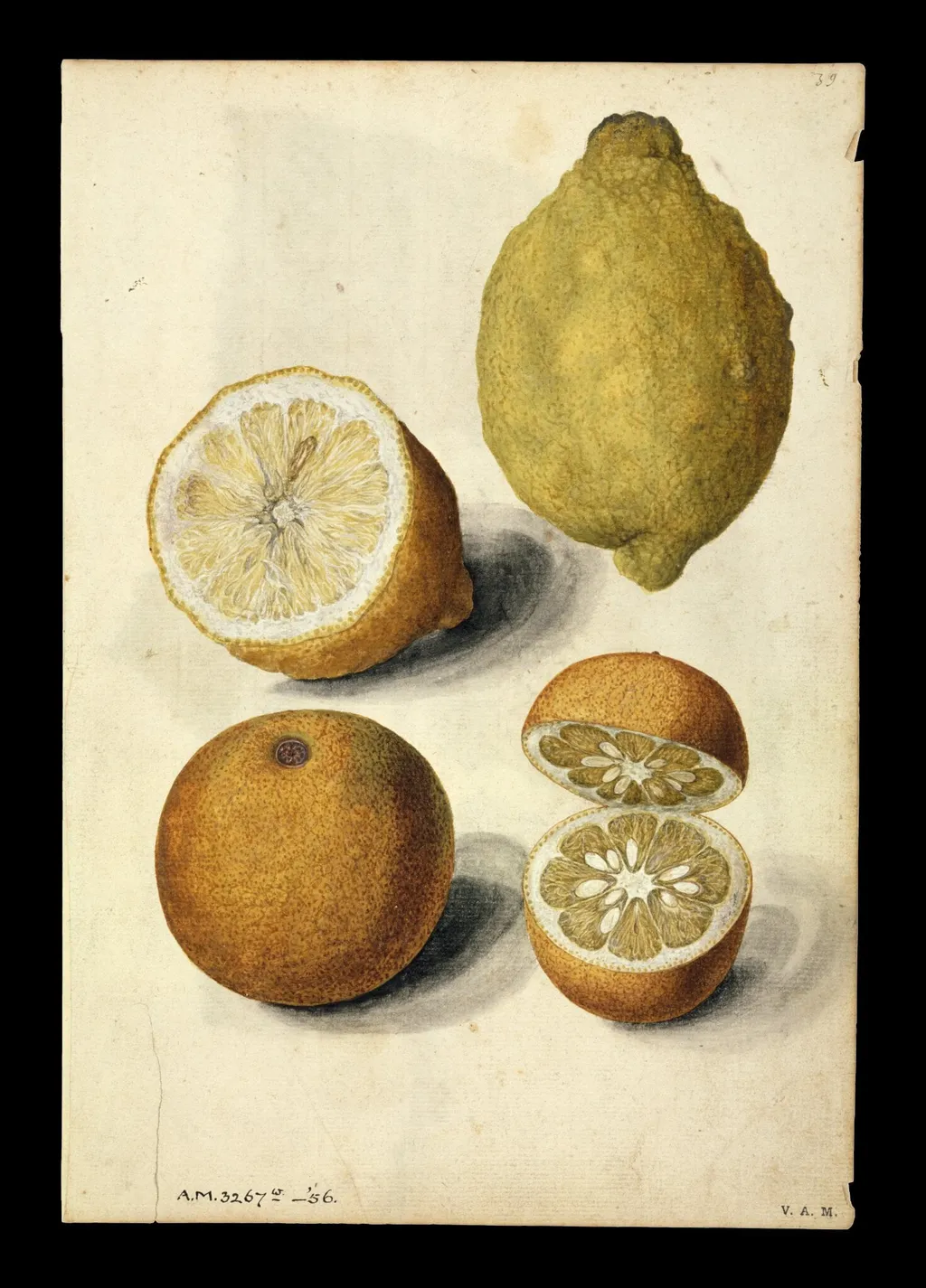
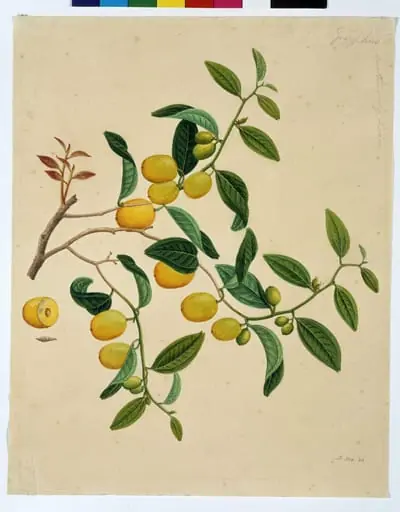
Lemon and orange; Mulberry branch is a watercolor work on paper by the Byzantine icon painting artist Jacques Le Moyne de Morgues. It dates from 1568 and is held in the collection of the Victoria and Albert Museum. This watercolour sheet presents two distinct botanical studies on opposite faces.
About this work
Overview
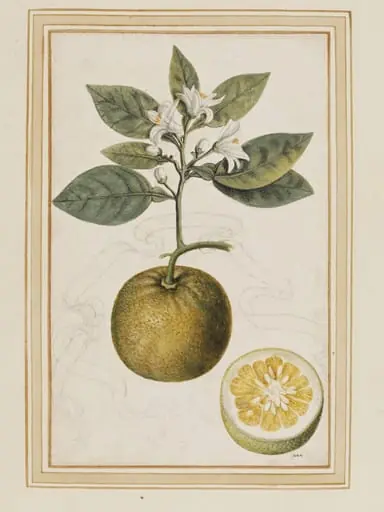
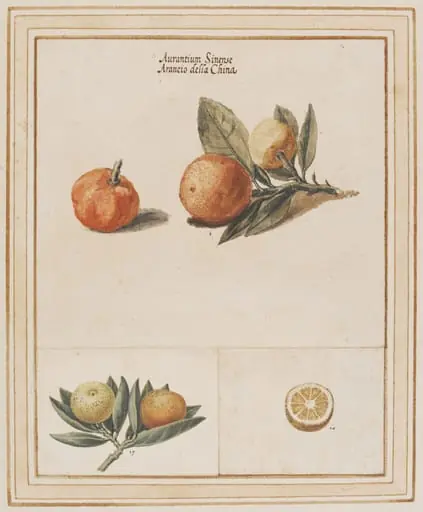
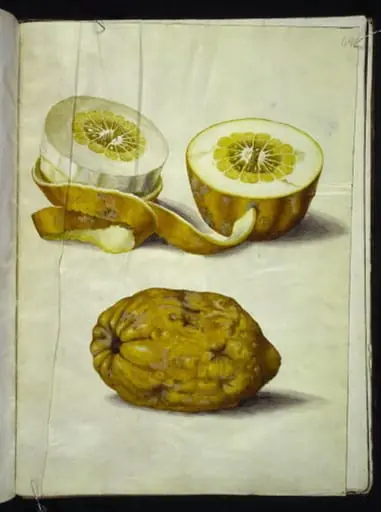
This watercolour sheet presents two distinct botanical studies on opposite faces. The front side depicts a whole orange, a halved orange, a whole lemon and a halved lemon, while the reverse shows a mulberry branch laden with leaves and berries. Executed in the late 16th century, the work belongs to a larger album of fifty‑nine similar sheets now held by the Victoria and Albert Museum.
Subject & Meaning
The images record both citrus fruits and mulberry foliage with a focus on anatomical detail. By showing whole and cut specimens, the artist highlights internal structures—segments, pulp and seed cavities—providing a visual reference for identification and comparison, reflecting the period’s dual interest in scientific observation and decorative representation of plant life.
Technique & Style
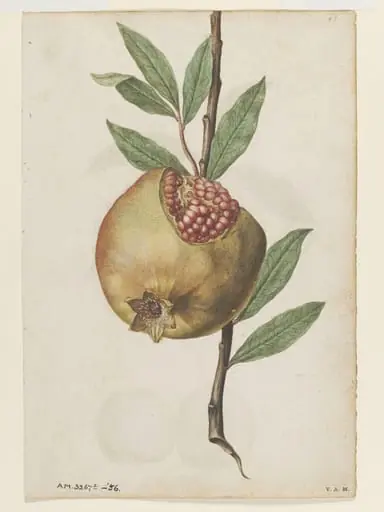
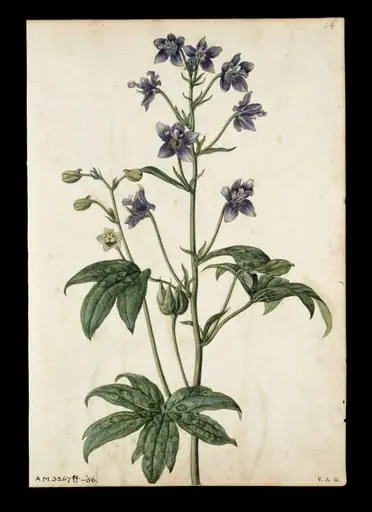
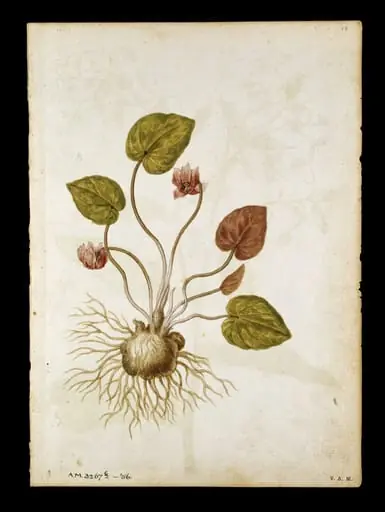
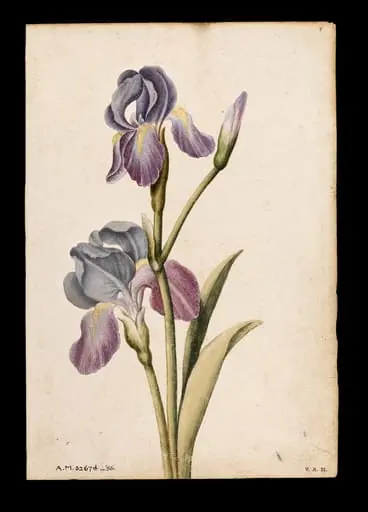
Rendered in transparent watercolour, the illustrations employ fine, controlled brushwork to delineate texture and light. The smooth yellow‑green skin of the lemon and the dimpled orange rind are modeled with subtle washes, while the mulberry leaves and berries are outlined with precise lines, creating a clear, almost clinical visual language typical of Renaissance botanical drawing.
History & Provenance
The sheet is attributed to Jacques Le Moyne de Morgues, a French artist active around 1575. It formed part of a bound collection of fifty‑nine watercolours that the Victoria and Albert Museum acquired in 1856, valued for its high‑quality binding and the rarity of such early French botanical albums.
Context
The piece exemplifies the 16th‑century surge in botanical documentation, a time when scholars and artists collaborated to catalogue flora for medicinal and horticultural purposes. Comparable albums exist in the British Museum and other European collections, indicating a broader network of florilegia that influenced later scientific illustration traditions.
Own this work as a print
Artist & collection
Artist
Jacques Le Moyne de Morgues (French pronunciation: ; c. 1533–1588) was a French artist and member of Jean Ribault's expedition to the New World. His depictions of Native American life and culture, colonial life, and…