Artwork
Colutea arborescens (almindelig blærebælg); Hippocrepis emerus (busk-hestesko)
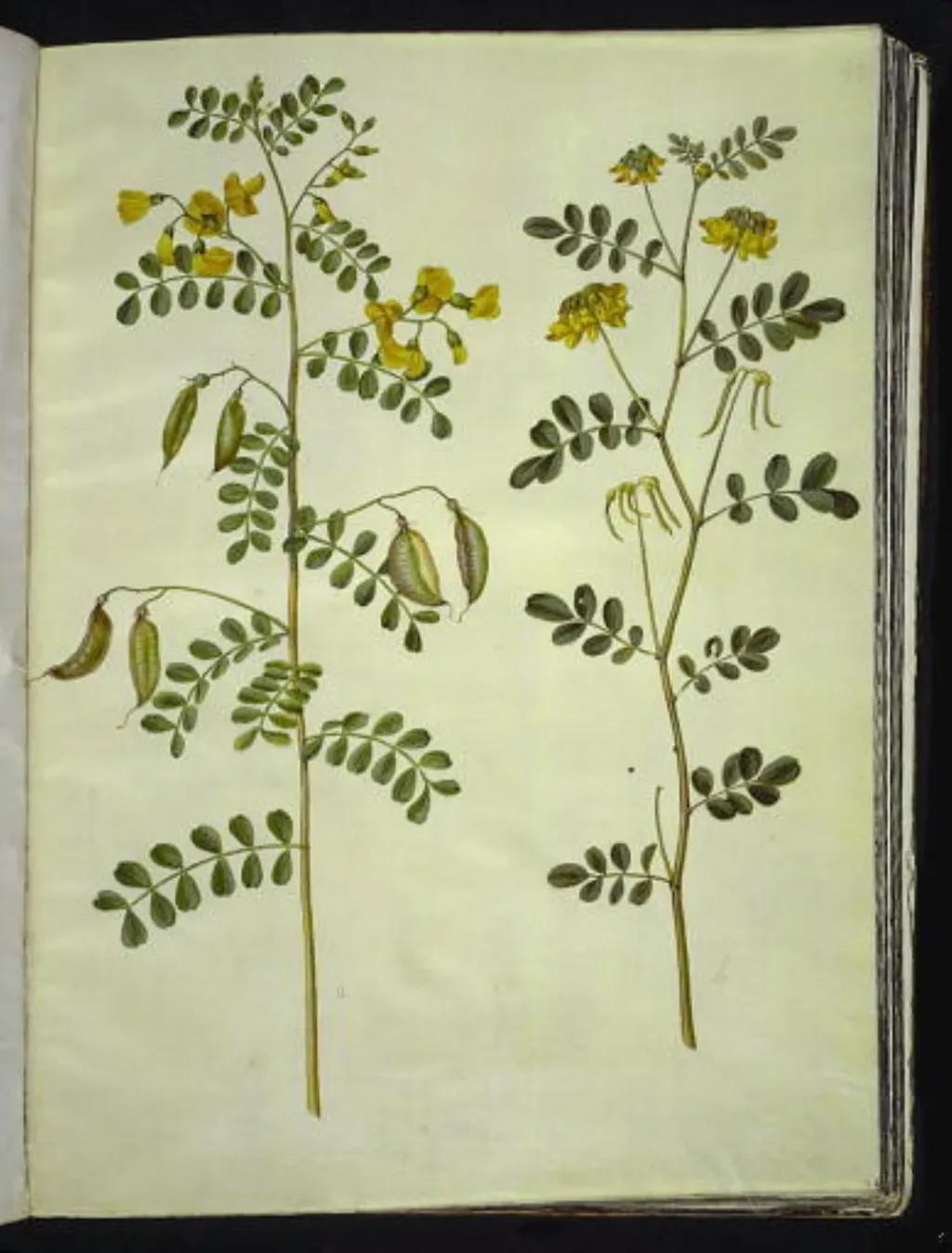
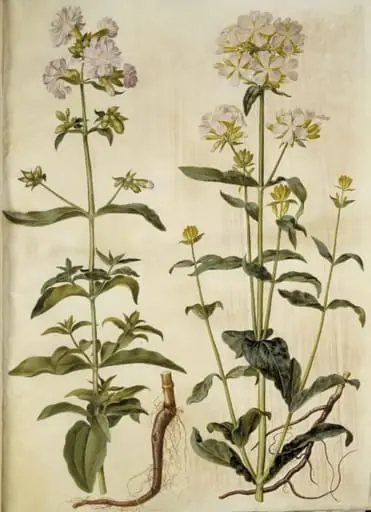
Colutea arborescens (almindelig blærebælg); Hippocrepis emerus (busk-hestesko) is an unspecified work on paper by Unknown. It dates from 1654 and is held in the collection of the Statens Museum for Kunst. Created around 1654, this watercolor illustration is part of the Museum of Ethnography’s collection.
About this work
Overview
Created around 1654, this watercolor illustration is part of the Museum of Ethnography’s collection. It presents a close‑up view of two leguminous plants—Colutea arborescens and Hippocrepis emerus—rendered with precise botanical accuracy. The composition is set against a muted beige ground that allows the green foliage and pale yellow blossoms to stand out.
Subject & Meaning
The work focuses on the contrasting forms of the two species. Colutea arborescens displays its characteristic inflated seed pods, while Hippocrepis emerus shows the distinctive horseshoe‑shaped seed pods suggested by its common name. Both are shown in full bloom, emphasizing their delicate five‑petaled yellow flowers and the orderly arrangement of leaves along slender brown stems.
Technique & Style
Executed in watercolor, the artist employs fine glazing to achieve subtle shifts in hue across the leaves and petals. Thin, transparent washes build depth, while precise brushwork defines the leaf veins and stem texture. The realistic approach reflects a scientific intent, capturing botanical details with clarity rather than decorative flourish.
History & Provenance
Attributed to the anonymous creator identified as 35199_person, the illustration dates to the mid‑17th century, a period when botanical drawing served both artistic and scholarly purposes. It entered the Museum of Ethnography’s holdings as part of its ethnobotanical collection, illustrating historical interest in plant identification and classification.
Artist & collection

 Domestic Scene
 Giacomo and Cardinal Marco, investing Andrea, Abbot of San Zeno, with his Benefice
 The Nymph of Fontainebleau
 Portrait of a Woman
 Madonna and Child with Saints in the Enclosed Garden
 Venus and Minerva
 Family Group of Four on Sofa
 Wall painting from Room H of the Villa of P. Fannius Synistor at Boscoreale
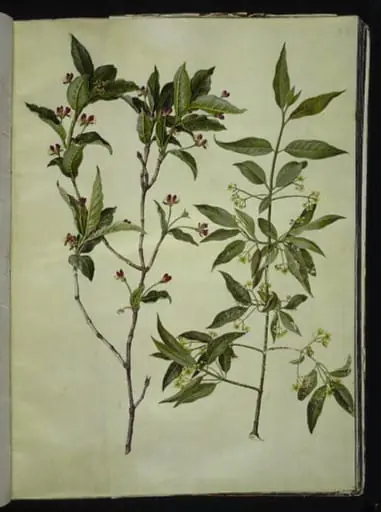 Lonicera alpigena (alpe-gedeblad); Euonymus europaeus (almindelig benved)
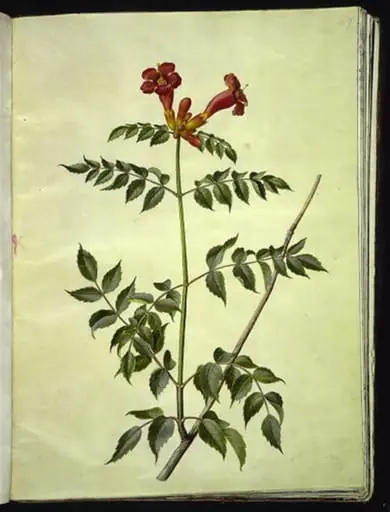 Campsis radicans (almindelig trompetblomst)
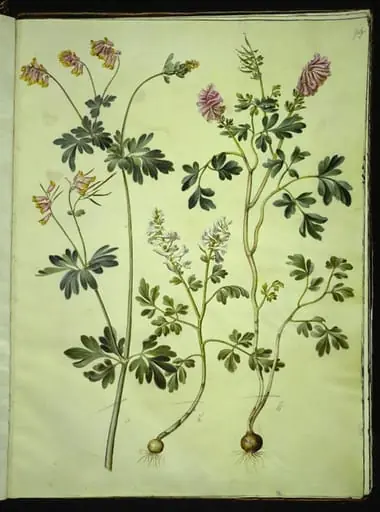 Capnoides sempervirens (harlekinurt); Corydalis solida (langstilket lærkespore)
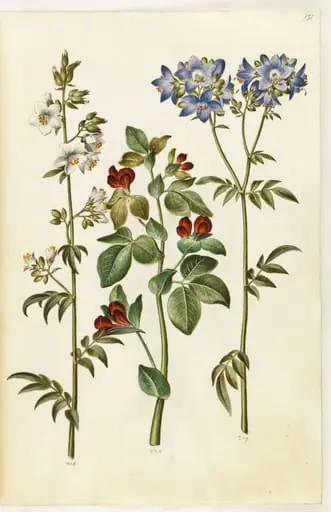 Polemonium caeruleum (almindelig jakobsstige); Lotus tetragonolobus (aspargesært)
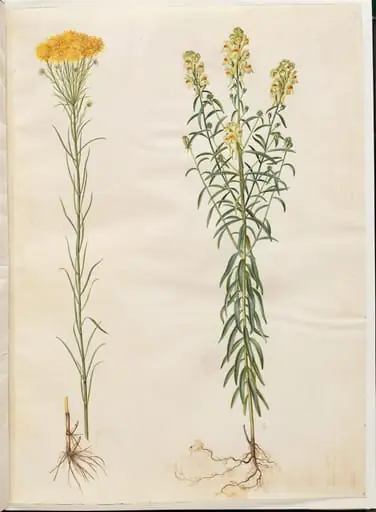 Aster linosyris (guldhår-asters); Linaria vulgaris (almindelig torskemund)
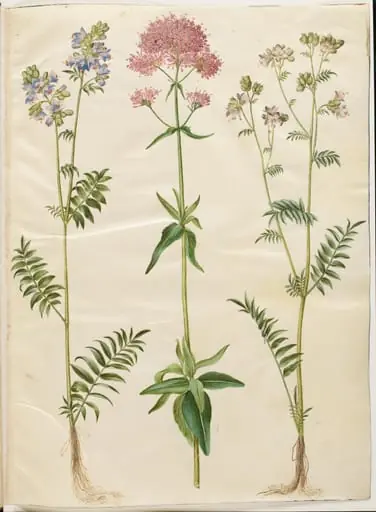 Polemonium caeruleum (almindelig jakobsstige); Centranthus ruber (rød sporebaldrian)
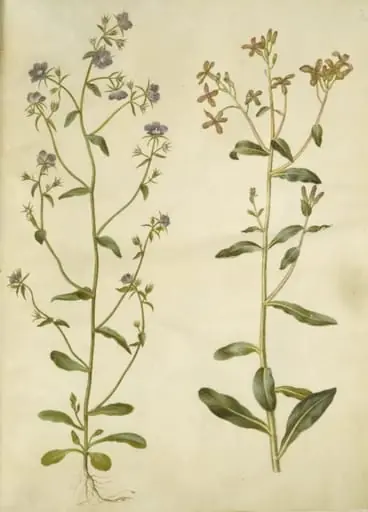 Legousia speculum-veneris (ægte venusspejl); Hesperis tristis (natviol)
 Saponaria officinalis (almindelig sæbeurt)