Artwork
Saponaria officinalis (almindelig sæbeurt)
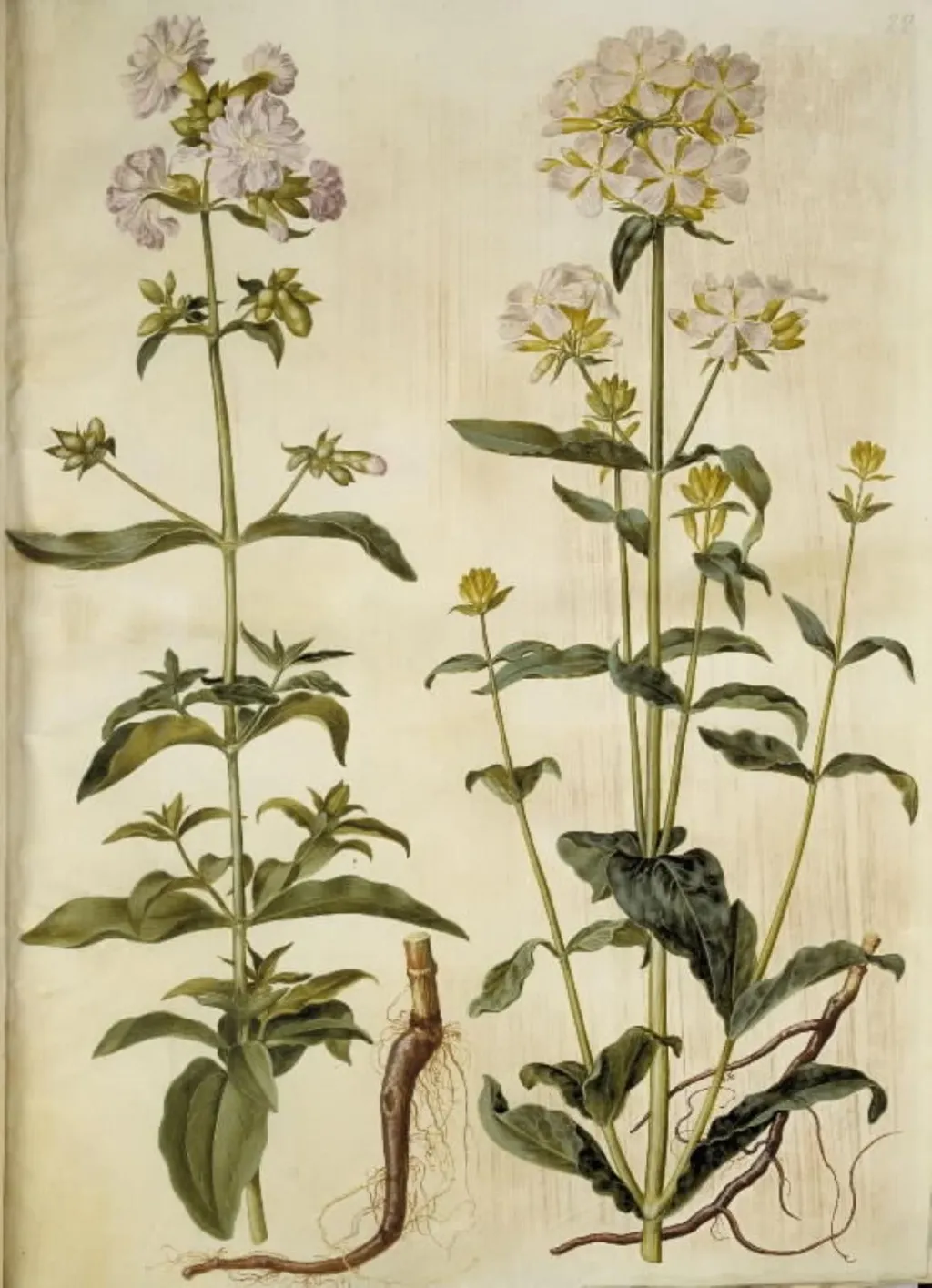
Saponaria officinalis (almindelig sæbeurt) is an unspecified work on paper by Unknown. It dates from 1654 and is held in the collection of the Statens Museum for Kunst. This watercolor painting, dated around 1654, depicts Saponaria officinalis, a common soapwort plant.
About this work
Overview
This watercolor painting, dated around 1654, depicts Saponaria officinalis, a common soapwort plant. Created by an artist identified as 35199_person, the work is part of the collection at the Museum of Ethnography. Rendered with precision and restraint, it serves as a scientific record rather than a decorative piece, capturing the plant’s structure with quiet clarity.
Subject & Meaning
The painting focuses on Saponaria officinalis, a herb known historically for its saponin-rich roots, used in cleaning and textile processing.
The painting focuses on Saponaria officinalis, a herb known historically for its saponin-rich roots, used in cleaning and textile processing. By illustrating the entire plant—including roots, stems, leaves, and clustered white flowers—the artist emphasizes its botanical integrity. The image reflects a period when natural history documentation sought to classify and understand flora for practical and scholarly purposes.
Technique & Style
Executed in watercolor, the work employs fine, controlled brushwork to convey texture and tonal variation. The leaves show a subtle contrast between their upper and lower surfaces, while the slender stems and delicate petals are rendered with minimal line work. The palette is restrained, relying on muted greens and whites to achieve a sense of botanical accuracy over artistic flourish.
History & Provenance
The painting originates from the mid-seventeenth century and has been preserved in the Museum of Ethnography’s collection. Its origins as part of a larger botanical study are not fully documented, but its format and detail suggest it was likely produced for academic or medicinal use, possibly within a European scholarly or medical circle of the time.
Context
During the 1650s, European naturalists increasingly turned to visual documentation to record plant species as part of broader efforts in taxonomy and pharmacology. This work aligns with a growing tradition of illustrated herbaria, where accuracy and clarity were prioritized over ornamentation, reflecting the empirical turn in scientific inquiry.
Legacy
Though the artist’s broader oeuvre remains obscure, this piece endures as an example of early scientific illustration. Its quiet precision contributes to a historical archive of botanical knowledge, offering insight into how plants were observed, recorded, and understood before the advent of modern botanical photography.
Artist & collection

 Domestic Scene
 Giacomo and Cardinal Marco, investing Andrea, Abbot of San Zeno, with his Benefice
 The Nymph of Fontainebleau
 Portrait of a Woman
 Madonna and Child with Saints in the Enclosed Garden
 Venus and Minerva
 Family Group of Four on Sofa
 Wall painting from Room H of the Villa of P. Fannius Synistor at Boscoreale
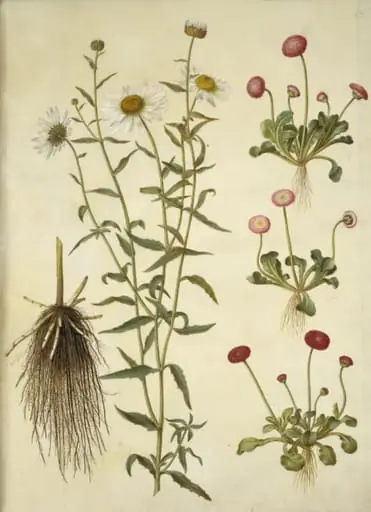 Leucanthemum vulgare (hvid okseøje); Bellis perennis (almindelig tusindfryd)
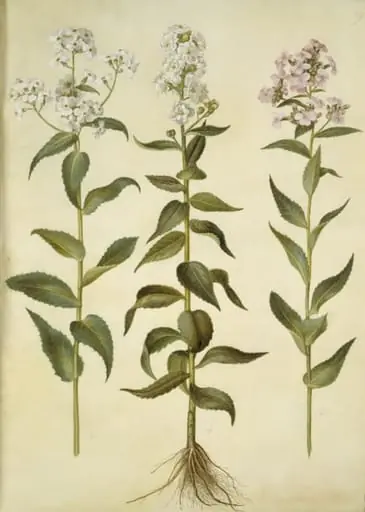 Hesperis matronalis (almindelig aftenstjerne)
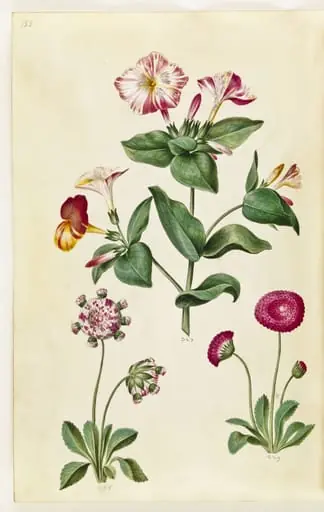 Mirabilis jalapa (vidunderblomst); Bellis perennis (almindelig tusindfryd)
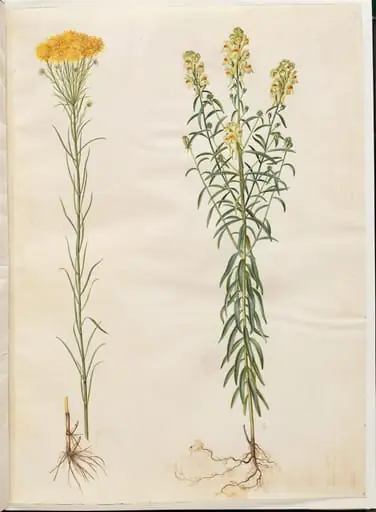 Aster linosyris (guldhår-asters); Linaria vulgaris (almindelig torskemund)
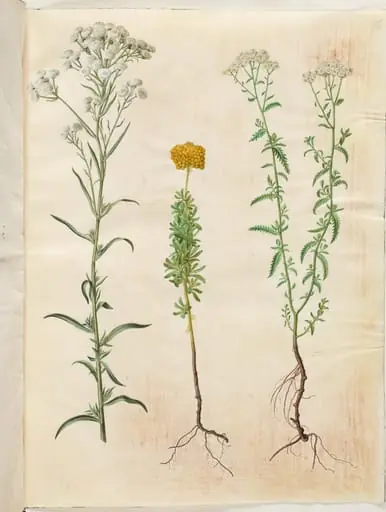 Achillea ptarmica (sølvknap-røllike); Achillea ageratum (balsam-røllike); Achillea millefolium (almindelig røllike)
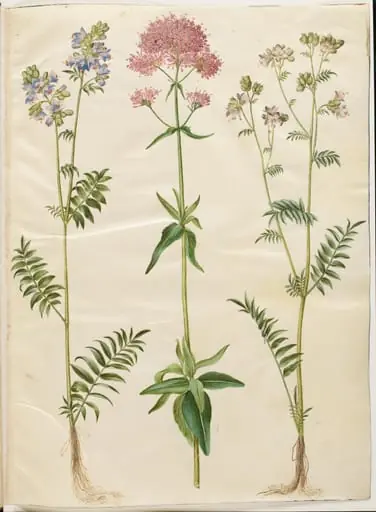 Polemonium caeruleum (almindelig jakobsstige); Centranthus ruber (rød sporebaldrian)