Artwork
Fritillaria imperialis (kejserkrone)
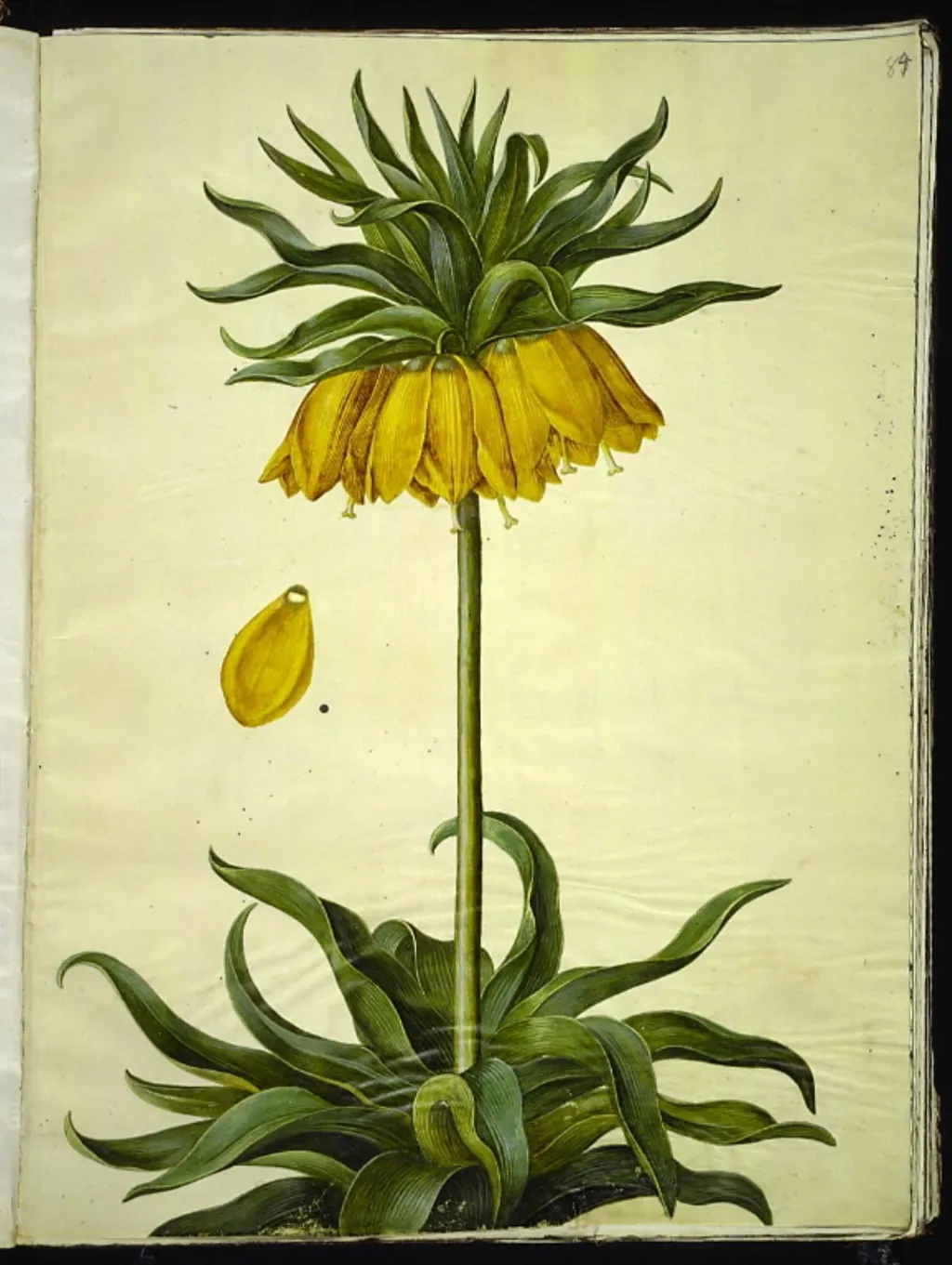
Fritillaria imperialis (kejserkrone) is an unspecified work on paper by Unknown. It dates from 1654 and is held in the collection of the Statens Museum for Kunst. Created around 1654, this watercolor depicts Fritillaria imperialis, commonly known as the crown imperial.
About this work
Overview
Rendered with precision, the painting isolates the plant against a pale background, emphasizing botanical accuracy over decorative composition.
Created around 1654, this watercolor depicts Fritillaria imperialis, commonly known as the crown imperial. The work is attributed to an anonymous artist and is part of the collection at the Museum of Ethnography. Rendered with precision, the painting isolates the plant against a pale background, emphasizing botanical accuracy over decorative composition. Its purpose aligns with scientific illustration practices of the period, where visual documentation served scholarly study.
Subject & Meaning
The subject is a single specimen of Fritillaria imperialis, a bulbous plant native to southwestern Asia. Its towering stem, pendant bulb, and flaring yellow petals are rendered without embellishment, reflecting a focus on botanical identification rather than symbolic meaning. The absence of context or human elements underscores its role as a specimen for study, likely intended for inclusion in a herbarium or botanical reference.
Technique & Style
Executed in watercolor, the painting employs thin, layered washes to achieve subtle gradations in color and texture. The petals show delicate curves, while the leaves are rendered with fine, wavy lines to suggest their natural flexibility. The stem and bulb are defined with precise outlines and minimal shading, demonstrating a methodical approach typical of 17th-century botanical illustration, where clarity and detail took precedence over artistic expression.
History & Provenance
The artwork was likely produced in the mid-17th century as part of a larger collection of plant studies, possibly commissioned by a scholar or collector interested in exotic flora. It entered the Museum of Ethnography’s holdings through an acquisition or donation, though its exact path from creation to museum remains undocumented. Its survival reflects the value placed on such illustrations as records of natural history.
Context
During the 1600s, European interest in botany surged alongside global exploration. Artists were frequently employed to document unfamiliar plants brought back from Asia, the Middle East, and the Americas. This painting fits within that tradition—its meticulous detail and lack of ornamentation mirror the growing scientific demand for accurate visual records, distinct from the ornamental floral art of the time.
Legacy
Though unsigned and unattributed, the work stands as an example of early scientific illustration that contributed to the classification of plant species. Its preservation in a museum setting highlights its enduring role as a reference tool. Such images laid groundwork for modern botanical science, bridging art and empirical observation before the advent of photography.
Artist & collection

 Domestic Scene
 Giacomo and Cardinal Marco, investing Andrea, Abbot of San Zeno, with his Benefice
 The Nymph of Fontainebleau
 Portrait of a Woman
 Madonna and Child with Saints in the Enclosed Garden
 Venus and Minerva
 Family Group of Four on Sofa
 Wall painting from Room H of the Villa of P. Fannius Synistor at Boscoreale
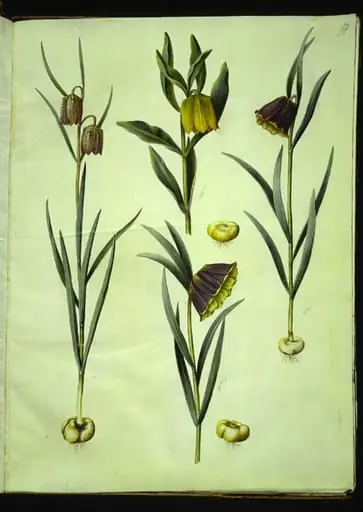 Fritillaria meleagris (almindelig vibeæg); Fritillaria aurea eller Fritillaria tubiformis & moggridgei (vibeæg); Fritillaria montana
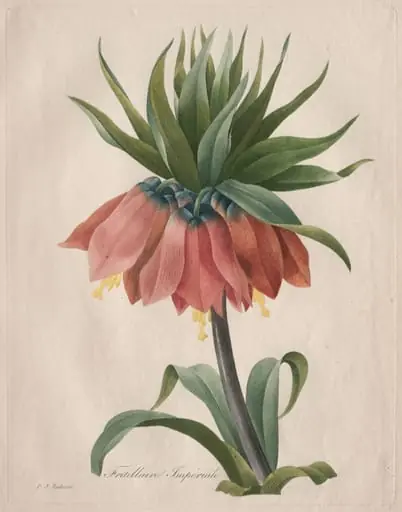 Crown Imperial Fritillary
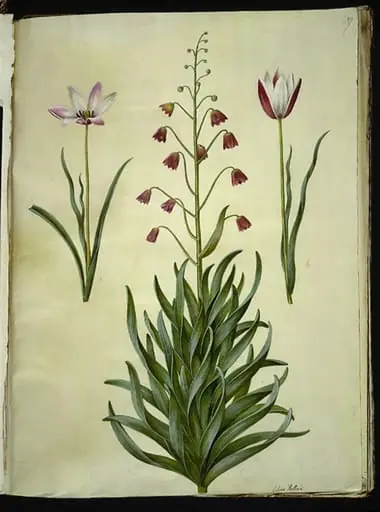 Tulipa clusiana (clusius-tulipan); Fritillaria persica (persisk fritillaria)
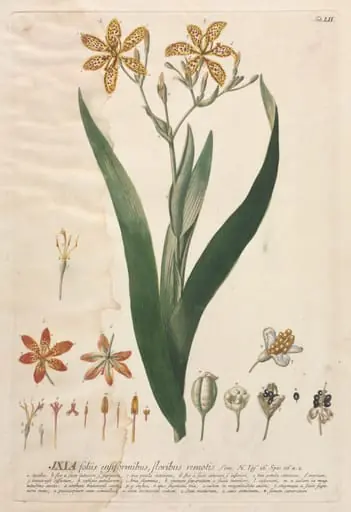 Plantae Selectae: No. 52 - Ixia
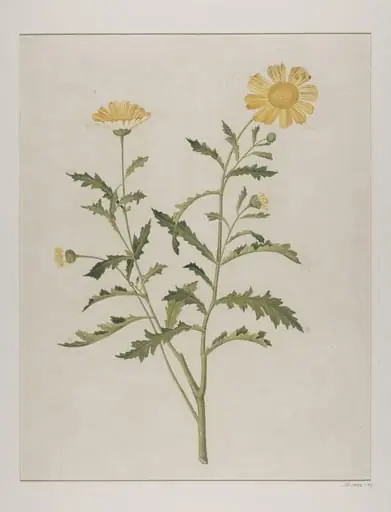 Wild chrysanthemum (chrysanthemum indicum)
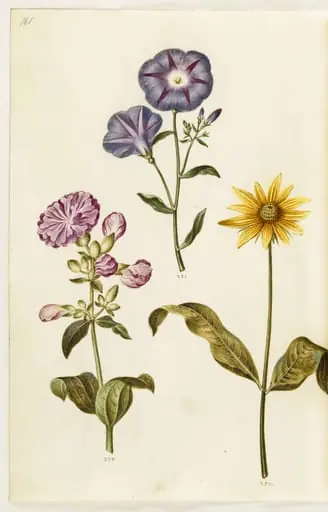 Saponaria officinalis (almindelig sæbeurt); Convolvulus tricolor (jomfruskørt); Helianthus (?) (solsikke-art)
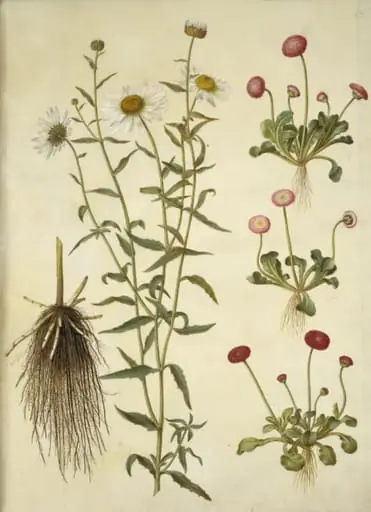 Leucanthemum vulgare (hvid okseøje); Bellis perennis (almindelig tusindfryd)