Artwork
Tulipa clusiana (clusius-tulipan); Fritillaria persica (persisk fritillaria)
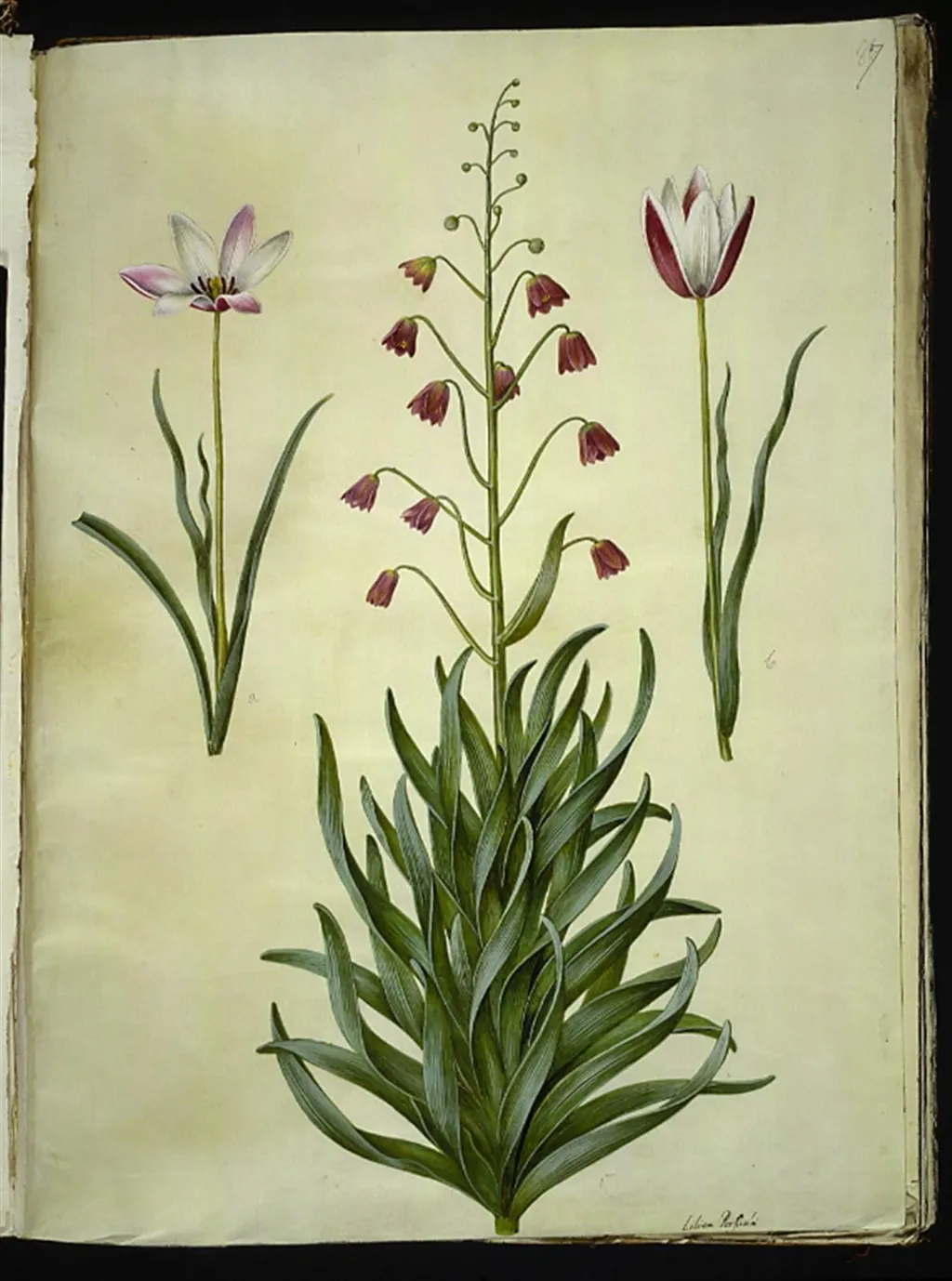
Tulipa clusiana (clusius-tulipan); Fritillaria persica (persisk fritillaria) is an unspecified work on paper by Unknown. It dates from 1654 and is held in the collection of the Statens Museum for Kunst. This botanical illustration depicts two flowering species: Tulipa clusiana and Fritillaria persica, rendered around 1654.
About this work
Overview
The work is attributed to an artist identified as 35199_person and is part of the collection at the Museum of Ethnography.
This botanical illustration depicts two flowering species: Tulipa clusiana and Fritillaria persica, rendered around 1654. The work is attributed to an artist identified as 35199_person and is part of the collection at the Museum of Ethnography. Rendered with precision, the painting serves as a record of exotic flora cultivated in European gardens during the 17th century, reflecting the period’s growing interest in botanical classification and foreign plant species.
Subject & Meaning
The painting presents three distinct blooms: two tulips with pale petals edged in pink and red, and a central fritillaria with bell-shaped flowers in red and green tones. These species, native to the Near East and Central Asia, were rare and prized in European collections. Their inclusion suggests an emphasis on rarity and exoticism, aligning with the era’s scientific and horticultural curiosity about non-European flora.
Technique & Style
The artist employs fine brushwork to capture the delicate structure of each flower, with attention to petal texture, vein detail, and subtle gradations of color. The light yellow background isolates the specimens, enhancing their clarity without distraction. The composition is static and frontal, prioritizing botanical accuracy over decorative flourish, characteristic of scientific illustrations from the period.
History & Provenance
Created circa 1654, the work likely originated in a private or academic setting where botanical specimens were studied and documented. It entered the Museum of Ethnography’s collection through unknown means, possibly as part of a larger archive of natural history drawings. Its survival suggests it was valued for its documentation of plant diversity, even if its artistic authorship remains obscure.
Context
In mid-17th-century Europe, tulips and fritillarias were symbols of both scientific inquiry and economic speculation, particularly during the tulip mania period. Botanical illustrations like this one supported emerging taxonomic systems and were used in herbaria and scholarly publications. This piece reflects the intersection of art, science, and colonial exchange, as exotic plants were imported and cultivated across the continent.
Legacy
Though the artist’s identity remains unverified, the work contributes to a broader corpus of early modern botanical records. It preserves visual data on plant forms that may no longer be common in cultivation, offering insight into historical horticultural practices. As a specimen of scientific illustration, it endures as a quiet testament to the era’s systematic observation of the natural world.
Artist & collection

 Domestic Scene
 Giacomo and Cardinal Marco, investing Andrea, Abbot of San Zeno, with his Benefice
 The Nymph of Fontainebleau
 Portrait of a Woman
 Madonna and Child with Saints in the Enclosed Garden
 Venus and Minerva
 Family Group of Four on Sofa
 Wall painting from Room H of the Villa of P. Fannius Synistor at Boscoreale
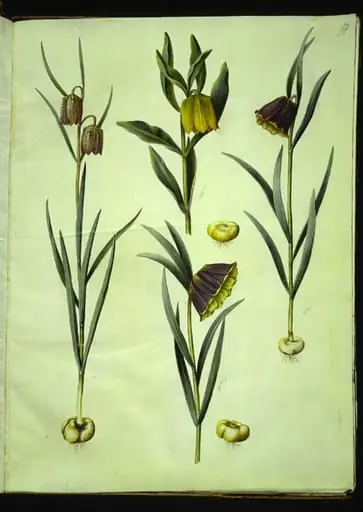 Fritillaria meleagris (almindelig vibeæg); Fritillaria aurea eller Fritillaria tubiformis & moggridgei (vibeæg); Fritillaria montana
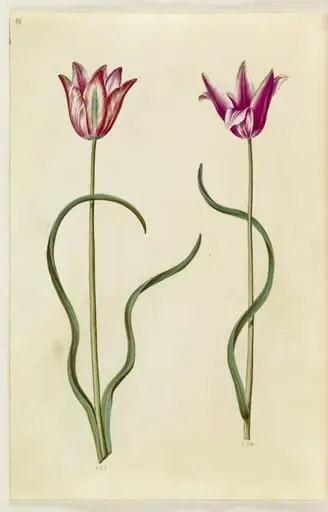 Tulipa clusiana (clusius-tulipan)
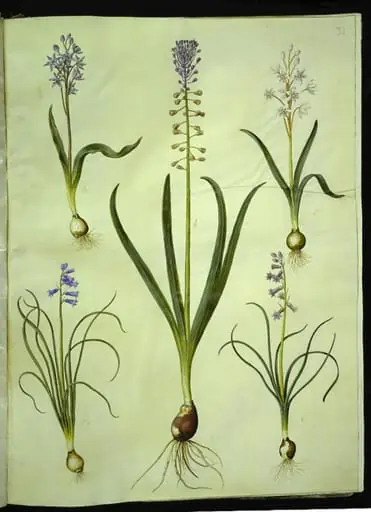 Scilla bifolia (tobladet skilla); Muscari comosum (duskhyacint); Brimeura amethystina (pyrenæisk hyacint)
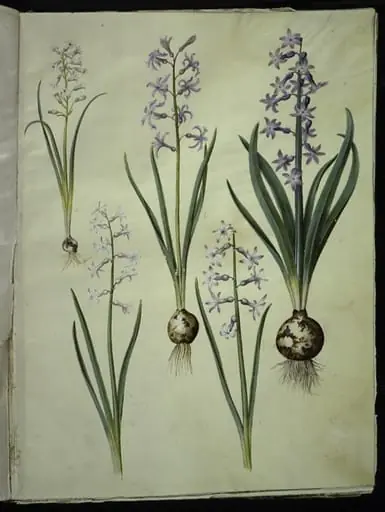 Brimeura amethystina (pyrenæisk hyacint); Hyacinthus orientalis (almindelig hyacint)
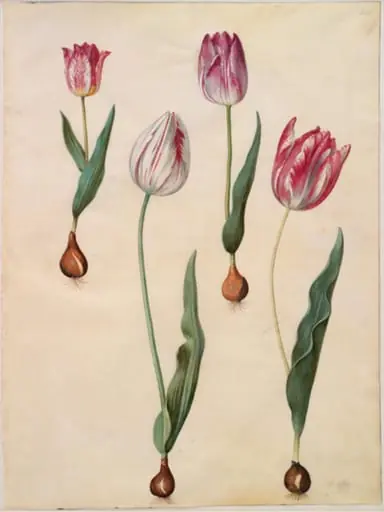 Tulipa gesneriana (have-tulipan)
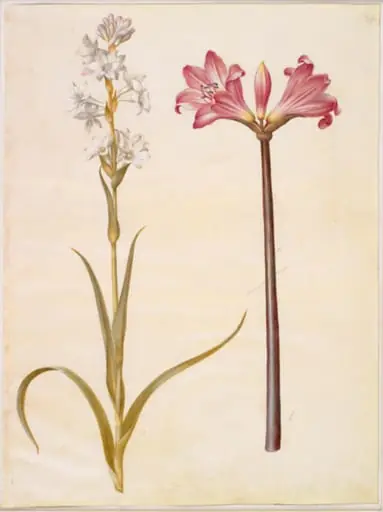 Polianthes tuberosa (tuberose); Amaryllis belladonna (belladonnalilje)
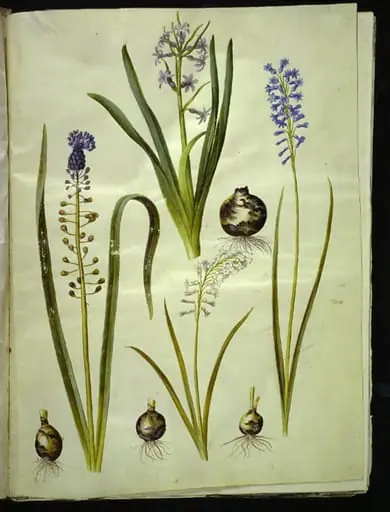 Hyacinthus orientalis (almindelig hyacint); Muscari comosum (duskhyacint); Brimeura amethystina (pyrenæisk hyacint)
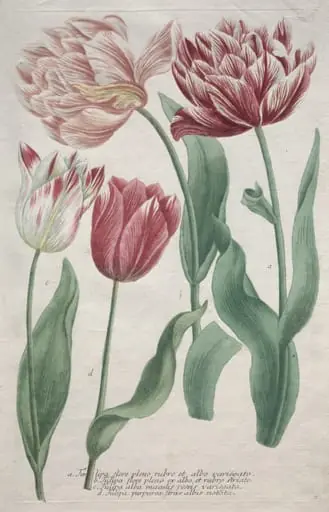 Tulips
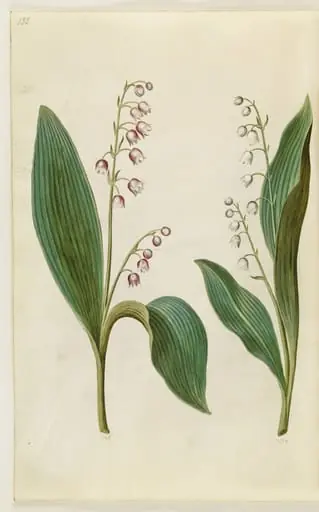 Convallaria majalis rosea (rød liljekonval); Convallaria majalis (liljekonval)
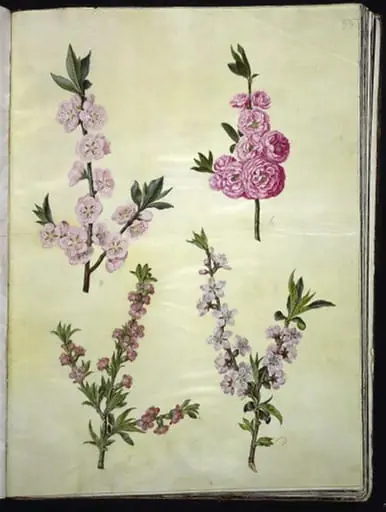 Prunus dulcis (mandel); Prunus persica (fersken)