Artwork
Fritillaria meleagris (almindelig vibeæg)
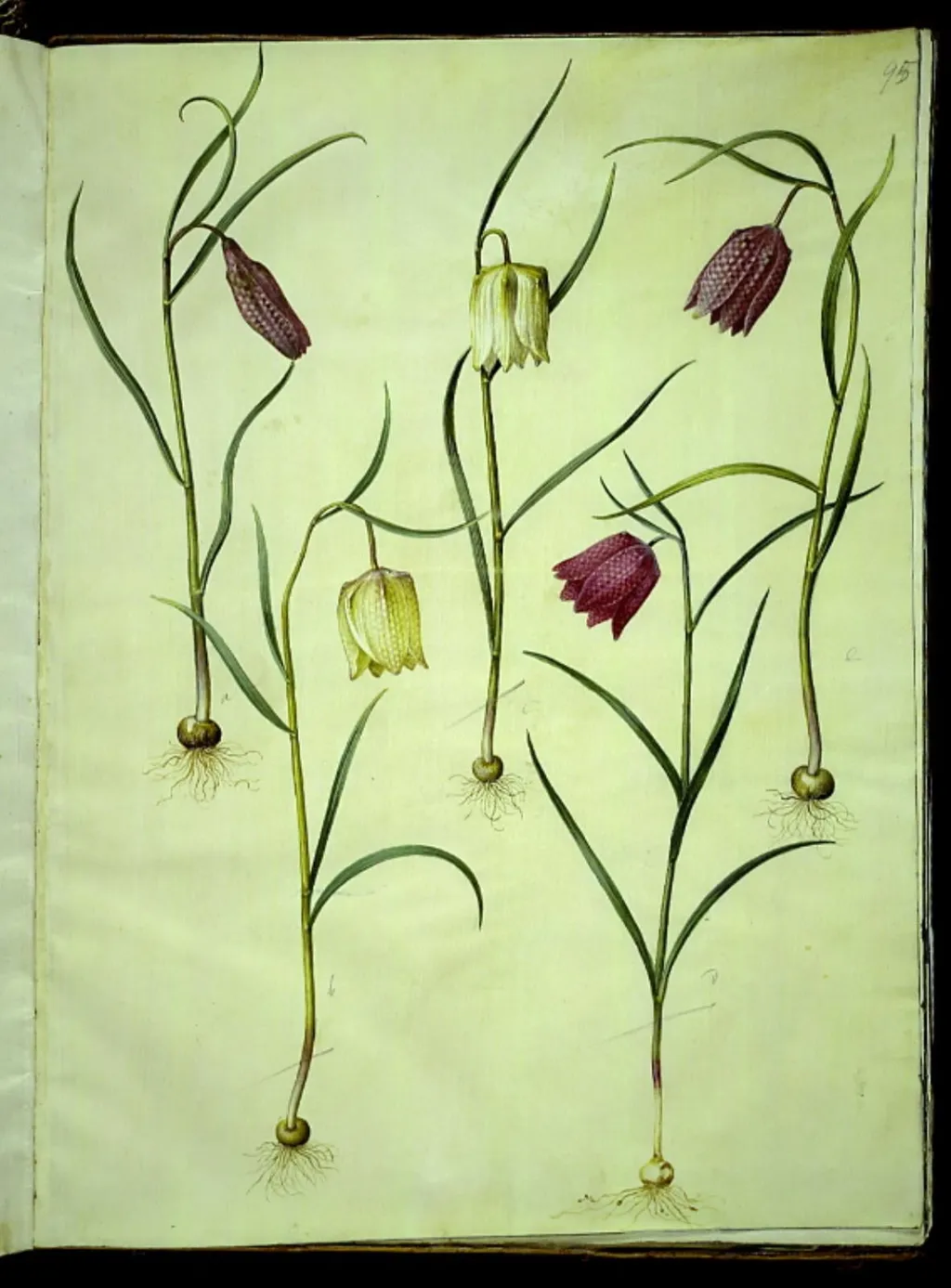
Fritillaria meleagris (almindelig vibeæg) is an unspecified work on paper by Unknown. It dates from 1654 and is held in the collection of the Statens Museum for Kunst. This watercolor depicts three Fritillaria meleagris plants, rendered with botanical precision around 1654.
About this work
Overview
Each element is rendered with careful observation, reflecting a tradition of scientific illustration rather than ornamental art.
This watercolor depicts three Fritillaria meleagris plants, rendered with botanical precision around 1654. The work is attributed to an artist identified as 35199_person and is part of the collection at the Museum of Ethnography. The composition isolates the plants against a neutral background, emphasizing structural clarity over decorative context. Each element is rendered with careful observation, reflecting a tradition of scientific illustration rather than ornamental art.
Subject & Meaning
The painting focuses on the Fritillaria meleagris, a wildflower known for its checkered purple and yellow blooms. By depicting the plant in full growth—with roots, stems, and blossoms—the artist captures its life cycle. The inclusion of both color variations suggests an interest in natural variation within the species, possibly for educational or taxonomic purposes rather than symbolic expression.
Technique & Style
Executed in watercolor, the work employs thin, layered washes to achieve subtle gradations of color and texture. Petals are rendered with fine brushwork, capturing the speckled patterns and delicate translucency. The roots and grass-like leaves are drawn with linear precision, indicating a methodical approach. The absence of shadow or atmospheric effects reinforces a focus on anatomical accuracy over mood or ambiance.
History & Provenance
Created circa 1654, the painting entered the Museum of Ethnography’s collection through unknown means. Its origin as part of a larger botanical study or private collection remains undocumented. The attribution to 35199_person reflects archival identification, though the artist’s full identity and broader body of work are not publicly established. The work’s survival suggests it was valued for its observational rigor.
Context
In mid-17th-century Europe, detailed plant illustrations flourished alongside the rise of natural philosophy and early botany. Artists often worked with scholars to document flora for scientific catalogs. This piece aligns with that tradition, sharing characteristics with works produced for universities or medicinal herbals. Its plain background and lack of human or architectural elements reflect a prioritization of the specimen itself.
Legacy
Though not widely exhibited, the painting contributes to a broader archive of pre-modern botanical records. Its technical discipline offers insight into how natural forms were studied before photographic reproduction. It remains a quiet example of how close observation shaped early scientific understanding of plant diversity, influencing later herbarium practices and botanical illustration standards.
Artist & collection

 Domestic Scene
 Giacomo and Cardinal Marco, investing Andrea, Abbot of San Zeno, with his Benefice
 The Nymph of Fontainebleau
 Portrait of a Woman
 Madonna and Child with Saints in the Enclosed Garden
 Venus and Minerva
 Family Group of Four on Sofa
 Wall painting from Room H of the Villa of P. Fannius Synistor at Boscoreale
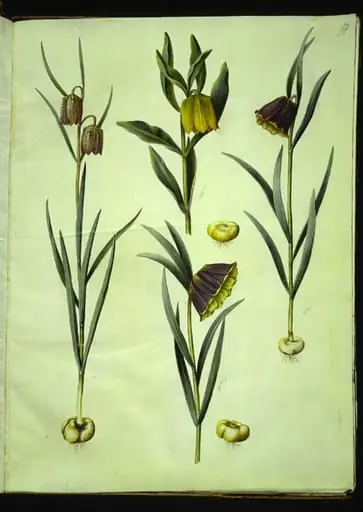 Fritillaria meleagris (almindelig vibeæg); Fritillaria aurea eller Fritillaria tubiformis & moggridgei (vibeæg); Fritillaria montana
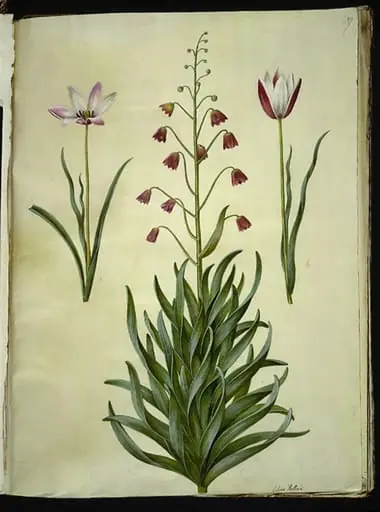 Tulipa clusiana (clusius-tulipan); Fritillaria persica (persisk fritillaria)
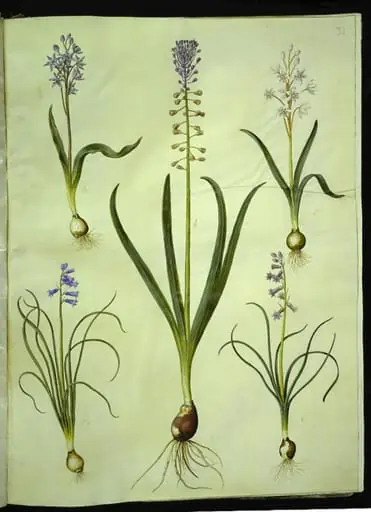 Scilla bifolia (tobladet skilla); Muscari comosum (duskhyacint); Brimeura amethystina (pyrenæisk hyacint)
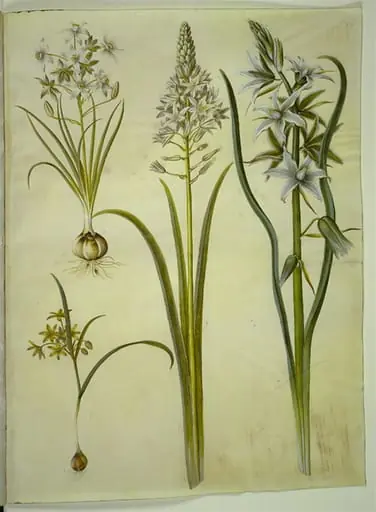 Ornithogalum umbellatum (kost-fuglemælk); Ornithogalum pyramidale (pyramide-fuglemælk); Gagea lutea (almindelig guldstjerne); Ornithogalum nutans (nikkende fuglemælk)
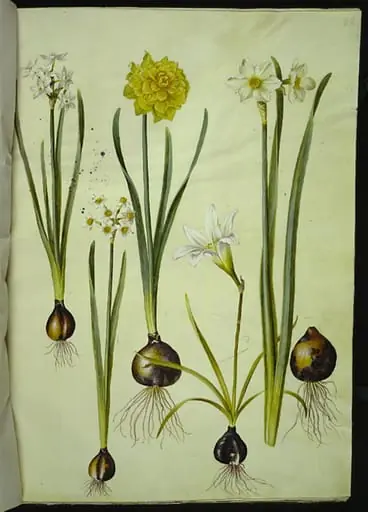 Narcissus tazetta (tazet); Narcissus pseudonarcissus (påskelilje); Zephyranthes atamasca (zefyrblomst); Narcissus ? ×incomparabilis (have-narcis)
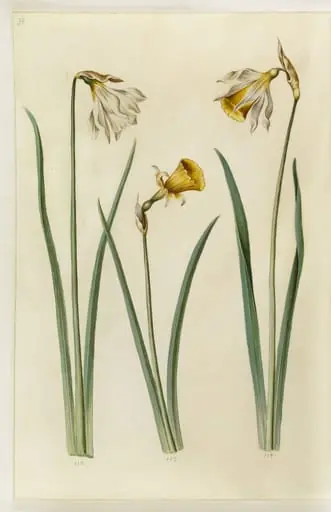 Narcissus pseudonarcissus moschatus (moskus-narcis); Narcissus bulbocodium (krinoline-narcis); Narcissus pseudonarcissus (påskelilje)
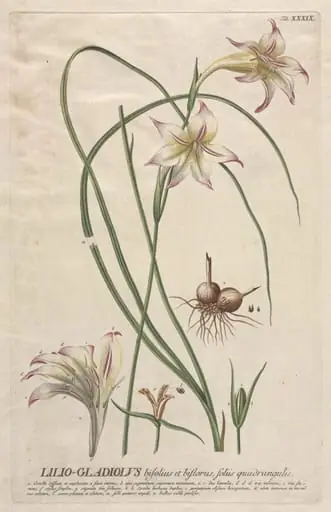 Plantae Selectae: No. 39 - Lilio-Gladiolus
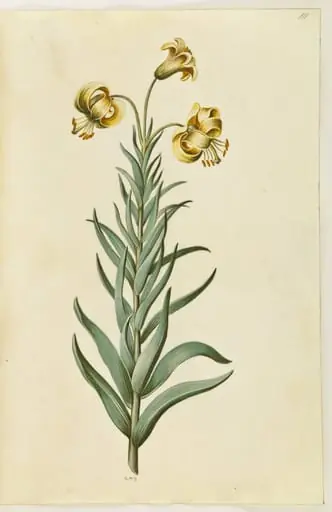 Lilium pyrenaicum (pyrenæisk lilje)
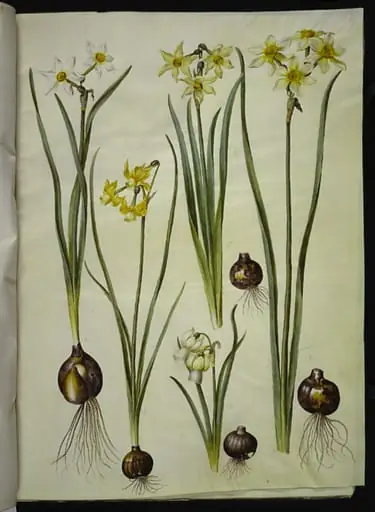 Narcissus poeticus (pinselilje); Narcissus triandrus (orkide-narcis); Narcissus ×medioluteus (toblomstret narcis)
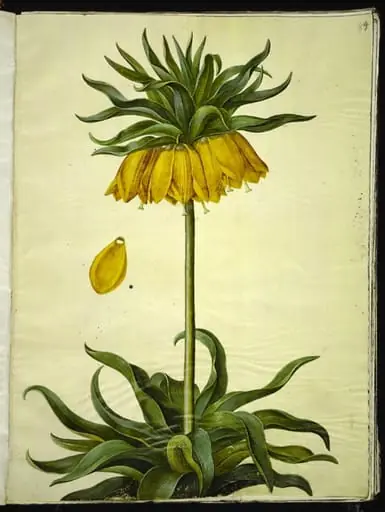 Fritillaria imperialis (kejserkrone)
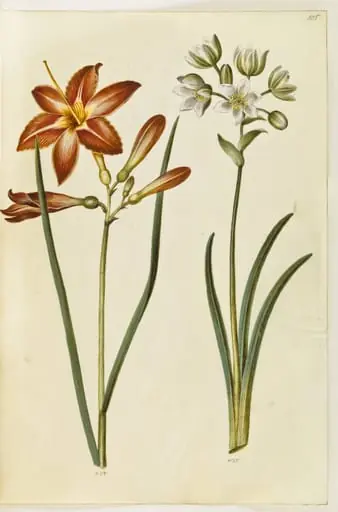 Hemerocallis fulva (brun daglilje); Ornithogalum arabicum (mælkestjerne)
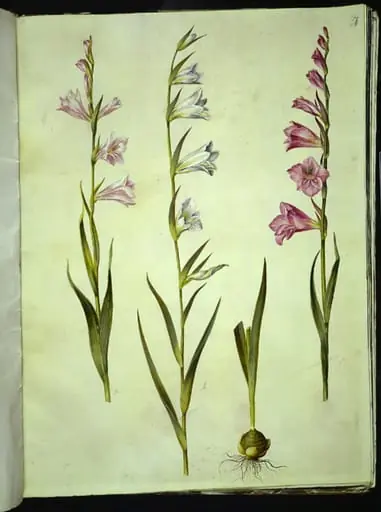 Gladiolus communis (almindelig gladiolus)