Artwork
Primula ×pubescens Wulfen (have-aurikel)
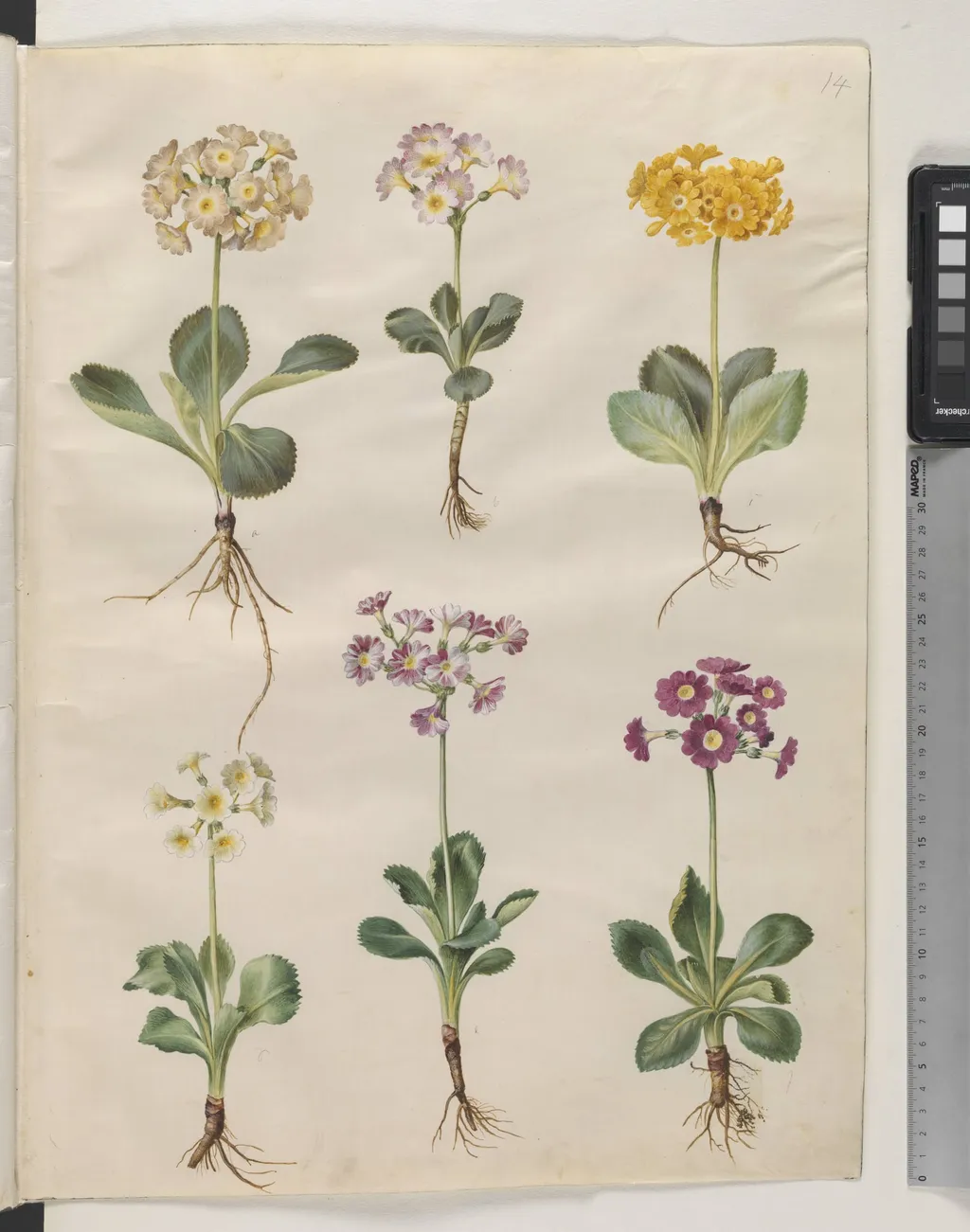
Primula ×pubescens Wulfen (have-aurikel) is an unspecified work on paper by Unknown. It dates from 1654 and is held in the collection of the Statens Museum for Kunst. Primula × pubescens Wulfen, commonly known as have‑aurikel, is a botanical illustration dating to around 1654.
About this work
Overview
Primula × pubescens Wulfen, commonly known as have‑aurikel, is a botanical illustration dating to around 1654. The work, attributed to the artist identified as 35199_person, is part of the collection of the Museum of Ethnography. Rendered as an image, it presents a compact study of five individual plants, arranged in two rows, each rendered with meticulous attention to form and colour.
Subject & Meaning
The illustration depicts five small specimens of Primula × pubescens, each showing the characteristic foliage, roots, and blossoms.
The illustration depicts five small specimens of Primula × pubescens, each showing the characteristic foliage, roots, and blossoms. The flowers appear in three hues—yellow, purple and white—offering a comparative view of the species’ variation. By isolating the plants against a neutral background, the image emphasizes their morphological details, serving both as a visual record and a tool for botanical identification.
Technique & Style
Executed with fine line work and subtle shading, the drawing highlights the delicate structure of petals, stems and leaves. The artist’s focus on minute details suggests a scientific approach typical of 17th‑century natural history illustration, where accuracy superseded decorative intent. The composition balances realism with a clear, orderly layout, allowing each specimen to be examined individually.
History & Provenance
Created circa 1654, the work has remained within institutional holdings, eventually entering the Museum of Ethnography’s collection. While the creator is recorded only by a catalog reference (35199_person), the piece reflects the period’s growing interest in cataloguing flora for both scholarly and educational purposes, linking it to early modern ethnobotanical studies.
Artist & collection

 Domestic Scene
 Giacomo and Cardinal Marco, investing Andrea, Abbot of San Zeno, with his Benefice
 The Nymph of Fontainebleau
 Portrait of a Woman
 Madonna and Child with Saints in the Enclosed Garden
 Venus and Minerva
 Family Group of Four on Sofa
 Wall painting from Room H of the Villa of P. Fannius Synistor at Boscoreale
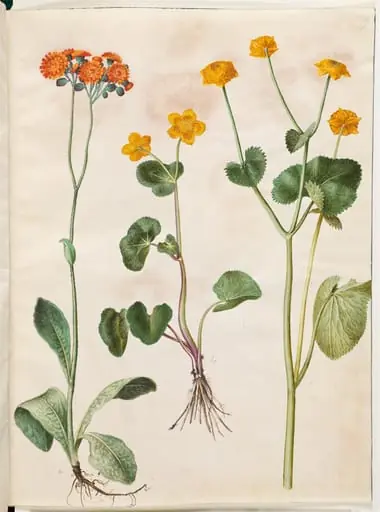 Pilosella aurantiaca (pomerans-høgeurt); Caltha palustris (eng-kabbeleje)
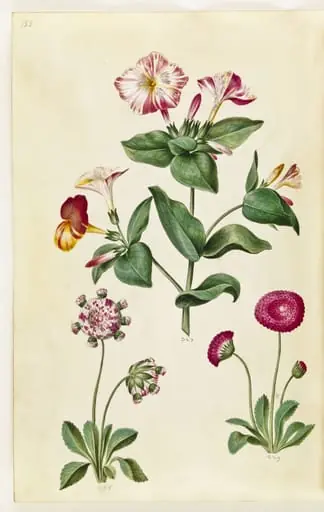 Mirabilis jalapa (vidunderblomst); Bellis perennis (almindelig tusindfryd)
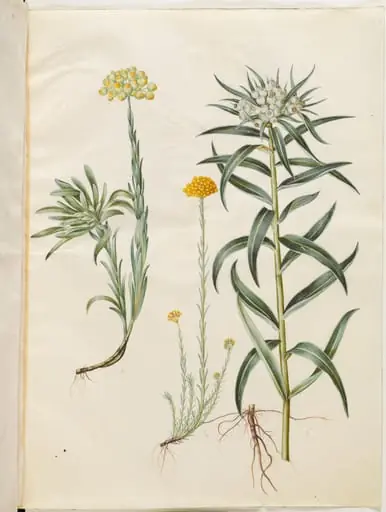 Helichrysum orientale (busk-evighedsblomst); Helichrysum Stoechas (stinkende evighedsblomst); Anaphalis margaritacea (almindelig perlekurv)
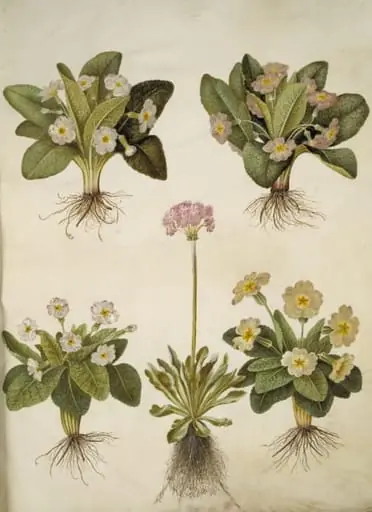 Primula vulgaris (hybrid af storblomstret kodriver); Primula farinosa (melet kodriver)
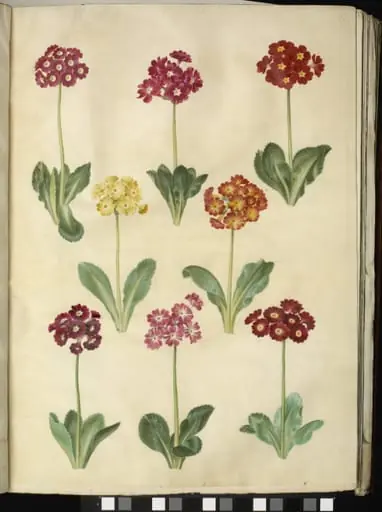 Primula ×pubescens (have-aurikel)
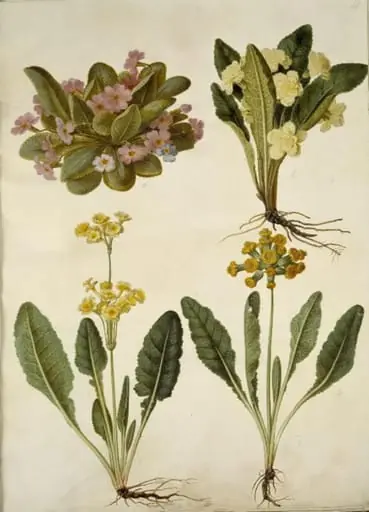 Primula vulgaris (karnevals-kodriver); Primula vulgaris (hybrid af storblomstret kodriver); Primula veris (hybrid af hulkravet kodriver)
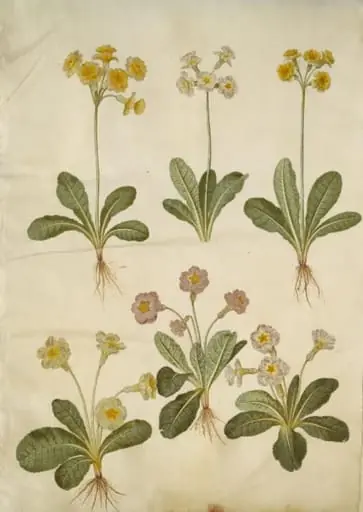 Primula veris (hybrid af hulkravet kodriver); Primula vulgaris (hybrid af storblomstret kodriver)
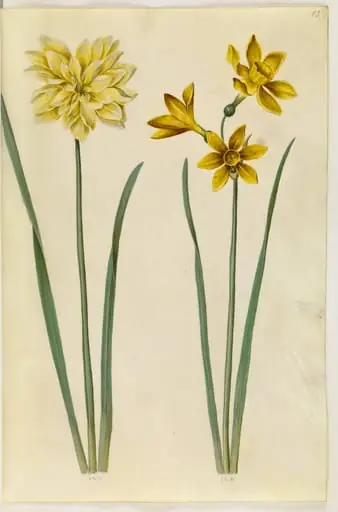 Narcissus pseudonarcissus (påskelilje); Narcissus tazetta aureus (guld-tazet)
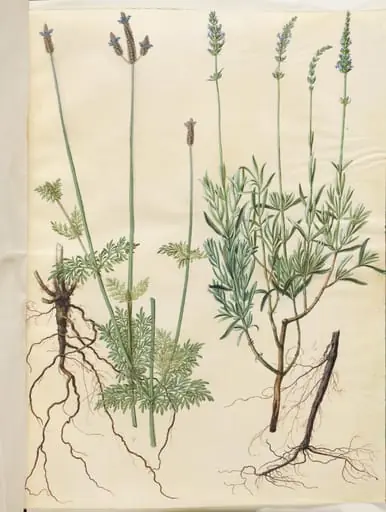 Lavandula multifida (aks-lavendel); Lavandula angustifolia (ægte lavendel)