Artwork
Lavandula multifida (aks-lavendel); Lavandula angustifolia (ægte lavendel)
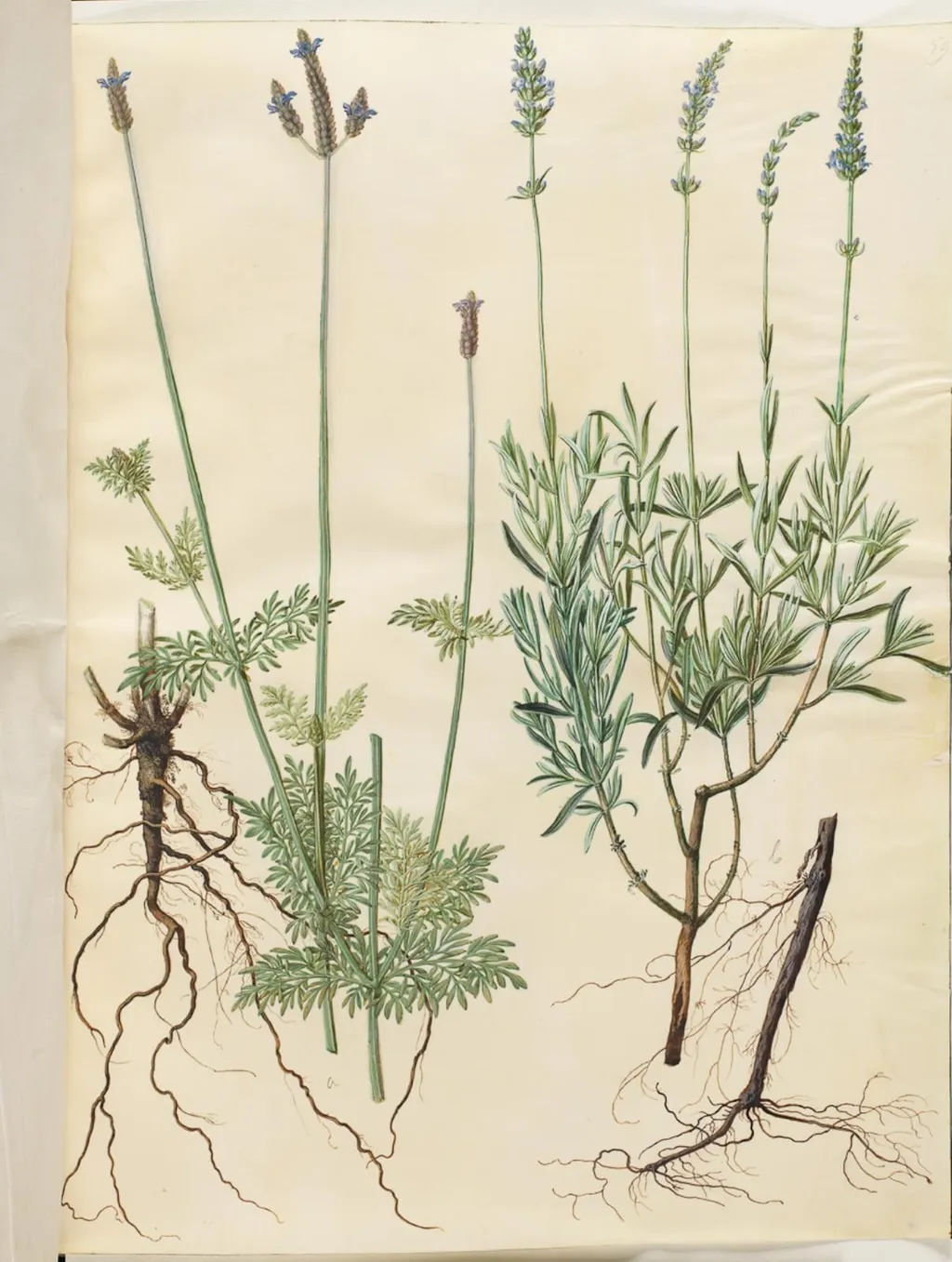
Lavandula multifida (aks-lavendel); Lavandula angustifolia (ægte lavendel) is an unspecified work on paper by Unknown. It dates from 1654 and is held in the collection of the Statens Museum for Kunst. This watercolor painting, dated around 1654, depicts two species of lavender: Lavandula multifida and Lavandula angustifolia.
About this work
Overview
This watercolor painting, dated around 1654, depicts two species of lavender: Lavandula multifida and Lavandula angustifolia.
This watercolor painting, dated around 1654, depicts two species of lavender: Lavandula multifida and Lavandula angustifolia. Rendered with botanical precision, the work is part of the collection at the Museum of Ethnography. The artist, identified as 35199_person, focused on capturing the distinct morphological features of each plant, likely for scientific or educational purposes rather than decorative intent.
Subject & Meaning
The painting presents two lavender varieties side by side, emphasizing their structural differences. The left plant, Lavandula multifida, shows a single stem with sparse foliage, while the right, Lavandula angustifolia, displays a more robust, multi-stemmed form. Visible roots suggest an interest in full plant anatomy. The comparison may have served to aid identification or classification, reflecting early modern efforts to document plant diversity systematically.
Technique & Style
Executed in watercolor, the work employs subtle gradations of green and purple to convey natural variation in leaf and flower tones. The artist rendered textures with careful brushwork, distinguishing fine hairs on stems and the delicate structure of flower spikes. The composition is grounded in realism, with no decorative embellishment, prioritizing accuracy over aesthetic flourish, typical of scientific illustration of the period.
History & Provenance
The painting was created circa 1654 and entered the collection of the Museum of Ethnography at an unknown date. Its origin as part of a larger botanical study or personal collection remains undocumented. The artist, 35199_person, is not otherwise widely recognized in art historical records, suggesting the work may have been produced for local or institutional use rather than public display.
Context
In mid-17th-century Europe, detailed plant illustrations were increasingly valued in medical, agricultural, and naturalist circles. This work aligns with a broader trend of empirical observation, where visual documentation supported the classification of flora. Though not signed or dated with formal provenance, its style reflects the influence of contemporary botanical manuscripts produced for universities and apothecaries.
Legacy
The painting contributes to a historical record of plant observation before the standardization of botanical nomenclature. While not widely reproduced or studied, it remains a quiet testament to the meticulous documentation practices of its time. Its preservation in a museum setting underscores its value as a material artifact of early scientific inquiry into plant life.
Artist & collection

 Domestic Scene
 Giacomo and Cardinal Marco, investing Andrea, Abbot of San Zeno, with his Benefice
 The Nymph of Fontainebleau
 Portrait of a Woman
 Madonna and Child with Saints in the Enclosed Garden
 Venus and Minerva
 Family Group of Four on Sofa
 Wall painting from Room H of the Villa of P. Fannius Synistor at Boscoreale
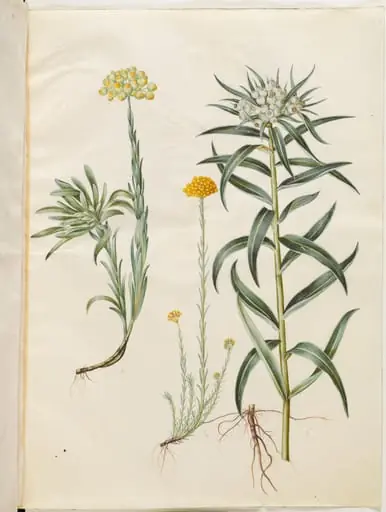 Helichrysum orientale (busk-evighedsblomst); Helichrysum Stoechas (stinkende evighedsblomst); Anaphalis margaritacea (almindelig perlekurv)
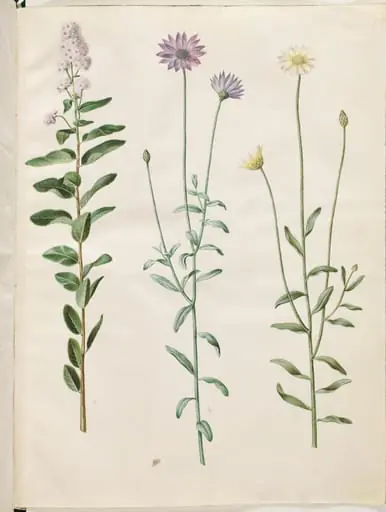 Spiraea salicifolia (pilebladet spiræa); Catananche caerulea (blå rasleblomst)
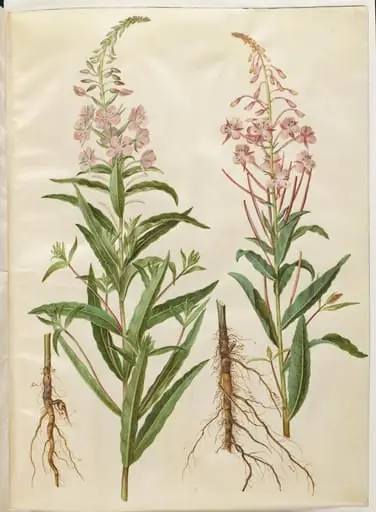 Chamerion angustifolium (smalbladet gederams)
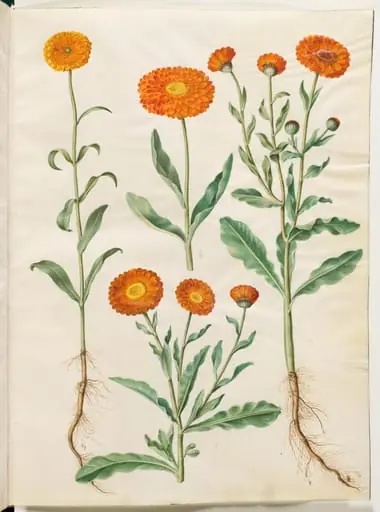 Calendula officinalis (have-morgenfrue)
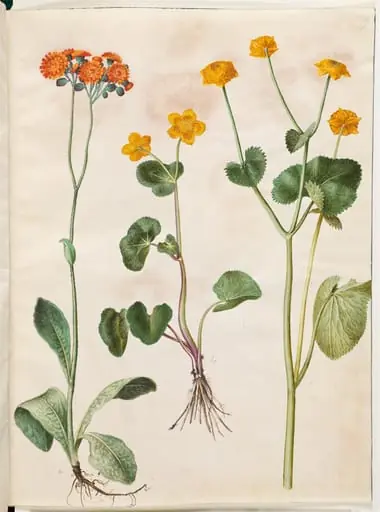 Pilosella aurantiaca (pomerans-høgeurt); Caltha palustris (eng-kabbeleje)
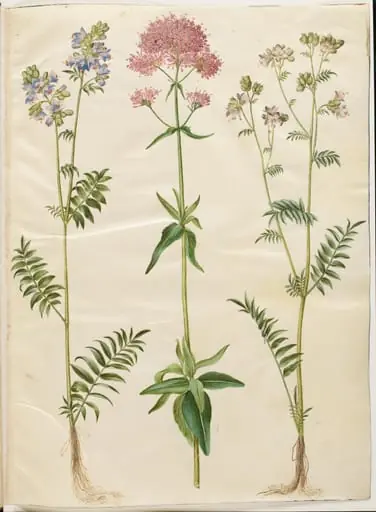 Polemonium caeruleum (almindelig jakobsstige); Centranthus ruber (rød sporebaldrian)
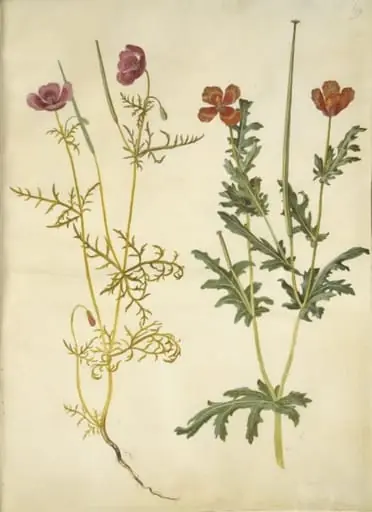 Roemeria hybrida (violet hornvalmue); Glaucium corniculatum (rød hornskulpe)
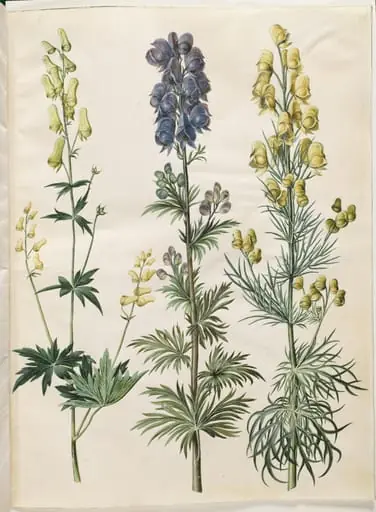 Aconitum lycoctonum (nordisk stormhat); Aconitum napellus (ægte stormhat); Aconitum anthora (finbladet stormhat)
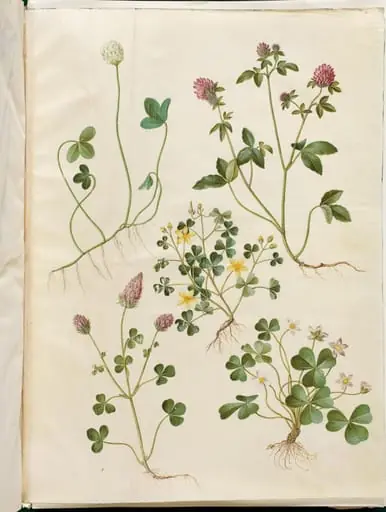 Trifolium repens (hvid-kløver); Trifolium pratense (rød-kløver); Oxalis corniculata (nedliggende surkløver); Trifolium incarnatum (blod-kløver); Oxalis acetosella (skovsyre)
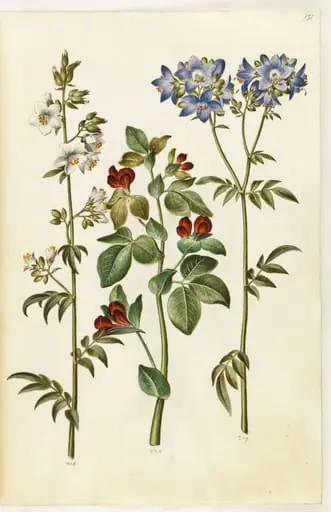 Polemonium caeruleum (almindelig jakobsstige); Lotus tetragonolobus (aspargesært)