Artwork
Narcissus pseudonarcissus (påskelilje); Narcissus tazetta aureus (guld-tazet)
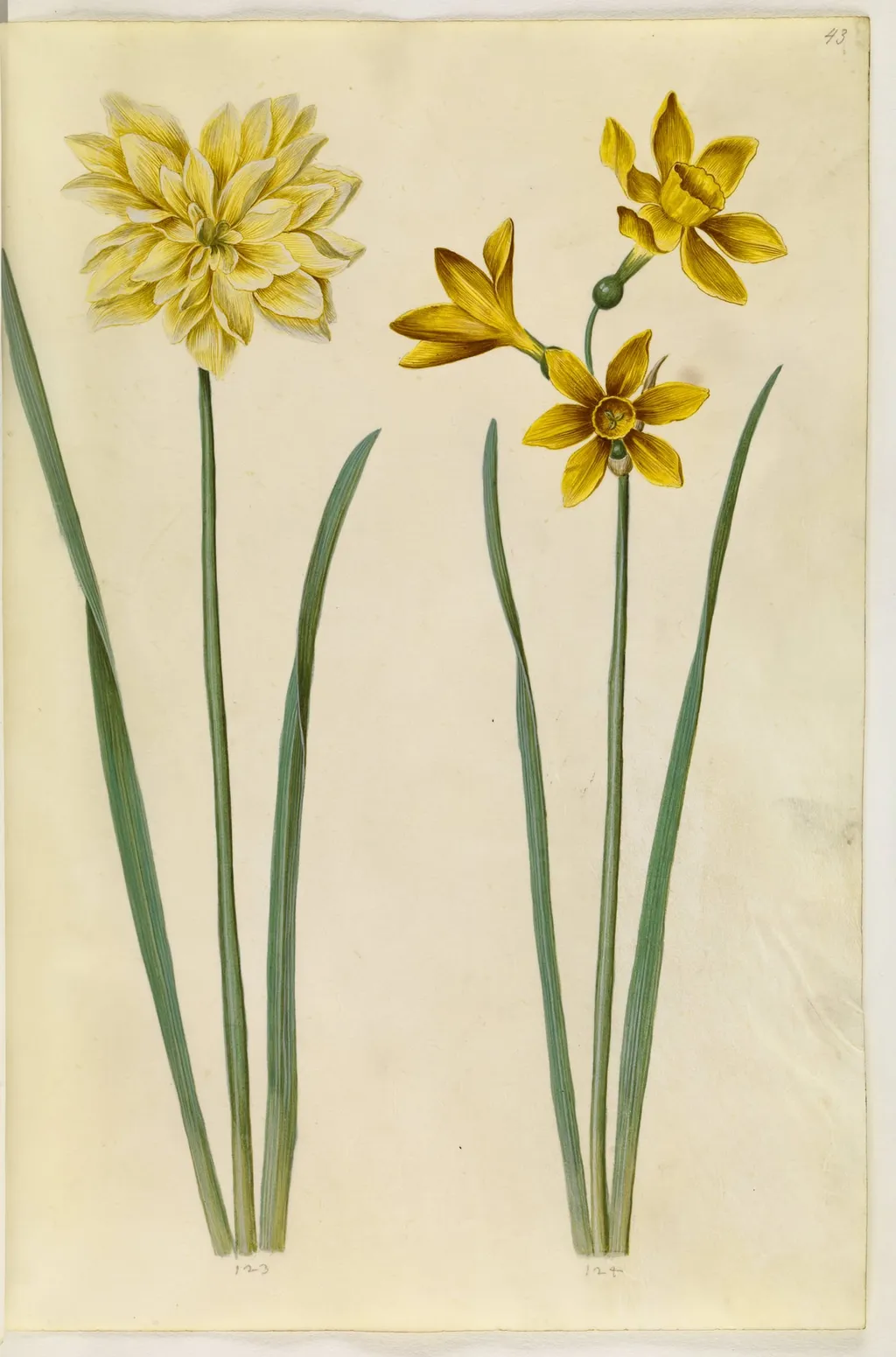
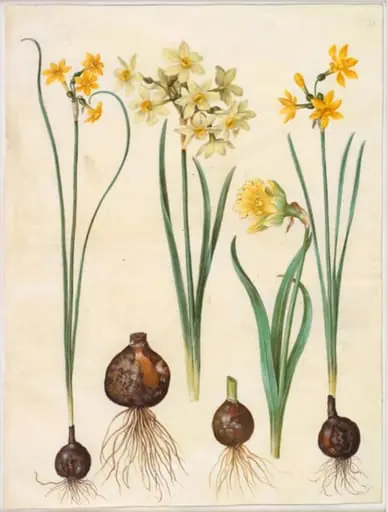
Narcissus pseudonarcissus (påskelilje); Narcissus tazetta aureus (guld-tazet) is an unspecified work on paper by Unknown. It dates from 1650 and is held in the collection of the Statens Museum for Kunst.
About this work
Overview
Created around 1650, this work attributed to the artist known as 35199_person depicts a modest botanical study of three vivid yellow blossoms set against an unobtrusive light background. The composition isolates the flowers, allowing their form and colour to dominate the visual field, while the simple setting emphasizes the natural qualities of the subjects.
Subject & Meaning
The image combines two species of daffodil: the common narcissus (Narcissus pseudonarcissus) and the golden tazetta (Narcissus tazetta aureus).
The image combines two species of daffodil: the common narcissus (Narcissus pseudonarcissus) and the golden tazetta (Narcissus tazetta aureus). By presenting both varieties together, the artist highlights subtle differences in petal shape—the former’s trumpet-like corollas contrast with the flatter petals of the latter—suggesting an interest in botanical classification and the diversity of spring flora.
Technique & Style
Executed in watercolor, the piece demonstrates the medium’s capacity for delicate translucency. Each petal and leaf is rendered with fine brushwork that captures the soft gradations of yellow and green, while the slightly curved stems convey a sense of organic movement. The restrained background enhances the luminous quality typical of 17th‑century botanical illustration.
History & Provenance
The work entered the collection of the Museum of Ethnography, where it remains on display. Its attribution to 35199_person, a relatively obscure figure from the mid‑17th century, is based on stylistic analysis and archival records linking the piece to the period’s scientific illustration practices.
Context
During the mid‑1600s, European interest in natural history spurred the production of detailed plant studies for scholarly and decorative purposes. Watercolor, valued for its ability to render subtle colour shifts, became a favored medium for documenting specimens. This painting reflects that tradition, serving both as a visual record of specific narcissus varieties and as an example of the era’s scientific art.
Artist & collection

 Domestic Scene
 Giacomo and Cardinal Marco, investing Andrea, Abbot of San Zeno, with his Benefice
 The Nymph of Fontainebleau
 Portrait of a Woman
 Madonna and Child with Saints in the Enclosed Garden
 Venus and Minerva
 Family Group of Four on Sofa
 Wall painting from Room H of the Villa of P. Fannius Synistor at Boscoreale
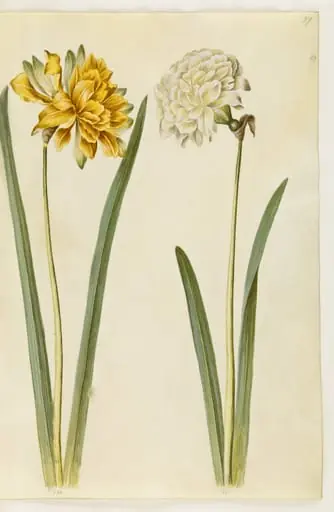 Narcissus pseudonarcissus (påskelilje)
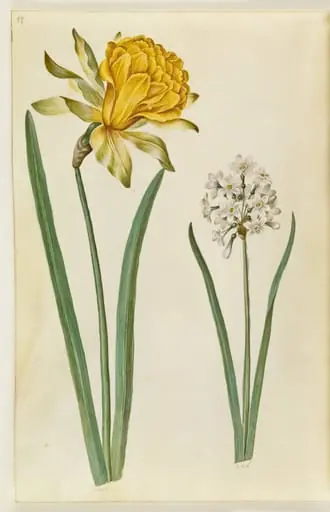 Narcissus pseudonarcissus (påskelilje); Narcissus tazetta (tazet)
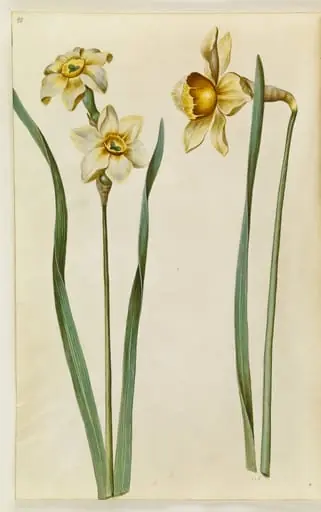 Narcissus ×medioluteus (toblomstret narcis); Narcissus ×incomparabilis (have-narcis)
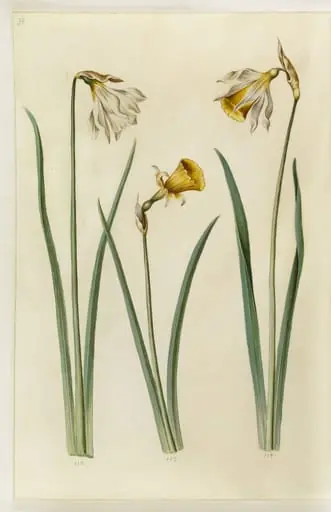 Narcissus pseudonarcissus moschatus (moskus-narcis); Narcissus bulbocodium (krinoline-narcis); Narcissus pseudonarcissus (påskelilje)
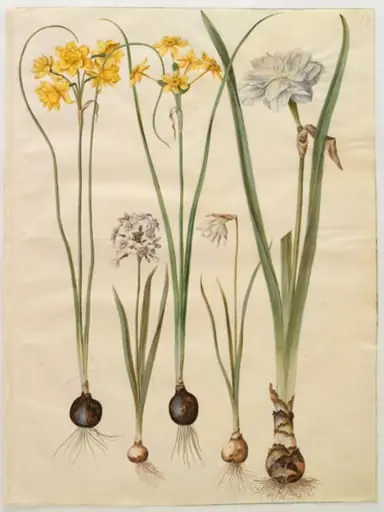 Narcissus jonquilla (siv-narcis); Narcissus tazetta (tazet); Narcissus pseudonarcissus moschatus (moskus-narcis); Narcissus poeticus (pinselilje)
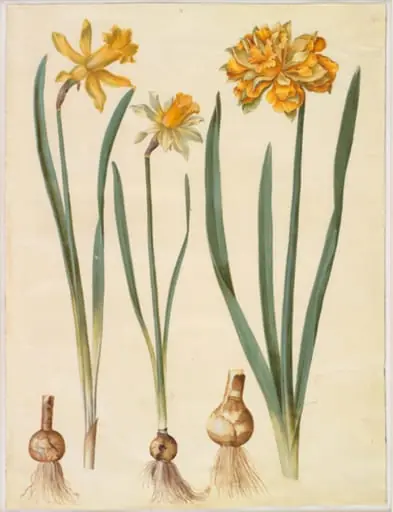 Narcissus pseudonarcissus major (stor påskelilje); Narcissus pseudonarcissus bicolor (tofarvet påskelilje); Narcissus pseudonarcissus
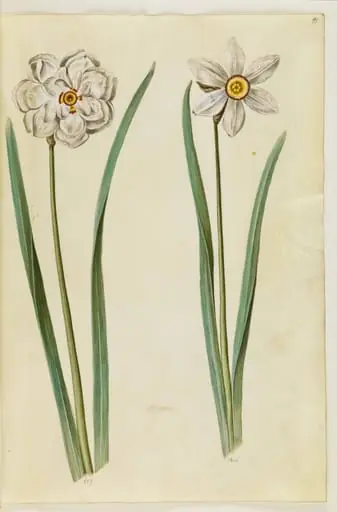 Narcissus poeticus (pinselilje)
 Narcissus jonquilla (siv-narcis); Narcissus tazetta aureus (guld-tazet); Narcissus pseudonarcissus bicolor (tofarvet påskelilje)