Artwork
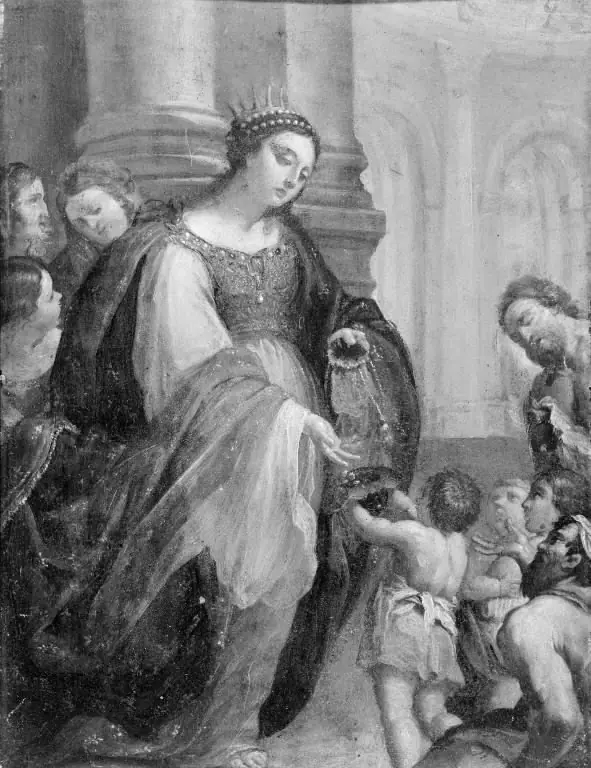
En fransk dronning med krone og blå kappe indvirket med guld, liljer, giver almisse til de fattige
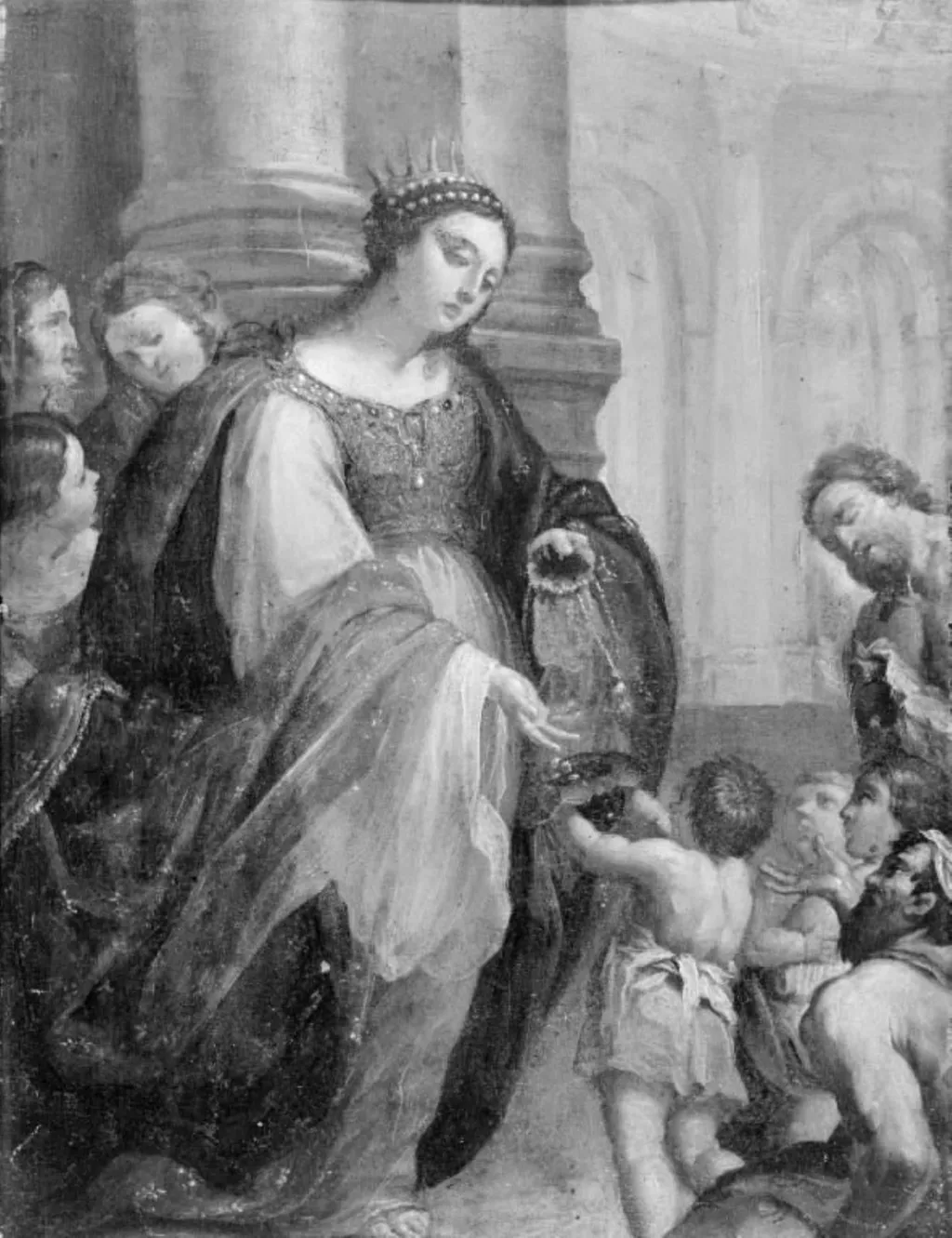
En fransk dronning med krone og blå kappe indvirket med guld, liljer, giver almisse til de fattige is a photography by the Romanticist artist Unknown. It dates from 1779 and is held in the collection of the Statens Museum for Kunst. This 1779 image depicts a French queen distributing alms to the poor, rendered in a formal, symbolic style.
About this work
Overview
The composition centers on a royal figure in a blue, gold-embroidered cloak, surrounded by figures reaching out in quiet supplication.
This 1779 image depicts a French queen distributing alms to the poor, rendered in a formal, symbolic style. The work is held by the Museum of Ethnography and attributed to an artist identified only by the number 37223_person. The composition centers on a royal figure in a blue, gold-embroidered cloak, surrounded by figures reaching out in quiet supplication. The scene lacks overt drama, instead emphasizing ritualized generosity.
Subject & Meaning
The central figure, identified by crown and floral motifs, represents royal benevolence. The lilies, traditionally associated with French monarchy and purity, reinforce her status and moral authority. The act of giving alms reflects a common theme in religious and political iconography: the monarch as divine agent of charity. The quiet interaction suggests duty rather than spectacle, aligning with Enlightenment ideals of enlightened rule.
Technique & Style
The painting employs restrained modeling and flat, decorative surfaces rather than deep perspective. Gold detailing on the blue cloak is rendered with linear precision, emphasizing pattern over volume. Figures are arranged in a shallow space, their gestures minimal and symbolic. Light falls evenly, avoiding strong chiaroscuro; the focus remains on symbolic elements—crown, lilies, and the small bag of alms—rather than emotional intensity.
History & Provenance
Created in 1779, the work entered the collection of the Museum of Ethnography shortly after its completion. Its attribution to 37223_person suggests it may have been produced under institutional or courtly commission, though the artist’s identity remains obscure. The painting’s survival in a museum focused on cultural artifacts, rather than fine art, hints at its use as an ethnographic record of royal ritual.
Context
In late 18th-century France, public displays of royal charity were both religious duty and political theater. As social tensions rose, such imagery served to reinforce the monarchy’s moral legitimacy. The depiction of a queen, rather than a king, may reflect Marie Antoinette’s public role in charitable acts, though the work does not clearly identify her. The stylized form aligns with courtly traditions still prevalent before the Revolution.
Legacy
The painting survives as a quiet testament to pre-revolutionary ideals of monarchy as moral stewardship. Its preservation in an ethnographic context, rather than a royal or fine arts collection, underscores its role as a cultural artifact documenting social rituals. It offers insight into how power was visually encoded in everyday acts of charity, before the collapse of the ancien régime rendered such imagery obsolete.
Artist & collection

 Domestic Scene
 Giacomo and Cardinal Marco, investing Andrea, Abbot of San Zeno, with his Benefice
 The Nymph of Fontainebleau
 Portrait of a Woman
 Madonna and Child with Saints in the Enclosed Garden
 Venus and Minerva
 Family Group of Four on Sofa
 Wall painting from Room H of the Villa of P. Fannius Synistor at Boscoreale
 The Giving of Alms
 The Giving of Alms
 Maria mit Christuskind und einem Engel (Nachfolger)
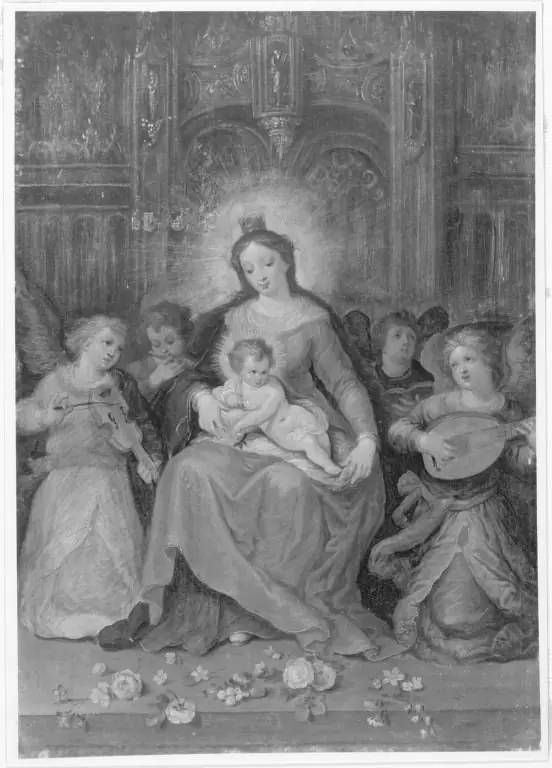 Madonna mit musizierenden Engeln
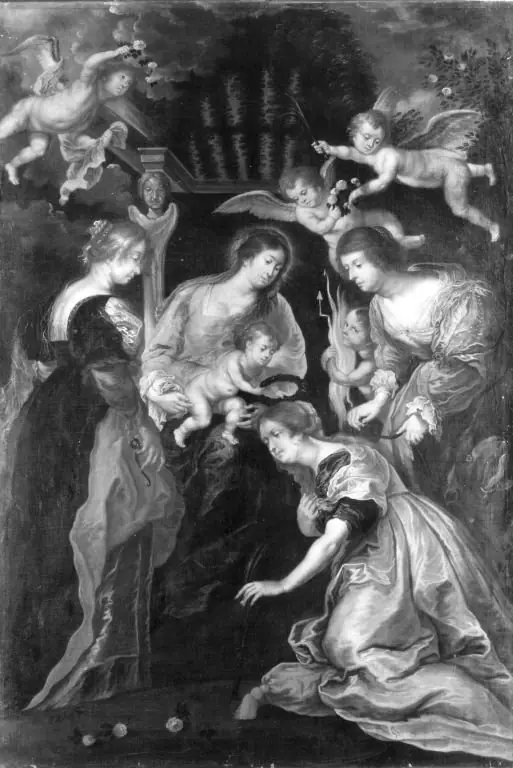 Vermählung der hl. Katharina (Kopie nach)
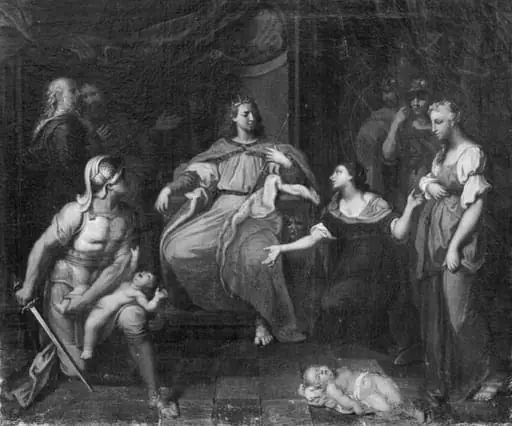 The Judgment of Solomon
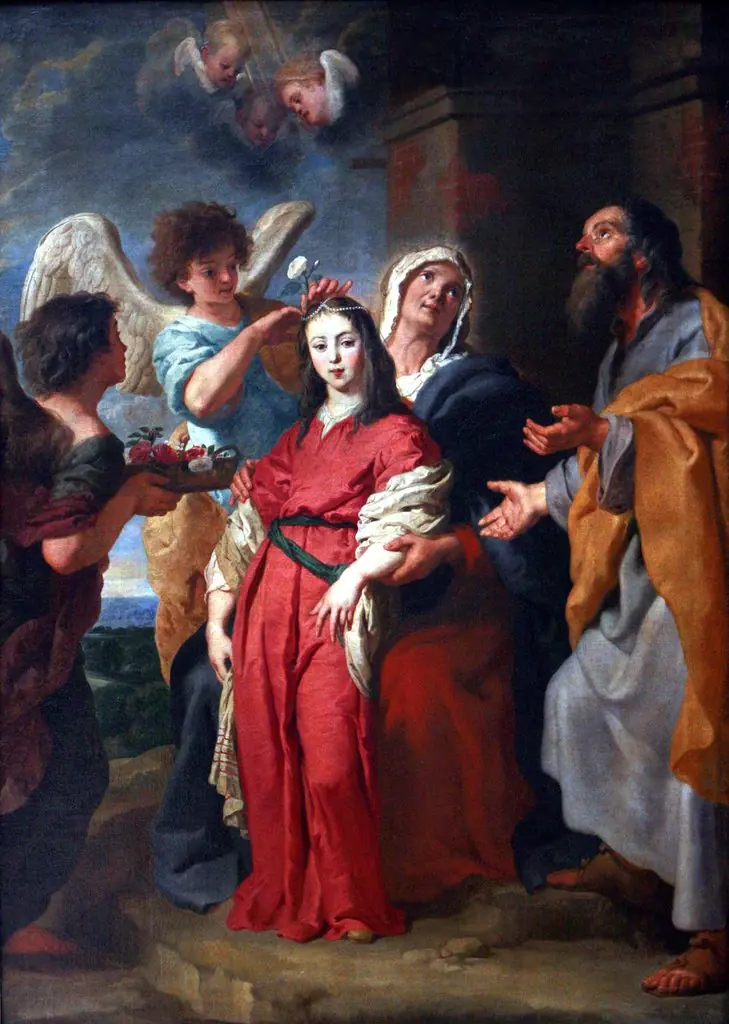 Adolescent Virgin decorated by Angels in the presence of Joachim and Saint Anne
 The Judgment of Solomon
 The Annunciation
 Der hl. Nepomuk Almosen spendend
 Hagar und Ismael (?)
 En fransk dronning med krone og blå kappe indvirket med guld, liljer, giver almisse til de fattige