Artwork
En rejsende til hest ved nattetid
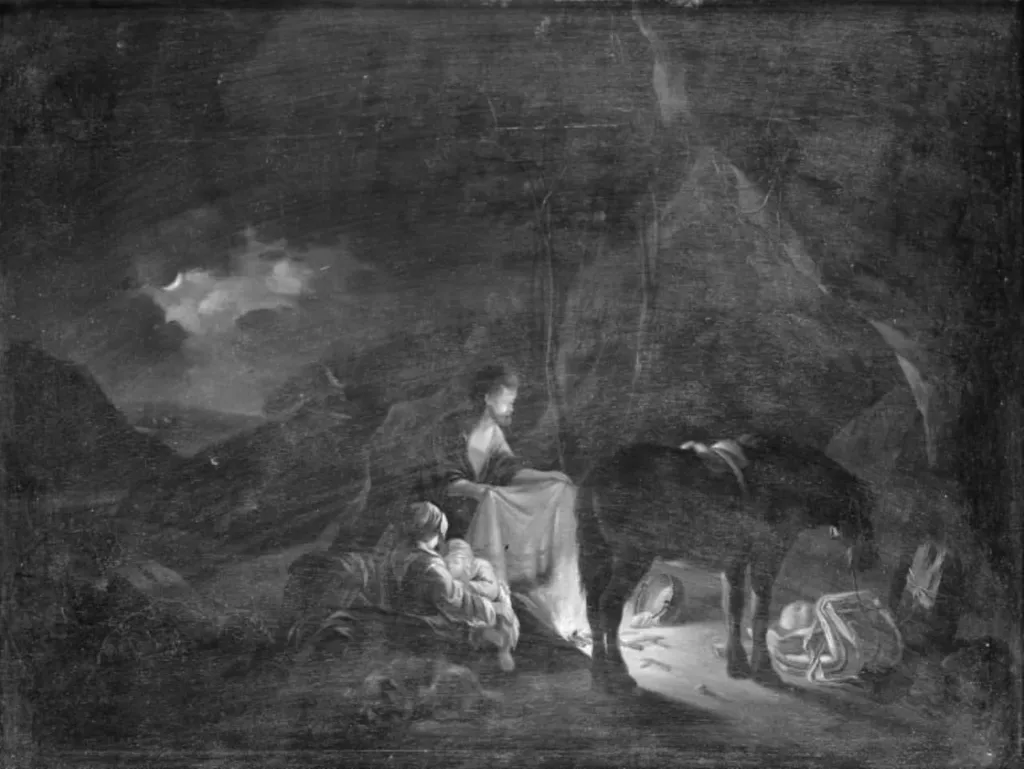
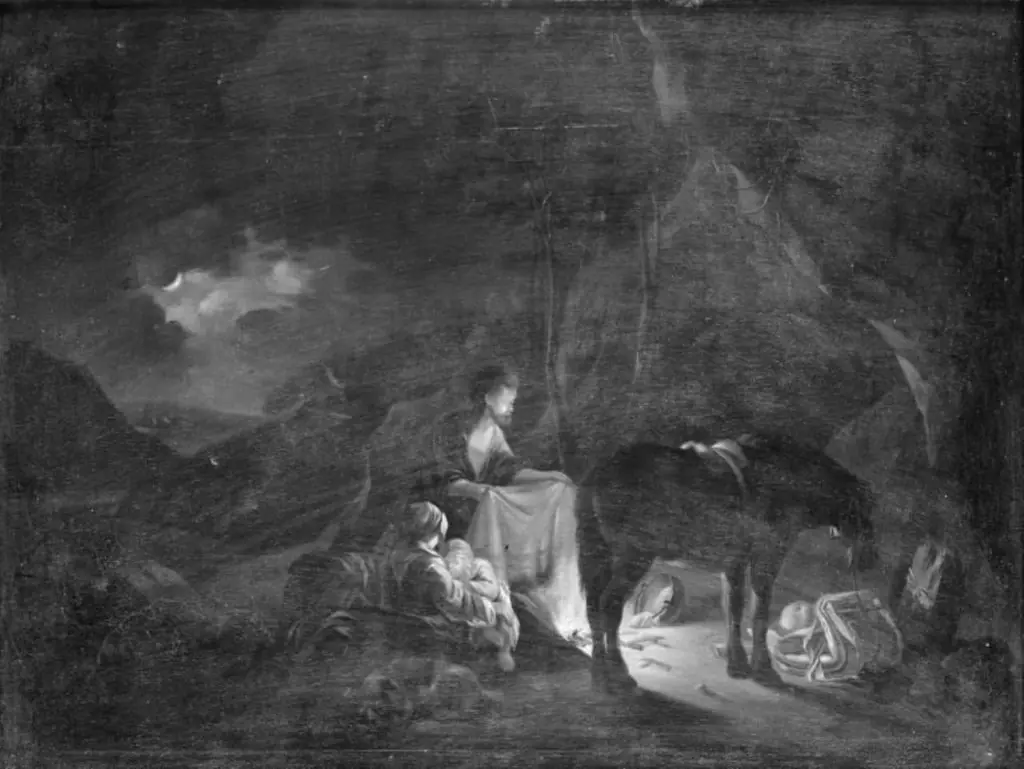
En rejsende til hest ved nattetid is a photography by Unknown. It dates from 1750 and is held in the collection of the Statens Museum for Kunst. Created around 1750, this black-and-white image depicts a solitary traveler on horseback at night, moving along a narrow path.
About this work
Overview
The scene conveys quiet solitude and the stillness of nocturnal travel, rendered with careful attention to the interplay of darkness and faint illumination.
Created around 1750, this black-and-white image depicts a solitary traveler on horseback at night, moving along a narrow path. In the foreground, three figures gather near a small fire, their forms softened by shadow and illuminated by flickering light. The scene conveys quiet solitude and the stillness of nocturnal travel, rendered with careful attention to the interplay of darkness and faint illumination.
Subject & Meaning
The image captures a moment of rest and transit in a cold, remote landscape. The lone rider suggests journeying through unfamiliar territory, while those by the fire represent temporary shelter and human connection. The contrast between movement and stillness, isolation and companionship, evokes themes of endurance, vulnerability, and the quiet rituals of travel in pre-industrial times.
Technique & Style
The artist employs strong chiaroscuro to define form and mood. The rider’s lantern and the fire serve as the only sources of light, casting sharp contrasts against deep shadows. Details emerge only where light touches—faces, blankets, smoke—while the surrounding landscape recedes into near-total darkness. This selective illumination draws focus to human presence amid vast, unyielding night.
History & Provenance
The work is held in the collection of the Museum of Ethnography, suggesting its origin as a documentary or ethnographic record rather than a fine art piece. Its creation date of circa 1750 places it in a period when visual records of rural travel were rare. The medium—likely a drawn or printed image—indicates it may have been made for observation or study, not public display.
Context
In mid-18th century Europe, long-distance travel by horse was common among merchants, pilgrims, and laborers. Night travel was perilous and required preparation—fires for warmth, pack animals for gear, and lanterns for navigation. This image reflects the practical realities of such journeys, capturing a moment rarely recorded in formal art of the time.
Legacy
Though not widely known, the image contributes to a visual archive of everyday life in the pre-modern era. Its emphasis on quiet human resilience and the use of light to convey atmosphere aligns with later documentary traditions. It remains a quiet testament to the rhythms of travel before mechanization transformed mobility.
Artist & collection

 Domestic Scene
 Giacomo and Cardinal Marco, investing Andrea, Abbot of San Zeno, with his Benefice
 The Nymph of Fontainebleau
 Portrait of a Woman
 Madonna and Child with Saints in the Enclosed Garden
 Venus and Minerva
 Family Group of Four on Sofa
 Wall painting from Room H of the Villa of P. Fannius Synistor at Boscoreale
 The Flight into Egypt
 The Flight into Egypt
 Anbetung der Hirten
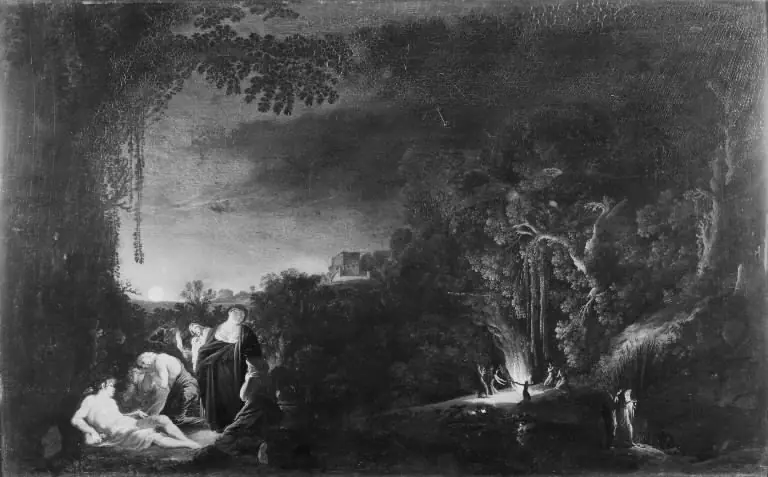 Måneskinslandskab med mytologisk (?) motiv
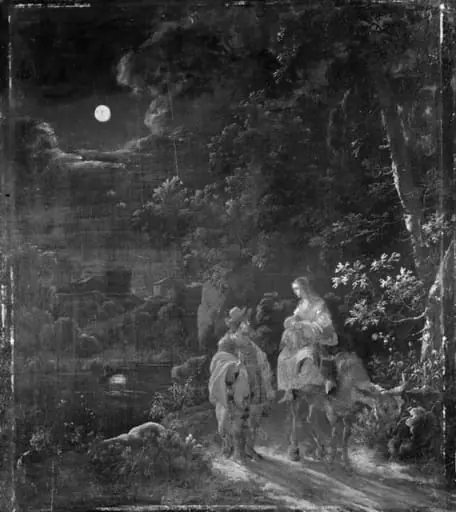 The Flight into Egypt
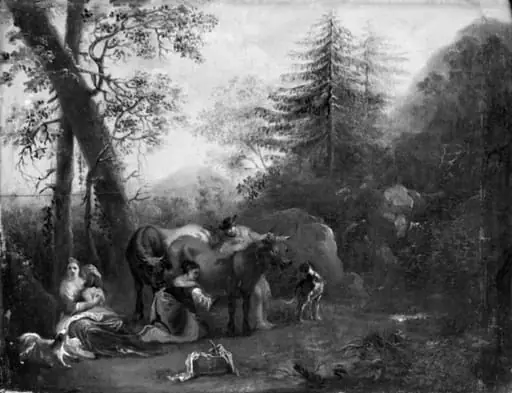 Landscape with Cattle, the Shepherdess Milking the Cow
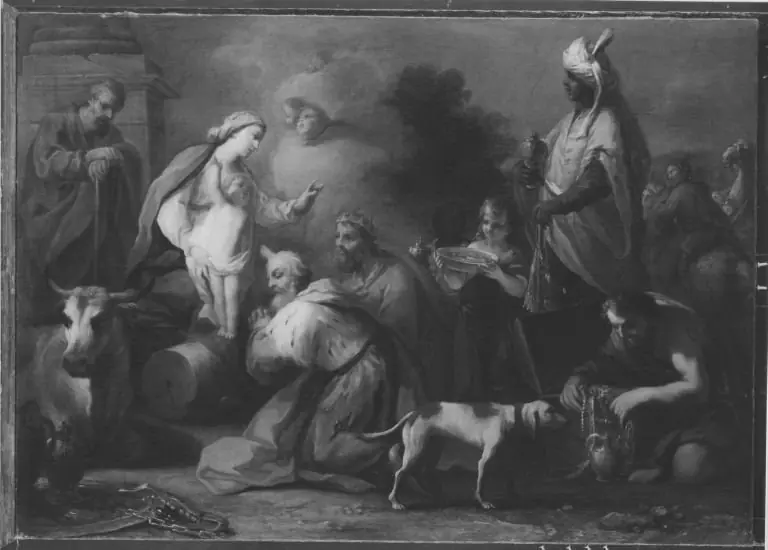 Anbetung der Könige
 Italian Landscape with Shepherds
 Landscape with Cattle, the Shepherdess Playing with a Dog
 Landscape with Cattle, the Shepherdess Milking the Cow
 Ruhe auf der Flucht (zugeschrieben)
 En rejsende til hest ved nattetid