Artwork
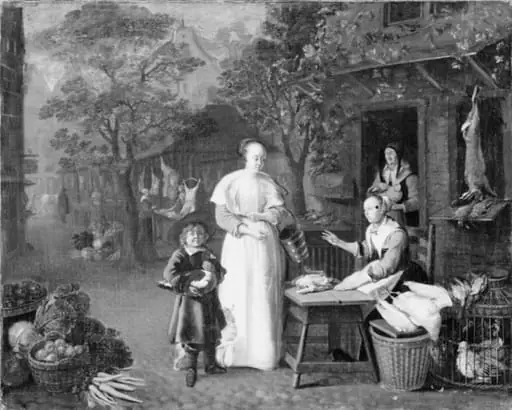
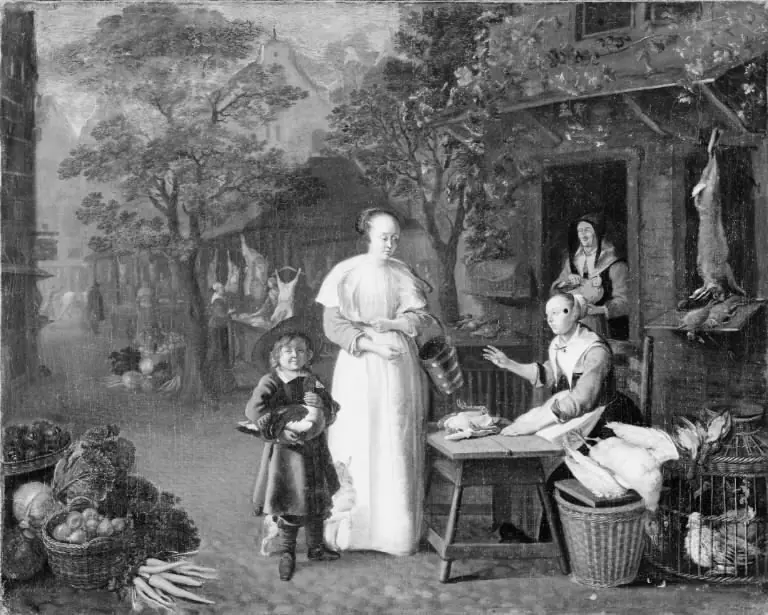
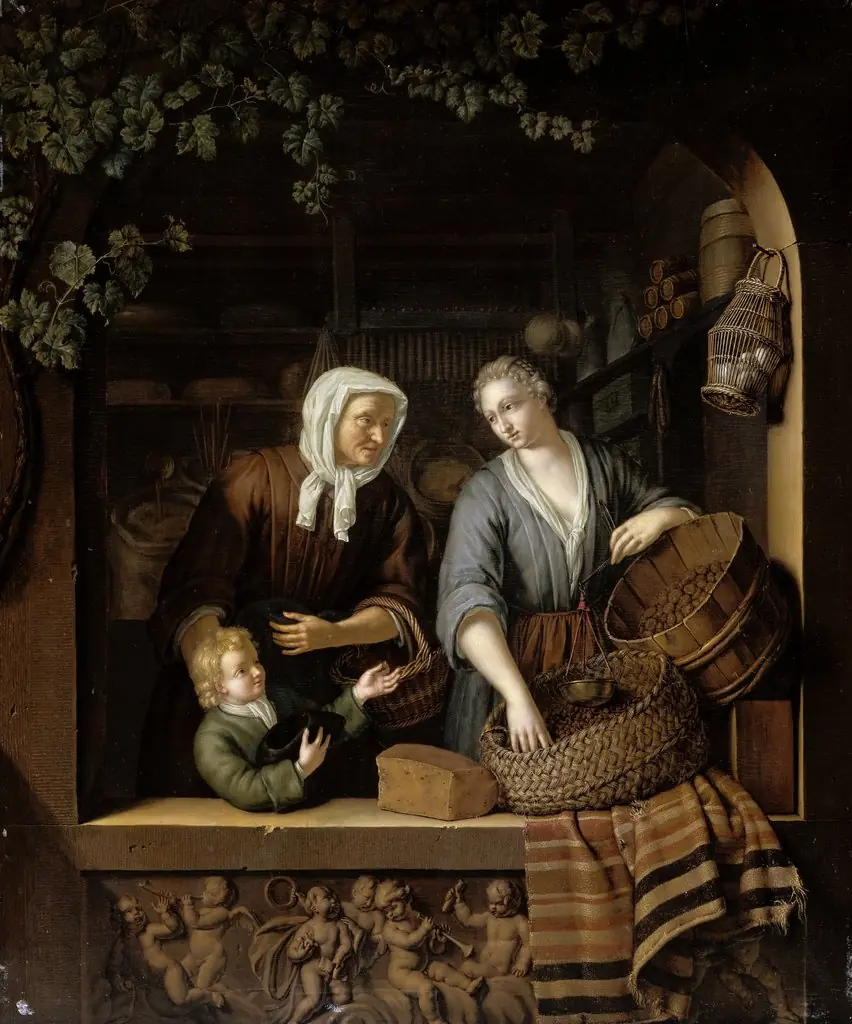
Gadescene i København ved år 1800. En pige gør indkøb af grøntsager hos Amagerkonen
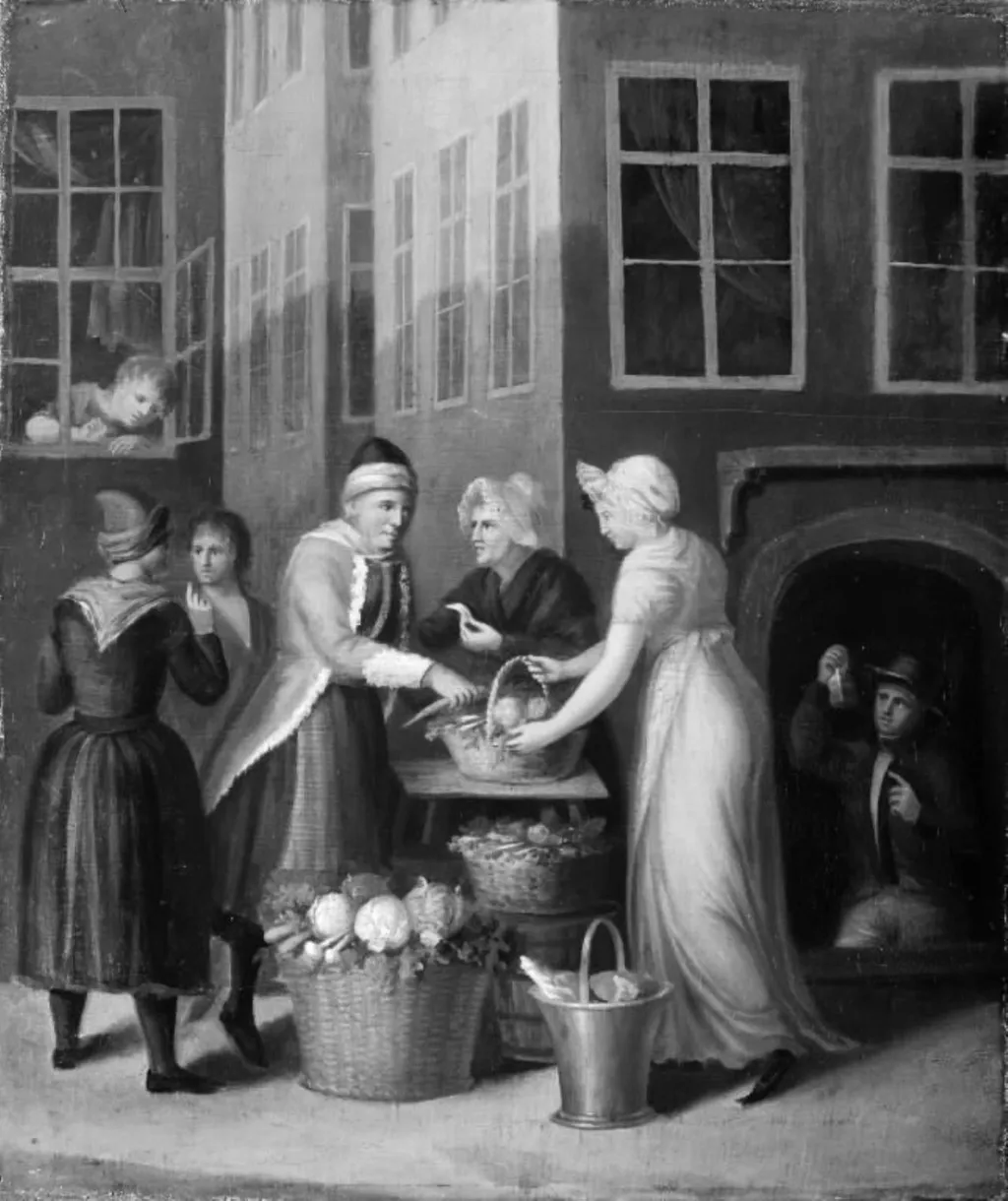
Gadescene i København ved år 1800. En pige gør indkøb af grøntsager hos Amagerkonen is a photography by Unknown. It dates from 1750 and is held in the collection of the Statens Museum for Kunst. This image, dated around 1750, captures a quiet domestic market scene in Copenhagen.
About this work
Overview
A young girl is shown purchasing vegetables from a vendor known as Amagerkonen, a figure associated with rural suppliers bringing produce into the city.
This image, dated around 1750, captures a quiet domestic market scene in Copenhagen. A young girl is shown purchasing vegetables from a vendor known as Amagerkonen, a figure associated with rural suppliers bringing produce into the city. The setting appears to be an interior space with large windows, suggesting a modest home repurposed for trade. The composition is rendered in monochrome, emphasizing texture and light over color.
Subject & Meaning
The scene depicts an ordinary transaction between a girl and a vendor, highlighting the daily economic life of Copenhagen’s lower classes. The presence of Amagerkonen — a traditional figure from the Amager district — signals the integration of rural suppliers into urban markets. The onlookers and the cat suggest a lived-in environment where commerce and domesticity overlap, offering a glimpse into the rhythms of 18th-century urban life.
Technique & Style
The artist employs chiaroscuro to model forms with subtle contrasts of light and shadow, softening edges and lending depth to the dim interior. Brushwork is restrained, with blurred contours that enhance the sense of quiet realism. The lack of vivid color and the muted tones draw attention to the textures of woven baskets, worn flooring, and fabric folds, reinforcing the scene’s unadorned authenticity.
History & Provenance
The work is held in the collection of the Museum of Ethnography, suggesting its value as a document of social practice rather than fine art. Its origins are tied to a tradition of observational imagery from the mid-18th century, possibly created by an anonymous artist documenting everyday urban life. No definitive records of its early ownership exist, but its preservation indicates recognition of its ethnographic significance.
Context
In mid-18th century Copenhagen, fresh produce from nearby Amager was commonly sold in homes and courtyards due to limited public markets. The figure of Amagerkonen was a familiar presence, often a woman transporting goods by cart. This scene reflects a time before formalized market infrastructure, when commerce occurred in domestic spaces, blending economic necessity with household routine.
Legacy
Though not widely exhibited, the image contributes to historical records of urban labor and gendered roles in pre-industrial Denmark. It stands as a quiet testament to the informal economies sustaining city life, preserving details often omitted in official histories. Its endurance in museum collections underscores its role as a visual archive of ordinary existence.
Artist & collection

 Domestic Scene
 Giacomo and Cardinal Marco, investing Andrea, Abbot of San Zeno, with his Benefice
 The Nymph of Fontainebleau
 Portrait of a Woman
 Madonna and Child with Saints in the Enclosed Garden
 Venus and Minerva
 Family Group of Four on Sofa
 Wall painting from Room H of the Villa of P. Fannius Synistor at Boscoreale