Artwork
The Four Markets: The Vegetable Market
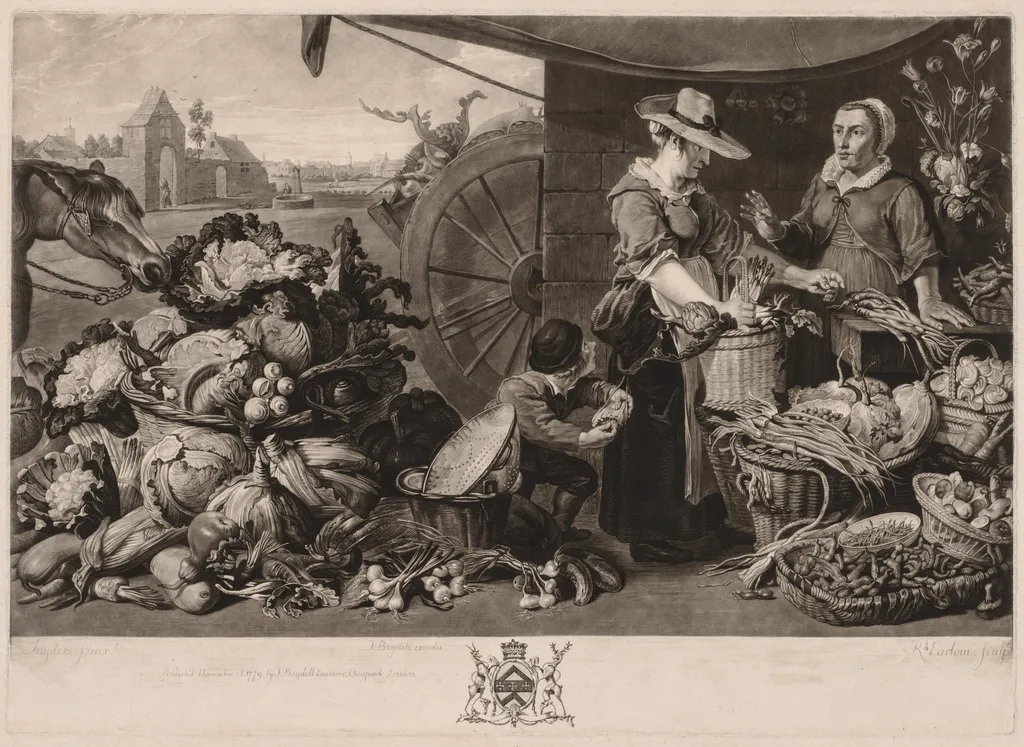
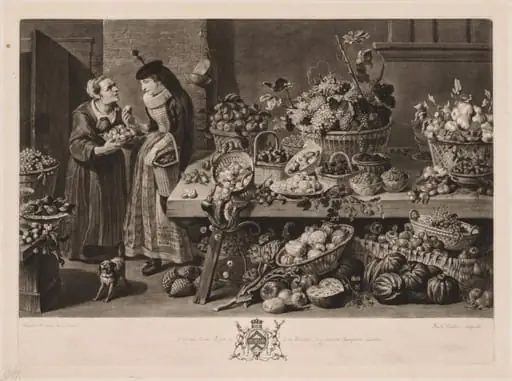
The Four Markets: The Vegetable Market is a print by the Romanticist artist Richard Earlom. It dates from 1779 and is held in the collection of the Cleveland Museum of Art.
About this work
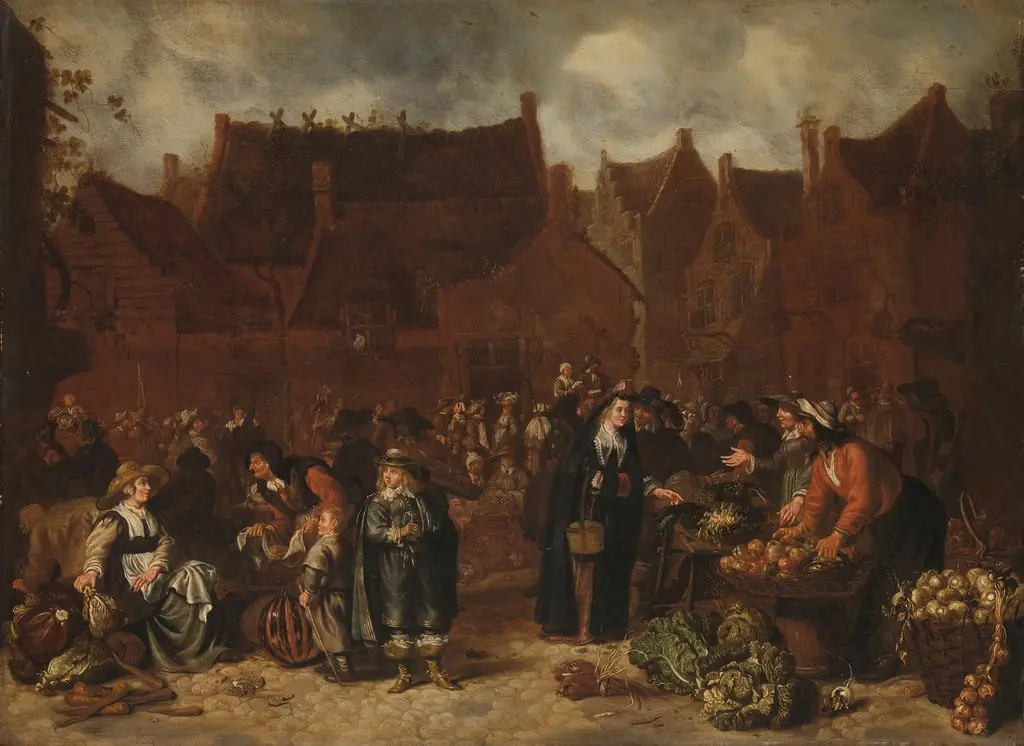
Sorgh showed the same scene years earlier, but Earlom’s copy feels livelier.
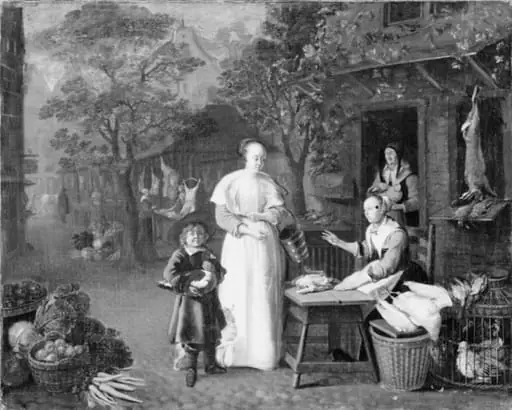
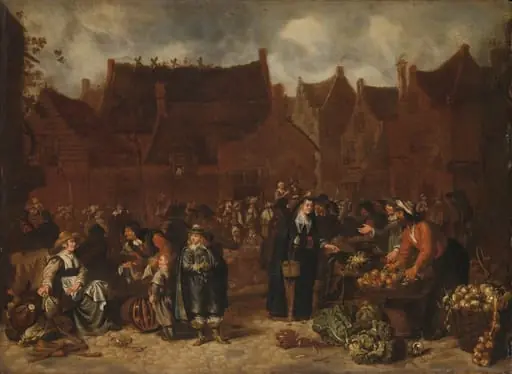
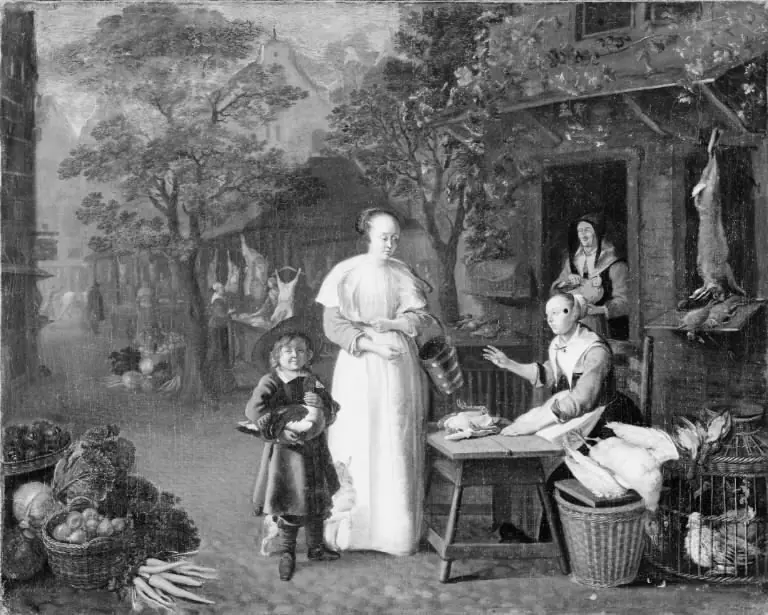
This print shows a busy 18th-century vegetable market in England. Women in bonnets sell cabbages, carrots, and herbs from baskets. A man in a tricorn hat carries a sack on his back.
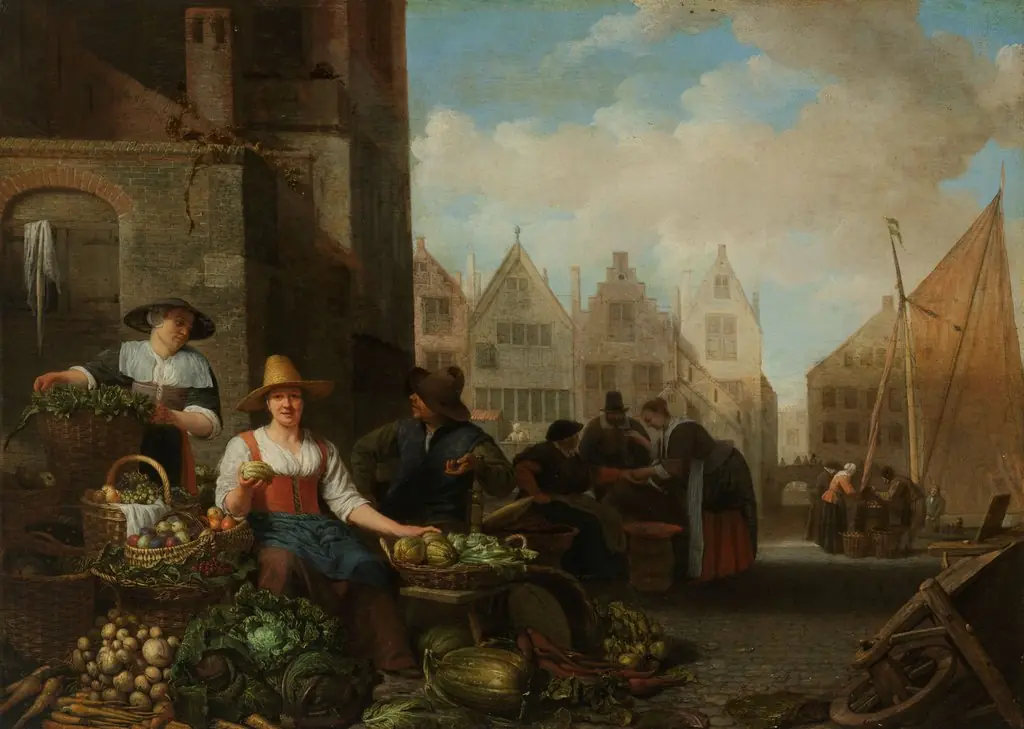
Earlom based this on a painting by Dutch artist Hendrick Sorgh. Sorgh showed the same scene years earlier, but Earlom’s copy feels livelier. Notice how the light falls on the vegetables, making them look almost real.
Check out Earlom’s other prints. Try looking up Richard Earlom (British, 1743–1822).
Overview
Created in 1779 by British printmaker Richard Earlom, this etching is part of a series titled The Four Markets, depicting urban commerce in 18th-century England. It was produced as a reproductive print after a painting by the Dutch artist Hendrick Sorgh. The work is currently held in the collection of The Cleveland Museum of Art, where it serves as an example of 18th-century printmaking techniques and the transnational exchange of visual motifs.
Subject & Meaning
The scene captures a bustling vegetable market, with vendors—mostly women wearing bonnets—displaying cabbages, carrots, and herbs in woven baskets. A man with a tricorn hat carries a heavy sack, suggesting the labor behind daily sustenance. The composition reflects the rhythms of urban life, emphasizing the social and economic role of markets in feeding city populations, without overt moralizing or idealization.
Technique & Style
Earlom employed mezzotint to achieve subtle gradations of light and texture, enhancing the tactile quality of vegetables and fabrics. His rendering of dappled sunlight on produce and clothing adds a sense of immediacy absent in Sorgh’s original. The technique allowed for greater atmospheric depth, transforming the Dutch model into a more vivid, English-inflected interpretation that prioritized naturalistic detail over compositional formality.
History & Provenance
Earlom’s print derives from a painting by Hendrick Sorgh, created decades earlier in the Netherlands. The work entered the Cleveland Museum of Art’s collection through documented acquisitions in the 20th century. Its survival as part of a larger series underscores the popularity of reproductive prints among British collectors who valued accessible art that mirrored domestic life and continental artistic traditions.
Context
In late 18th-century Britain, mezzotint prints like this one were widely circulated among the middle class, offering affordable access to images of everyday scenes. Earlom’s adaptation of a Dutch subject reflects broader cultural interest in Northern European realism. The market’s depiction aligns with growing urbanization and the visibility of women as economic actors in public spaces during this period.
Legacy
Earlom’s prints, including this one, contributed to the refinement of mezzotint as a medium capable of nuanced realism. Though not widely known today, his reproductive work influenced contemporary perceptions of genre scenes and helped preserve the visual record of 18th-century market life. His approach bridged Dutch naturalism and British print culture, leaving a quiet but lasting imprint on the history of printmaking.
Artist & collection