Artwork
Fight
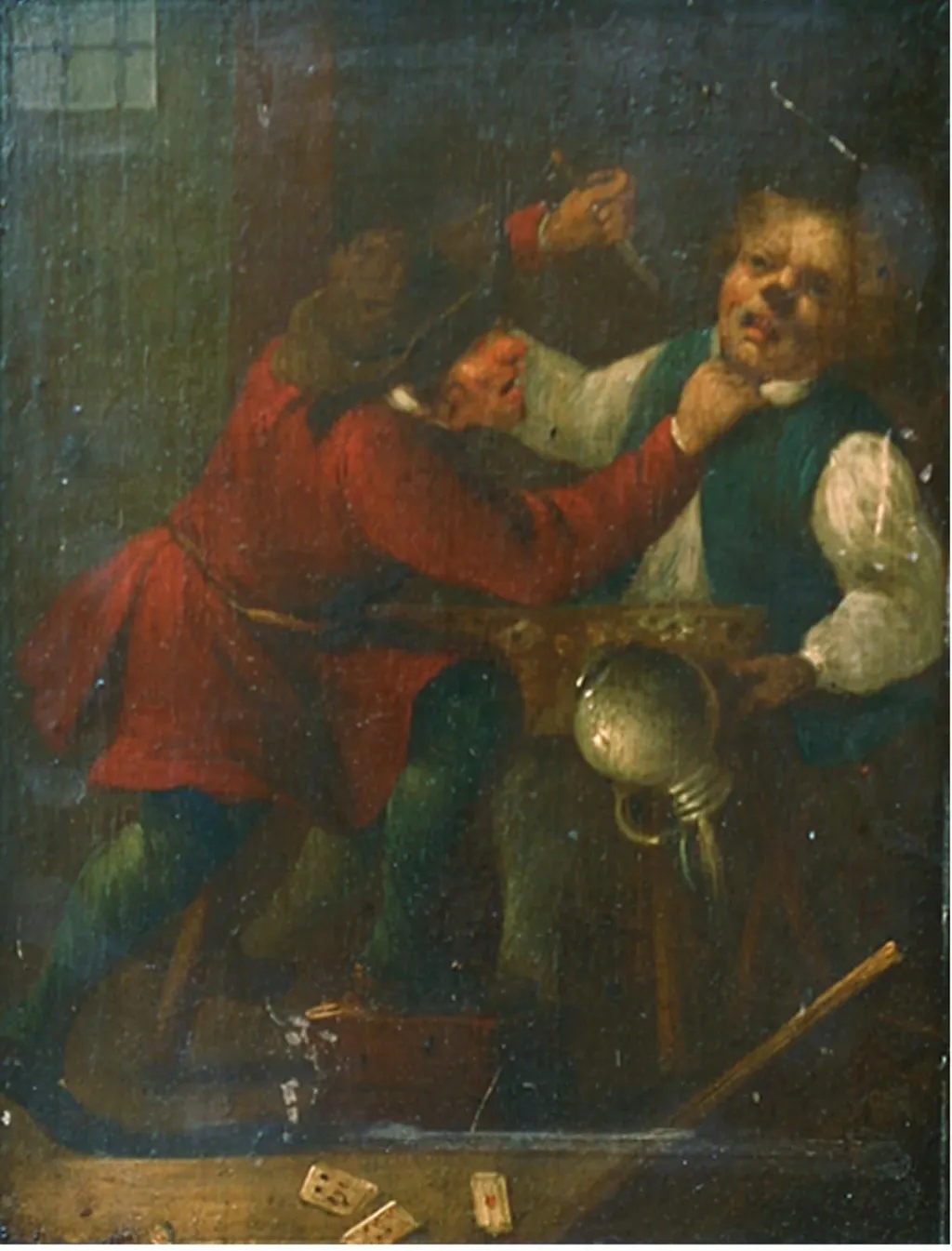
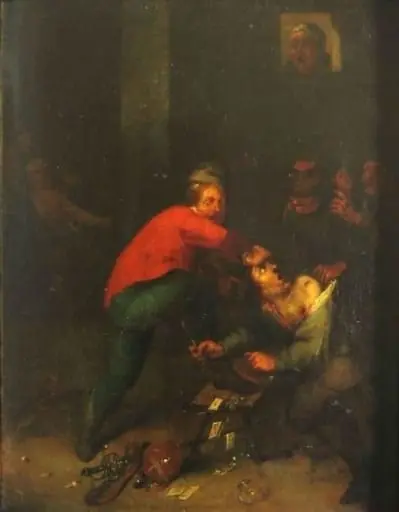
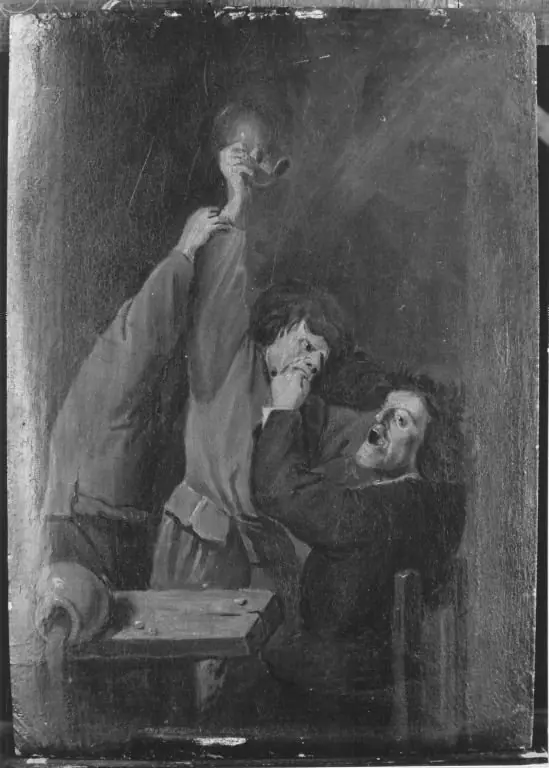
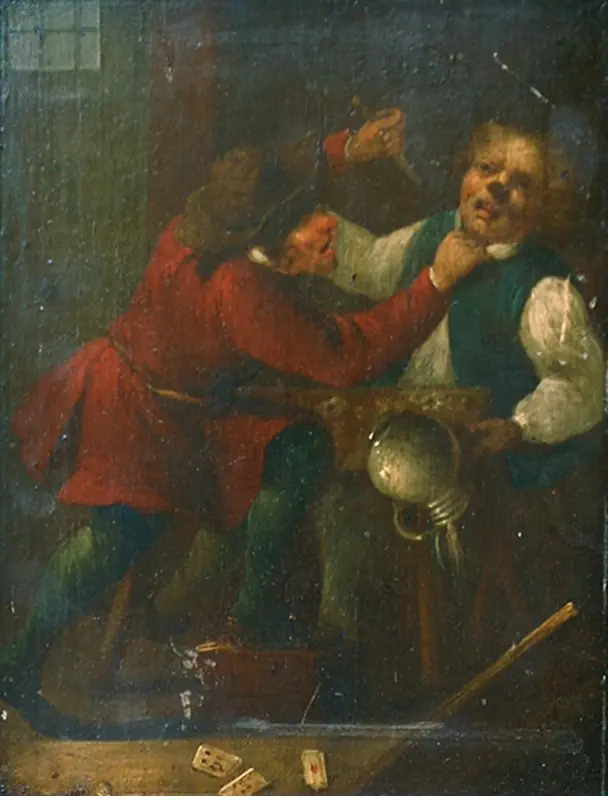
Fight is a photography by Unknown. It dates from 1650 and is held in the collection of the Statens Museum for Kunst. Created around 1650, this image depicts a moment of physical conflict between two men in a confined interior space.
About this work
Overview
Created around 1650, this image depicts a moment of physical conflict between two men in a confined interior space. The work is held in the collection of the Museum of Ethnography. Its composition emphasizes tension through stark contrasts of light and shadow, drawing attention to the figures’ gestures and expressions without revealing clear context for the struggle.
Subject & Meaning
Two men are locked in a struggle over a small, unseen object. One kneels, clad in red, while the other, dressed in green and white, leans forward with an expression of sudden surprise. The scene suggests a personal dispute, possibly over possession or honor, rendered without narrative clarity. The ambiguity invites interpretation rooted in everyday conflict rather than myth or allegory.
Technique & Style
The artist employs chiaroscuro to heighten emotional intensity, using deep shadows to obscure parts of the figures and environment while sharply illuminating key details—the red coat, the kneeling man’s face, the scattered debris. This modeling creates volume and drama, focusing the viewer’s attention on the physicality of the confrontation and the instability of the space.
History & Provenance
The work’s origin and creator remain unidentified, though its style and subject align with 17th-century genre scenes from regions where such intimate, unidealized depictions of conflict were produced. It entered the Museum of Ethnography’s collection as part of a broader effort to document everyday life through visual material, though its exact acquisition path is undocumented.
Context
In mid-17th-century Europe, depictions of ordinary people in moments of tension were gaining traction among artists seeking realism over idealism. This image reflects that trend, capturing a transient, unheroic scene that might have been observed in taverns or homes. The absence of social markers or setting reinforces its focus on raw human interaction.
Legacy
Though not widely reproduced or studied, the image contributes to a quieter tradition of ethnographic art that values unembellished human behavior. Its preservation in a museum of ethnography underscores its role as a document of social gesture rather than artistic innovation, offering insight into how conflict was visually recorded outside formal or elite contexts.
Artist & collection

 Domestic Scene
 Giacomo and Cardinal Marco, investing Andrea, Abbot of San Zeno, with his Benefice
 The Nymph of Fontainebleau
 Portrait of a Woman
 Madonna and Child with Saints in the Enclosed Garden
 Venus and Minerva
 Family Group of Four on Sofa
 Wall painting from Room H of the Villa of P. Fannius Synistor at Boscoreale