Artwork
Țăranul în capcană
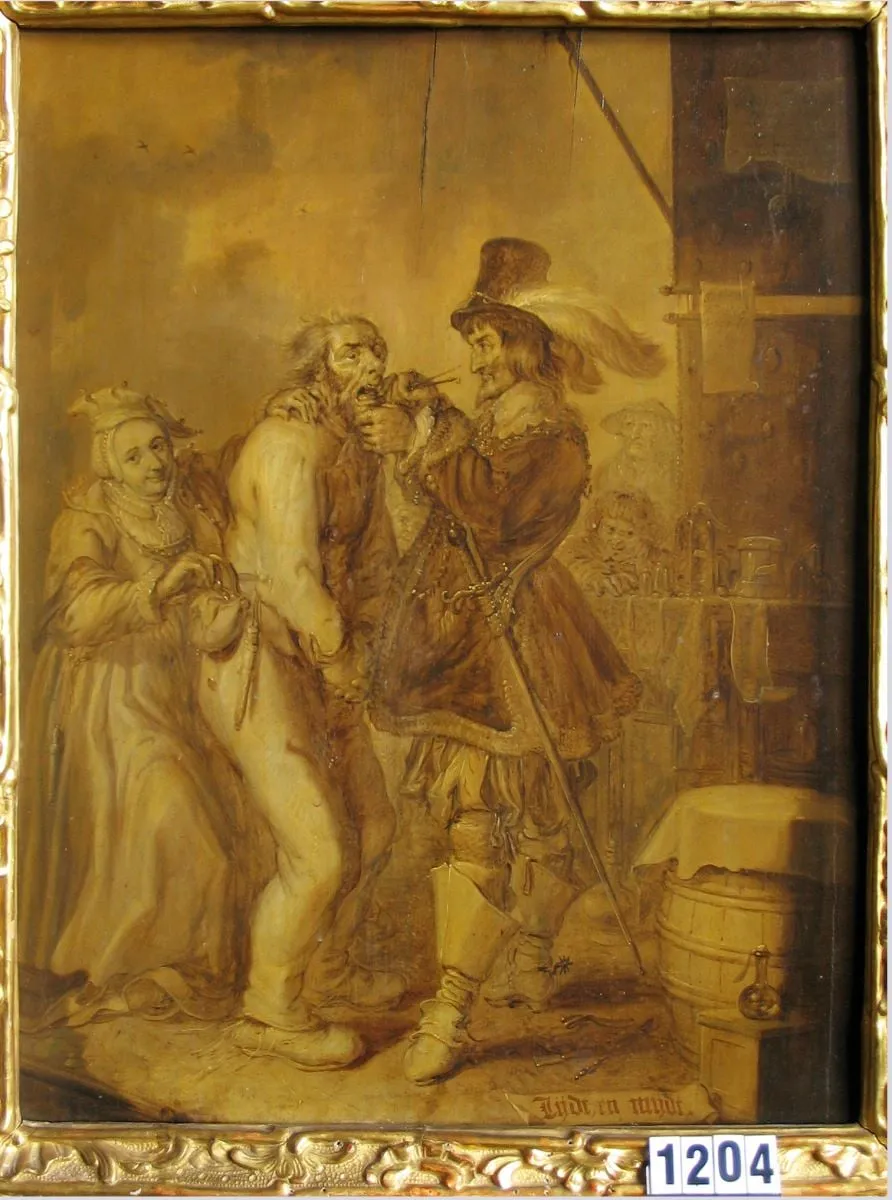
Țăranul în capcană is a print by the Baroque artist Adriaen van de Venne. It dates from 1631 and is held in the collection of the Brukenthal National Museum.
About this work
Overview
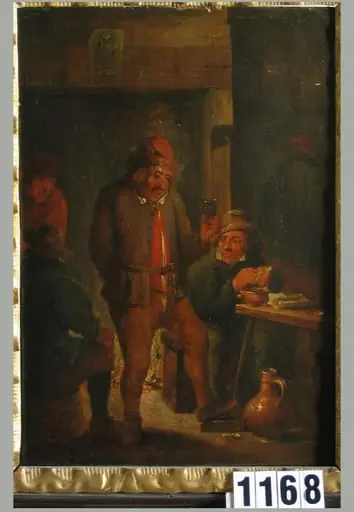
Created in 1631 by Adriaen van de Venne, this print depicts a tense interior scene involving four figures in a modest, dimly lit space.
Created in 1631 by Adriaen van de Venne, this print depicts a tense interior scene involving four figures in a modest, dimly lit space. The composition centers on a shirtless man restrained by another, while a woman observes from the side. The setting, filled with household objects like barrels and shelves, suggests a domestic or rural environment. The interplay of light and shadow enhances the emotional ambiguity of the moment.
Subject & Meaning
The scene likely portrays a moment of coercion or intervention within a peasant household. The man in the fur-lined coat appears to be exerting control over the slumped figure, while the woman’s impassive gaze adds uncertainty to the nature of the interaction. Whether this is punishment, medical aid, or legal enforcement remains deliberately unclear, inviting interpretation without offering resolution.
Technique & Style
Van de Venne employs chiaroscuro to define form and mood, with strong contrasts between the illuminated figures and the shadowed corners of the room. The figures are rendered with precise, linear detail, typical of Dutch printmaking of the period. The cluttered background and restrained palette reinforce the scene’s realism, grounding the drama in an ordinary, unidealized setting.
History & Provenance
The print was produced during Van de Venne’s active years in the Dutch Republic, a time when genre scenes and moralizing imagery were popular. It likely circulated as a standalone print, intended for private collectors rather than public display. No definitive early ownership records are known, but its survival in multiple institutional collections suggests enduring interest among early modern audiences.
Context
In early 17th-century Netherlands, depictions of rural life often carried implicit social commentary. Van de Venne’s work aligns with a broader trend of genre scenes that explored human behavior under pressure. Unlike overtly religious or historical subjects, this image draws power from its ambiguity, reflecting contemporary fascination with everyday moral dilemmas and social hierarchy.
Legacy
The print remains a quiet example of Dutch genre art’s capacity to convey psychological tension without narrative clarity. It influenced later artists interested in the interplay of light and human vulnerability. While not widely reproduced today, it continues to be studied for its subtle handling of power dynamics and its restraint in emotional expression.
Artist & collection
Artist
Adriaen van de Venne spent his life turning quiet corners of the Dutch countryside into sharp little jokes—he once drew a peasant stuck in a mousetrap labeled “Politics,” complete with tiny flags fluttering above the jaws.

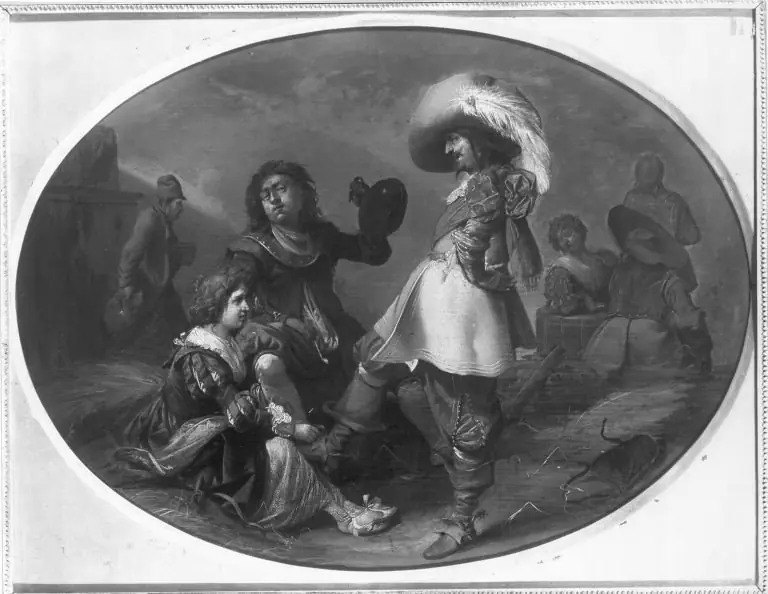 Company of an officer, soldiers and young women in a guardroom
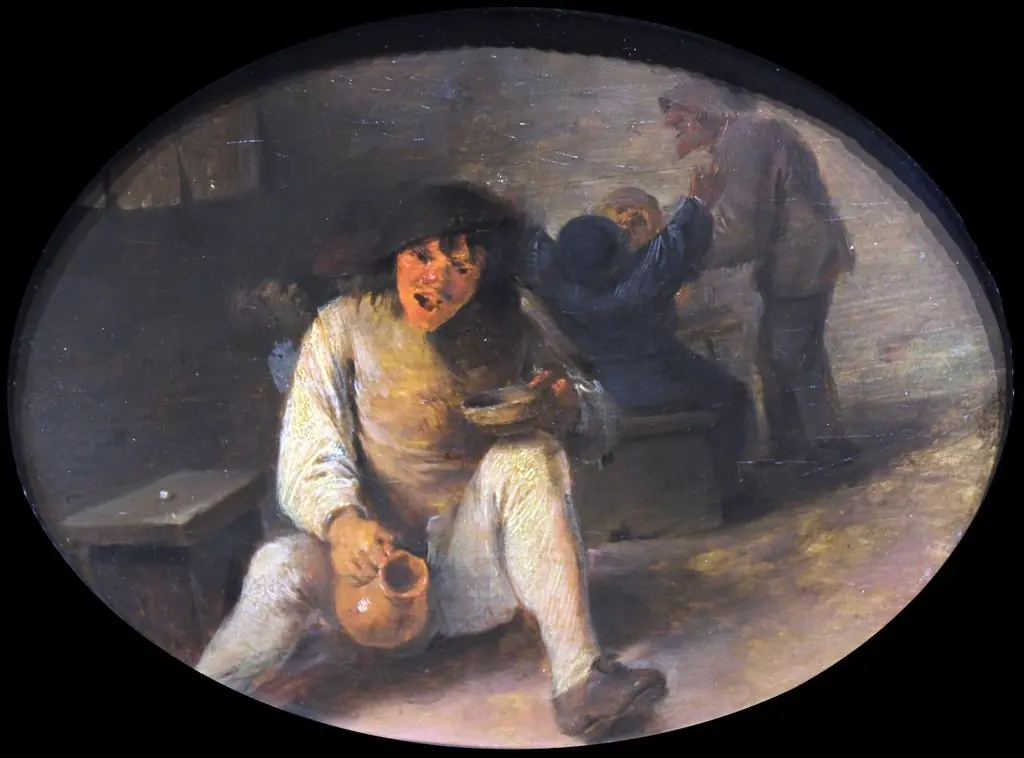 The Drunken Peasant
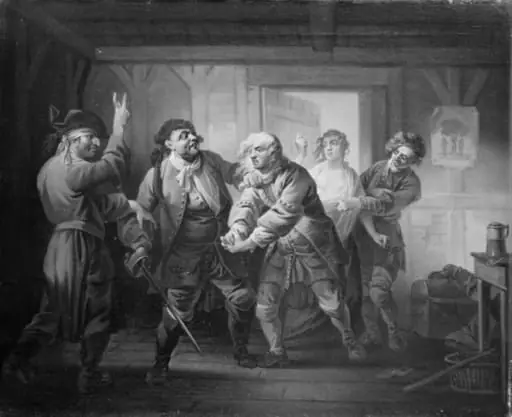 Den elvte Juni, V. akt, 1. scene
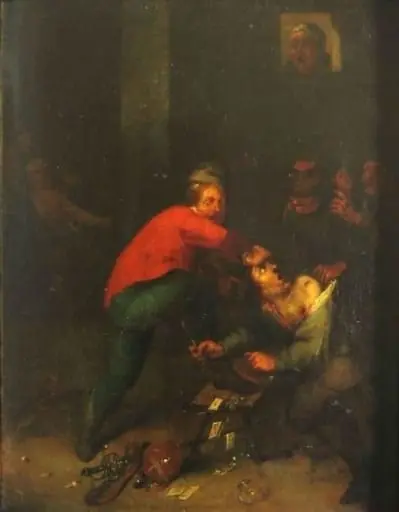 Încăierare la jocul de cărți
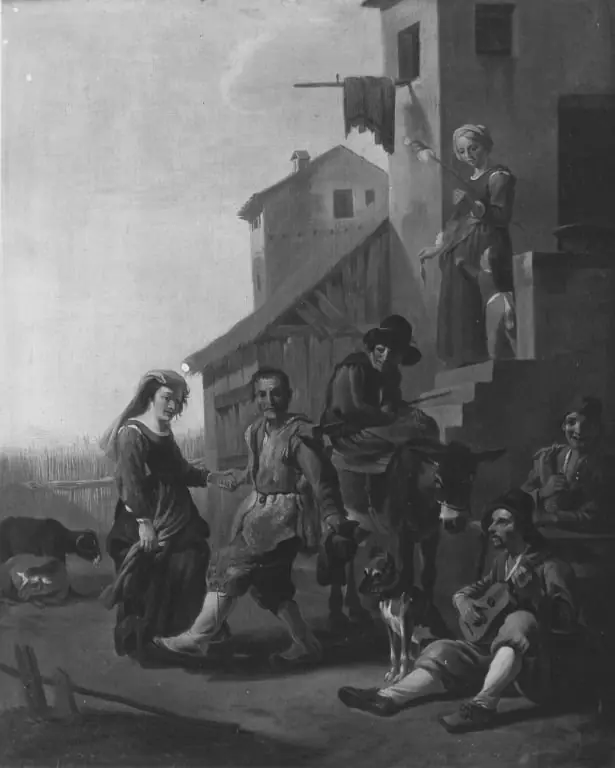 Tanz in der Campagna
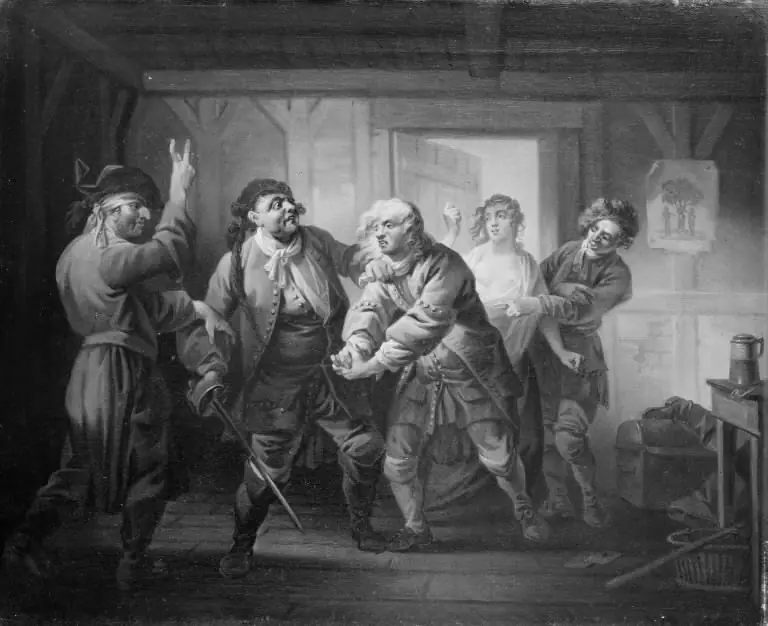 Den elvte Juni, V. akt, 1. scene
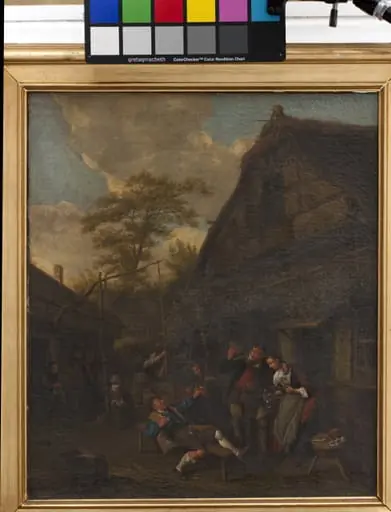 Peasants outside an Inn
 Sosirea vânătorilor (pandant: Muzică și dans)
 Paternal Duties
 Der Geruch
 Interior țărănesc cu băutori (în registrul inventar: Oameni băuți într-o cârciumă de țară)
 Interior țărănesc