Artwork
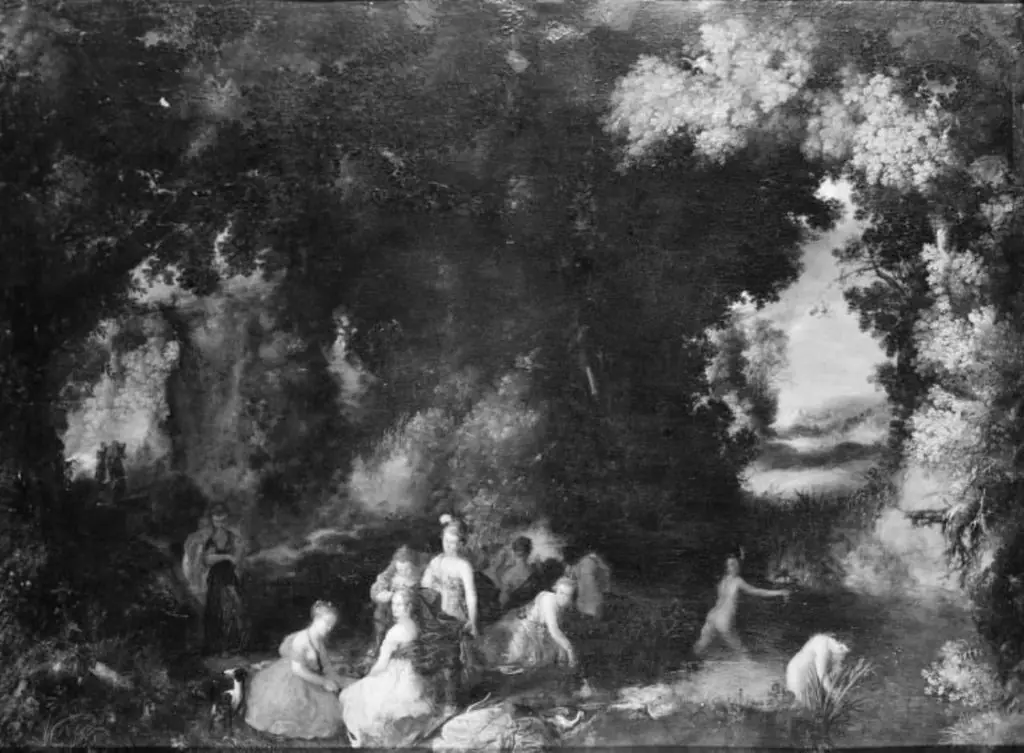
Diana, omgivet af sine nymfer
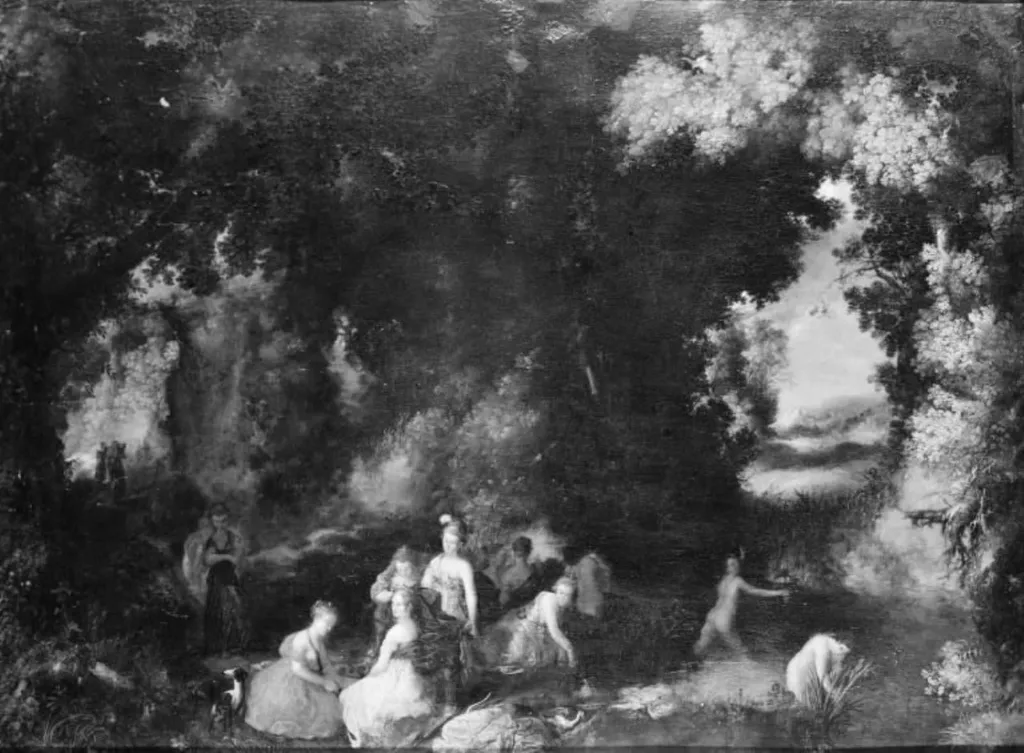
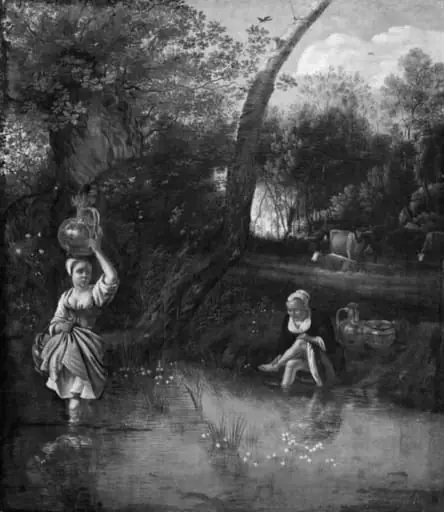
Diana, omgivet af sine nymfer is a photography by Unknown. It dates from 1750 and is held in the collection of the Statens Museum for Kunst. This mid-eighteenth-century painting depicts a scene from classical mythology, attributed to an artist active around 1750.
About this work
Overview
This mid-eighteenth-century painting depicts a scene from classical mythology, attributed to an artist active around 1750.
This mid-eighteenth-century painting depicts a scene from classical mythology, attributed to an artist active around 1750. Rendered in oil, it presents a woodland gathering centered on the figure of Diana, the Roman goddess of the hunt. The composition unfolds in a dense forest, where human forms emerge from the shadows, their features softened by an atmospheric treatment that prioritizes mood over individual identity.
Subject & Meaning
The work portrays Diana accompanied by her nymphs, a recurring theme in European art drawn from Ovid’s *Metamorphoses*. The goddess, often associated with chastity and the wilderness, is shown in a moment of repose or preparation, surrounded by her attendants. The blurred faces and indistinct gestures suggest a deliberate ambiguity, shifting focus from narrative clarity to the evocation of an otherworldly, timeless realm.
Technique & Style
Executed with a subdued palette, the painting employs chiaroscuro to contrast the figures against the darkened forest backdrop. Light filters through the foliage, illuminating select areas while leaving others in shadow, a method that heightens the scene’s dreamlike quality. The brushwork remains refined yet restrained, with an emphasis on tonal variation over precise detail, aligning with mid-18th-century interpretations of mythological subjects.
History & Provenance
The painting entered the collection of the Museum of Ethnography, though its early ownership remains unrecorded. Created during a period of renewed interest in classical antiquity, it reflects the era’s fascination with mythological themes. The work’s current state, including its blurred details, may result from later interventions or the limitations of photographic reproduction rather than the artist’s original intent.
Context
Produced in the mid-1700s, the painting emerges from a cultural milieu where mythological scenes served as vehicles for exploring ideals of nature, femininity, and divine authority. Diana’s depiction aligns with conventions of the time, though the artist’s handling of light and form introduces a distinct atmospheric effect. Such works often adorned private collections, catering to patrons who valued both classical erudition and decorative elegance.
Artist & collection

 Domestic Scene
 Giacomo and Cardinal Marco, investing Andrea, Abbot of San Zeno, with his Benefice
 The Nymph of Fontainebleau
 Portrait of a Woman
 Madonna and Child with Saints in the Enclosed Garden
 Venus and Minerva
 Family Group of Four on Sofa
 Wall painting from Room H of the Villa of P. Fannius Synistor at Boscoreale
 Rast am Waldrand
 Landscape with Diana and Nymphs
 Räuberüberfall im Wald
 Landscape with Peasants at a Fountain
 Christ and the Canaanite Woman
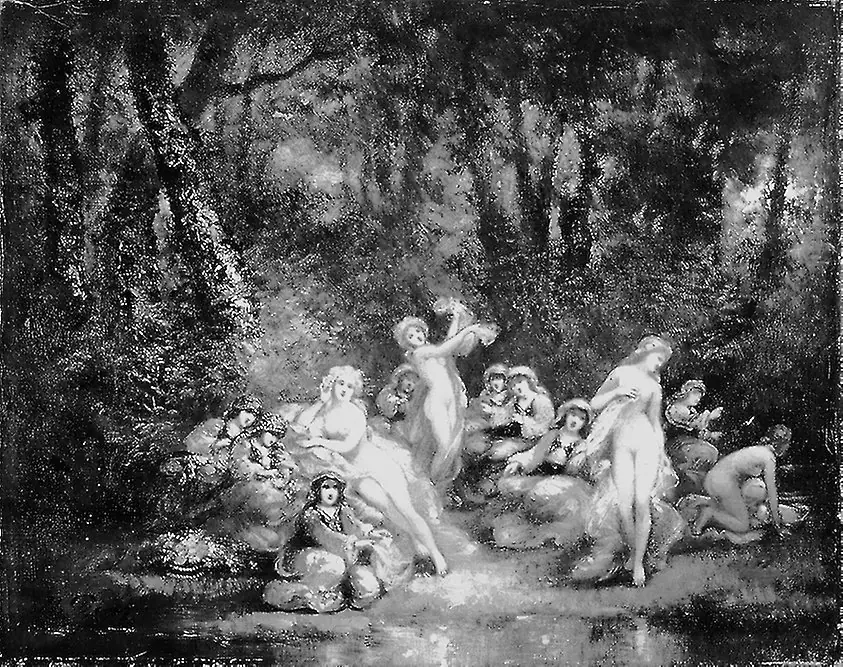 In the Woods
 Women and Cherubs in a Glen
 Waldlandschaft mit Engel und Tobias
 Landscape with Diana and Nymphs
 The Angler at the Forest Brook
 Diana, omgivet af sine nymfer
 Landscape with Peasant Girls at a Stream