Artwork
Nogle nymfer overraskes af en satyr. Ved siden sidder en flodgud
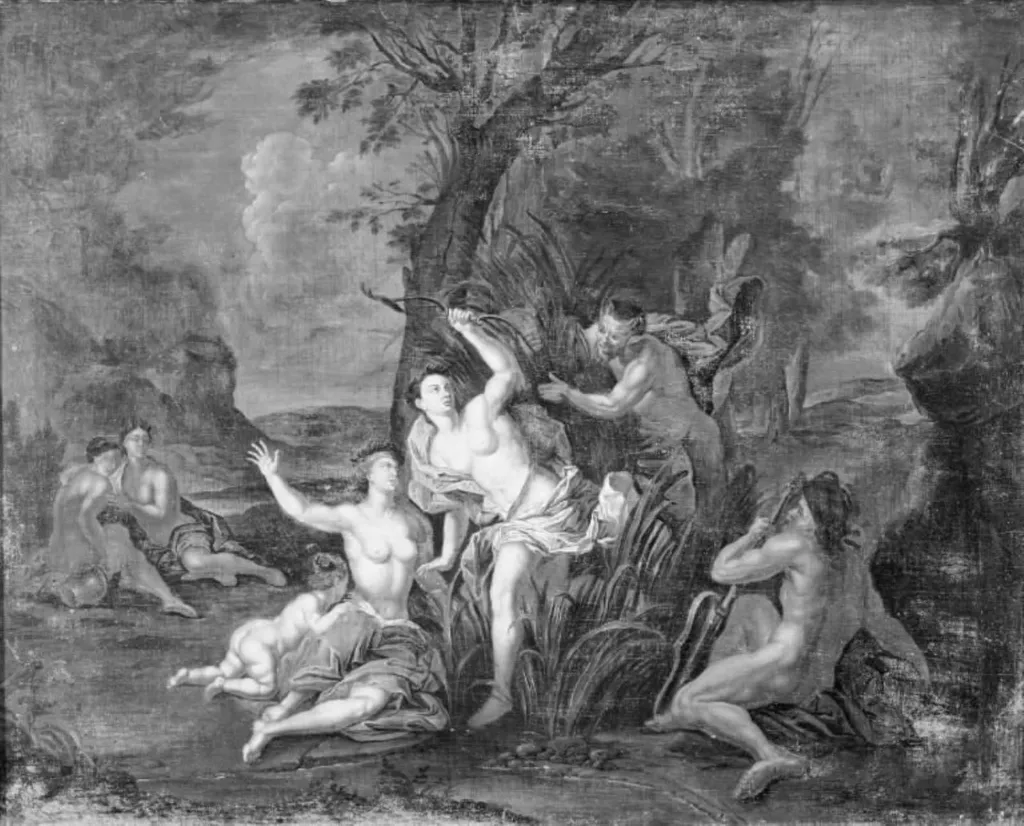
Nogle nymfer overraskes af en satyr. Ved siden sidder en flodgud is a photography by Unknown. It dates from 1750 and is held in the collection of the Statens Museum for Kunst. This black-and-white photograph, dated around 1750, captures a mythological scene titled 'Nogle nymfer overraskes af en satyr.
About this work
Overview
This black-and-white photograph, dated around 1750, captures a mythological scene titled 'Nogle nymfer overraskes af en satyr.
This black-and-white photograph, dated around 1750, captures a mythological scene titled 'Nogle nymfer overraskes af en satyr. Ved siden sidder en flodgud.' It is held in the collection of the Museum of Ethnography. The image is not a painting but a photographic reproduction of an earlier artwork, likely a sculpture or relief, rendered with high contrast to emphasize form and movement within a naturalistic setting.
Subject & Meaning
The scene depicts nymphs, nature spirits from classical mythology, startled by the sudden appearance of a satyr—a half-human, half-goat figure associated with wildness and revelry. A river god sits nearby, suggesting a sacred or liminal space. The moment captures surprise and vulnerability, reflecting themes of intrusion into the natural world, common in mythological narratives that explore boundaries between the human and the divine.
Technique & Style
The photograph employs strong chiaroscuro, using sharp contrasts between light and shadow to model the figures and heighten their three-dimensionality. This lighting technique draws attention to muscular tension, drapery folds, and the spatial relationships among the characters. The effect is theatrical, emphasizing drama over detail, and aligns with 18th-century aesthetic preferences for emotional intensity in mythological subjects.
History & Provenance
The original artwork, likely a sculptural group from the mid-18th century, was photographed at some point after its creation. The photograph now in the Museum of Ethnography may have been made for documentation, study, or exhibition purposes. Its presence in an ethnographic collection suggests an interest in how classical myths were interpreted and transmitted across cultures during the colonial era.
Context
In the 1700s, European artists and collectors frequently drew on Greco-Roman mythology to express ideals of beauty, nature, and human emotion. This scene fits within a broader trend of mythological tableaux in sculpture and painting, often commissioned by aristocrats or displayed in private gardens. The inclusion of a river god alongside nymphs and a satyr reflects a layered cosmology where natural forces were personified.
Legacy
Though the original sculpture is unlocated, the photograph preserves its composition and emotional tone. It serves as a record of how classical themes were visually encoded in the 18th century and later repurposed for anthropological study. The image continues to be referenced in discussions of myth, gender, and the representation of nature in European visual culture.
Artist & collection

 Domestic Scene
 Giacomo and Cardinal Marco, investing Andrea, Abbot of San Zeno, with his Benefice
 The Nymph of Fontainebleau
 Portrait of a Woman
 Madonna and Child with Saints in the Enclosed Garden
 Venus and Minerva
 Family Group of Four on Sofa
 Wall painting from Room H of the Villa of P. Fannius Synistor at Boscoreale
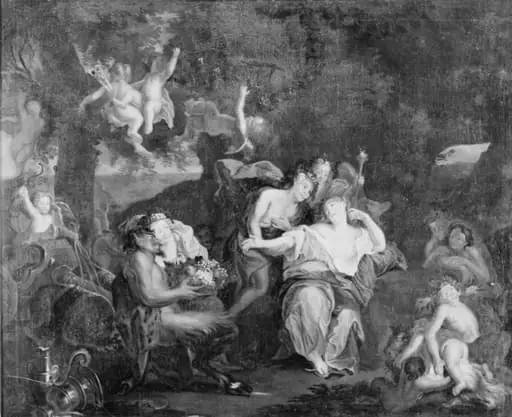 Bacchus og Ariadne sidder sammen i et landskab omgivne af amoriner, bacchantinder og satyrer
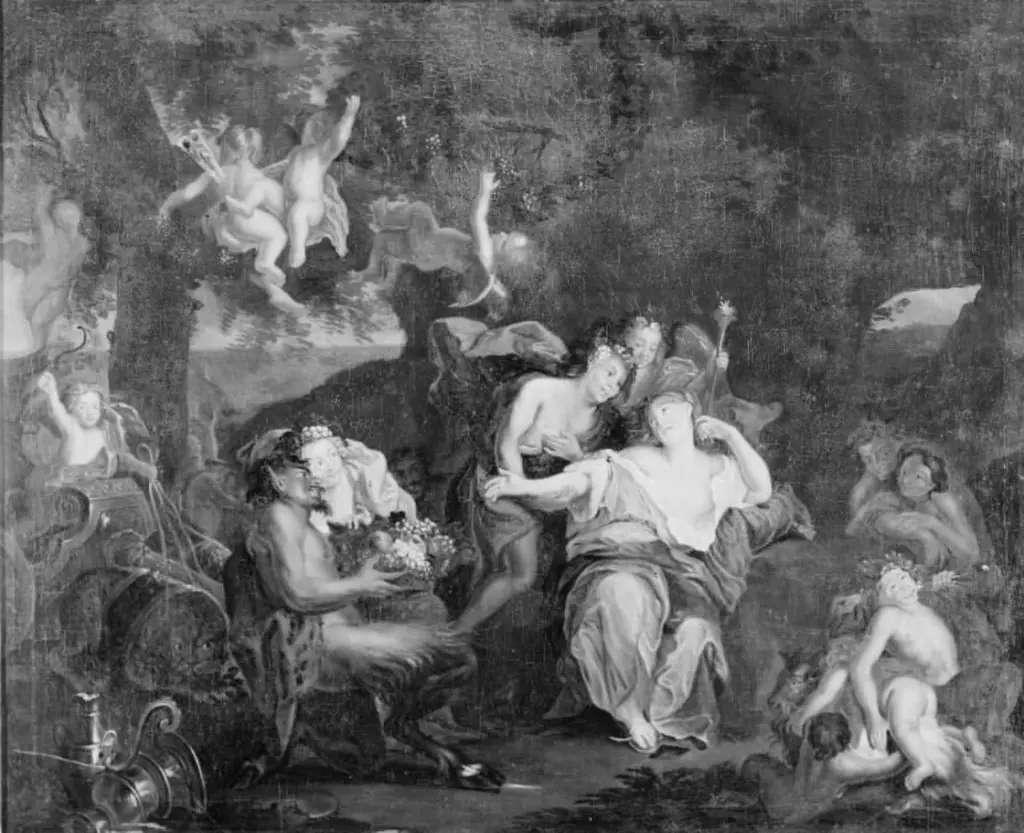 Bacchus og Ariadne sidder sammen i et landskab omgivne af amoriner, bacchantinder og satyrer
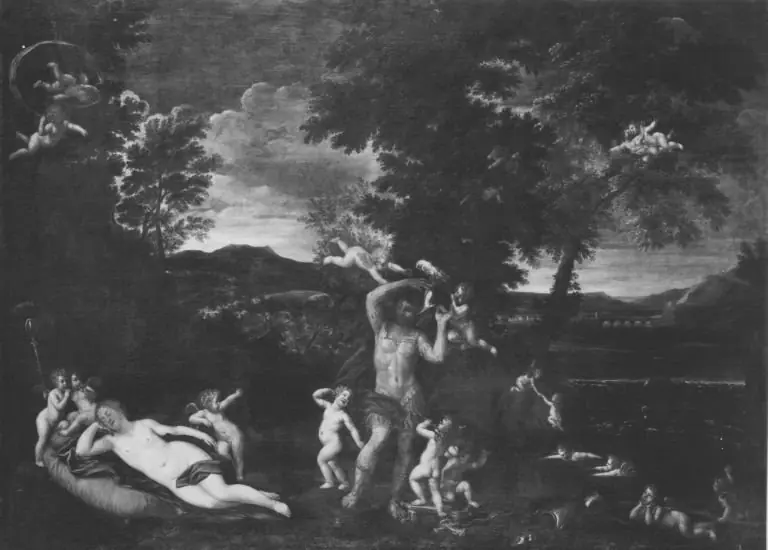 Venus, von Mars belauscht
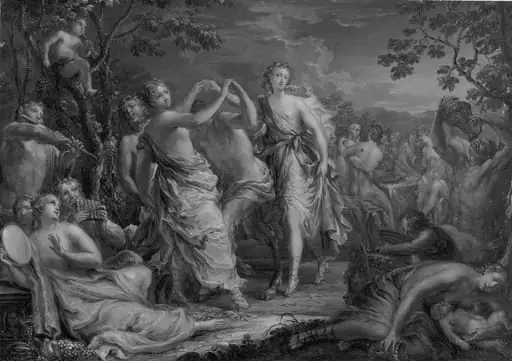 Bacchic Revels
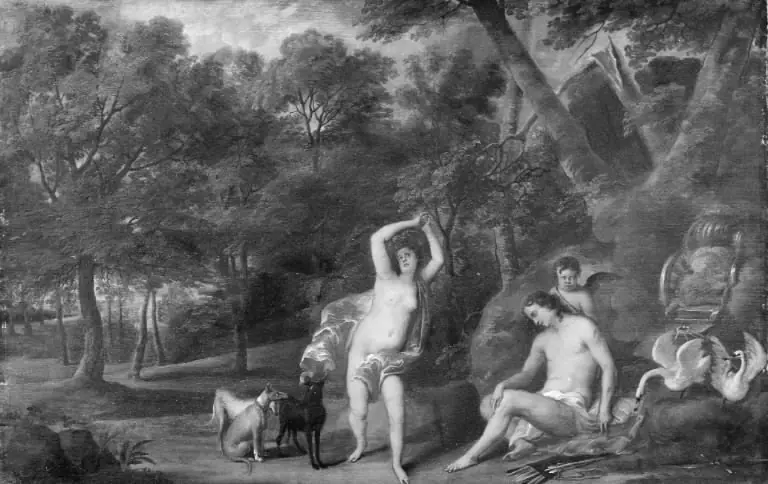 Venus Bewailing the Slain Adonis
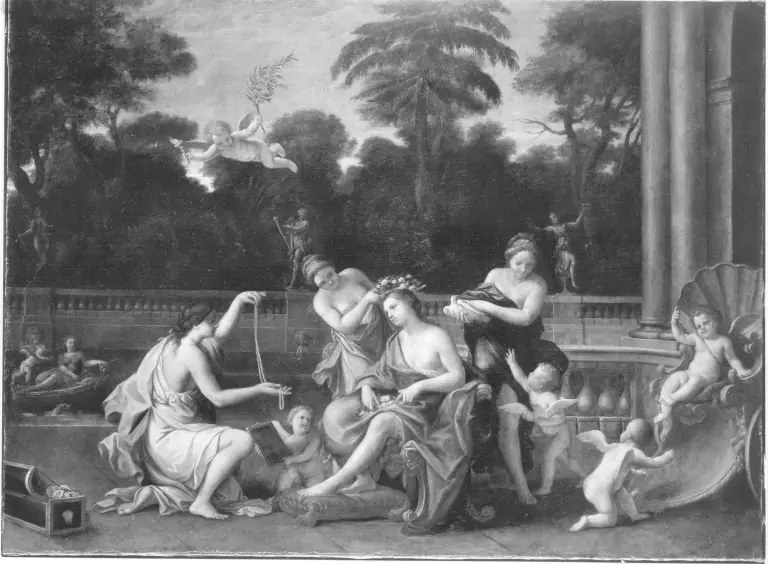 Schmückung der Venus
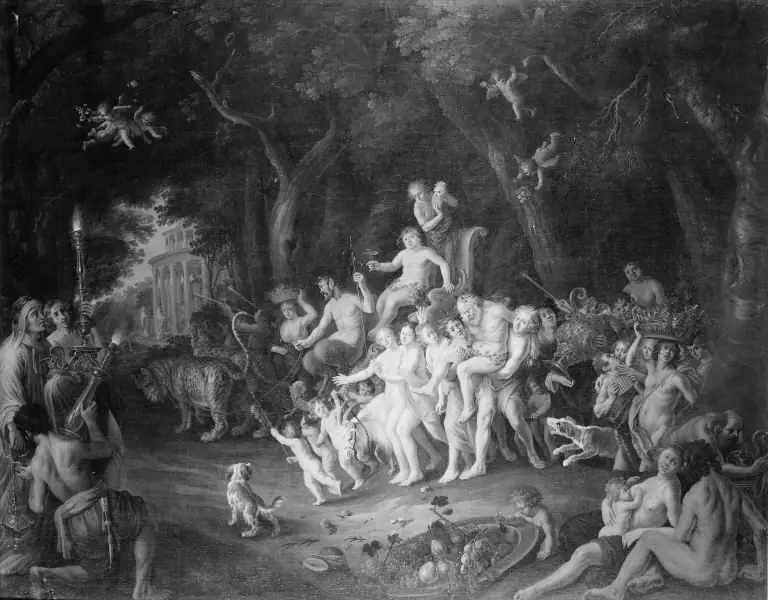 The Triumph of Bacchus
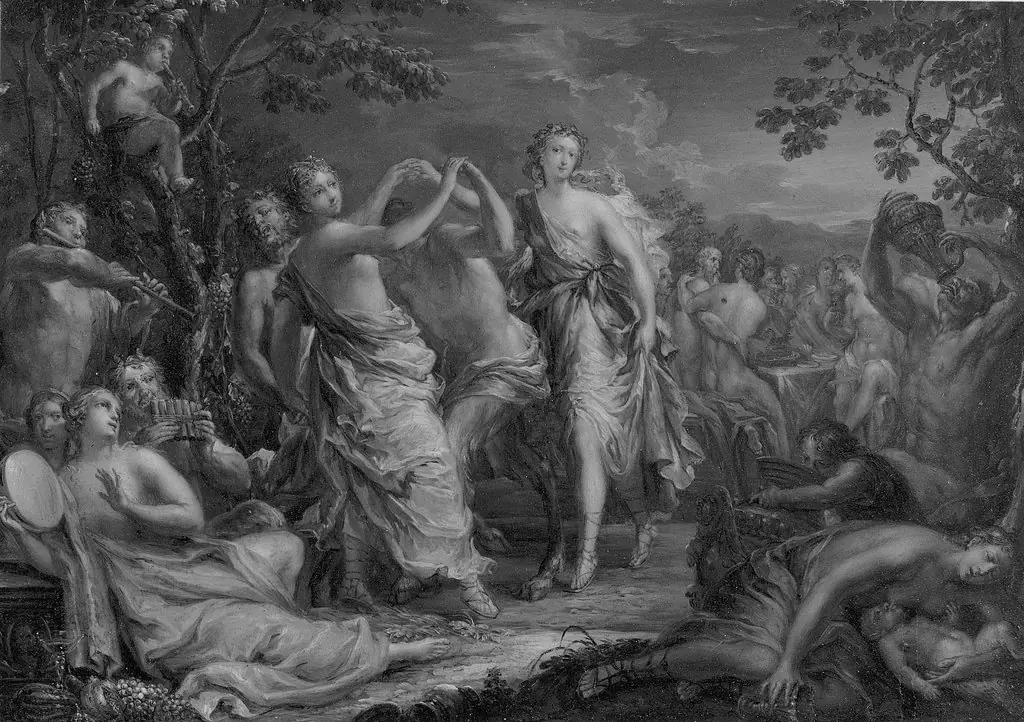 Bacchic Revels
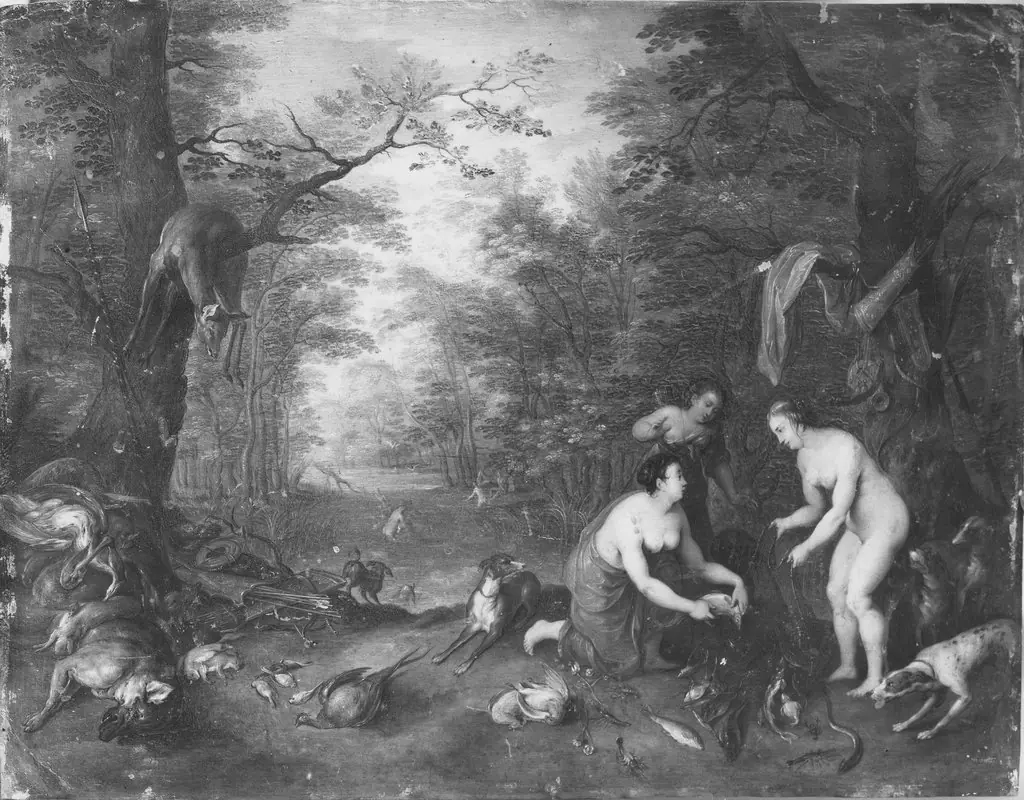 Diana Hunting
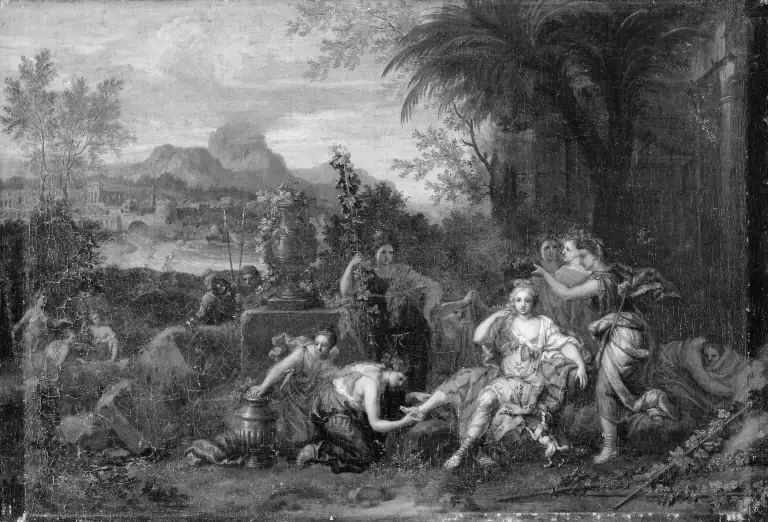 Landscape with Messalina's Wedding
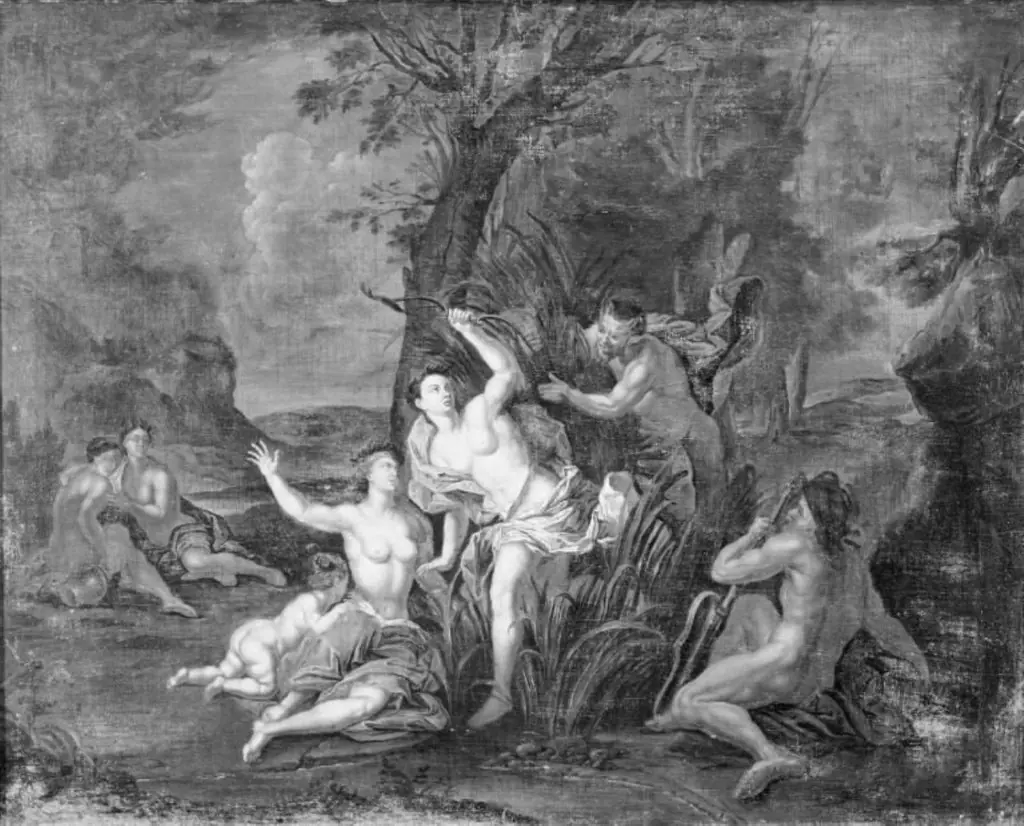 Nogle nymfer overraskes af en satyr. Ved siden sidder en flodgud
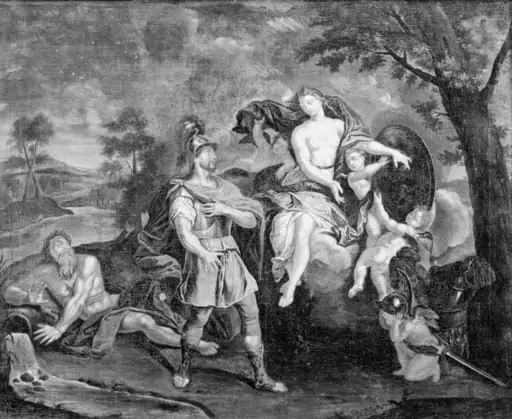 Mars synes at forsikre den i skyer siddende Venus om sin kærlighed. Imidlertid leger amoriner med hans våben