Artwork
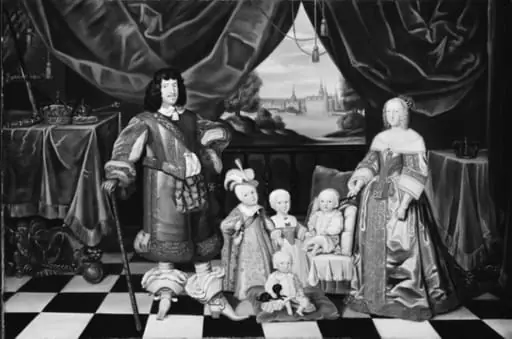
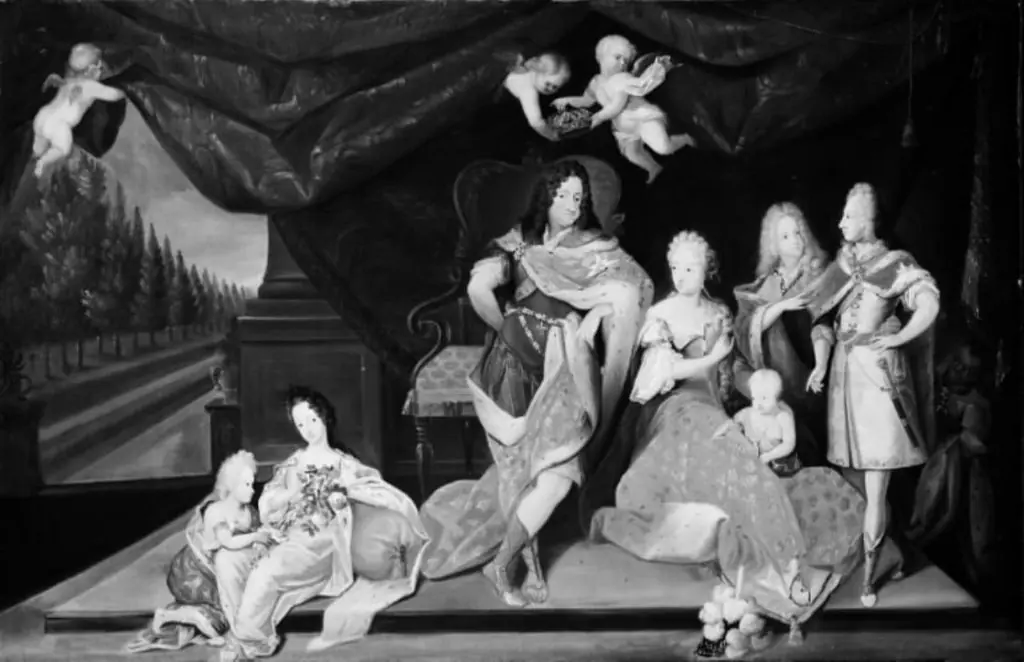
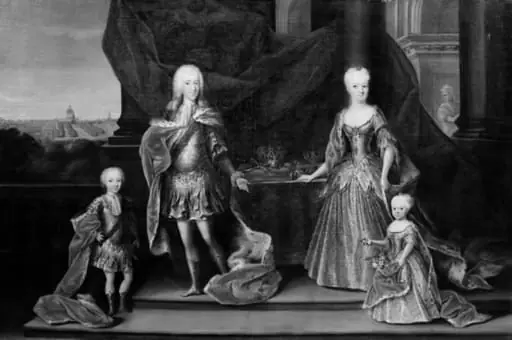
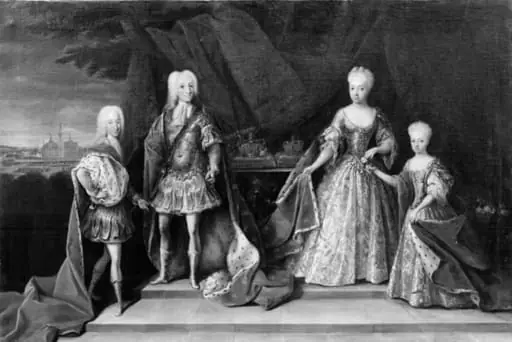
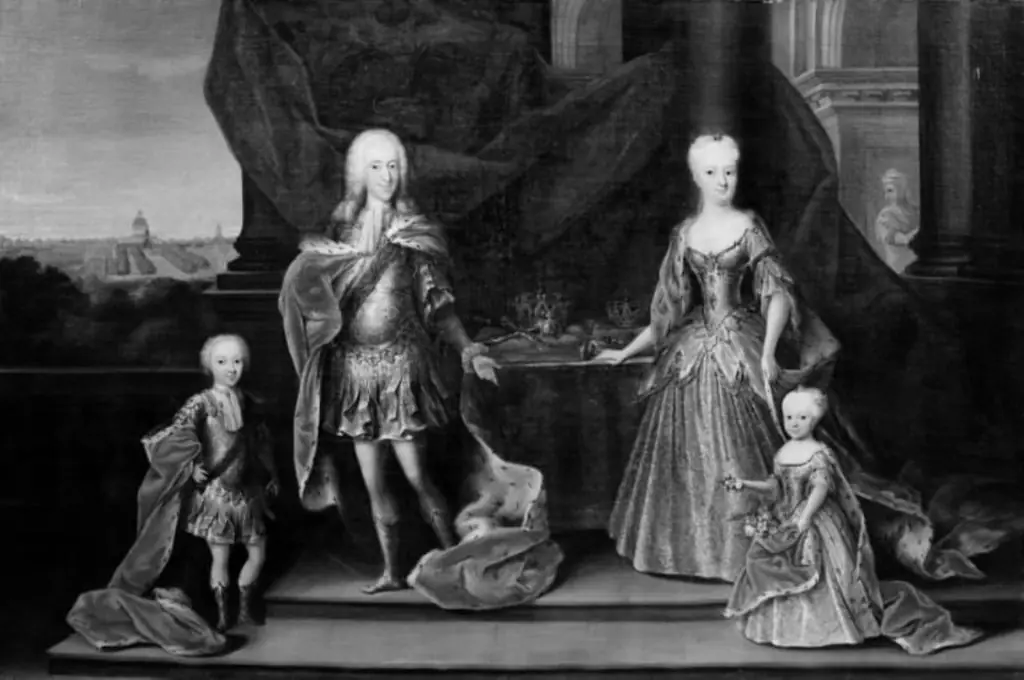
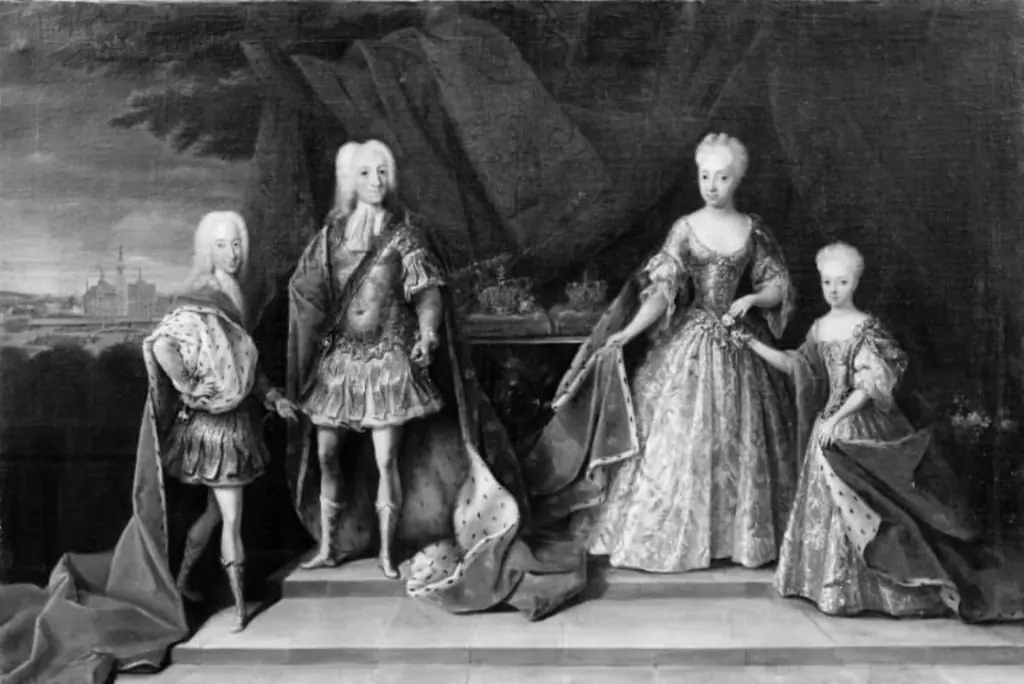
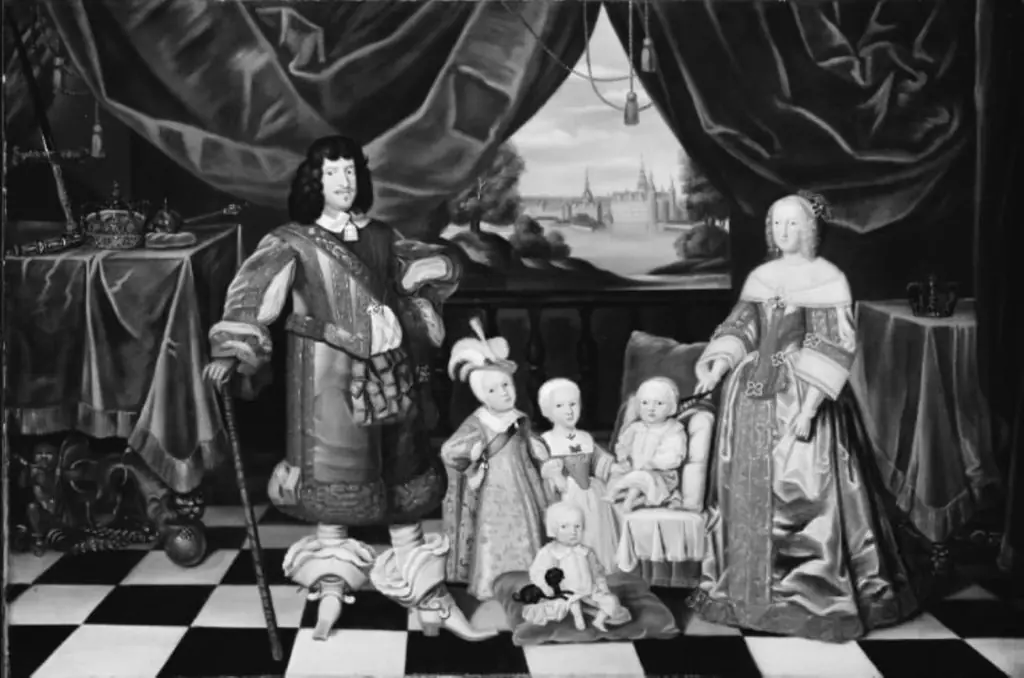
Kong Christian V med familie
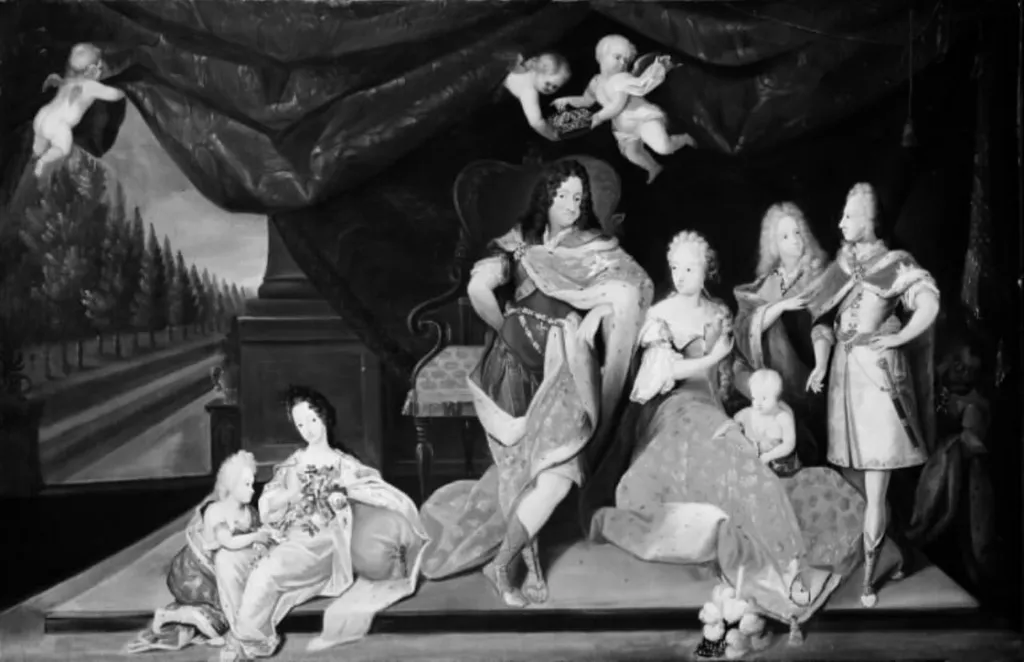
Kong Christian V med familie is a photography by Unknown. It dates from 1750 and is held in the collection of the Statens Museum for Kunst. This portrait, dated around 1750, depicts the Danish royal family in a formal composition.
About this work
Overview
Though attributed to an unknown artist, it captures King Christian V and his immediate family in a setting that blends domestic intimacy with royal protocol.
This portrait, dated around 1750, depicts the Danish royal family in a formal composition. Though attributed to an unknown artist, it captures King Christian V and his immediate family in a setting that blends domestic intimacy with royal protocol. The work resides in the Museum of Ethnography, where its presence reflects broader 18th-century European practices of using portraiture to affirm dynastic continuity.
Subject & Meaning
The central figures are a man and woman in elaborate court dress, likely King Christian V and his queen, surrounded by their children. Their arranged poses and refined attire signal status and lineage. The children, dressed in miniature versions of adult formalwear and holding symbolic objects, reinforce themes of succession and familial duty. The composition avoids spontaneity, emphasizing order and inherited authority.
Technique & Style
The painting employs chiaroscuro to model forms with subtle gradations of light, originating from the left. This enhances the three-dimensionality of figures against a soft, distant landscape featuring trees and a classical building. Brushwork is precise, particularly in textiles and facial features, reflecting academic training. The background, though rendered with care, remains secondary to the figures, maintaining focus on the family group.
History & Provenance
Created circa 1750, the portrait was likely commissioned to commemorate the royal lineage during a period of stabilized monarchy. It entered the Museum of Ethnography’s collection in the late 19th or early 20th century, possibly as part of a broader effort to document European aristocratic culture. Its current context within an ethnographic institution underscores its role as a cultural artifact rather than a purely artistic one.
Context
In mid-18th-century Denmark, royal portraiture served political and social functions beyond mere representation. Such images reinforced the legitimacy of the monarchy amid Enlightenment ideals and shifting power structures. The inclusion of children emphasized dynastic security, while the formal setting aligned with broader European trends in aristocratic self-presentation, particularly in courts influenced by French and German models.
Legacy
Though not widely exhibited outside specialized collections, the portrait remains a valuable record of Danish royal iconography. Its preservation in an ethnographic museum highlights how royal imagery functions as cultural evidence—documenting dress, gesture, and familial ideology. It contributes to scholarly understanding of how monarchy was visually sustained in Northern Europe during the early modern period.
Artist & collection

 Domestic Scene
 Giacomo and Cardinal Marco, investing Andrea, Abbot of San Zeno, with his Benefice
 The Nymph of Fontainebleau
 Portrait of a Woman
 Madonna and Child with Saints in the Enclosed Garden
 Venus and Minerva
 Family Group of Four on Sofa
 Wall painting from Room H of the Villa of P. Fannius Synistor at Boscoreale