Artwork
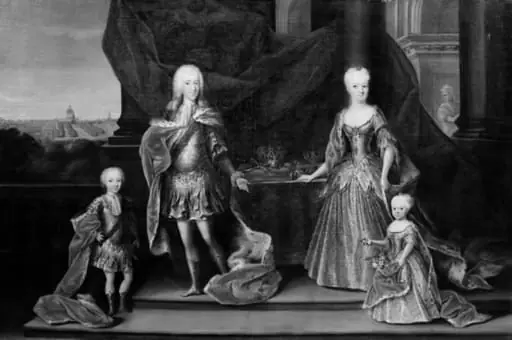
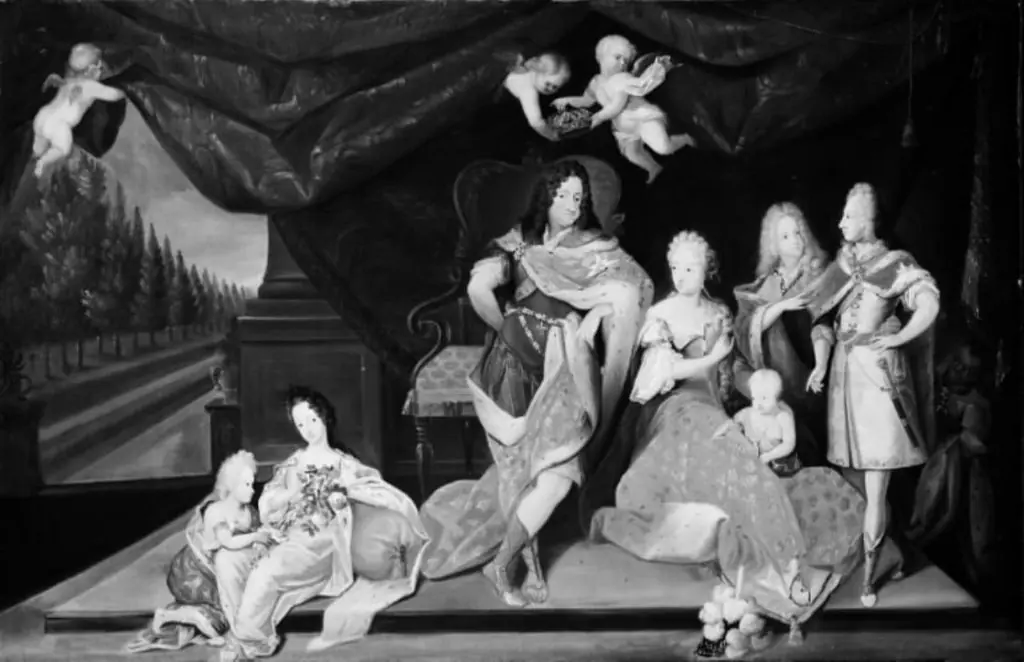
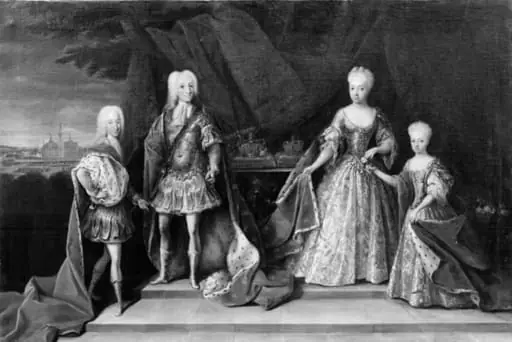
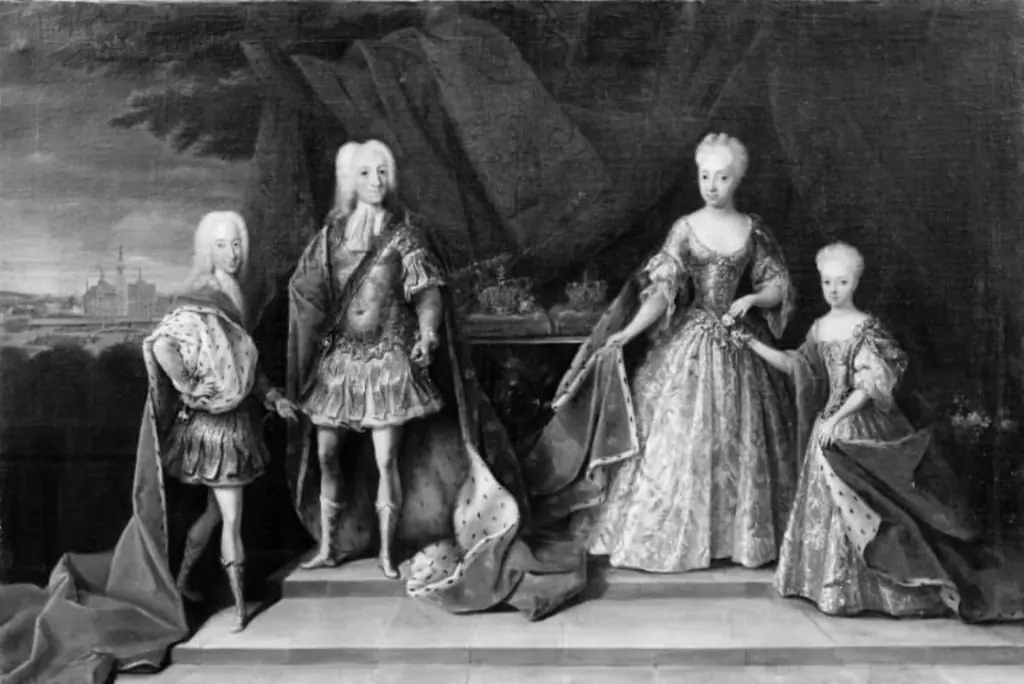
Kong Christian VI med familie
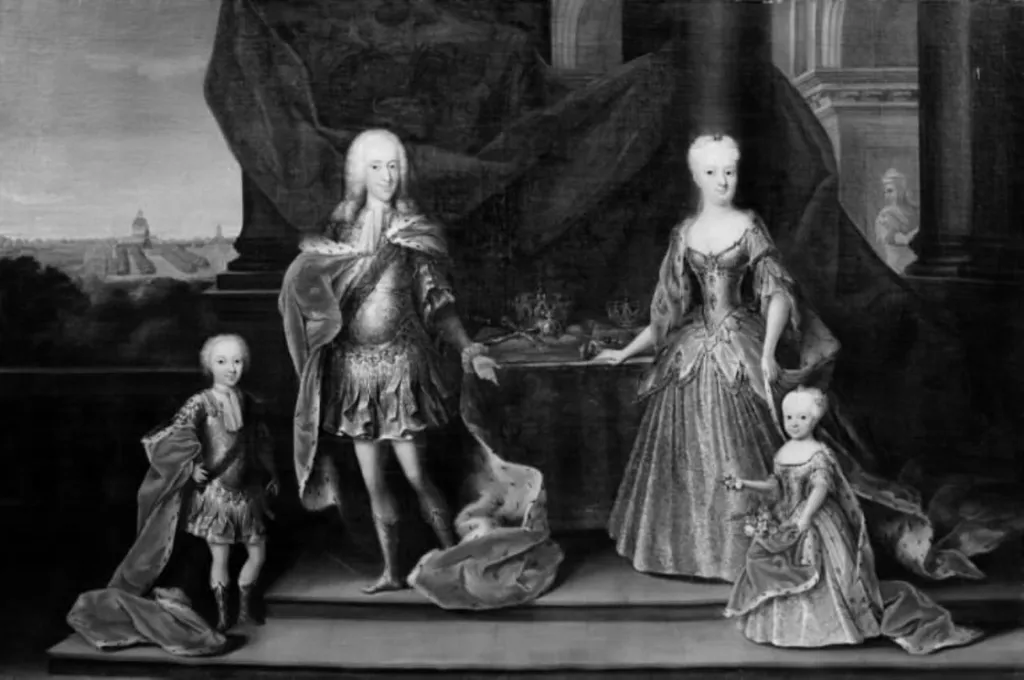
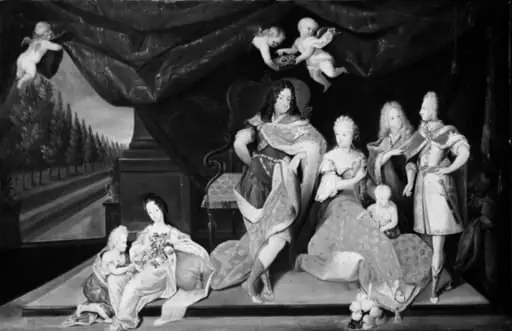
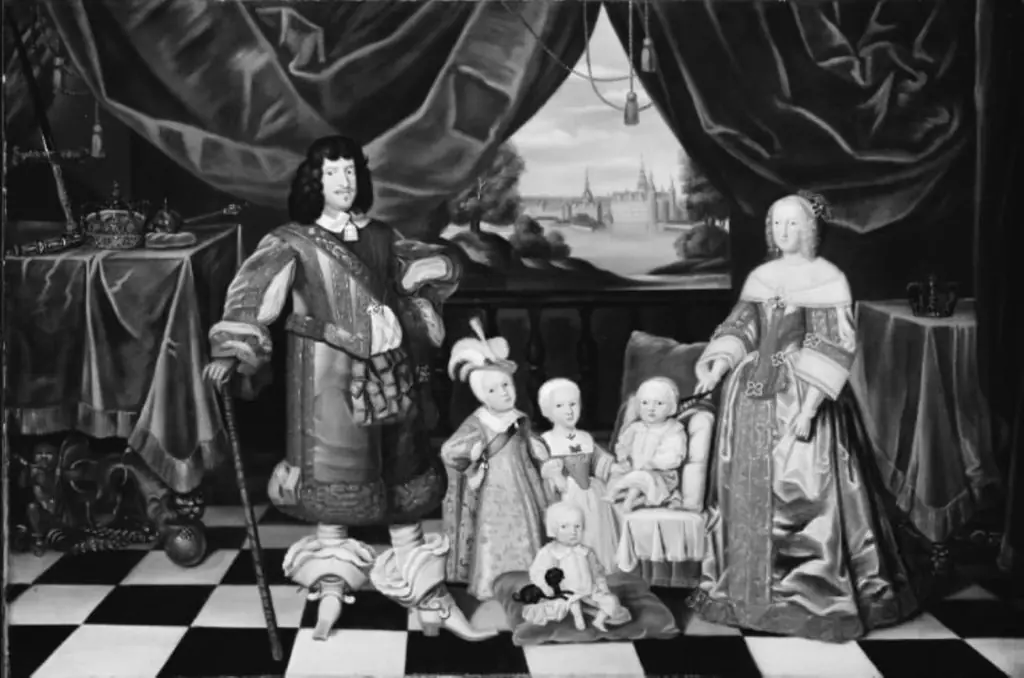
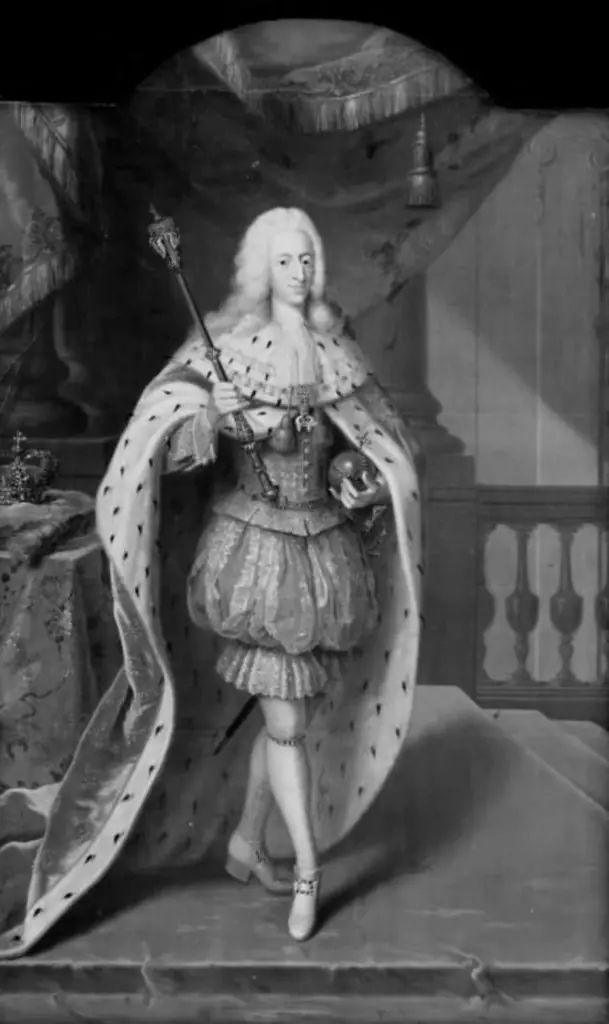
Kong Christian VI med familie is an oil painting by Unknown. It is held in the collection of the Statens Museum for Kunst. This oil painting portrays King Christian VI of Denmark with his immediate family, rendered in formal 18th-century dress.
About this work
Overview
Set against a dim interior with a narrow window casting subtle light, the composition emphasizes the royal figures through controlled chiaroscuro.
This oil painting portrays King Christian VI of Denmark with his immediate family, rendered in formal 18th-century dress. Set against a dim interior with a narrow window casting subtle light, the composition emphasizes the royal figures through controlled chiaroscuro. The arrangement is static and symmetrical, reinforcing their status through composed posture and precise detail in fabric and accessories.
Subject & Meaning
The painting presents the royal family as embodiments of order and continuity. The king, armed with a ceremonial sword, signifies authority; the queen’s elaborate gown reflects dynastic prestige. The children, positioned between them, suggest succession and the future of the monarchy. Their unified stance and formal attire convey a carefully curated image of stability and legitimacy.
Technique & Style
The artist employs refined brushwork to render textures—velvet, lace, metal—while using chiaroscuro to model forms and create spatial depth. The dark background isolates the figures, directing focus to their clothing and expressions. Light enters from a single source behind, gently illuminating faces and fabrics without disrupting the solemn tone. The style aligns with Northern European court portraiture of the period.
History & Provenance
Commissioned during Christian VI’s reign (1730–1746), the painting was likely intended for public display to reinforce royal presence. It remained in Danish royal collections, documented in inventories from the mid-18th century. Its preservation reflects its role as a state portrait, valued for its historical record rather than artistic innovation.
Context
In early 18th-century Denmark, portraiture served political ends, especially under absolutist rule. Christian VI promoted piety and centralized authority; this image aligns with his efforts to project dignity and divine sanction. Similar royal portraits across Europe used controlled environments and symbolic objects to communicate power beyond mere likeness.
Legacy
The painting endures as a key visual document of Danish royal life in the Baroque era. It informs historical understanding of courtly dress, familial representation, and monarchical ideology. Though not widely exhibited today, it remains part of Denmark’s national heritage, studied for its reflection of state imagery in an age of absolutism.
Artist & collection

 Domestic Scene
 Giacomo and Cardinal Marco, investing Andrea, Abbot of San Zeno, with his Benefice
 The Nymph of Fontainebleau
 Portrait of a Woman
 Madonna and Child with Saints in the Enclosed Garden
 Venus and Minerva
 Family Group of Four on Sofa
 Wall painting from Room H of the Villa of P. Fannius Synistor at Boscoreale