Artwork
Kong Frederik III med familie
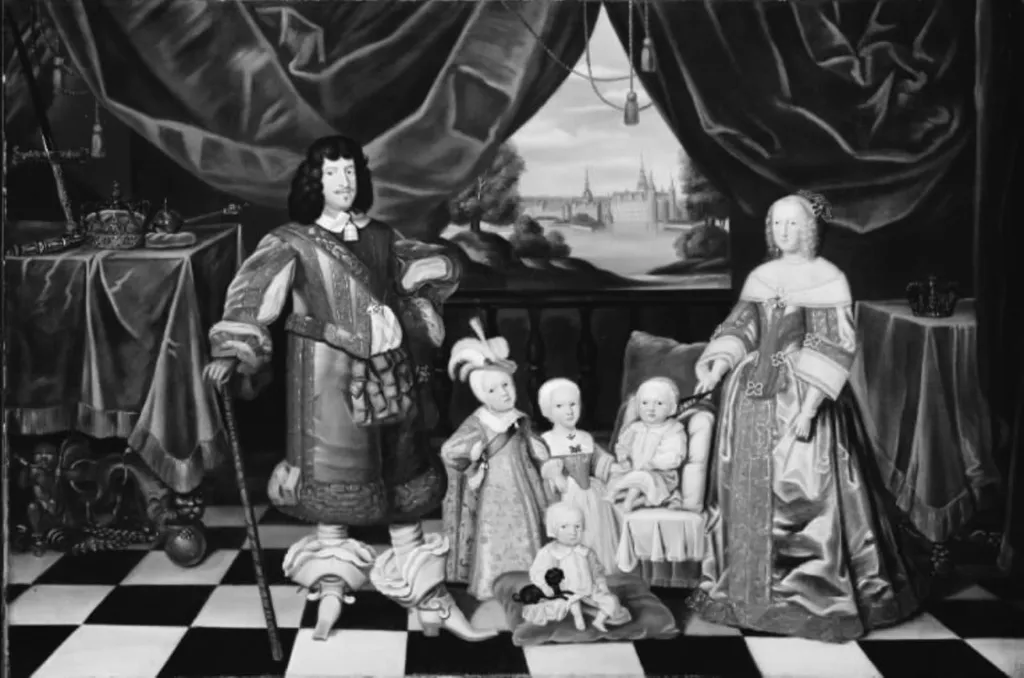
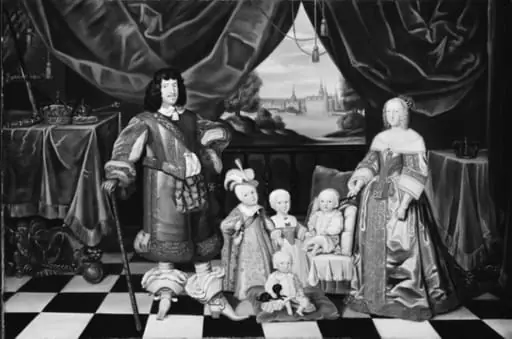
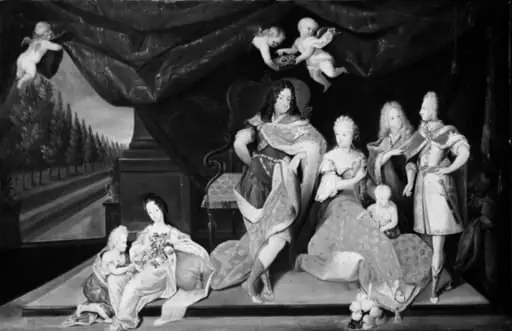
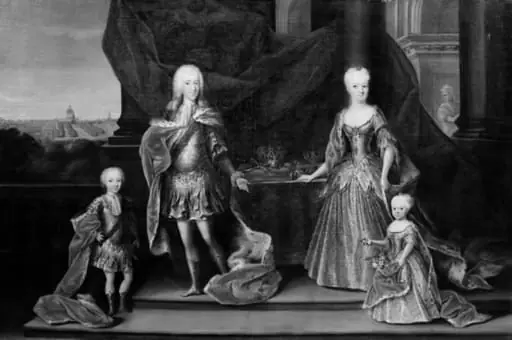
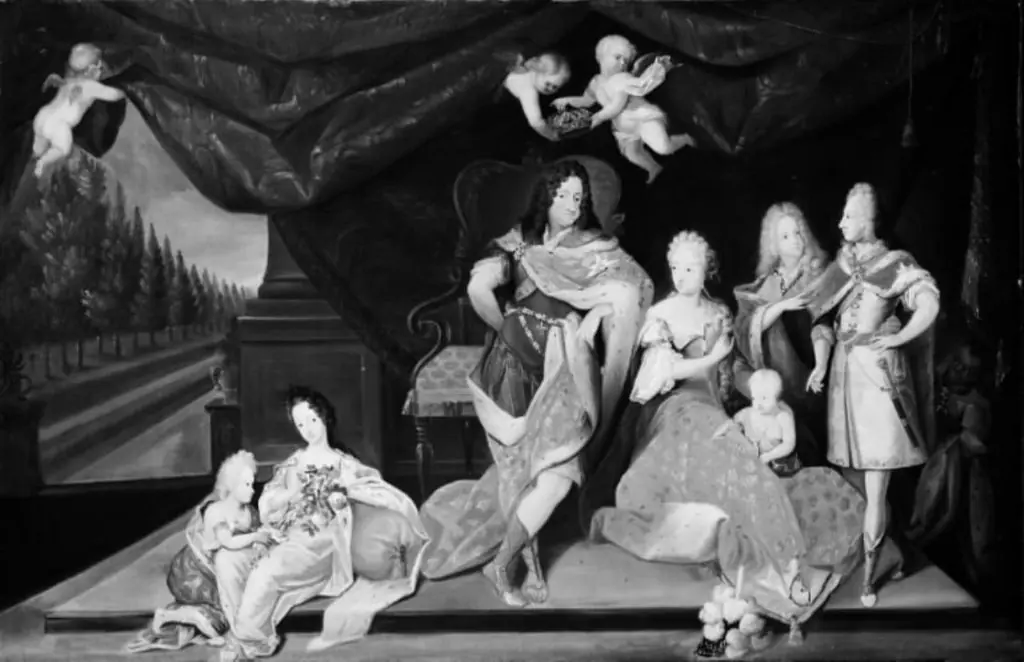
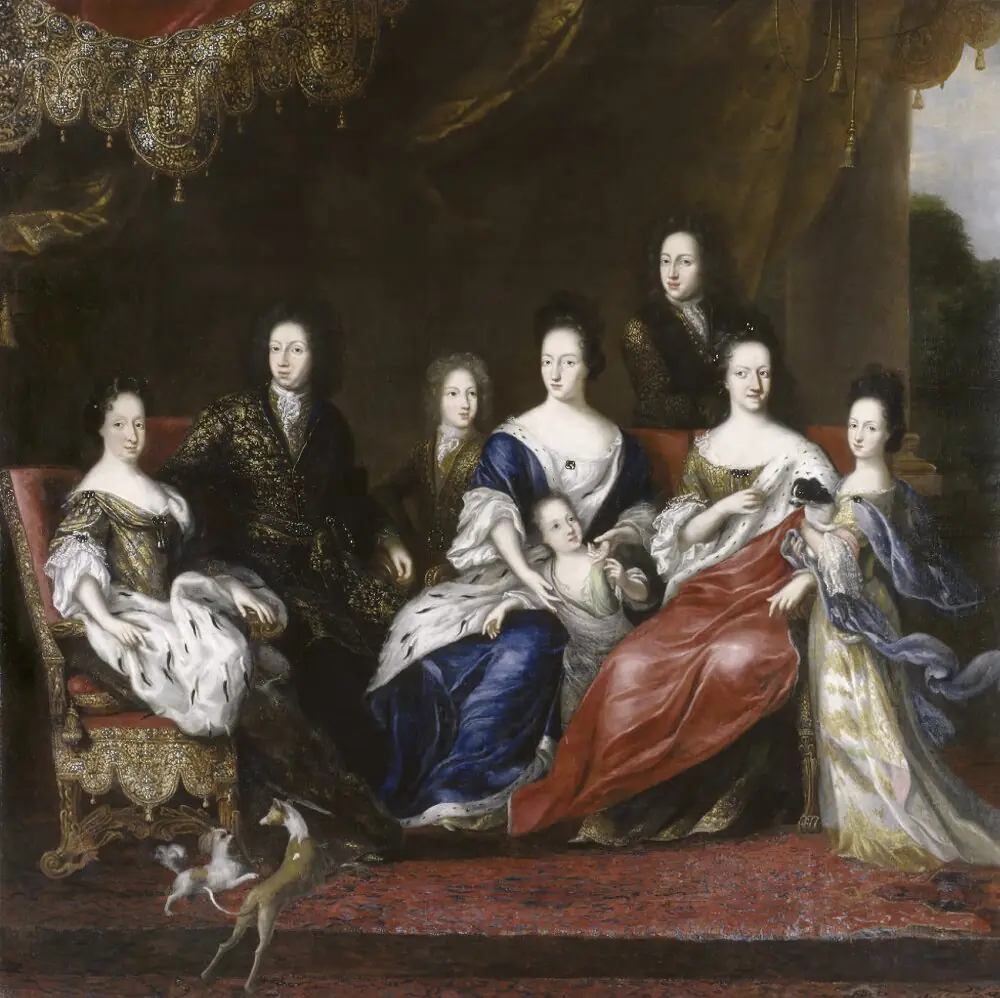
Kong Frederik III med familie is an oil painting by Unknown. It is held in the collection of the Statens Museum for Kunst. This oil painting portrays King Frederik III of Denmark with his immediate family in a formal domestic setting.
About this work
Overview
This oil painting portrays King Frederik III of Denmark with his immediate family in a formal domestic setting. The composition centers on the royal children, arranged between their parents, who stand at either side. The scene is framed by draped curtains and a table adorned with objects, creating a sense of spatial depth and private intimacy within a royal context.
Subject & Meaning
The painting presents the royal family as both sovereigns and parents, blending public duty with private affection. The king and queen’s poised stances suggest authority, while the children’s natural positioning—seated, standing, or on the floor—conveys familial warmth. The inclusion of a baby underscores continuity and dynastic hope, reinforcing the monarchy’s future through lineage.
Technique & Style
The artist employs chiaroscuro to model the figures with strong contrasts of light and shadow, drawing attention to facial expressions and textures of fabric.
The artist employs chiaroscuro to model the figures with strong contrasts of light and shadow, drawing attention to facial expressions and textures of fabric. This technique enhances the three-dimensionality of the subjects and adds emotional gravity to the scene. The brushwork is precise yet restrained, favoring clarity over ornamentation, consistent with 17th-century Northern European portraiture.
History & Provenance
Commissioned during Frederik III’s reign in the mid-17th century, the painting likely served to document the royal lineage for posterity. It remained in Danish royal collections for centuries, possibly displayed in Amalienborg or Christiansborg Palace. Its survival through political upheavals underscores its perceived importance as a record of royal identity.
Context
Created during Denmark’s transition into a more centralized monarchy, the painting reflects the era’s emphasis on dynastic stability. Unlike grand ceremonial portraits, this domestic setting aligns with emerging trends in Northern Europe that valued familial representation as a sign of moral and political order. The inclusion of everyday objects grounds the royal image in tangible reality.
Legacy
The work remains a key example of Danish court portraiture from the Baroque period. It offers insight into how monarchy was visually negotiated between authority and domesticity. Though not widely reproduced, it continues to inform scholarly understanding of royal self-representation in early modern Scandinavia.
Artist & collection

 Domestic Scene
 Giacomo and Cardinal Marco, investing Andrea, Abbot of San Zeno, with his Benefice
 The Nymph of Fontainebleau
 Portrait of a Woman
 Madonna and Child with Saints in the Enclosed Garden
 Venus and Minerva
 Family Group of Four on Sofa
 Wall painting from Room H of the Villa of P. Fannius Synistor at Boscoreale