Artwork
A Stone Cartouche with Virgin Mary and the Infant Christ in a Niche encircled by a Garland of Flowers
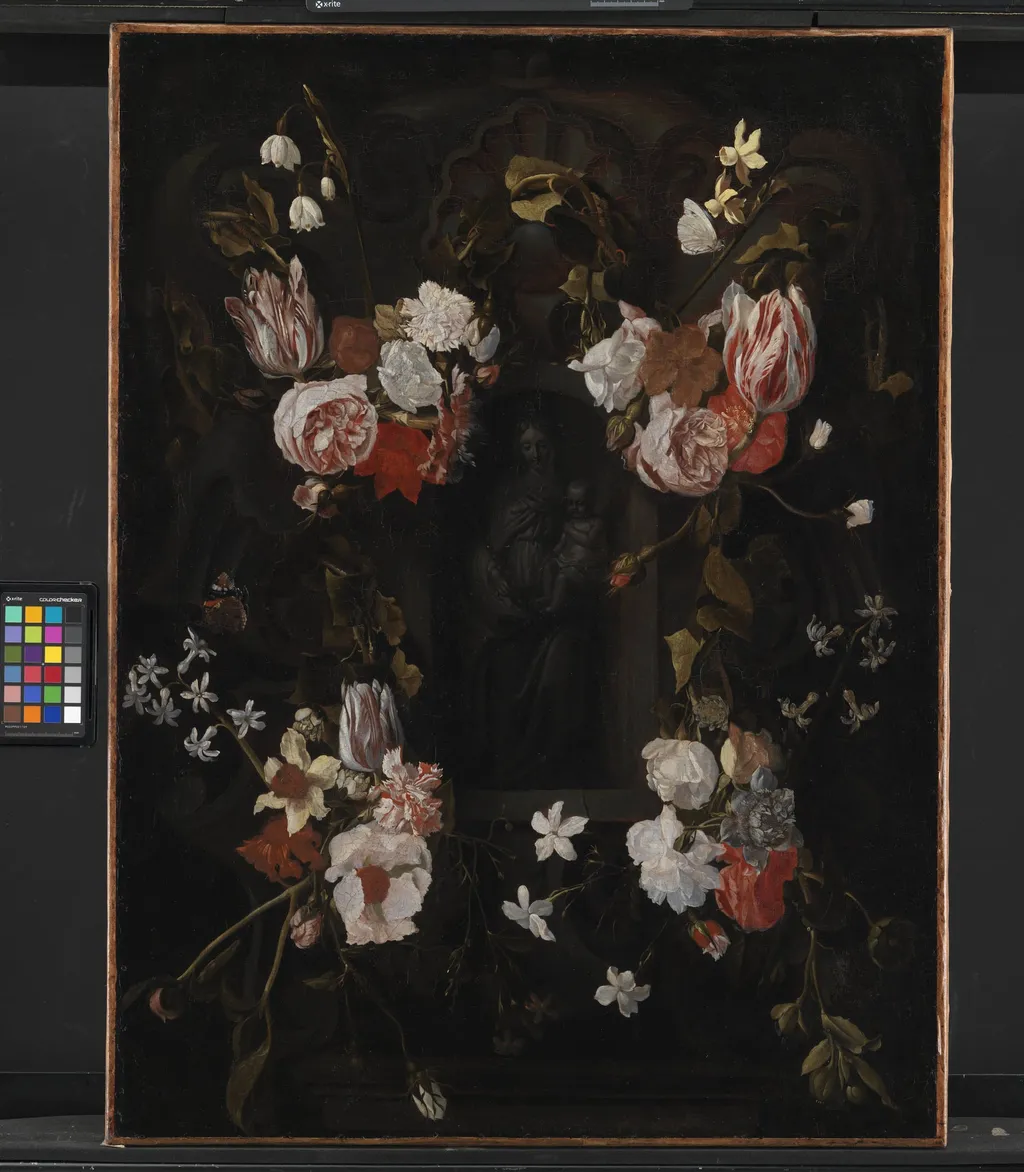
A Stone Cartouche with Virgin Mary and the Infant Christ in a Niche encircled by a Garland of Flowers is a photography by Unknown. It dates from 1650 and is held in the collection of the Statens Museum for Kunst. This carved stone relief, dated around 1650, depicts the Virgin Mary with the infant Christ nestled within a recessed niche.
About this work
Overview
The composition is framed by an elaborate floral garland rendered in painted detail, suggesting a sculptural object enhanced with pigment.
This carved stone relief, dated around 1650, depicts the Virgin Mary with the infant Christ nestled within a recessed niche. The composition is framed by an elaborate floral garland rendered in painted detail, suggesting a sculptural object enhanced with pigment. Though labeled as a painting, the work functions as a painted illusion of stone carving, blending sculptural form with pictorial technique to create a devotional object meant for private contemplation.
Subject & Meaning
The Virgin and Child, presented in a modest, intimate pose, reflect traditional Marian iconography emphasizing tenderness and humility. The surrounding floral garland, featuring roses, tulips, and delicate white blooms, symbolizes both earthly beauty and the transient nature of life. The inclusion of slightly wilting petals subtly reinforces themes of mortality and divine grace, aligning with Counter-Reformation devotional ideals that encouraged reflection on sacred presence amid impermanence.
Technique & Style
The artist employs chiaroscuro to model the figures and stone niche with subtle gradations of light and shadow, lending volume to the carved form despite its flat surface. The flowers are rendered with delicate brushwork, their soft hues—pale whites, muted reds, and cool greens—contrasting against the deep, uniform background. This interplay of texture and tone mimics the tactile qualities of carved stone and fresh petals, merging illusionism with symbolic detail.
History & Provenance
The work entered the collection of the Museum of Ethnography in the early 20th century, though its original context remains unclear. Its small scale and devotional subject suggest it may have been part of a private chapel or domestic altar in the Low Countries or southern Europe. No documentary records confirm its maker or early ownership, but its style aligns with regional traditions of painted stone reliefs produced for intimate religious use.
Context
Created during the height of the Counter-Reformation, this object reflects a broader European trend of integrating naturalistic floral motifs with sacred imagery to deepen spiritual engagement. Such works often served as aids to personal prayer, where the beauty of creation pointed toward divine order. The use of stone as a simulated medium echoes the enduring nature of faith, while the fleeting flowers underscore the transience of human life.
Legacy
Though not widely exhibited or studied, this piece exemplifies a quiet but persistent genre of devotional art that bridged sculpture and painting. Its preservation in an ethnographic museum highlights its role as a cultural artifact of domestic piety rather than a grand ecclesiastical commission. It continues to offer insight into how ordinary believers engaged with sacred imagery through material objects that blended artistry with spiritual symbolism.
Artist & collection

 Domestic Scene
 Giacomo and Cardinal Marco, investing Andrea, Abbot of San Zeno, with his Benefice
 The Nymph of Fontainebleau
 Portrait of a Woman
 Madonna and Child with Saints in the Enclosed Garden
 Venus and Minerva
 Family Group of Four on Sofa
 Wall painting from Room H of the Villa of P. Fannius Synistor at Boscoreale
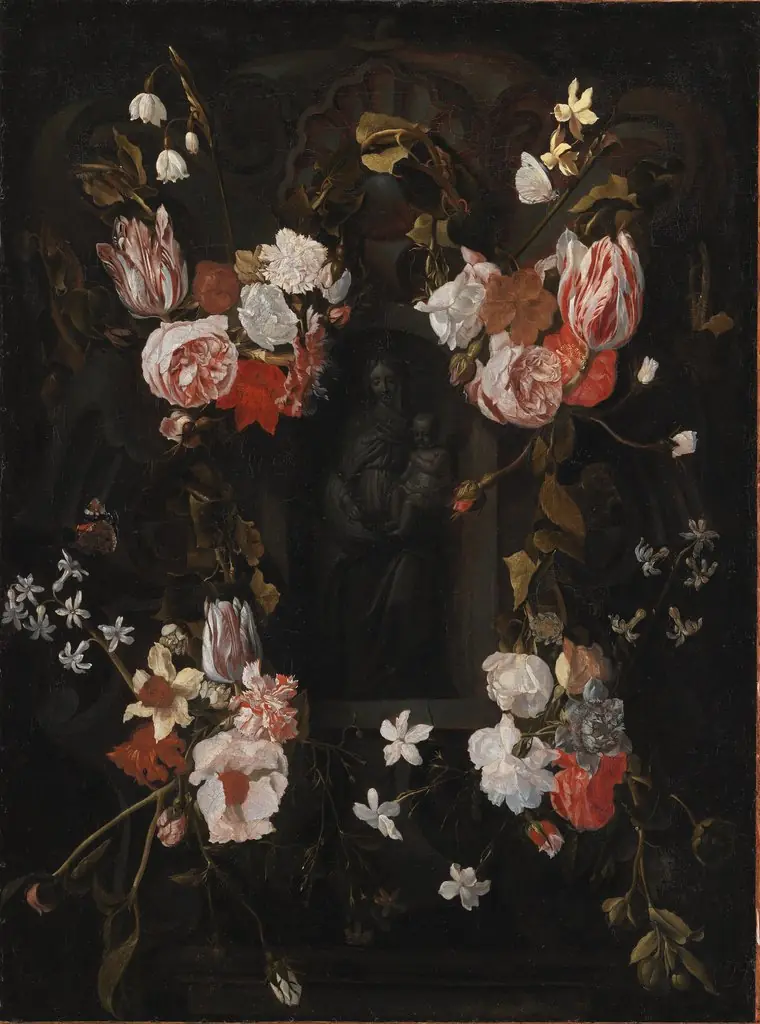 A Stone Cartouche with Virgin Mary and the Infant Christ in a Niche encircled by a Garland of Flowers
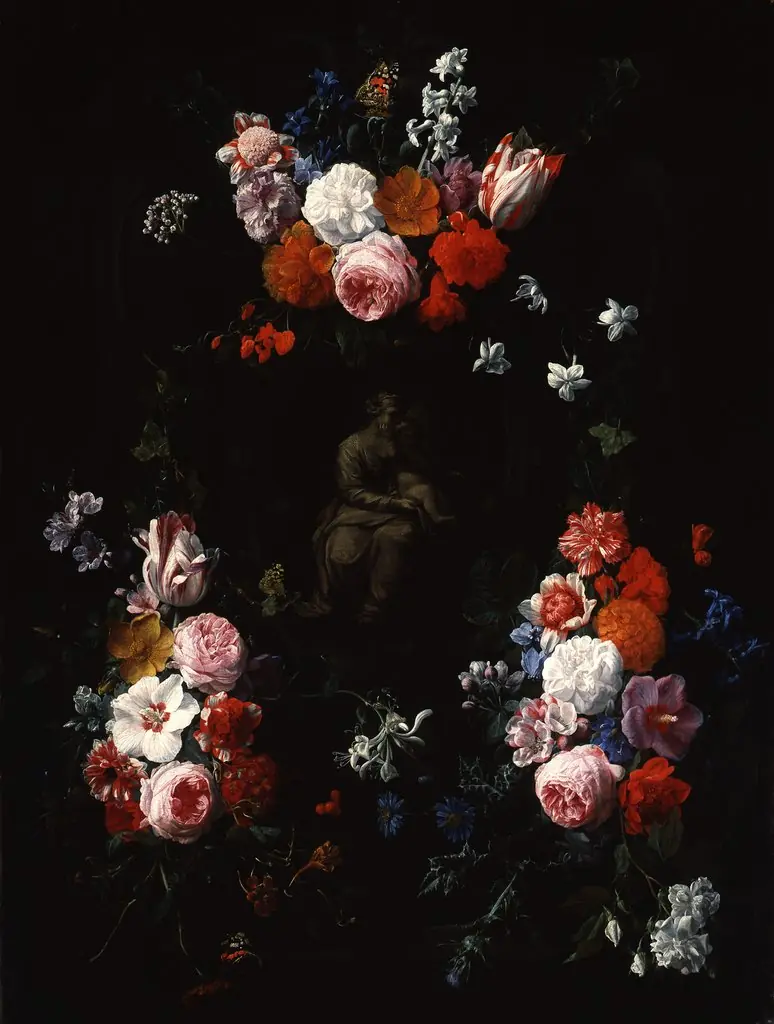 Cartouche with flowerfestoons surrounding a depiction of the Virgin mary with the Christ child
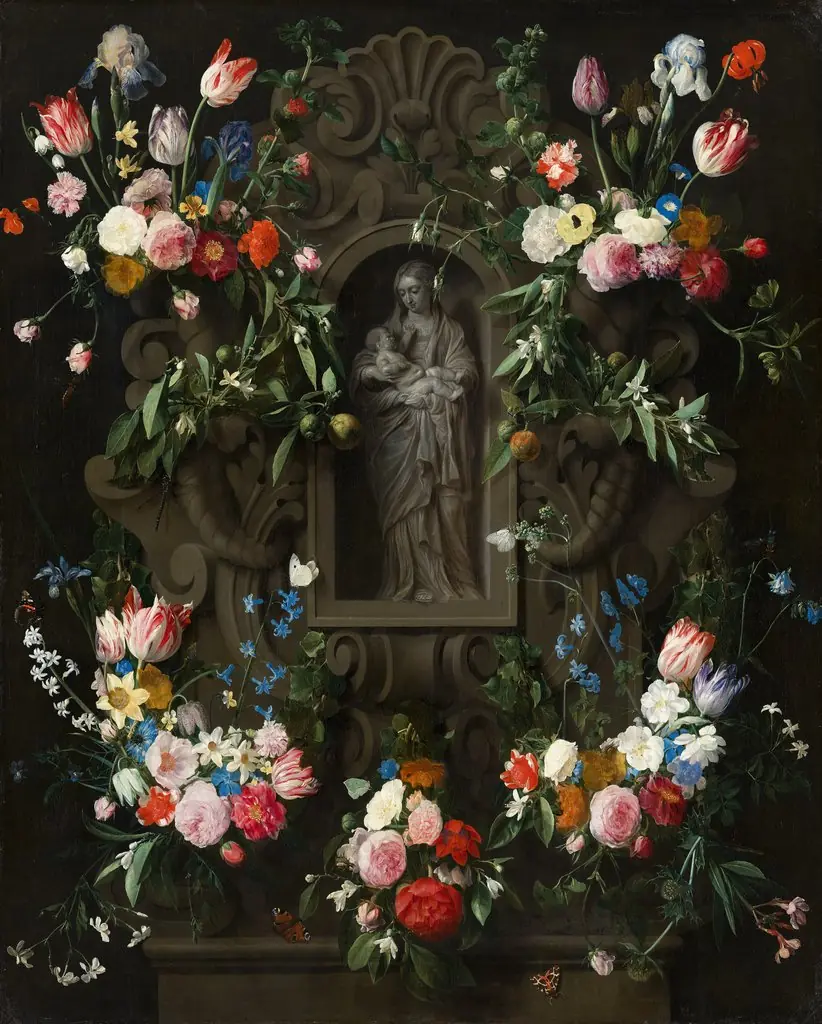 Garland of Flowers surrounding a Sculpture of the Virgin Mary
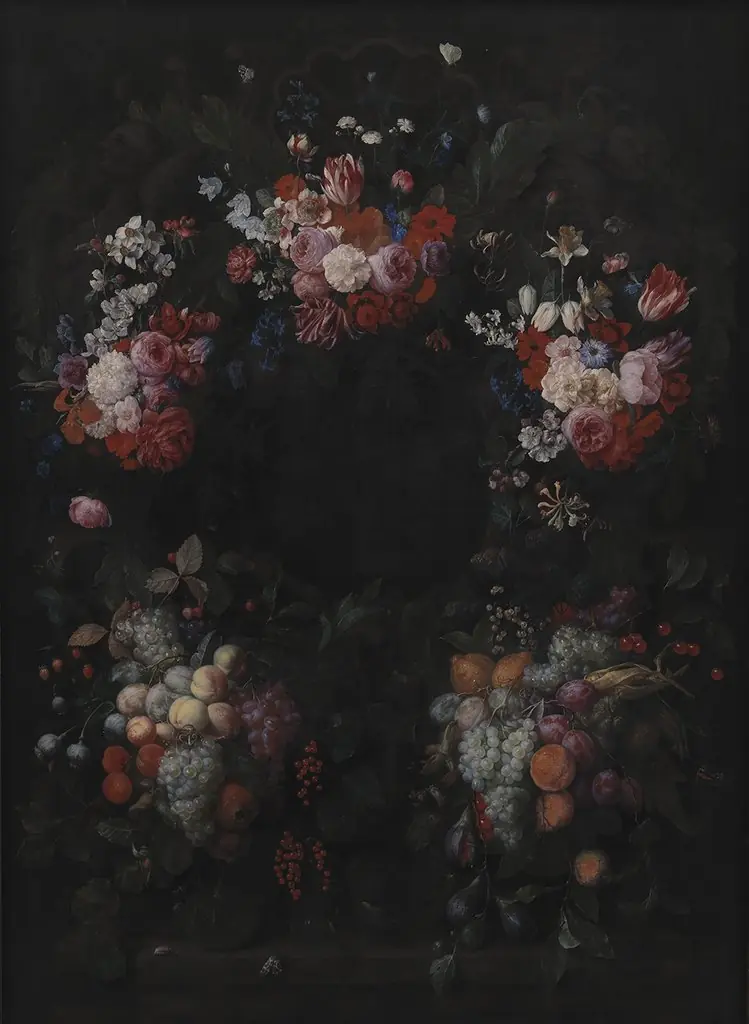 Stone Cartouche with Fruit and Flower Garland
 Stone Cartouche with Fruit and Flower Garland
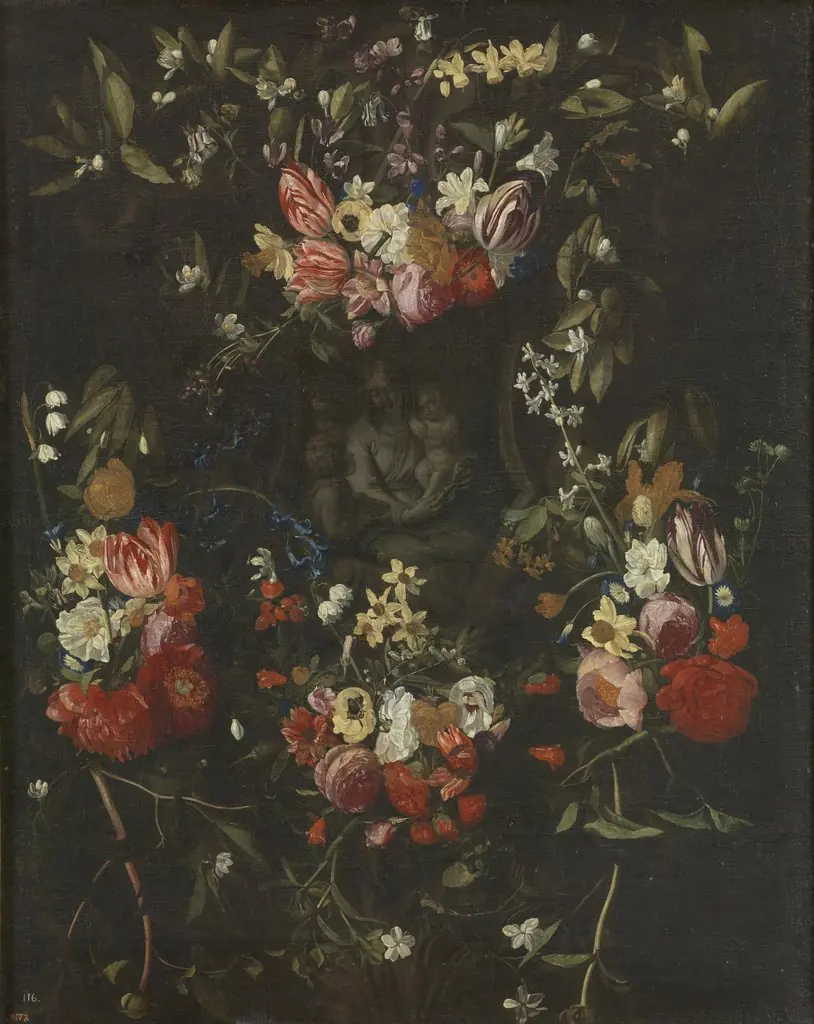 Garland of Flowers with the Virgin, the Christ Child and Saint John
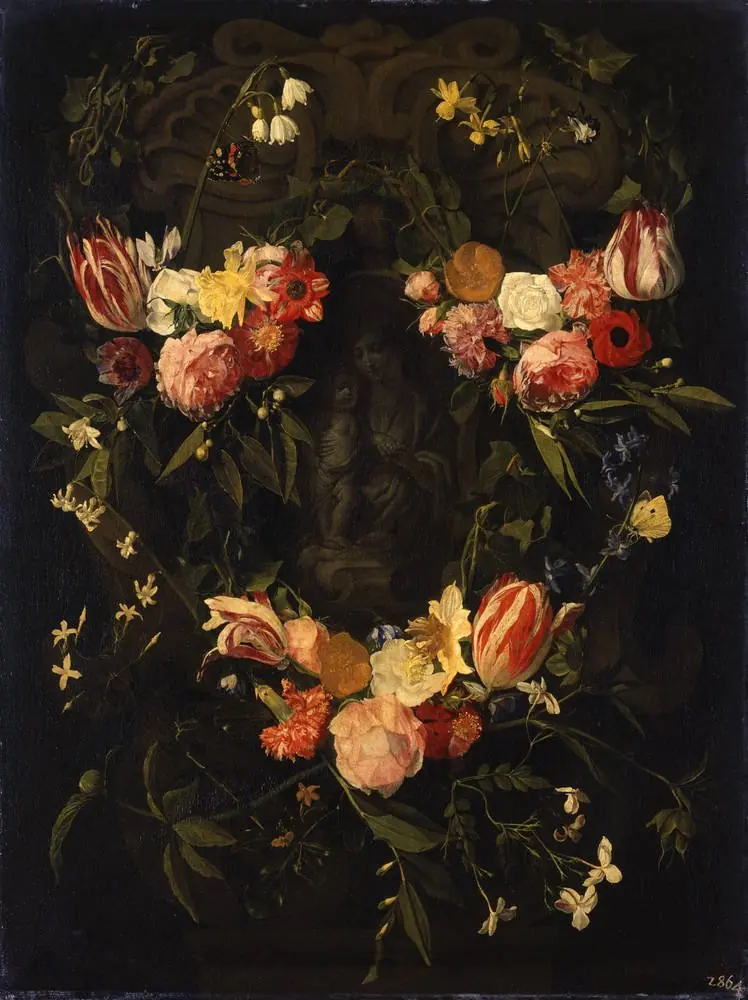 Sculpted cartouche adorned with flowers with a representation of the Virgin and Christ Child
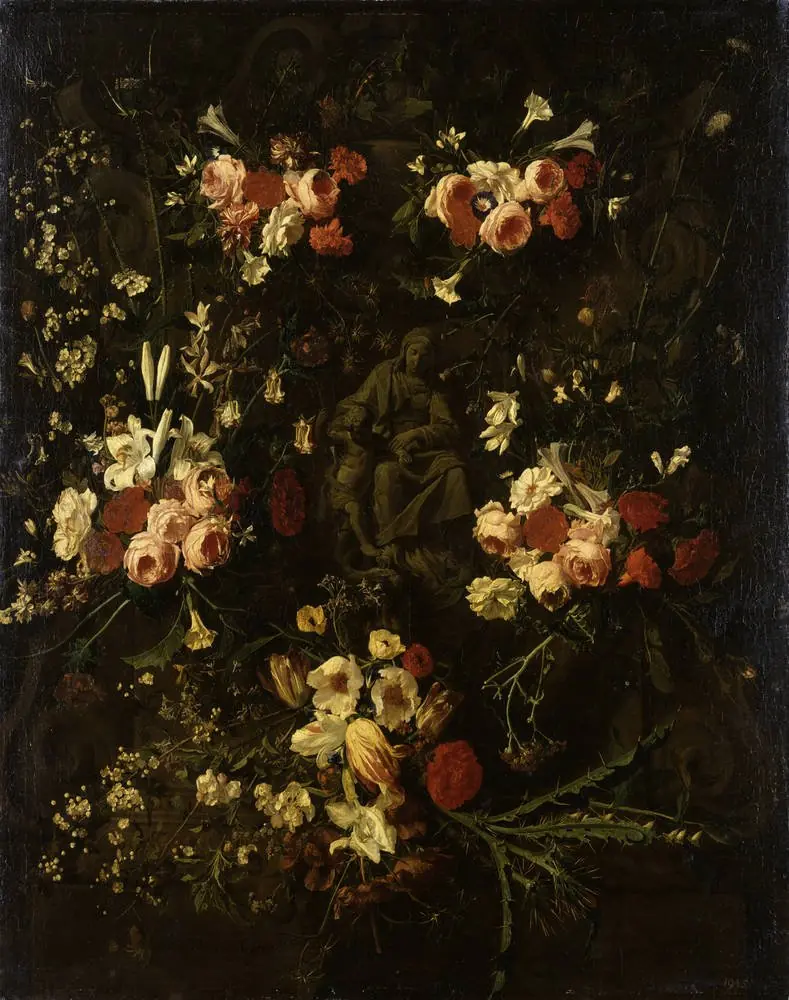 Flower garland cartouche around the Madonna and Child
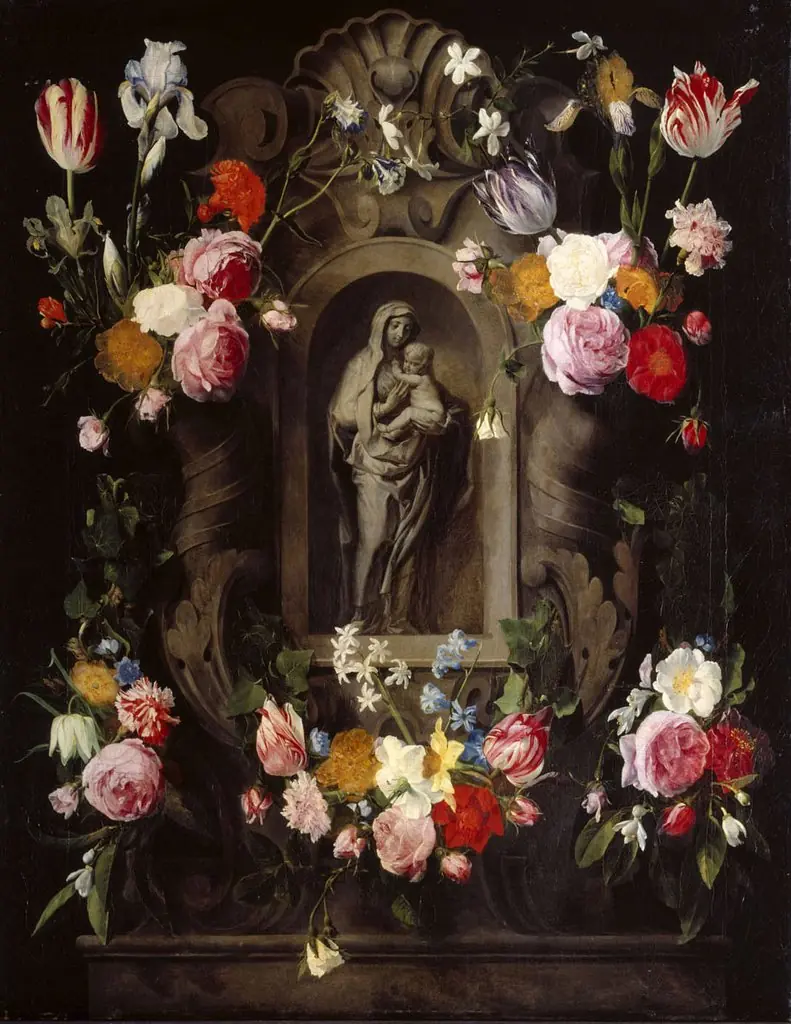 Madonna & Child Statuette in a Niche surrounded by a Garland of Flowers
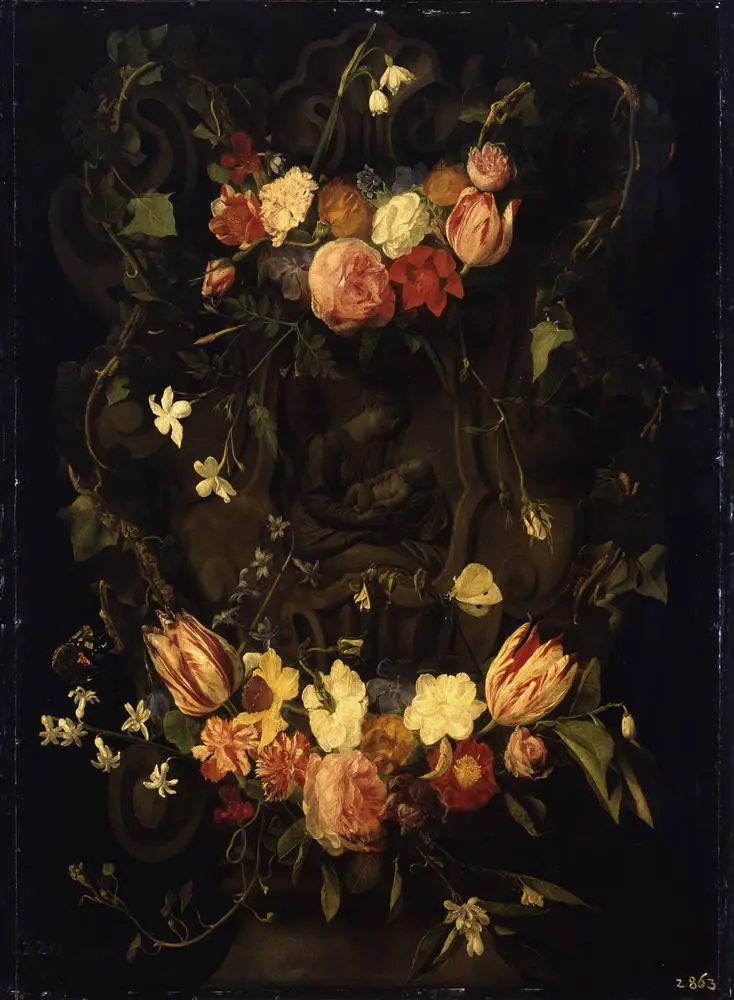 Sculpted cartouche adorned with flowergarlands with a representation of the Virgin and Christ-child
 A Stone Cartouche with a Garland of Flowers