Artwork
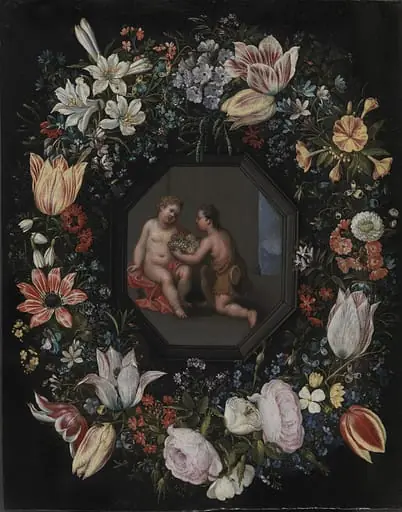
Garland of Flowers with the Virgin, the Christ Child and Saint John
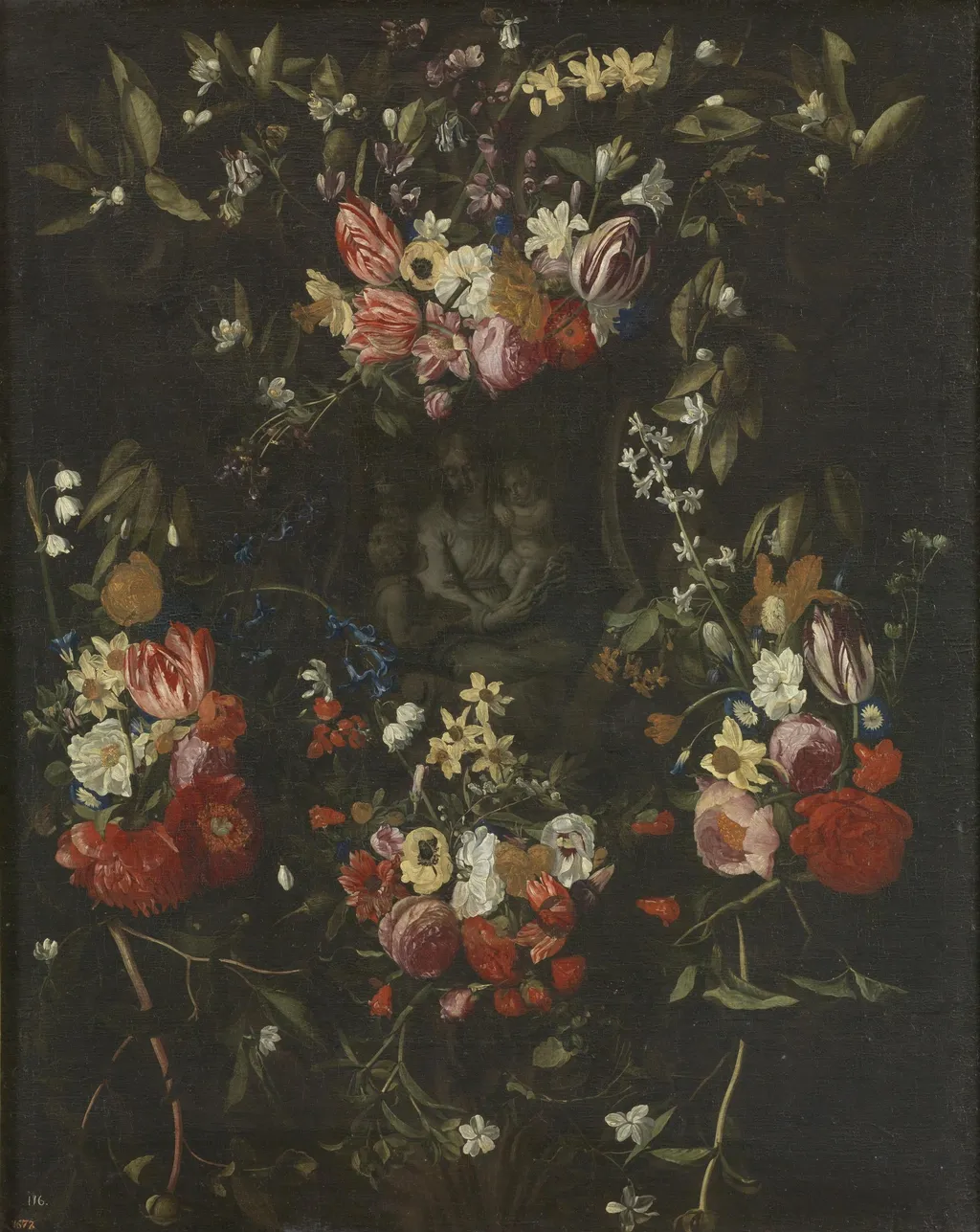
Garland of Flowers with the Virgin, the Christ Child and Saint John is an oil painting by the Early Baroque Italian artist Erasmus Quellinus II. It dates from 1601 and is held in the collection of the Museo del Prado.
About this work
Overview
Created in 1601, this oil on canvas presents a devotional grouping of the Virgin Mary, the infant Christ, and the youthful Saint John, framed by an elaborate wreath of blossoms. The composition is attributed to Erasmus Quellinus II, a Flemish artist who worked in the early Baroque period. The work belongs to the collection of the Museo del Prado in Madrid.
Subject & Meaning
At the centre of the painting, Mary cradles the Christ Child while Saint John gazes attentively at the pair, a conventional iconography that underscores themes of innocence, prophecy, and the intimate bond between mother and son. The surrounding floral garland functions as a visual hymn to creation, suggesting the transitory beauty of earthly life that frames the sacred narrative.
Technique & Style
Quellinus employs a pronounced chiaroscuro, setting the figures against a deep, muted background that heightens the luminosity of the flesh tones and the vivid petals. The flowers are rendered with meticulous attention to texture and colour, each blossom distinct, reflecting the Baroque fascination with natural detail and the dramatic contrast of light and shadow.
History & Provenance
The painting was executed shortly after Quellinus returned from his apprenticeship with Peter Paul Rubens, absorbing the master’s dynamic composition and colour palette. Though the work’s early ownership records are sparse, it entered the Museo del Prado’s holdings in the 20th century, where it remains on public display.
Context
In the early 1600s, Flemish artists increasingly incorporated Italianate Baroque elements, merging robust figural modeling with elaborate decorative motifs. Quellinus’s inclusion of a flower garland aligns with contemporary vanitas traditions, where luxuriant flora symbolised both divine abundance and the fleeting nature of earthly pleasures.
Own this work as a print
Artist & collection
Artist
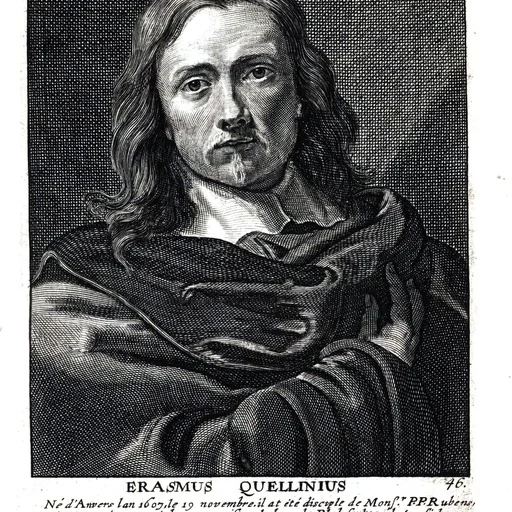
Erasmus Quellinus the Younger or Erasmus Quellinus II (November 19, 1607 – November 11, 1678) was a Flemish painter, engraver, draughtsman and tapestry designer who worked in various genres including history, portrait, allegorical, battle…

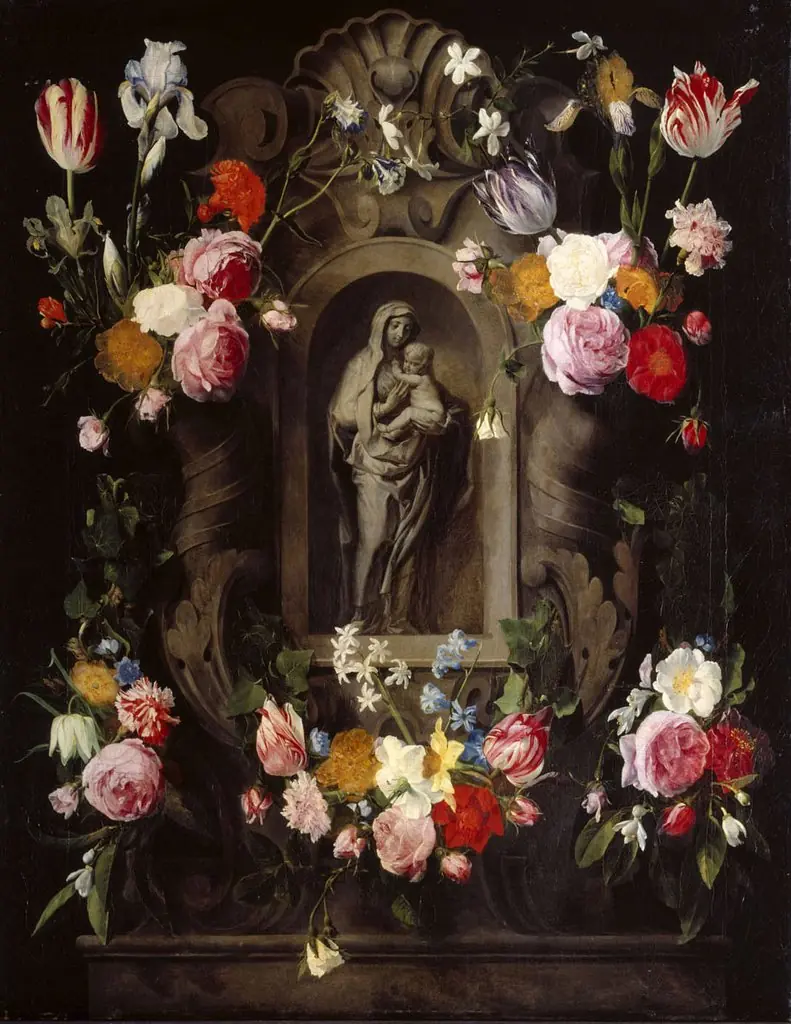 Madonna & Child Statuette in a Niche surrounded by a Garland of Flowers
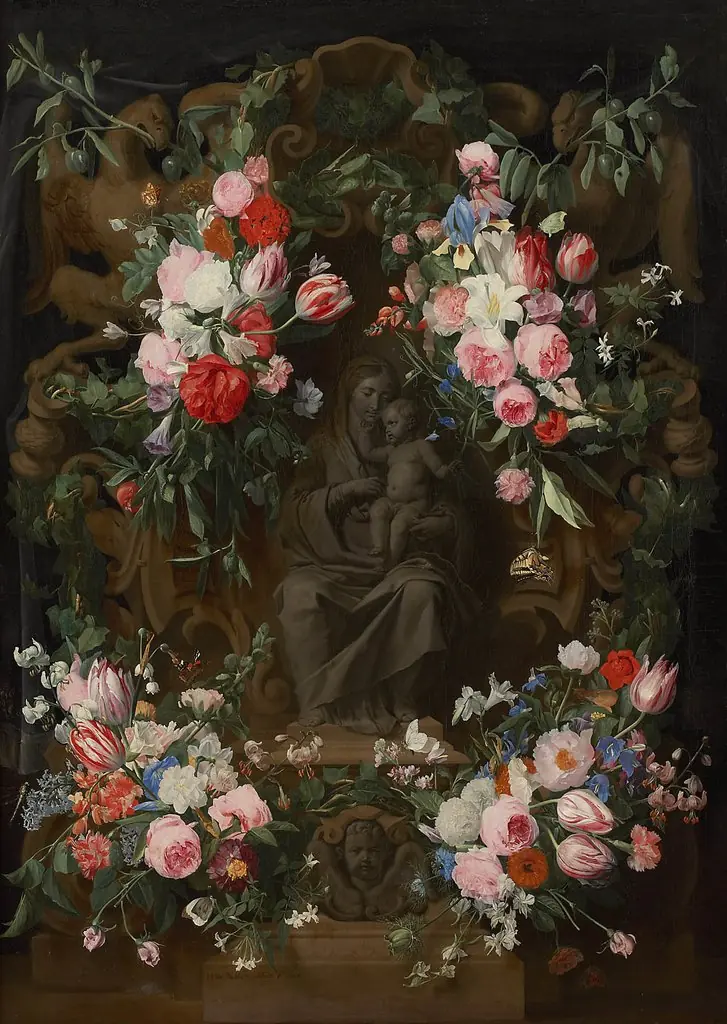 Seated Maria in a Flower Garland
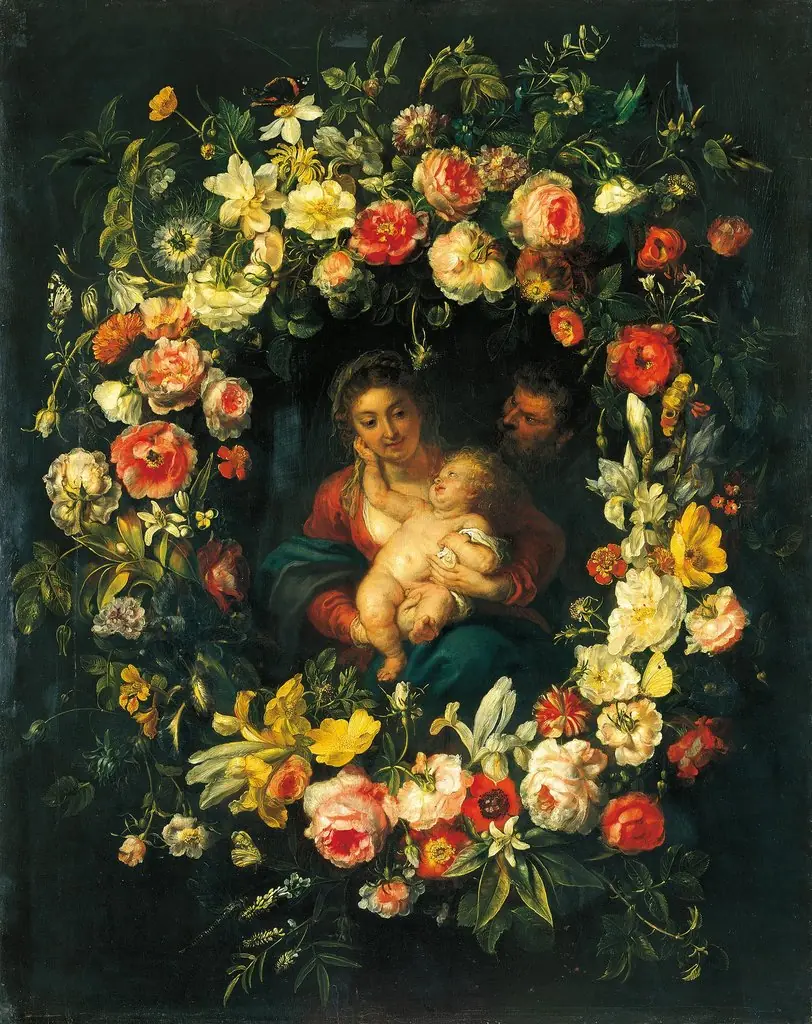 Holy Family in a Wreath of Flowers
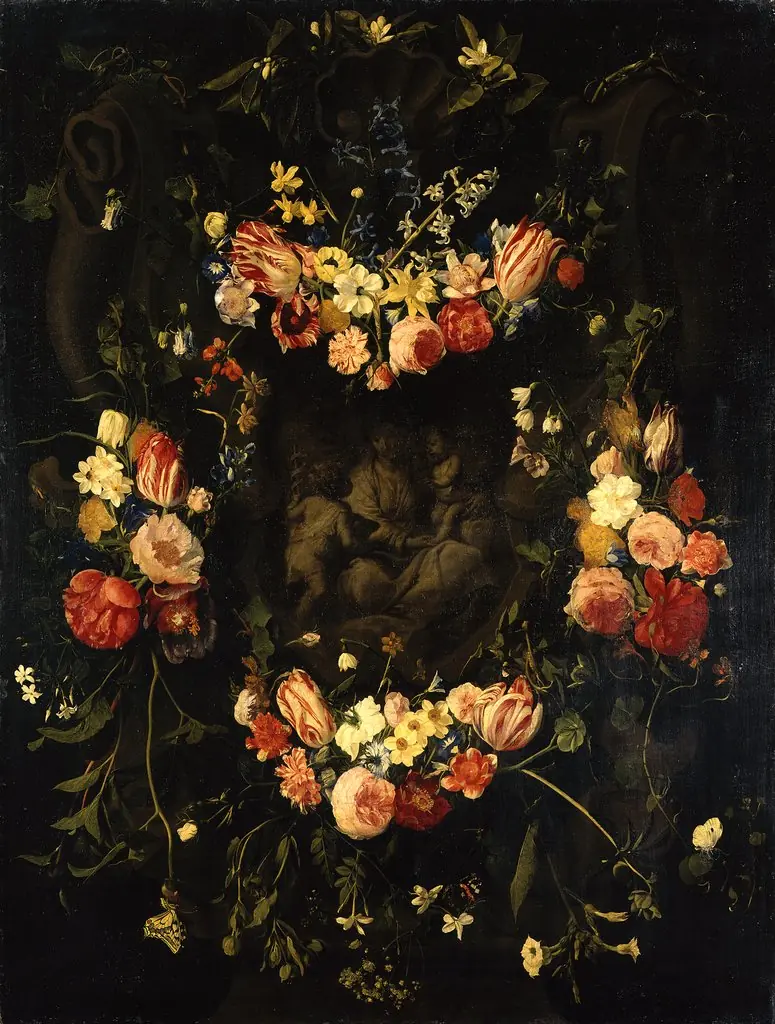 Cartouche addorned with flowergarlands surrounding a depiction of the Holy Family with the infant Saint John the Baptist
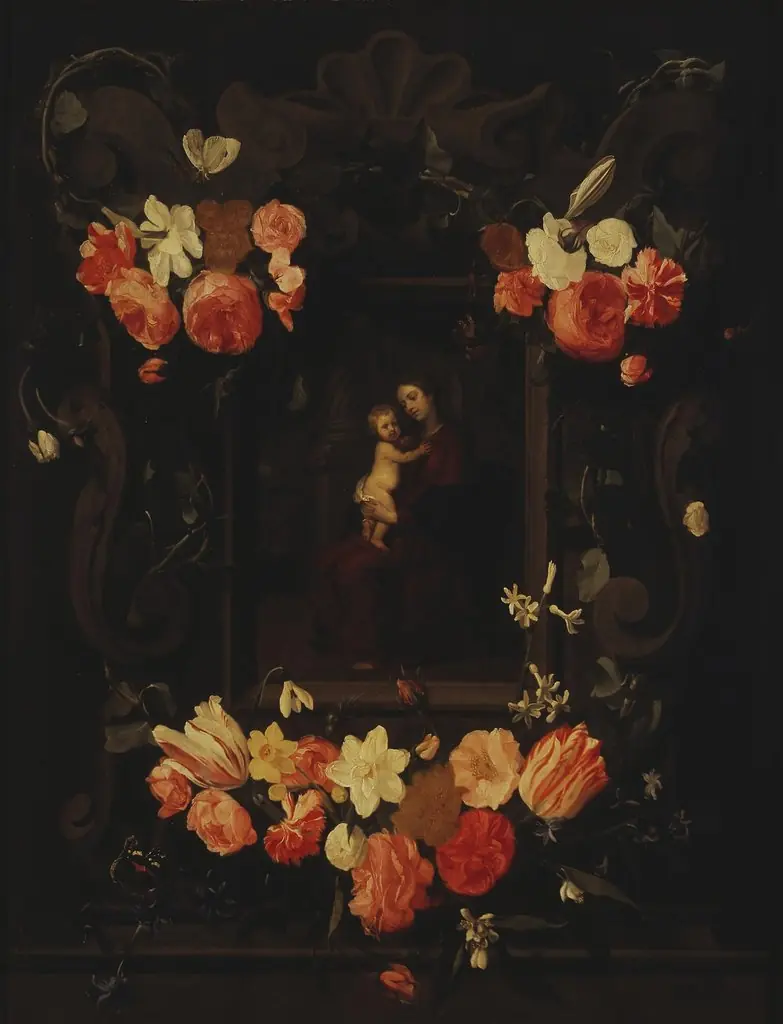 Madonna and Child Framed a Garland of Flowers
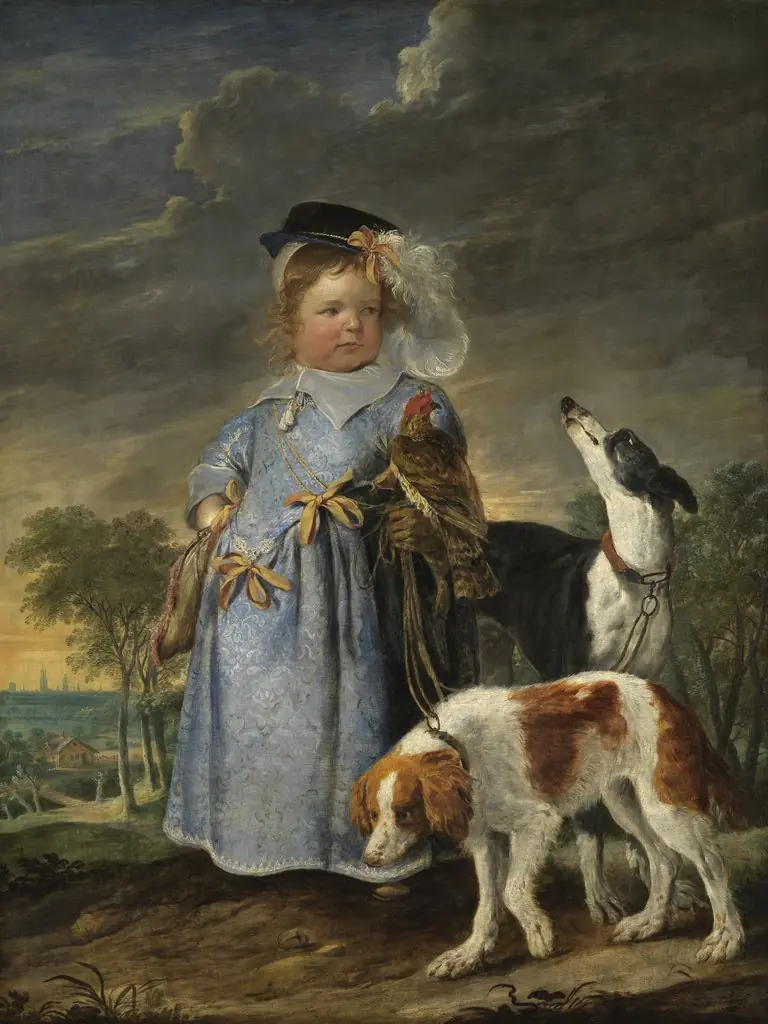 Portrait of a Boy
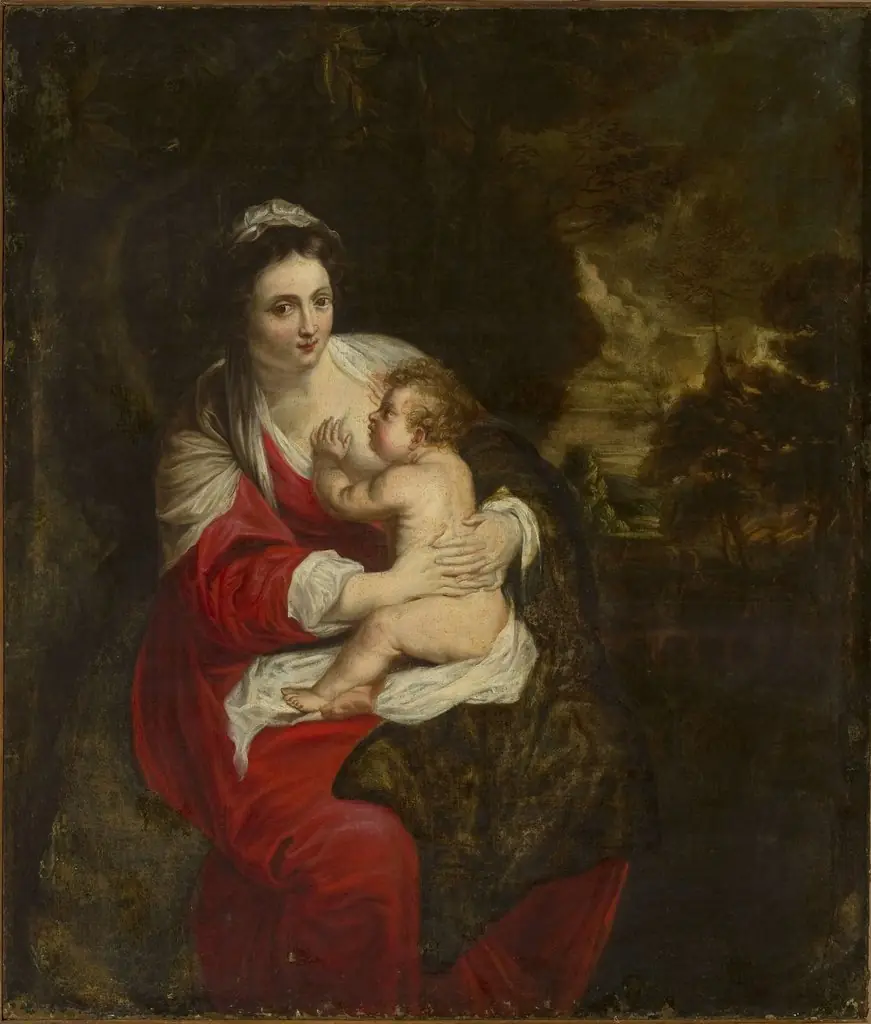 Madonna with Child Jesus
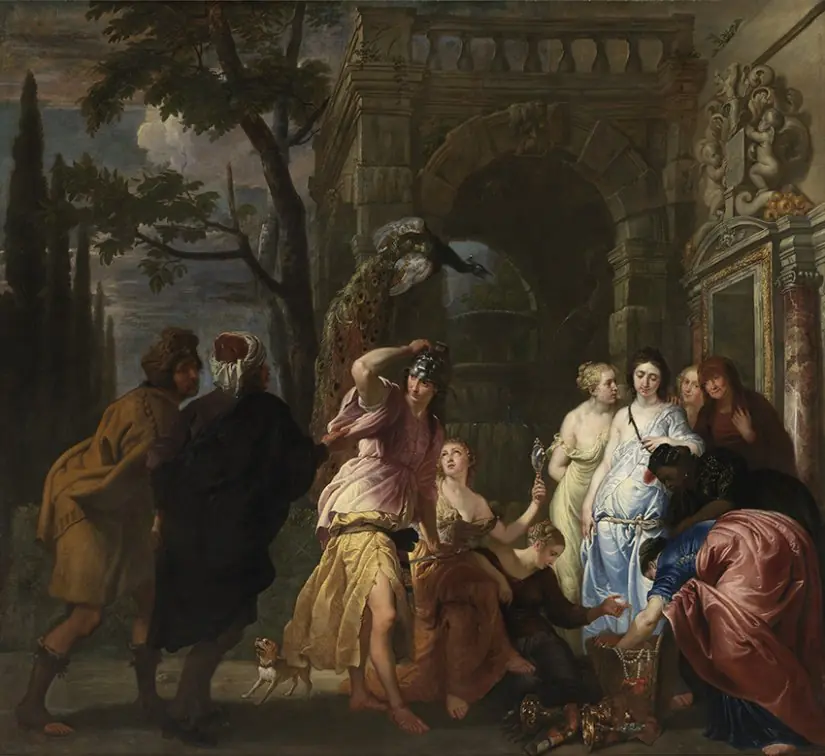 Achilles among the Daughters of Lycomedes
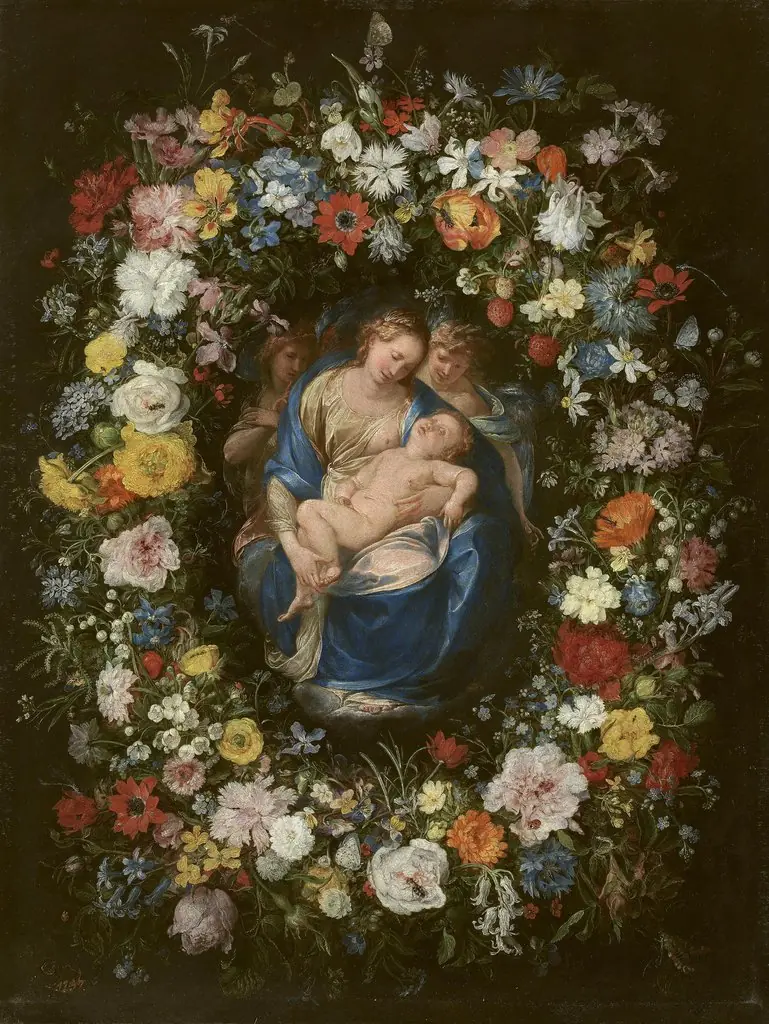 Garland with the Virgin, the Christ Child and two Angels
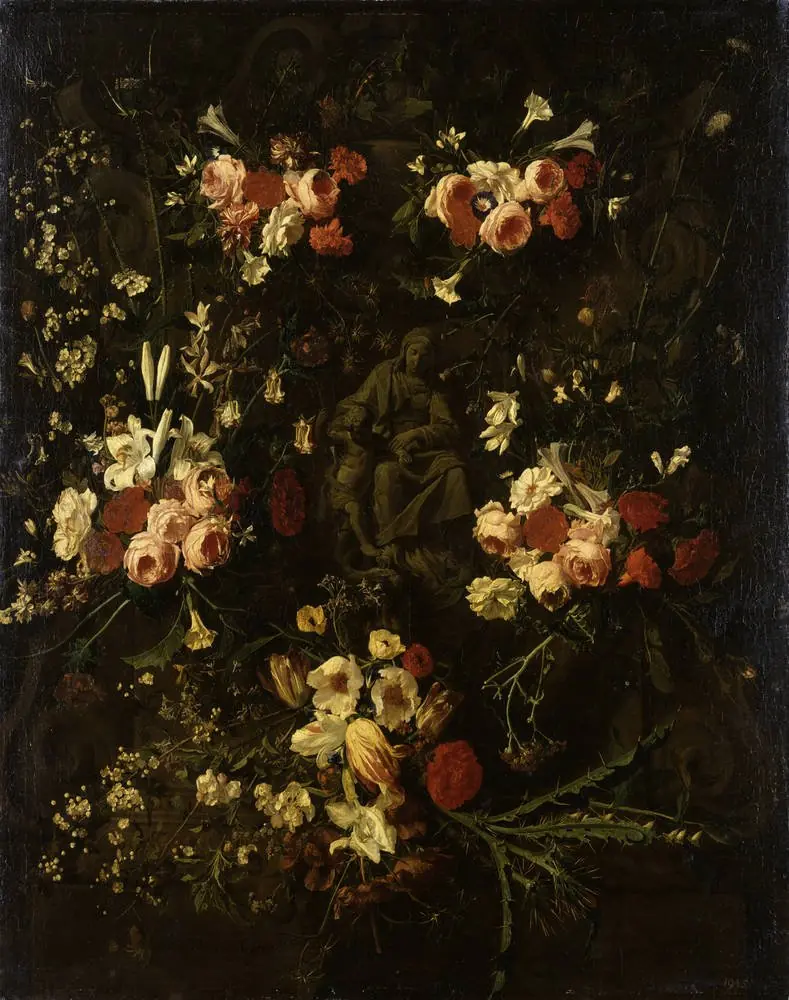 Flower garland cartouche around the Madonna and Child
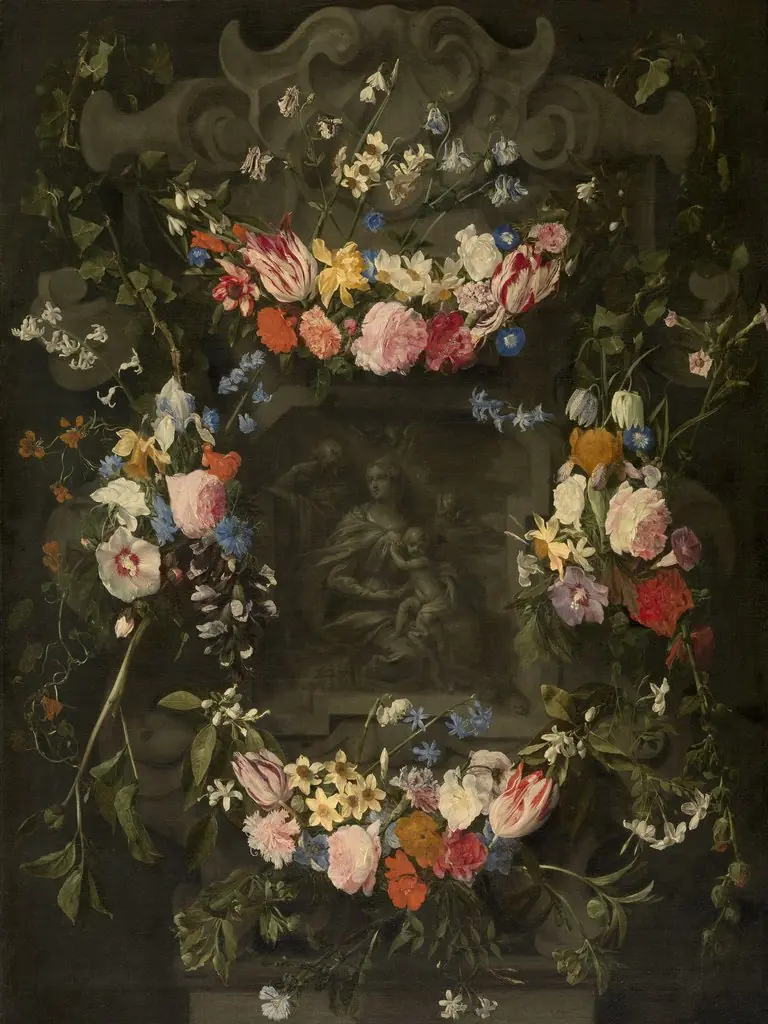 Holy Family in a Flower Garland
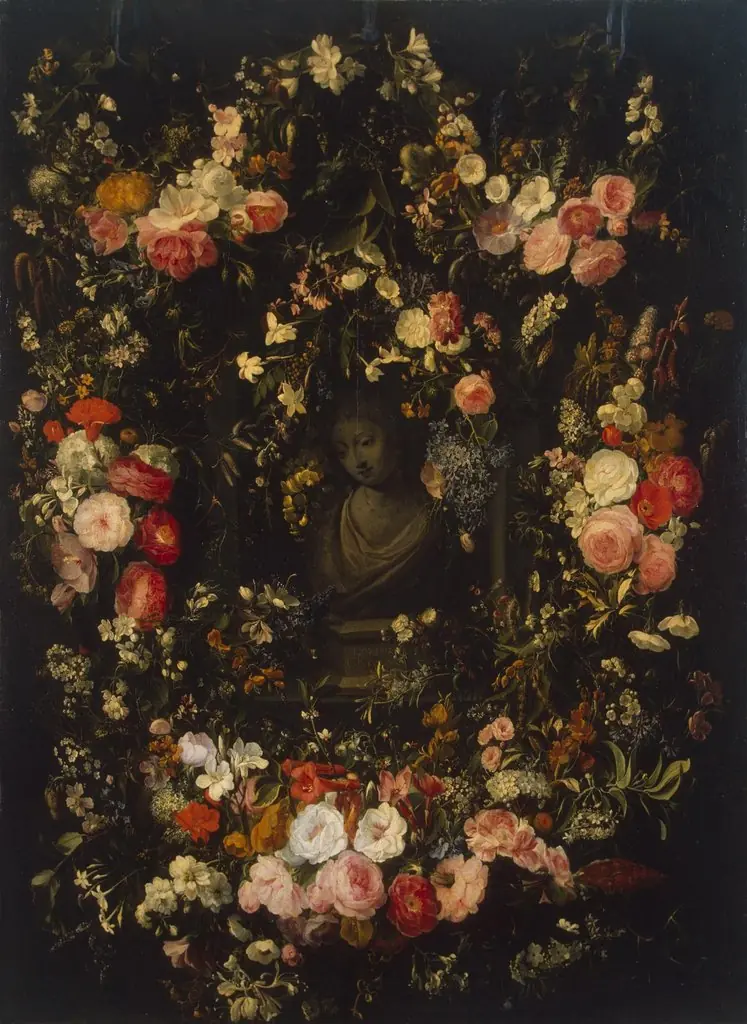 Bust of the Virgin Framed with a Garland of Flowers
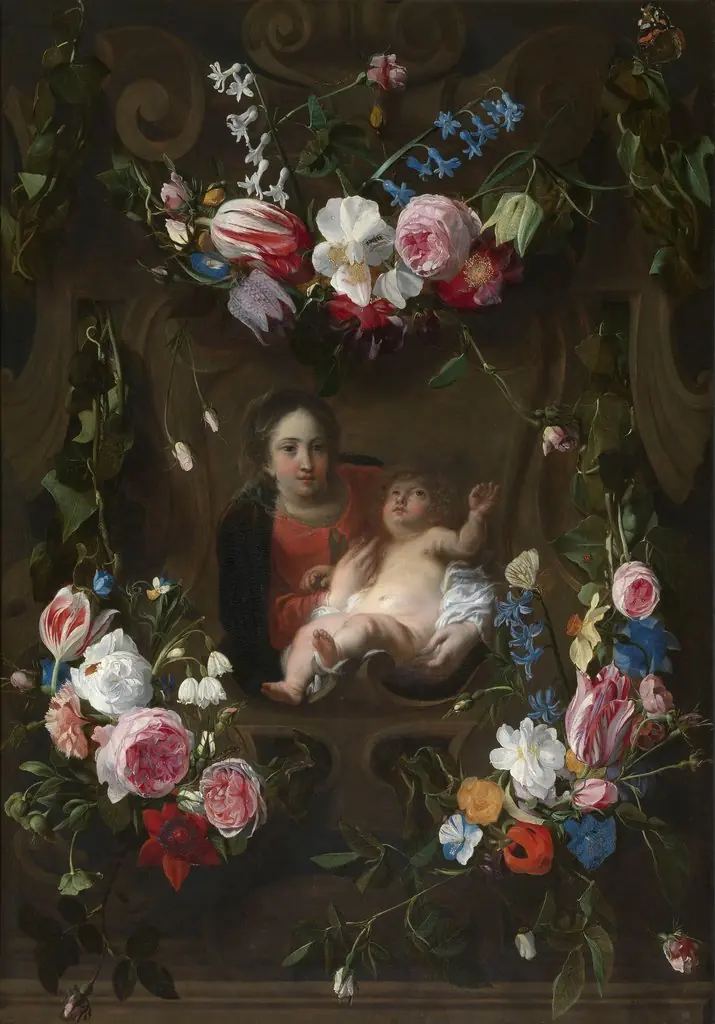 Madonna Surrounded by a Garland of Flowers
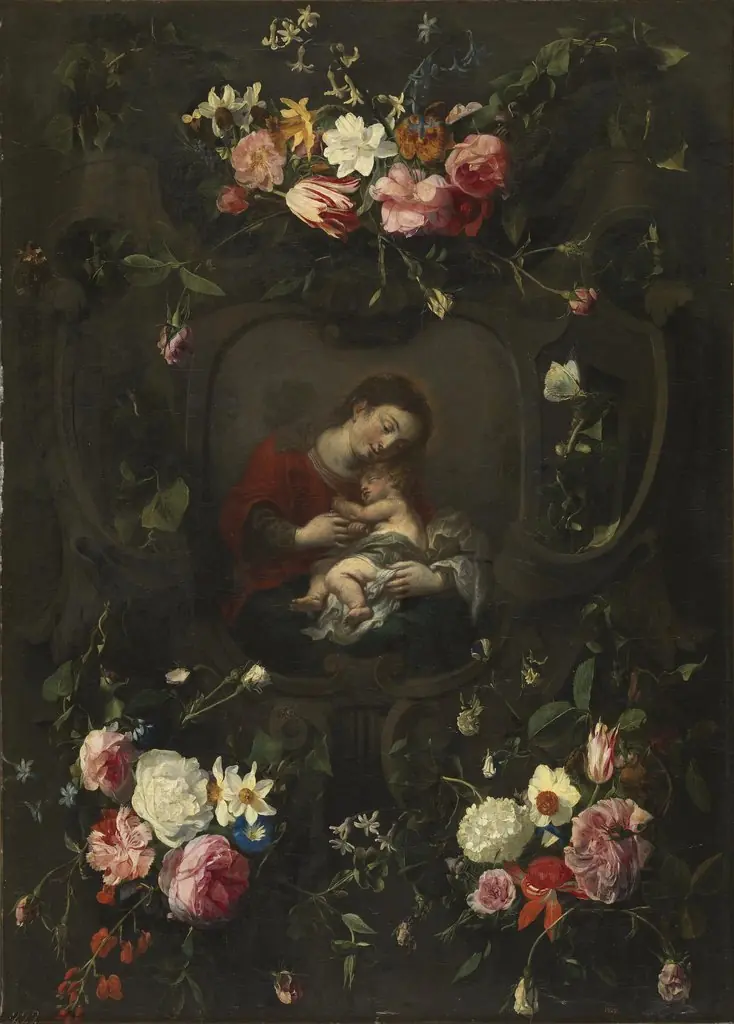 Flower garland around a Madonna and Child
 Wreath of flowers with Jesus and the infant John
 Flower Garland