Artwork
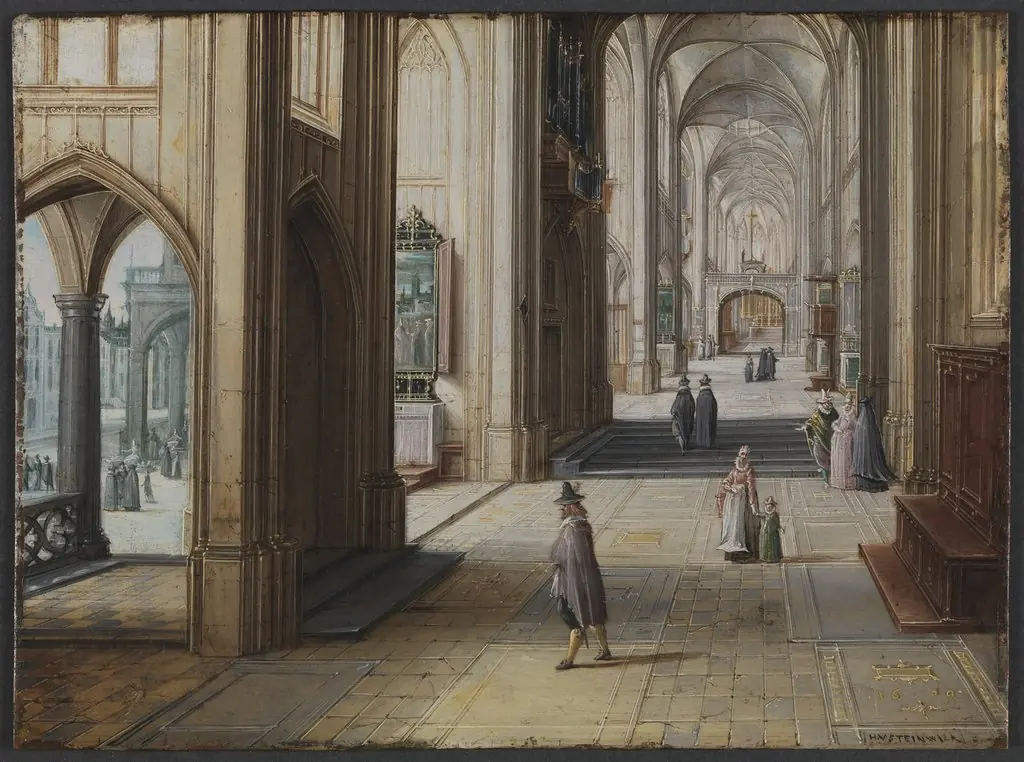
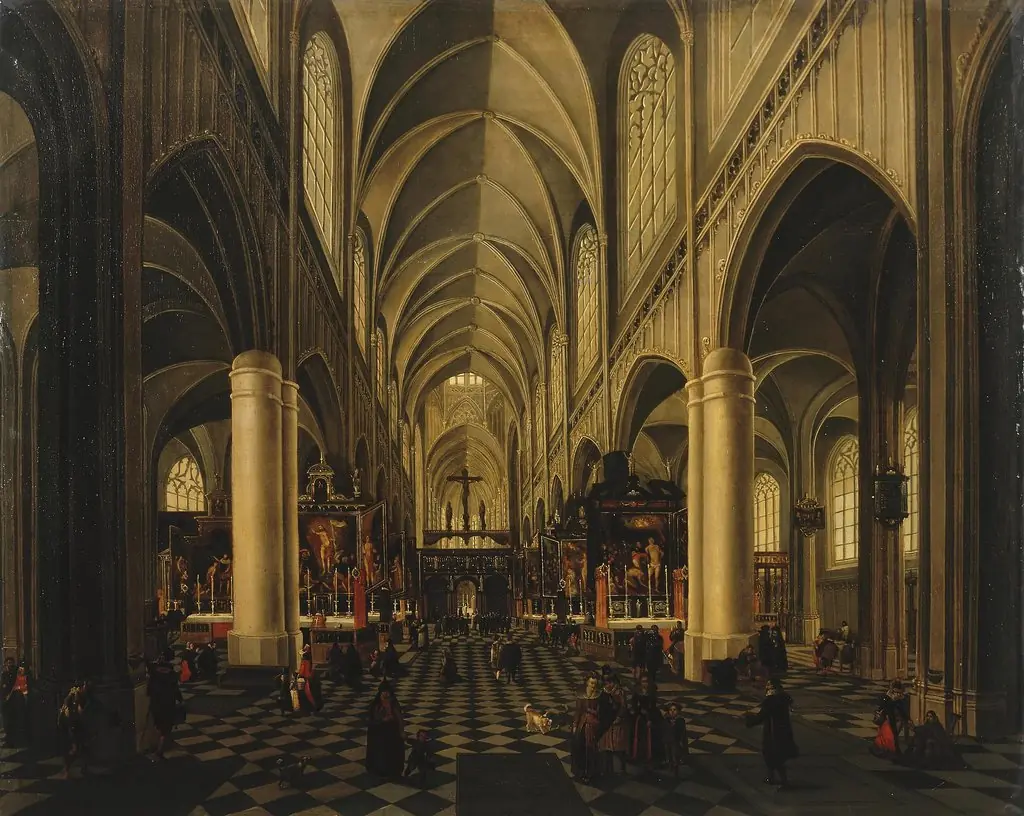
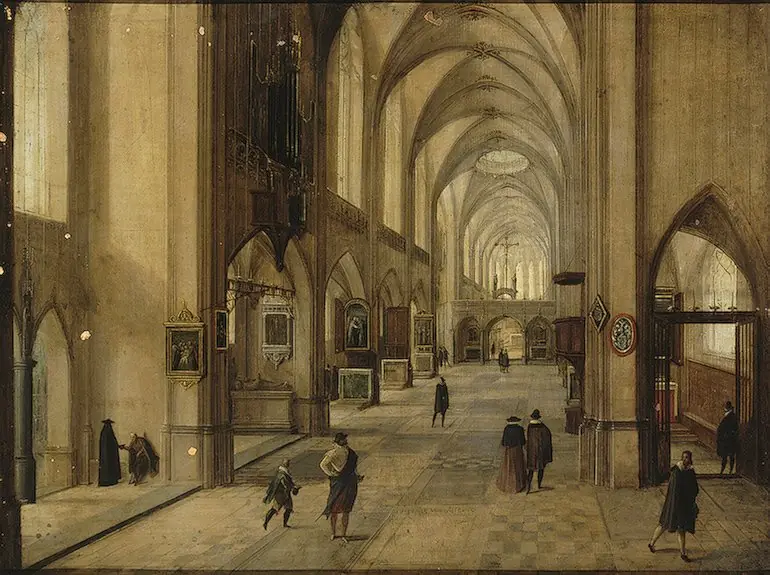
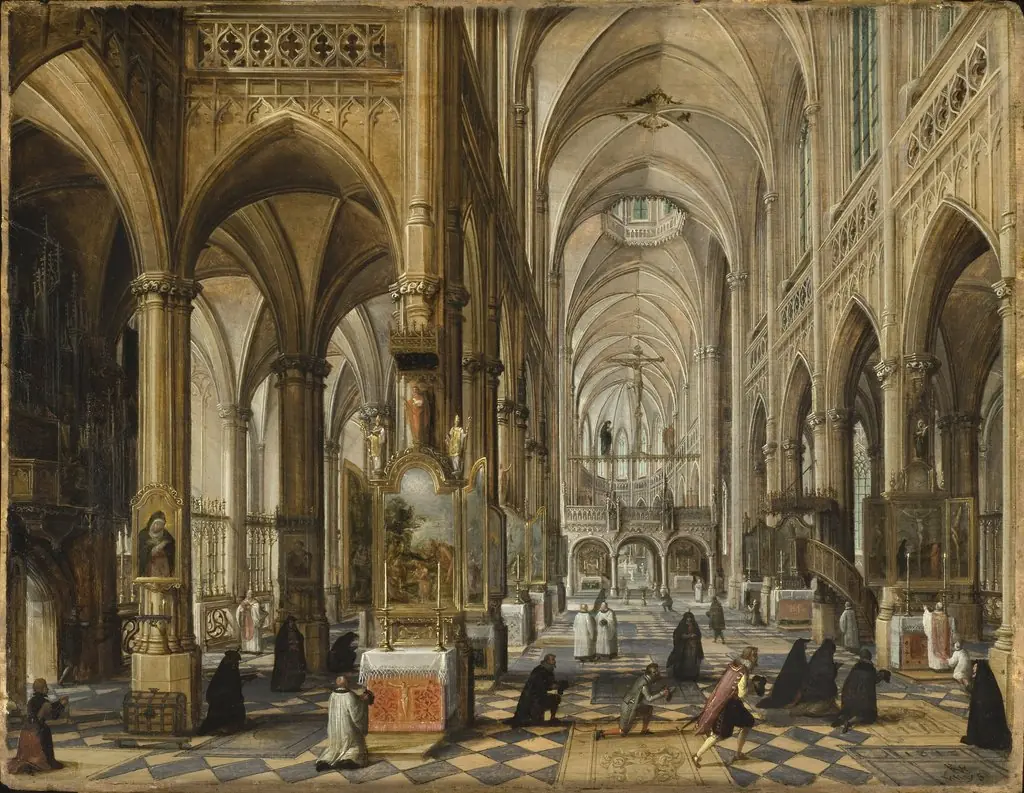
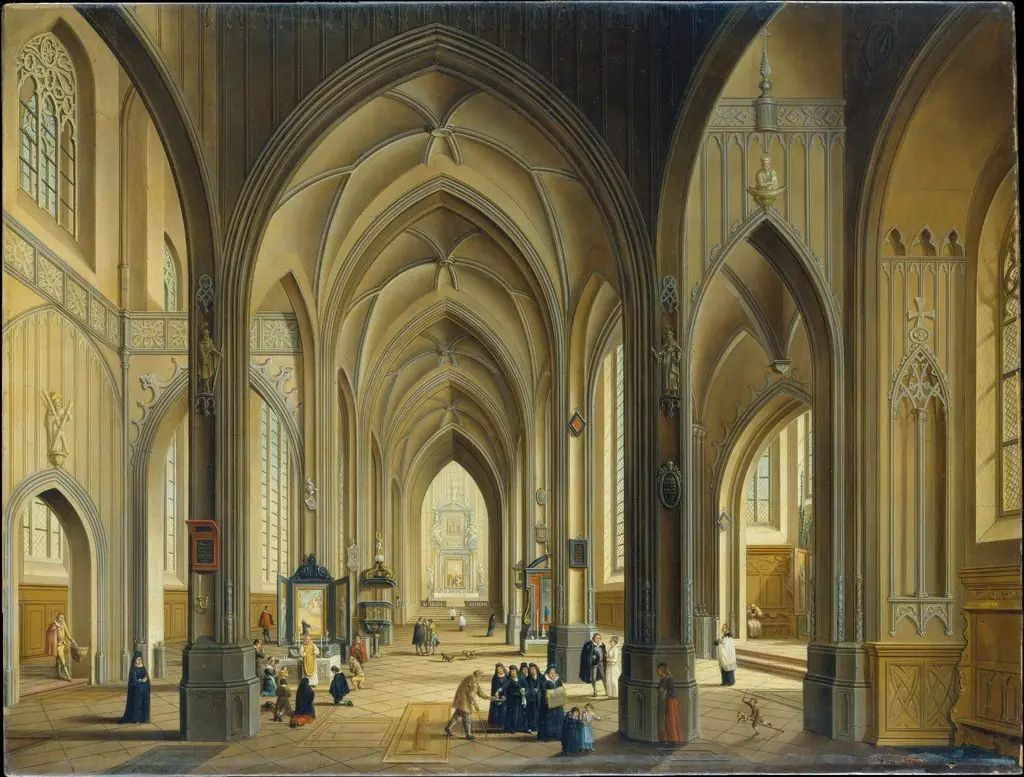
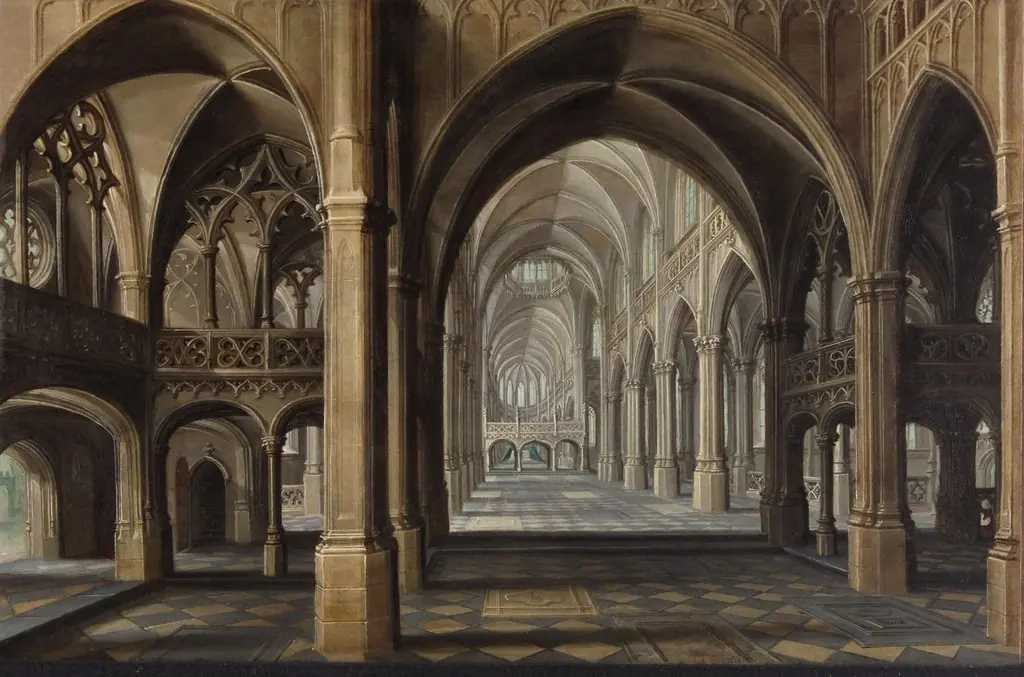
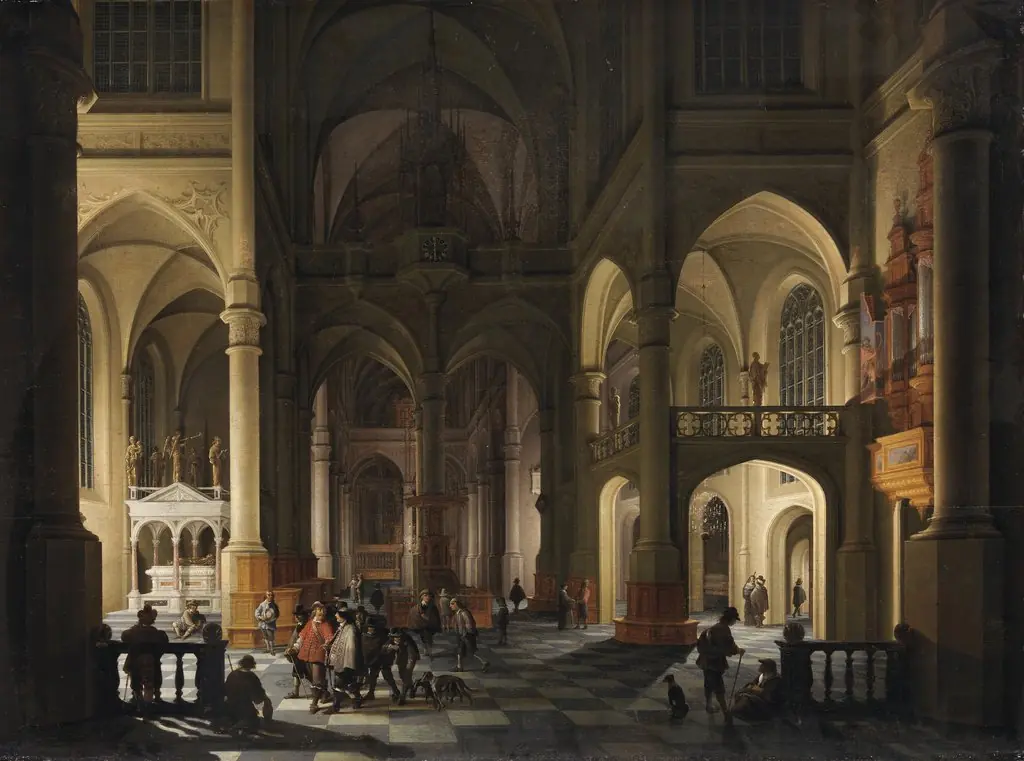
Interior of a Gothic Church Looking East
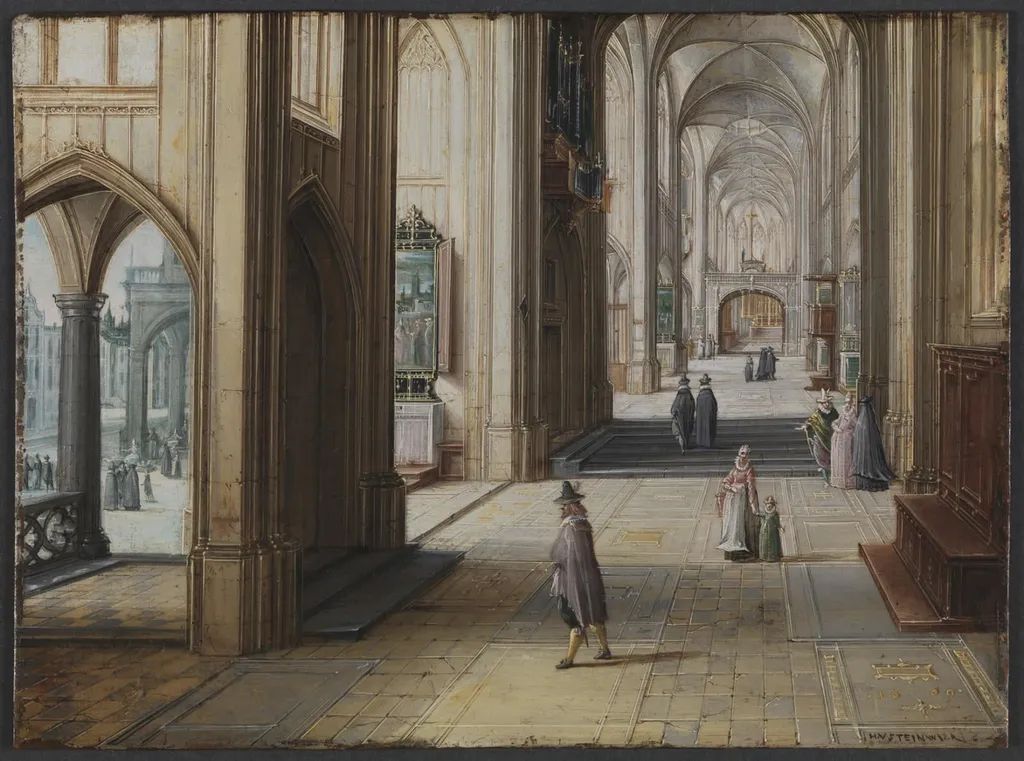
Interior of a Gothic Church Looking East is a photography by the Baroque artist Unknown. It dates from 1609 and is held in the collection of the Statens Museum for Kunst.
About this work
Overview
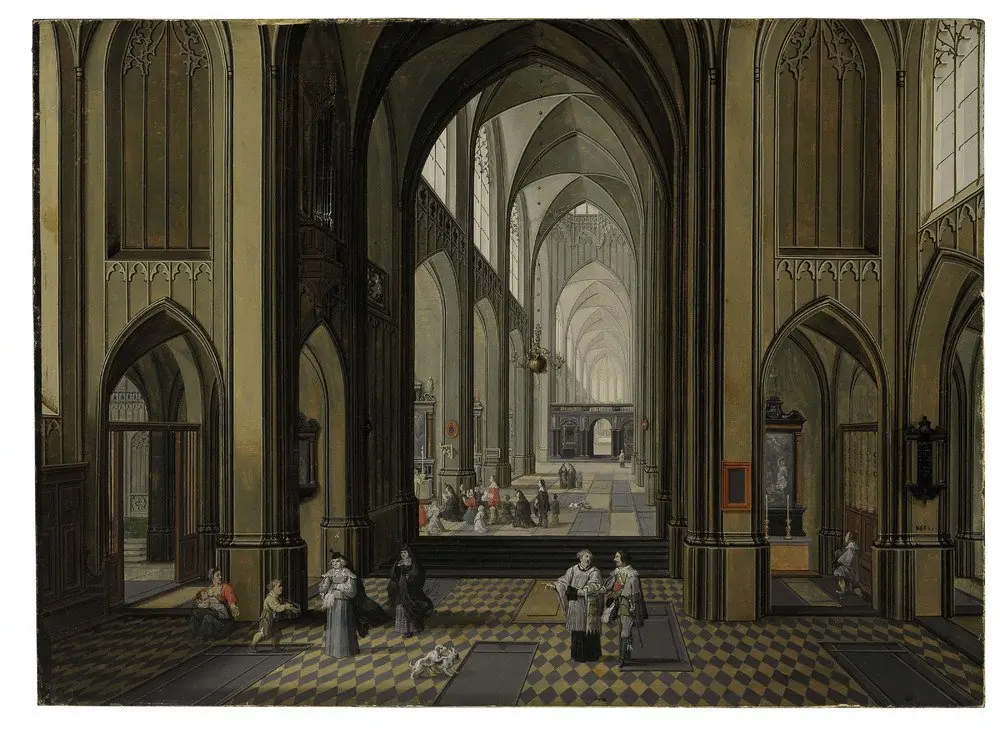
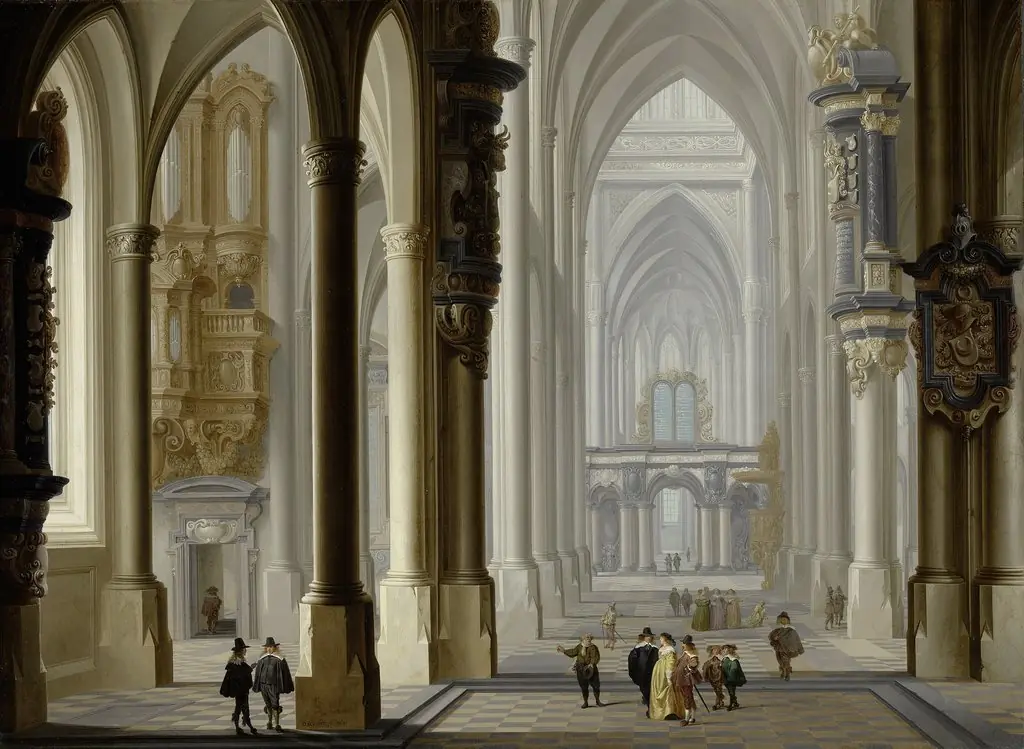
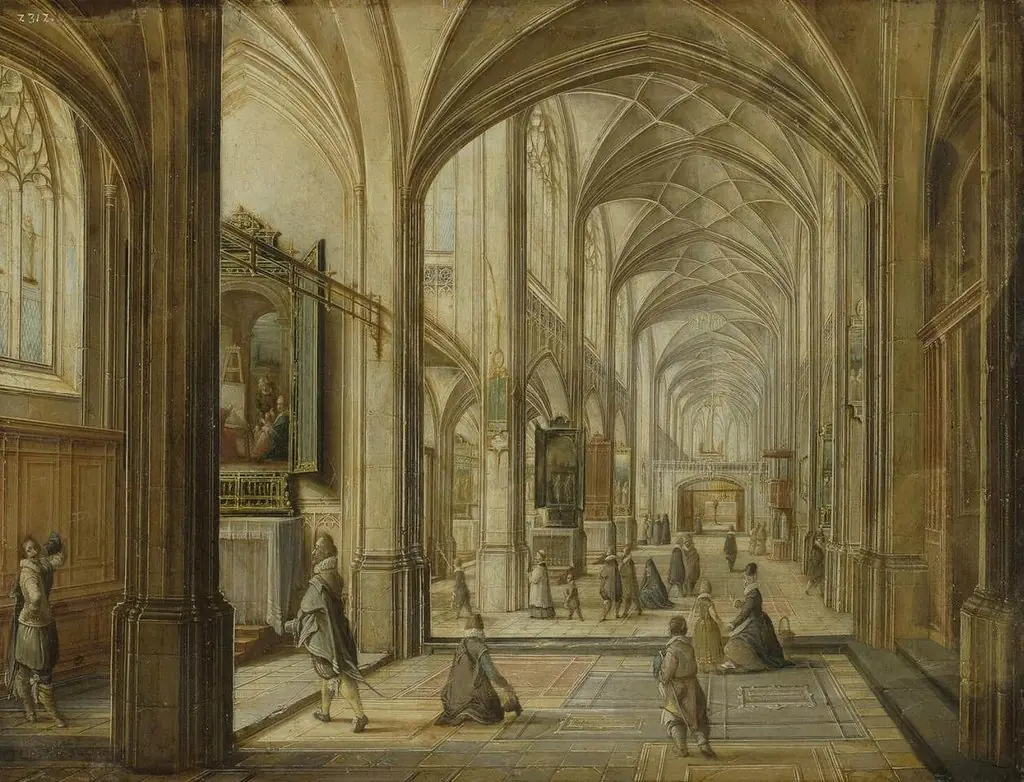
Created in 1609, the work titled Interior of a Gothic Church Looking East depicts the nave of a medieval church oriented toward the east. The composition presents a spacious, vaulted interior framed by pointed arches and tall windows, with a stone floor extending into the distance. The scene is held in the collection of the Museum of Ethnography.
Subject & Meaning
The painting captures a quiet moment within the sacred space, populated by a handful of figures in period dress. A small group gathers near the altar while an individual pilgrim proceeds toward the rear, suggesting both communal worship and solitary contemplation. The eastward orientation underscores the traditional liturgical direction toward the sunrise, symbolizing spiritual illumination.
Technique & Style
The artist employs a pronounced chiaroscuro effect, using strong contrasts of light and shadow to model the stone columns, arches, and vaulted ceiling. Sunlight streams through the pointed windows, illuminating the central aisle and guiding the viewer’s eye along the architectural lines. The rendering of texture and depth conveys a tangible sense of three‑dimensional space.
History & Provenance
Attributed to the anonymous creator recorded as 37751_person, the piece entered the Museum of Ethnography’s holdings through acquisition in the early twentieth century. Its provenance prior to museum ownership remains undocumented, reflecting the limited archival information typical for many early‑modern European interior scenes.
Context
The work belongs to a broader tradition of Northern European interior church paintings that emerged in the late sixteenth and early seventeenth centuries. Such images often served devotional purposes, offering viewers a visual meditation on sacred architecture and the play of divine light within ecclesiastical settings.
Artist & collection

 Domestic Scene
 Giacomo and Cardinal Marco, investing Andrea, Abbot of San Zeno, with his Benefice
 The Nymph of Fontainebleau
 Portrait of a Woman
 Madonna and Child with Saints in the Enclosed Garden
 Venus and Minerva
 Family Group of Four on Sofa
 Wall painting from Room H of the Villa of P. Fannius Synistor at Boscoreale