Artwork
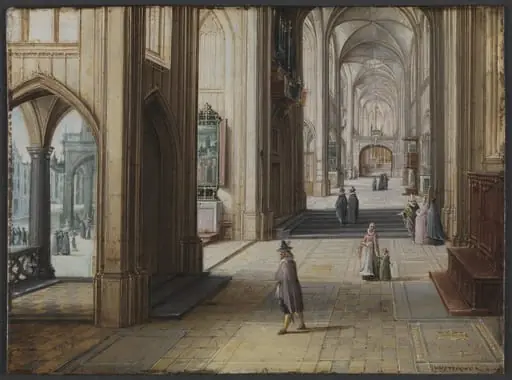
Interior of a Gothic Church
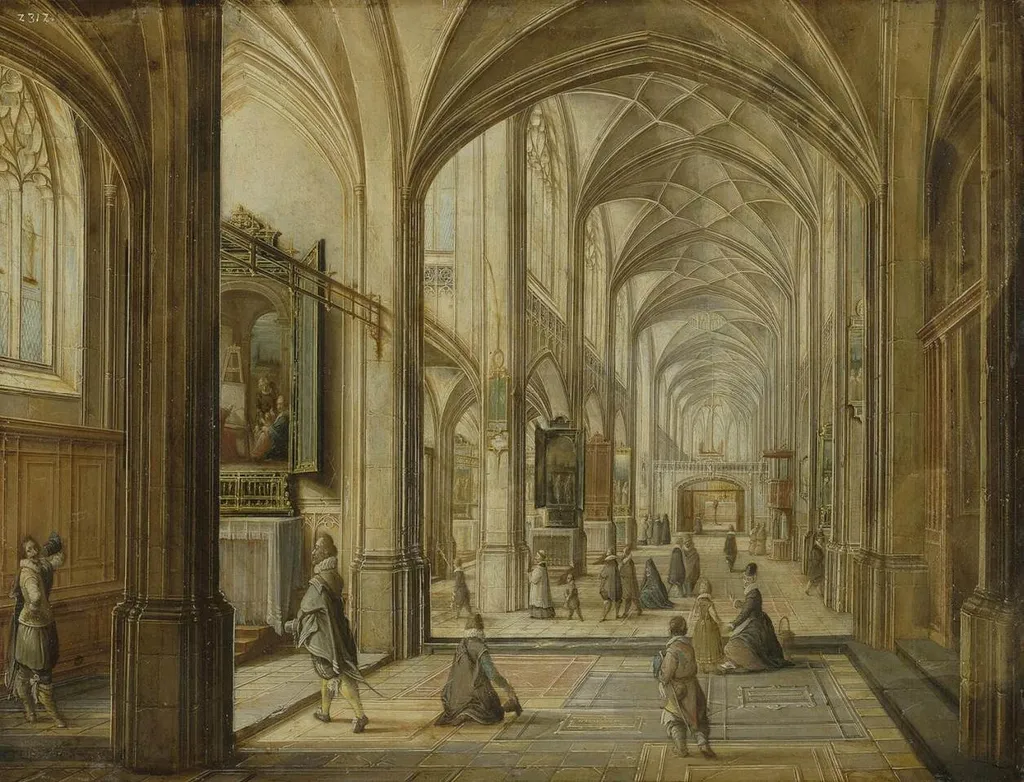
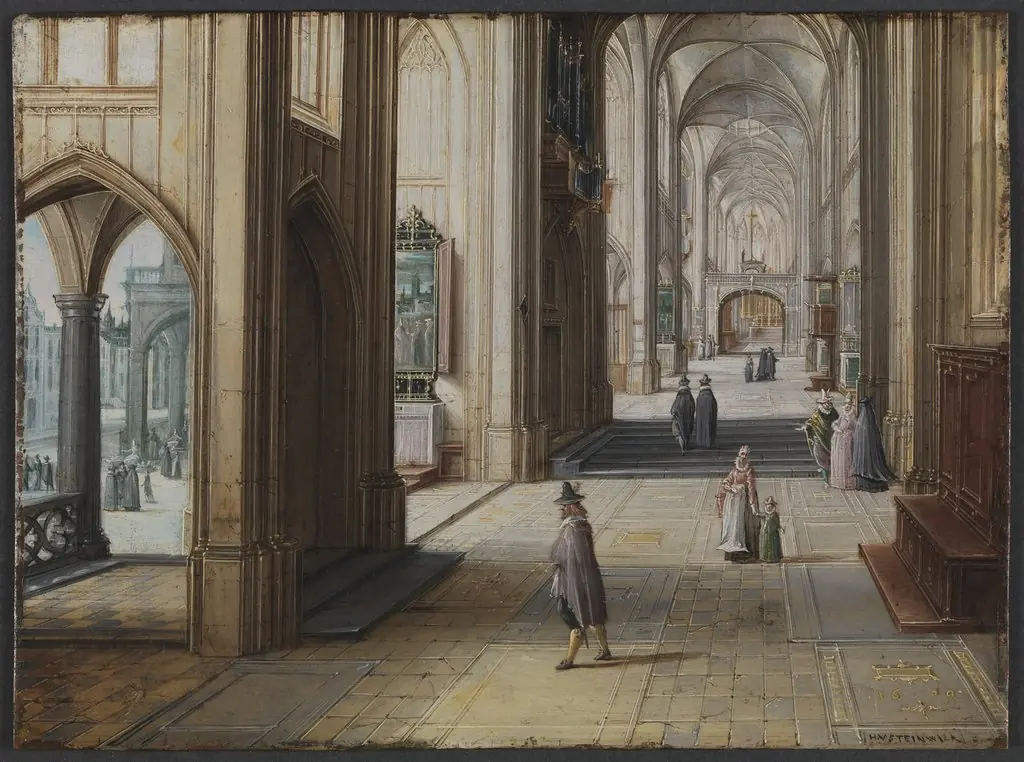
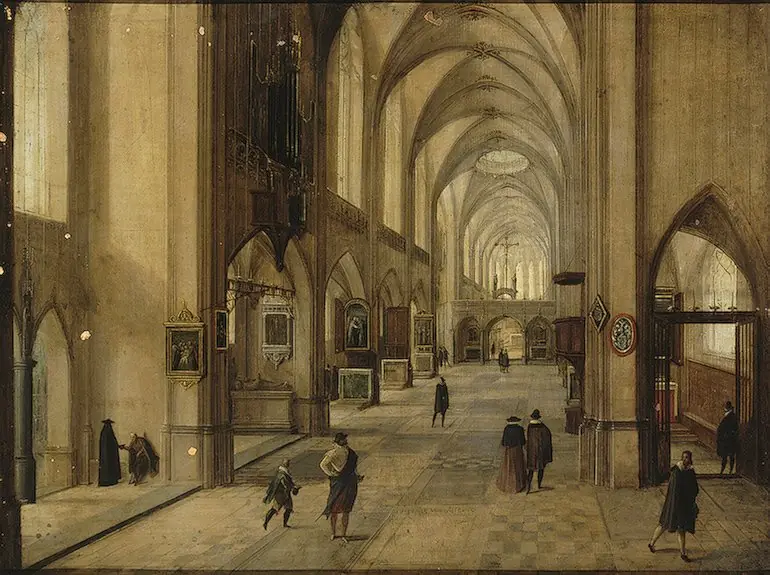
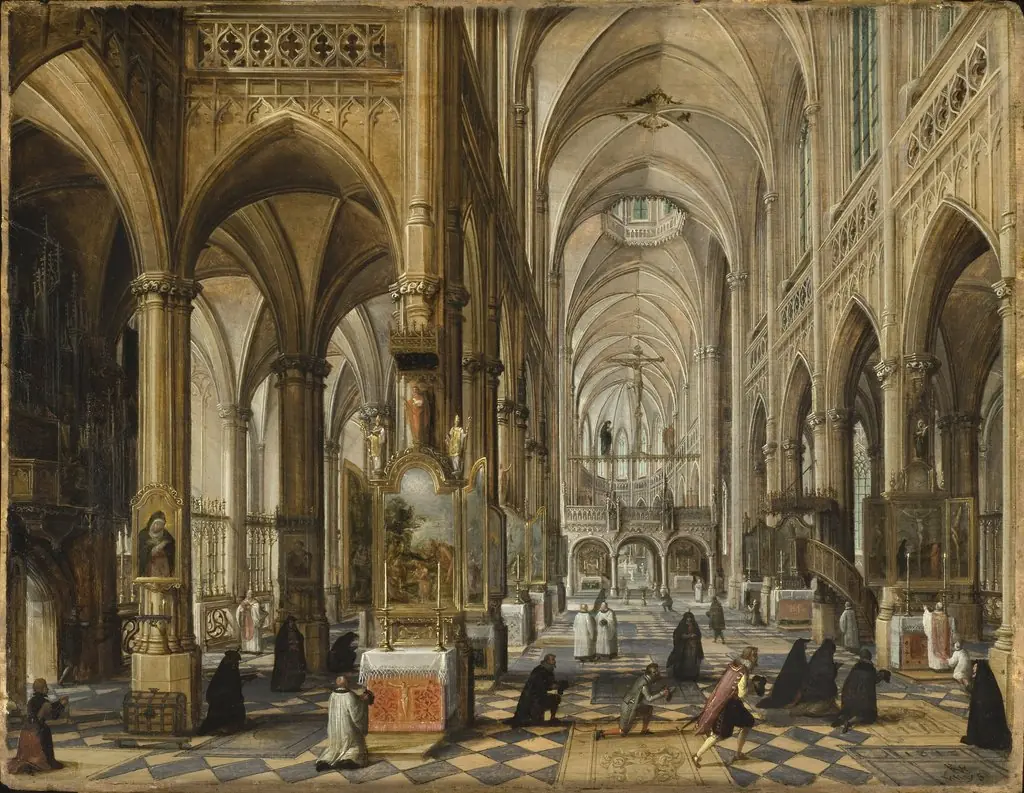
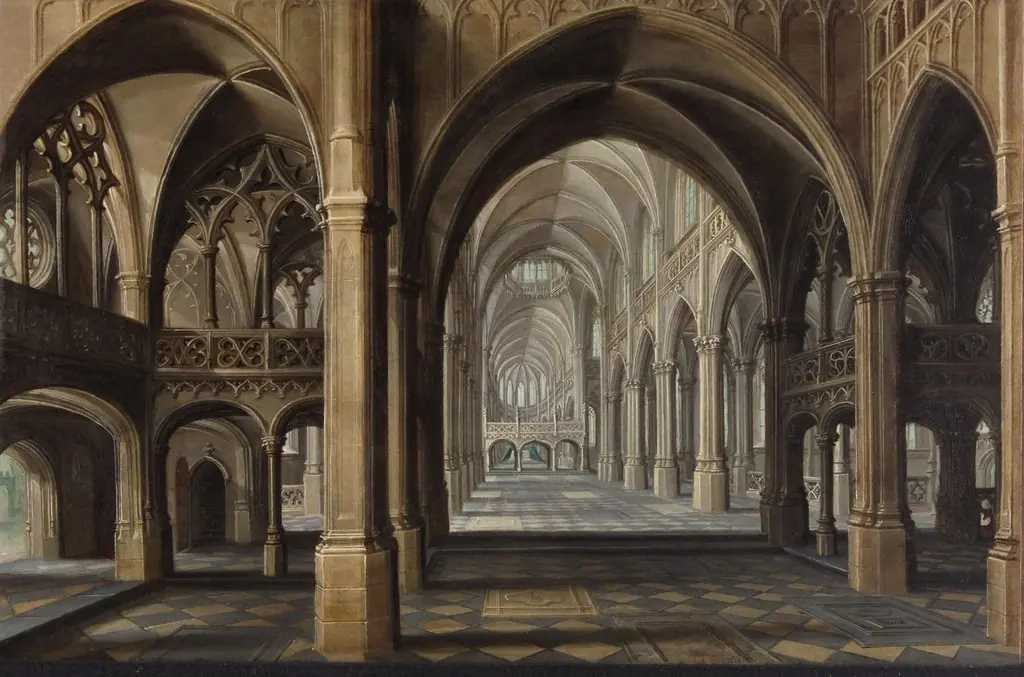
Interior of a Gothic Church is an oil painting by the Flemish Baroque painting artist Hendrik van Steenwijk II. It dates from 1615 and is held in the collection of the Hermitage Museum.
About this work
Overview
Painted in 1615 on copper, this interior scene of a Gothic church was executed by Hendrik van Steenwijck II, a Flemish artist specializing in architectural spaces. Trained by his father, he carried forward a niche tradition of meticulously rendered church interiors. The work resides in the State Hermitage Museum, reflecting its significance in early 17th-century Northern European painting.
Subject & Meaning
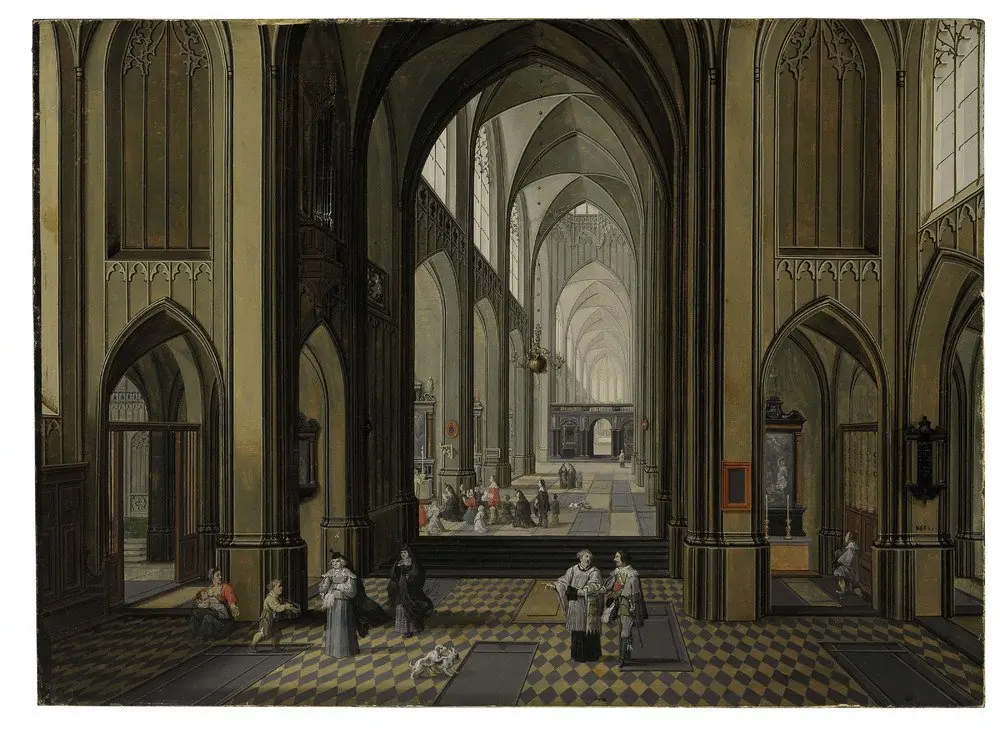
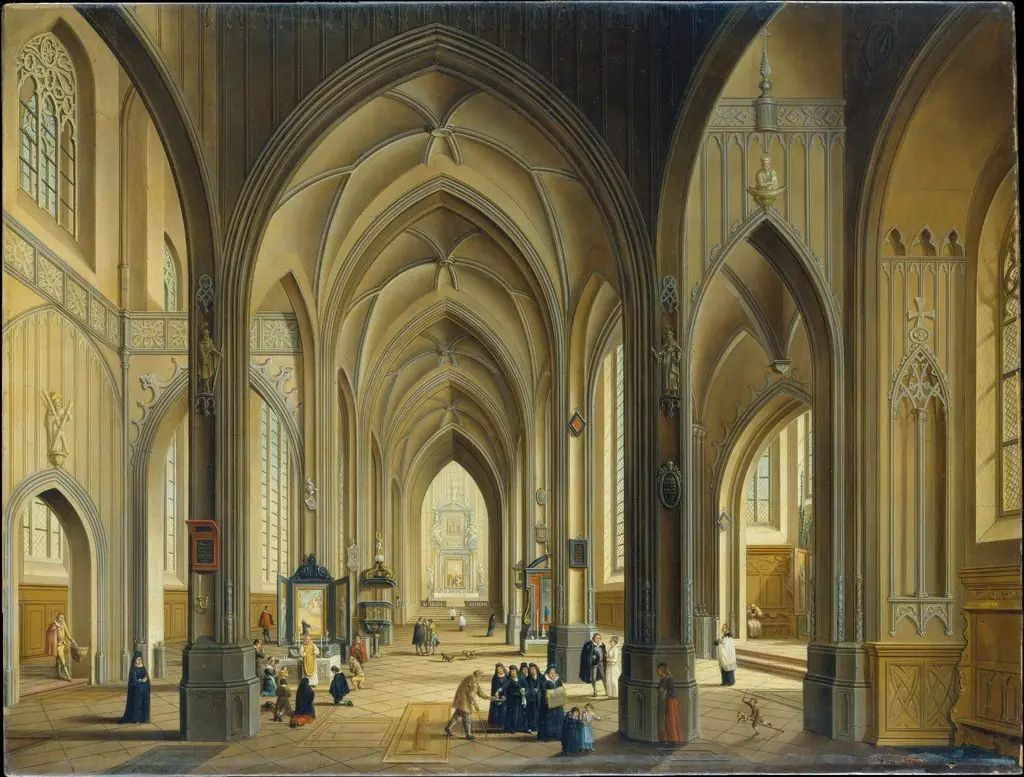
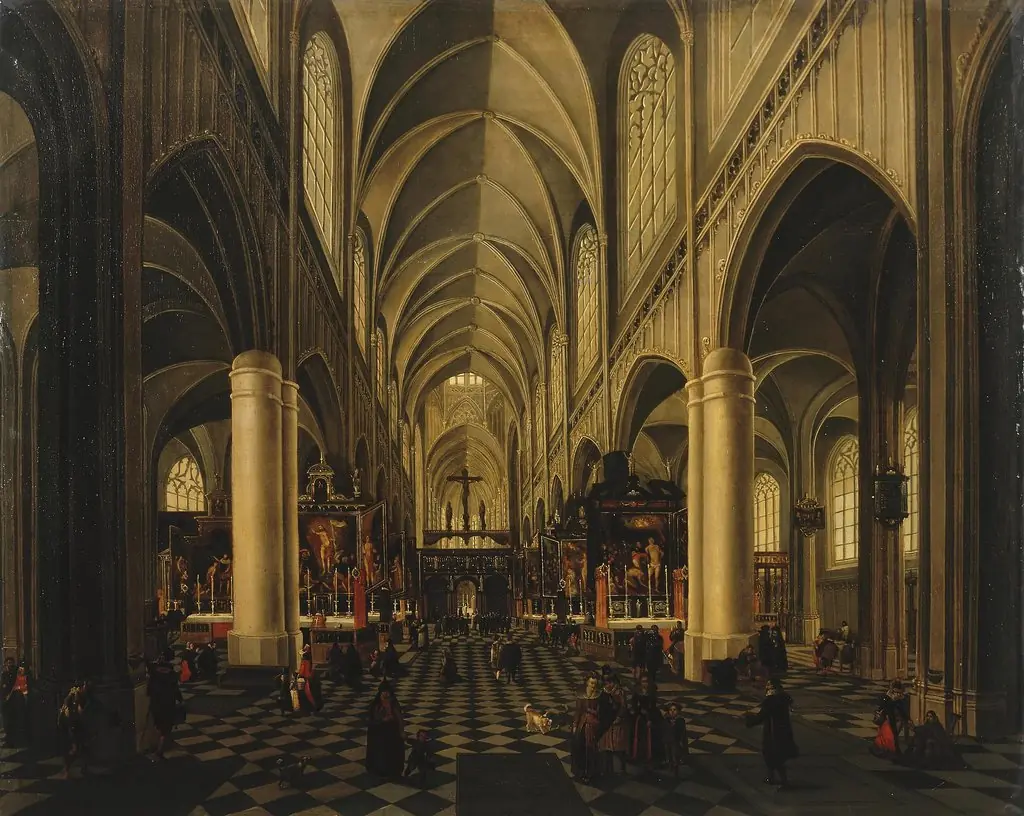
The painting portrays a quiet, lived-in ecclesiastical space: worshippers move and pause among stone pillars, while a central tomb draws attention as a focal point. Statues line the walls, and sunlight filters through high windows, illuminating select areas. The scene suggests devotion and daily ritual rather than ceremonial grandeur, emphasizing the church as a functional, human environment.
Technique & Style
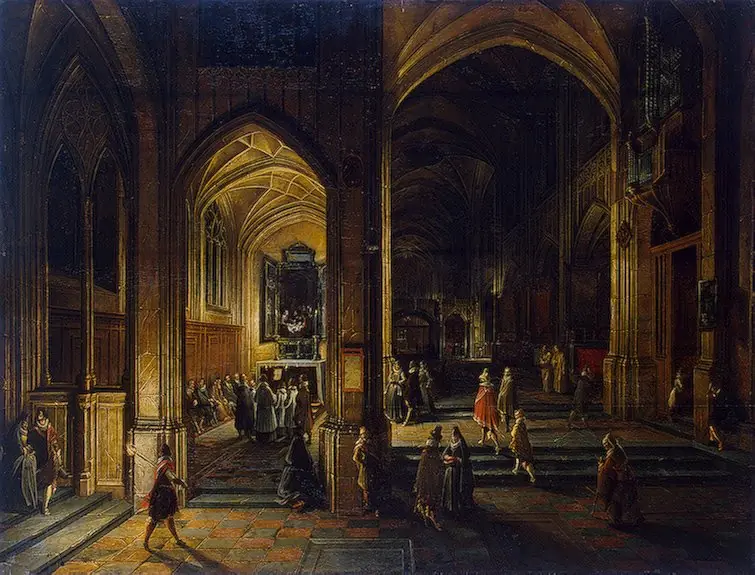
Van Steenwijck employed fine brushwork on a copper support to achieve sharp detail and smooth surfaces. He used chiaroscuro to model depth, contrasting pools of light with deep shadows beneath vaulted arches. The precise rendering of stone textures and the careful placement of figures enhance spatial illusion, demonstrating a technical command rooted in Northern Renaissance traditions.
History & Provenance
Born in Antwerp, van Steenwijck worked in both Frankfurt and Antwerp, leading his family’s workshop after his father’s death. His paintings of church interiors were sought after by collectors in the Dutch and Flemish regions. This particular work entered the Hermitage collection in the 18th or 19th century, likely through imperial acquisitions of Northern European art.
Context
In early 17th-century Flanders, architectural interiors gained popularity as subjects distinct from religious narratives. Artists like van Steenwijck catered to a market interested in spatial realism and atmospheric effects. His work reflects a broader trend toward secular appreciation of sacred architecture, even as religious themes remained culturally dominant.
Legacy
Van Steenwijck’s precise renderings influenced later Dutch and Flemish painters of interiors, particularly in the use of light and perspective. While not widely known today, his contributions helped establish architectural painting as a respected genre. His copper panels, prized for their durability and luminosity, remain key examples of early Baroque technical refinement.
Artist & collection
Artist
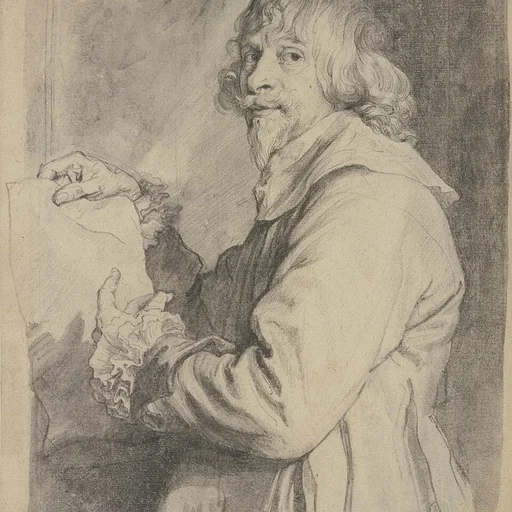
Hendrik van Steenwijck II (also Steenwyck, Steinwick) (c.1580–1640) was a Baroque painter mostly of architectural interiors, but also of biblical scenes and still lifes.