Artwork
Interior of a Gothic Church
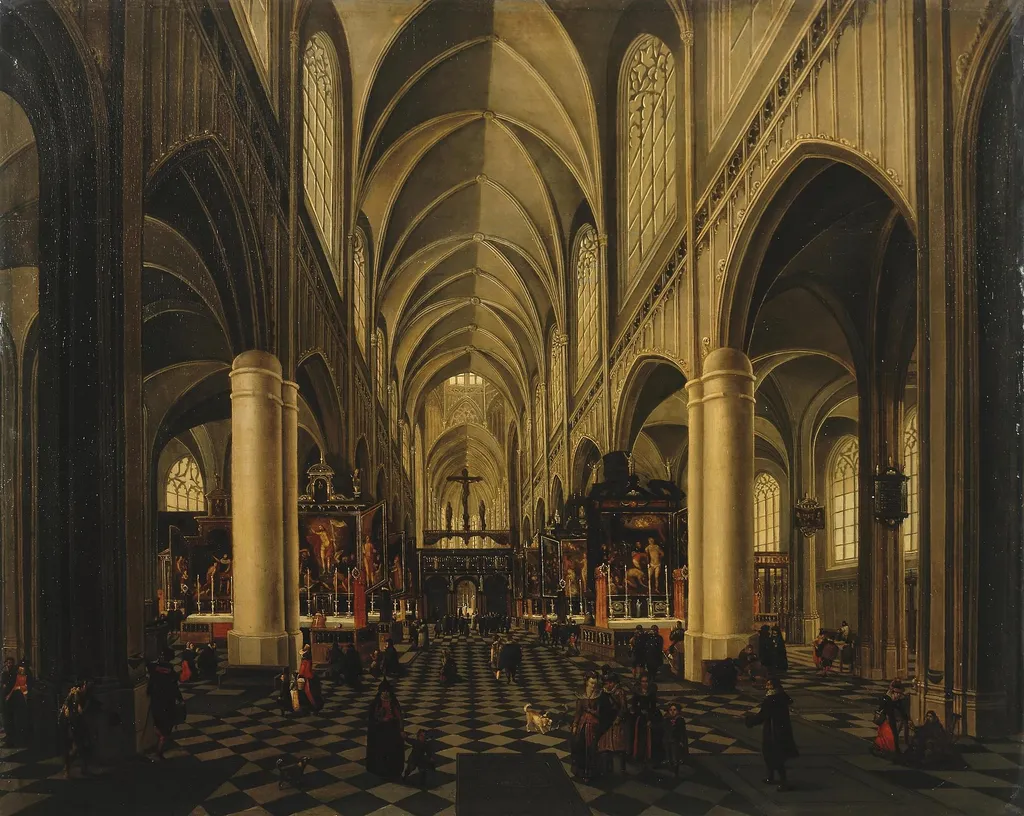
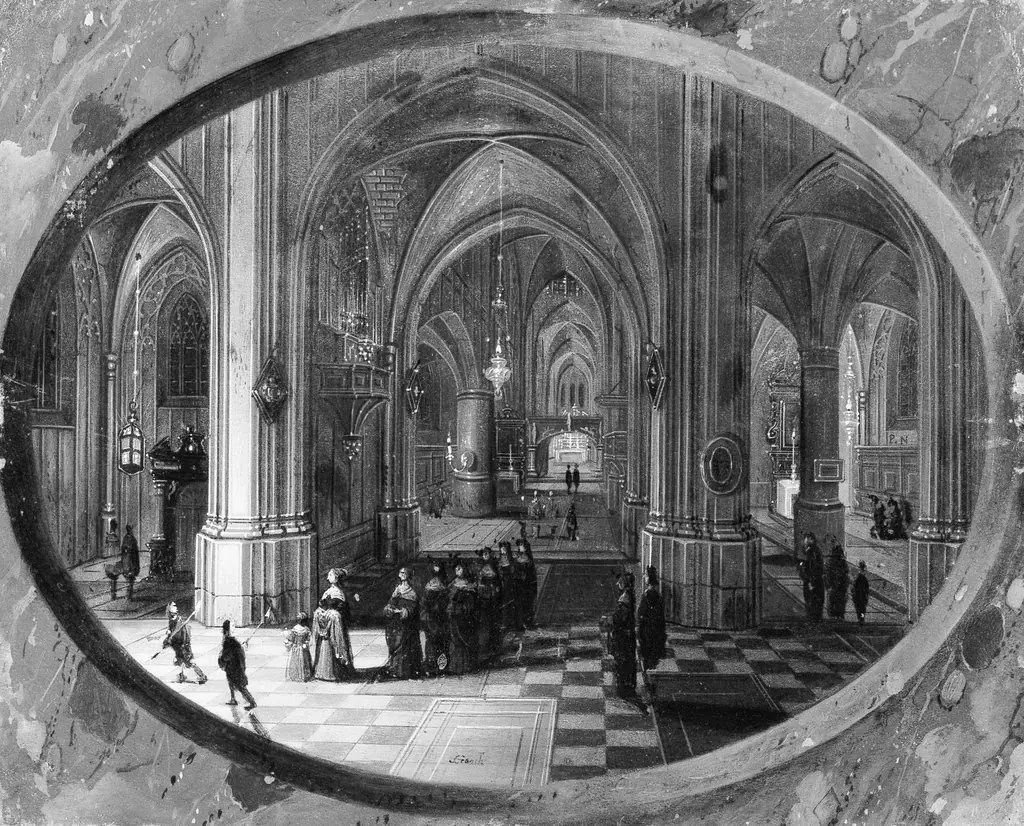
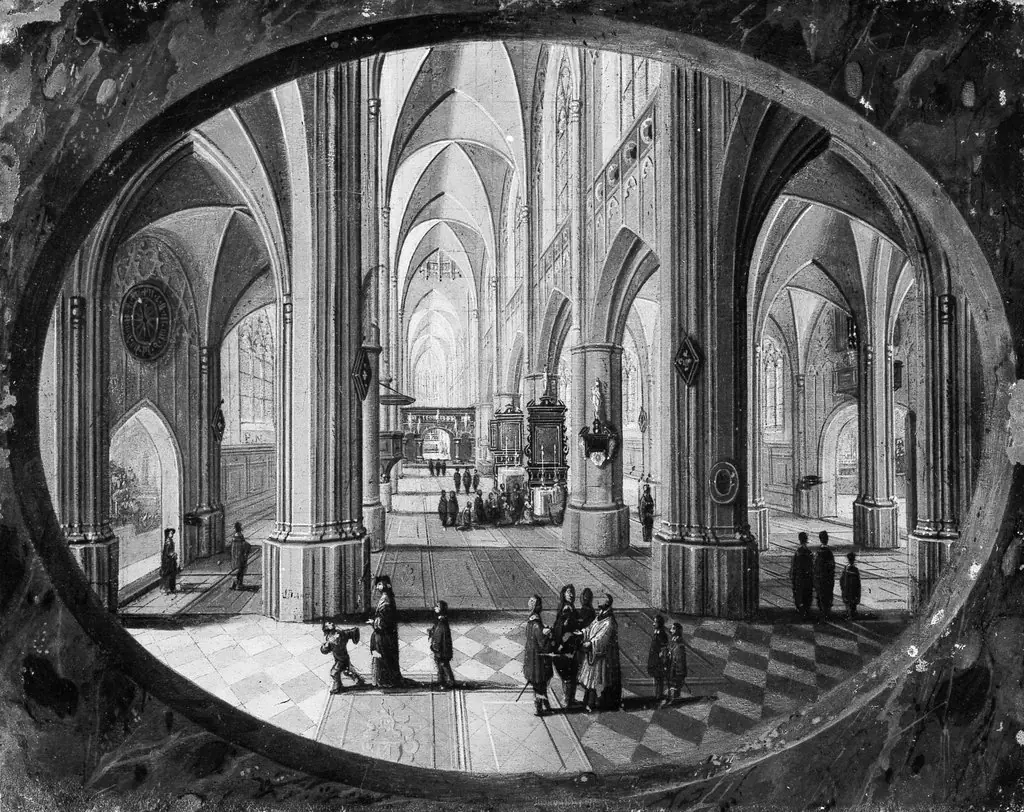
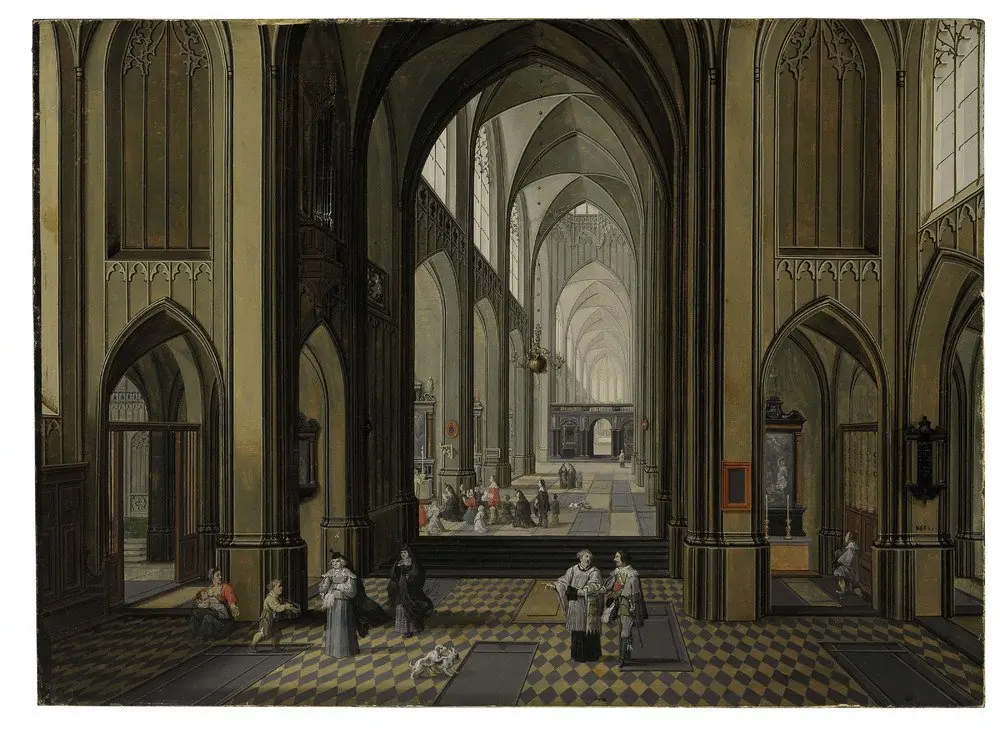
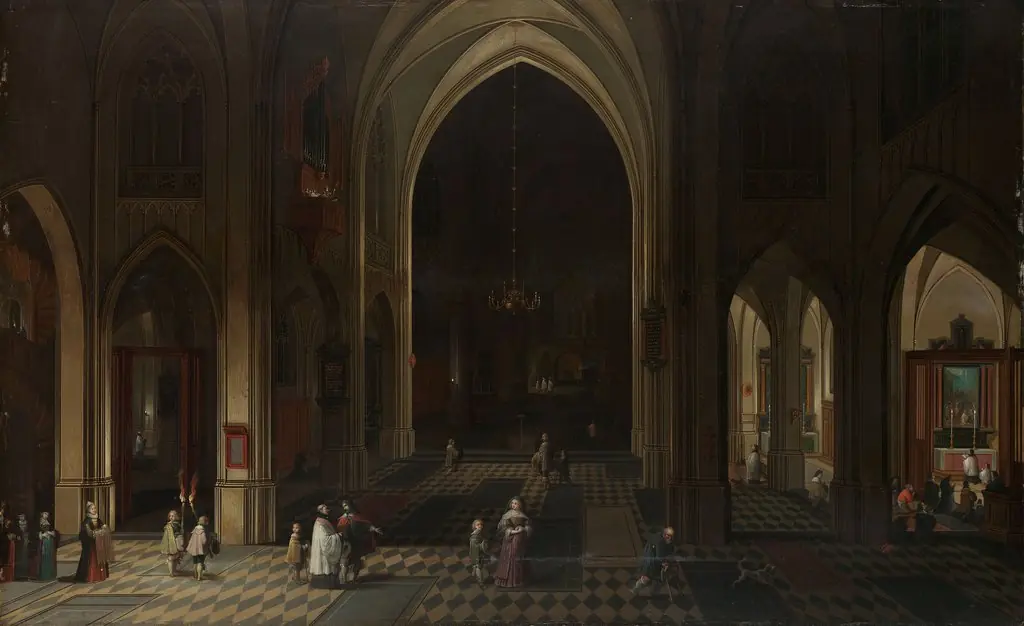
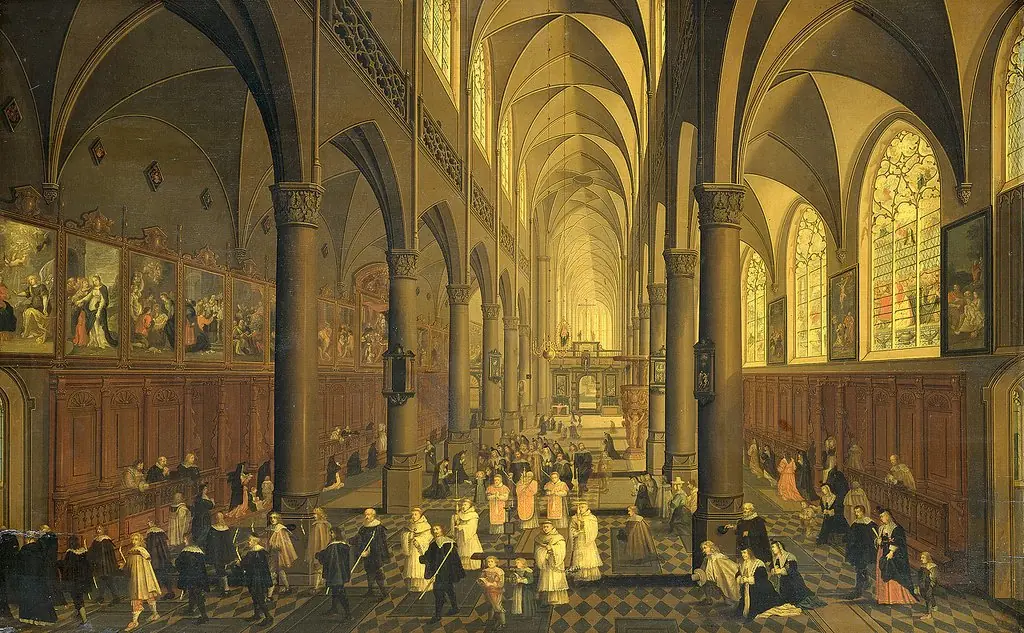
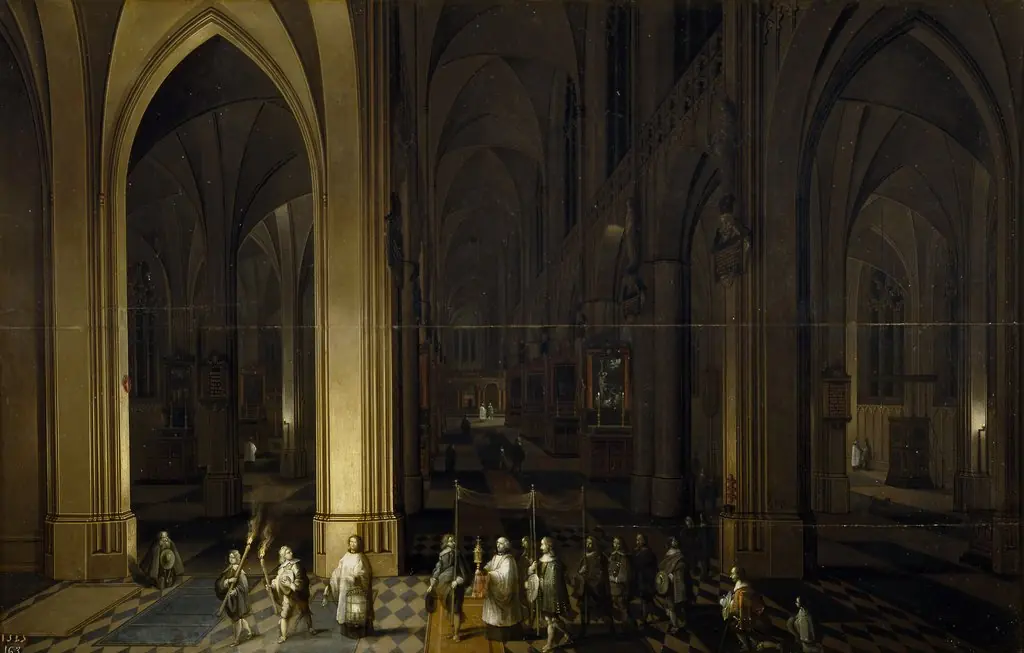
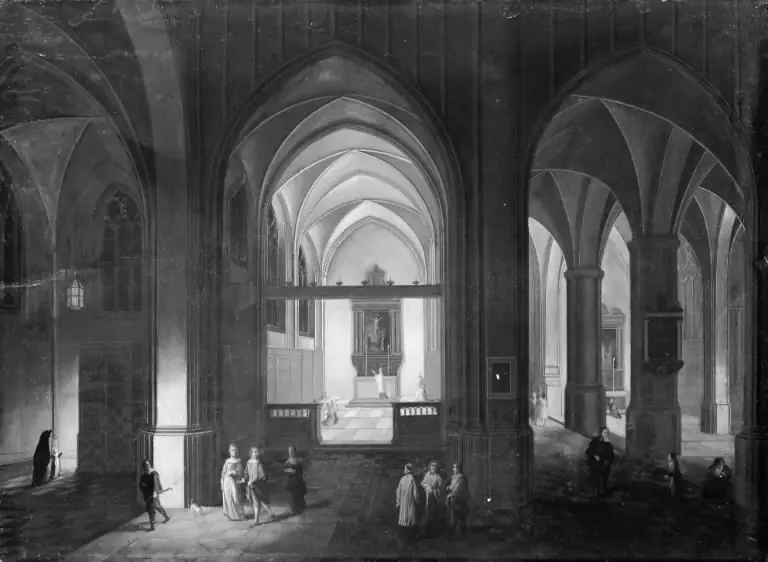
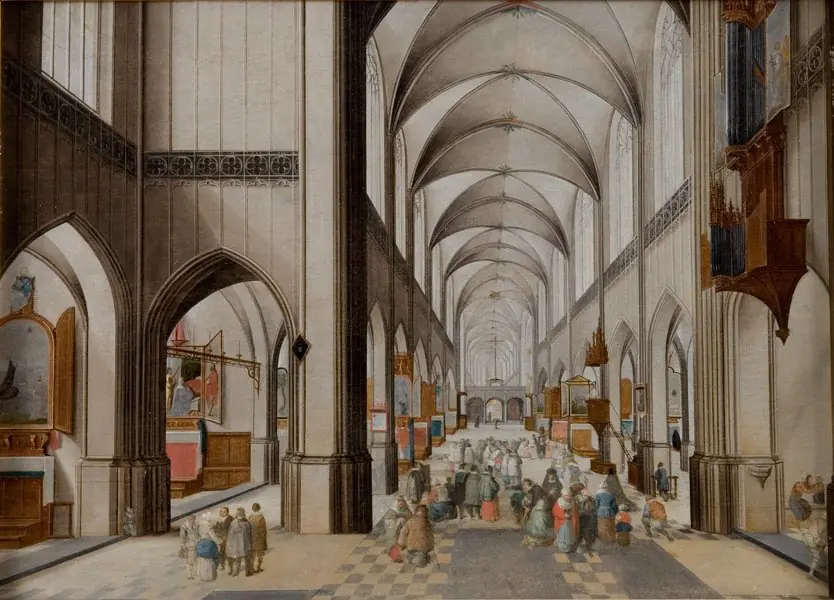
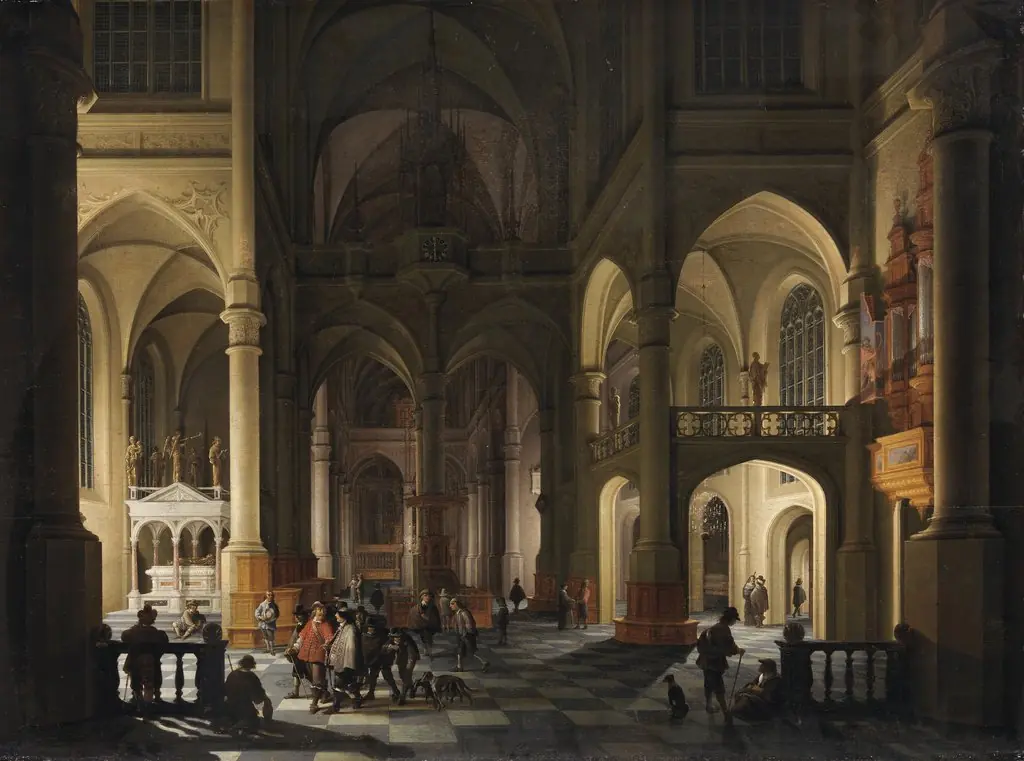
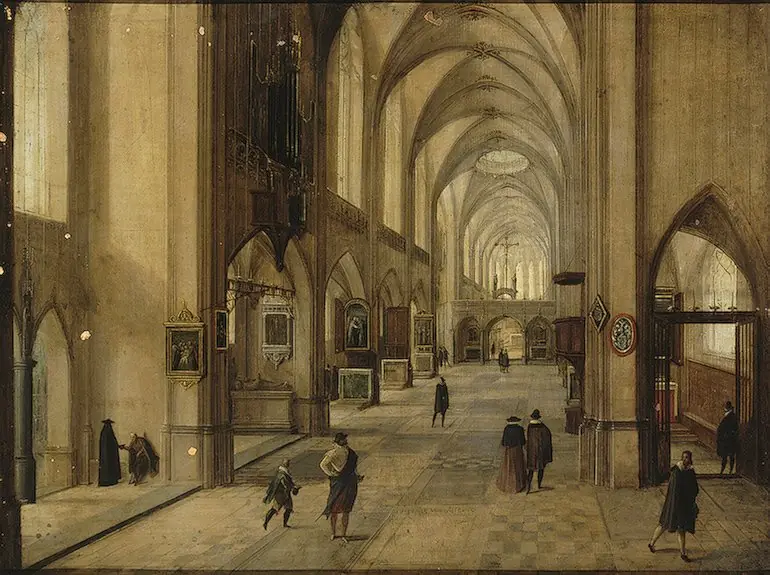
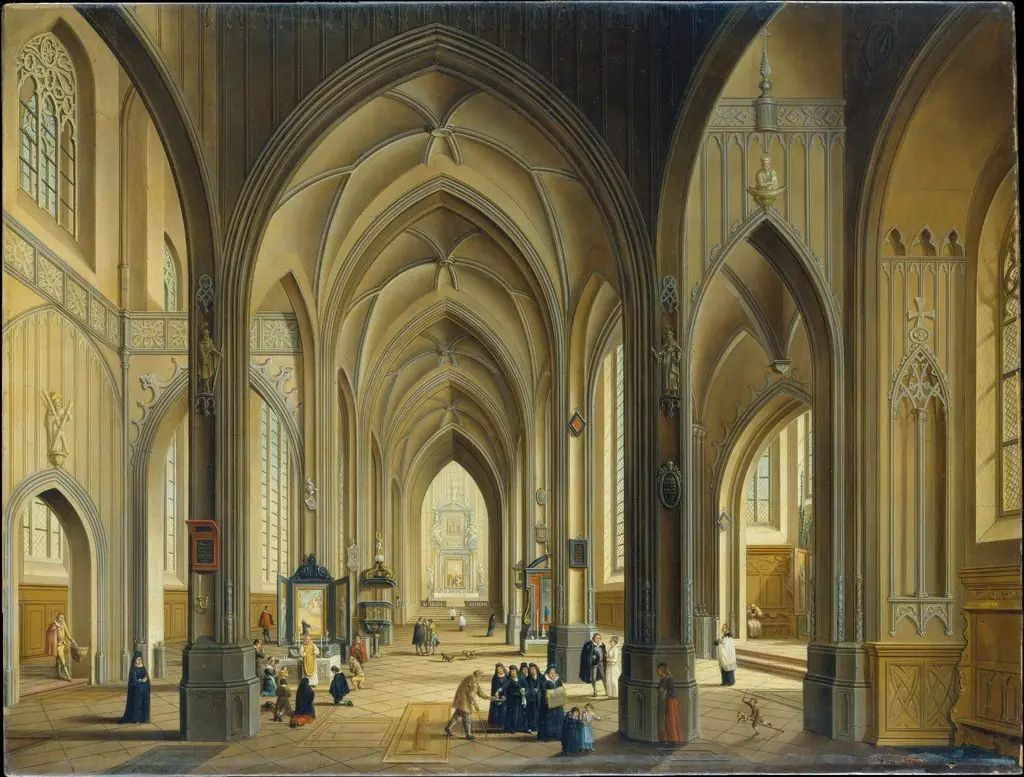
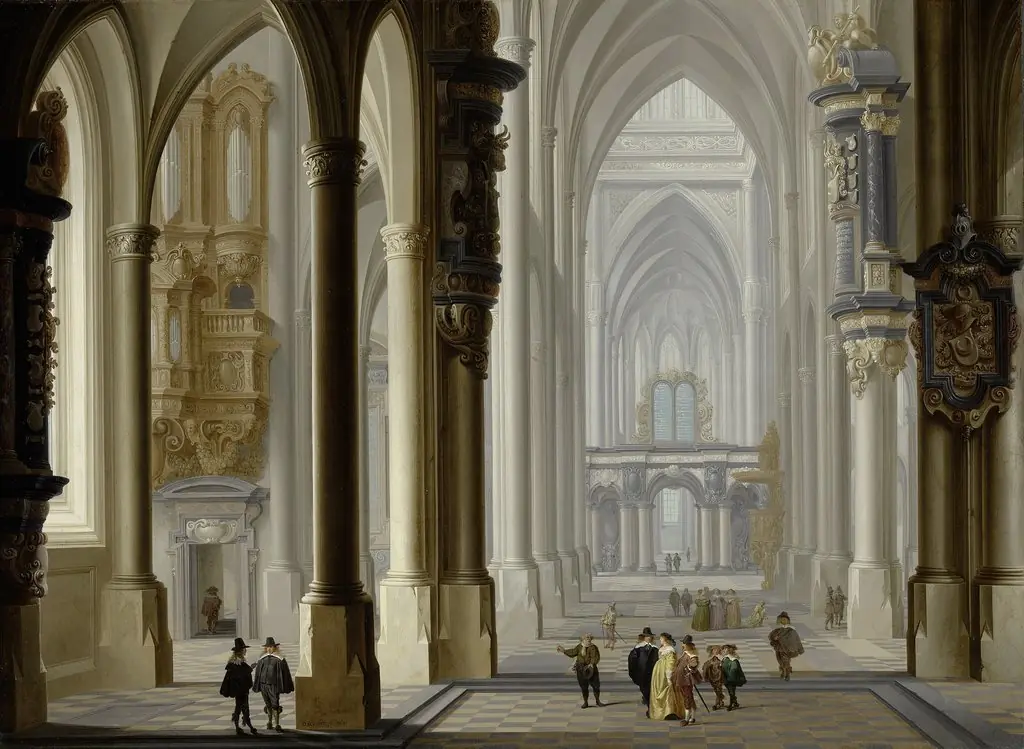
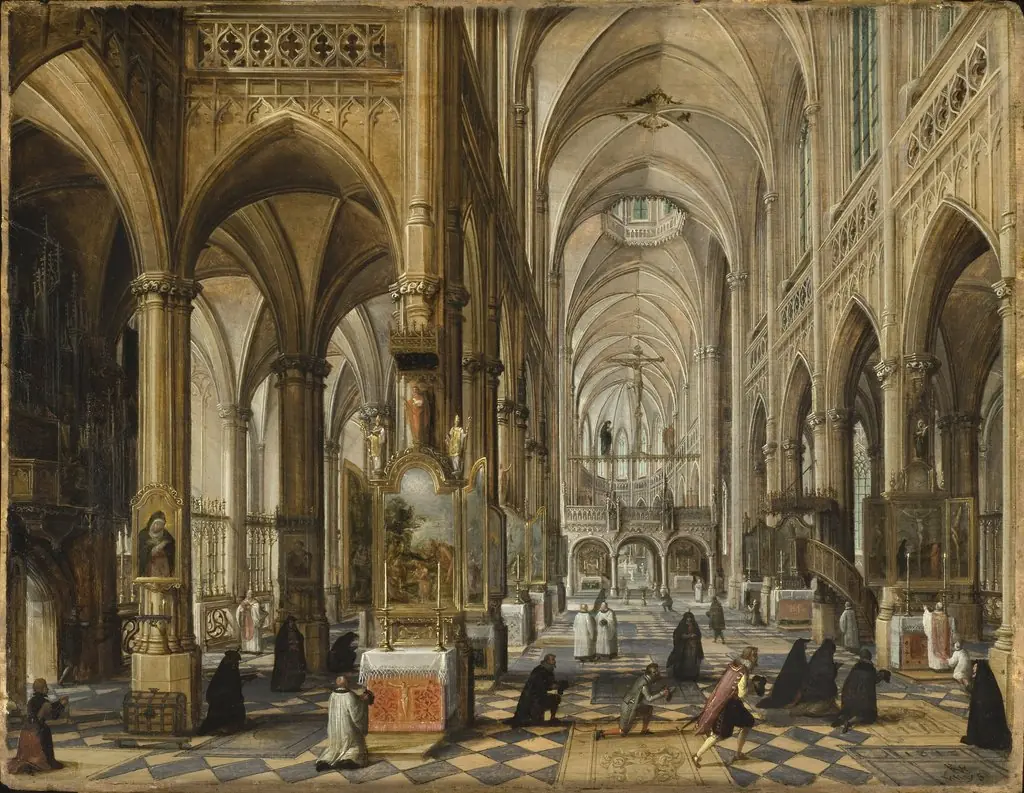
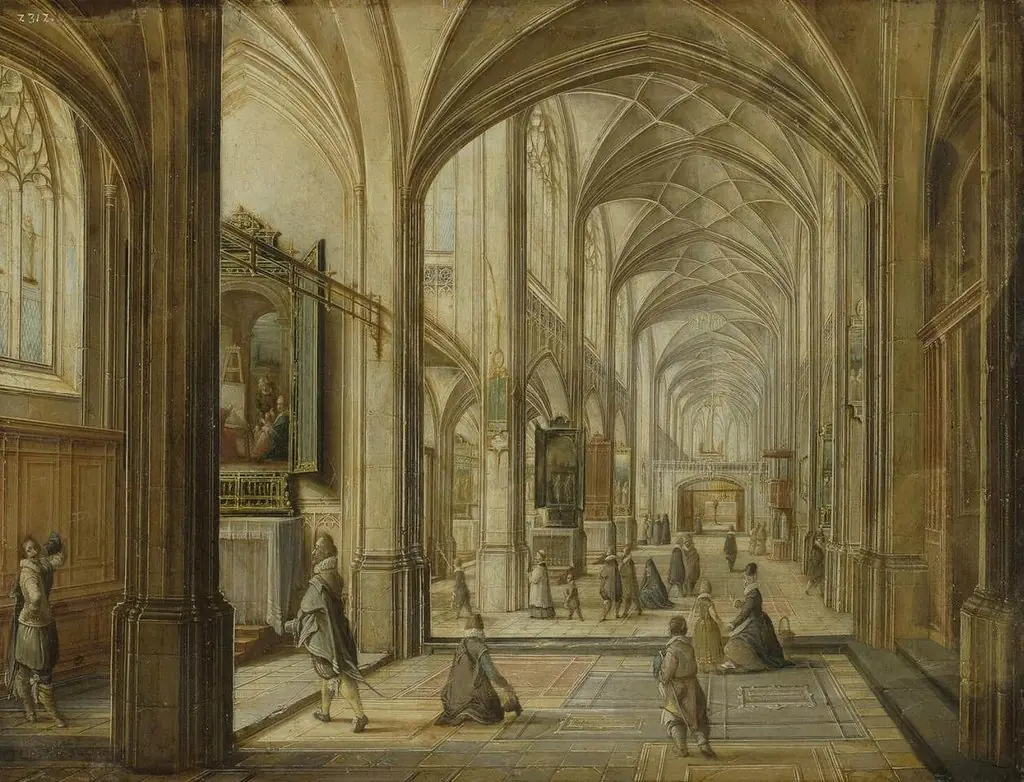
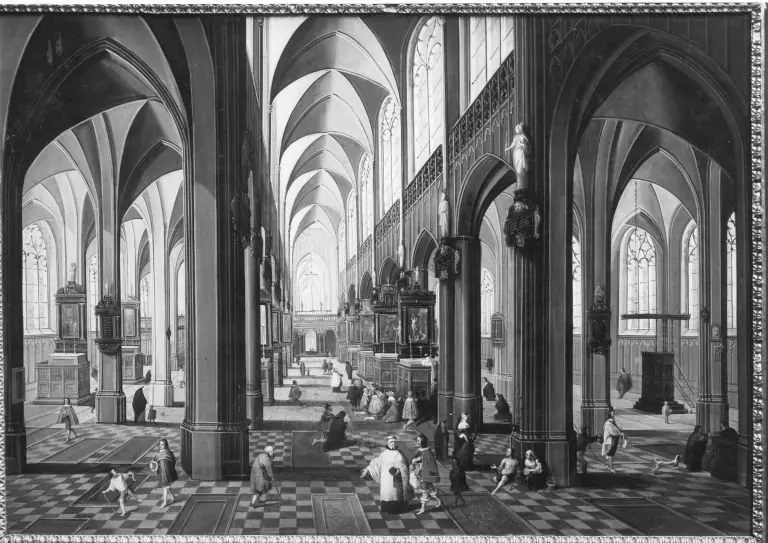
Interior of a Gothic Church is an oil painting by the Flemish Baroque painting artist Pieter Neefs the Elder. It dates from 1610 and is held in the collection of the Hermitage Museum.
About this work
Overview
His painting captures the scale and stillness of sacred architecture, emphasizing spatial depth through precise perspective and controlled lighting.
Pieter Neefs the Elder, a Flemish artist active in Antwerp around 1610, focused on meticulously rendered interior views of Gothic churches. His painting captures the scale and stillness of sacred architecture, emphasizing spatial depth through precise perspective and controlled lighting. Unlike many contemporaries, he avoided crowded scenes, instead conveying reverence through emptiness and atmospheric detail.
Subject & Meaning
The painting portrays an unoccupied nave of a Gothic church, with only a few figures near the altar, suggesting quiet devotion. The wooden cross above the altar anchors the composition spiritually, while the absence of large congregations invites contemplation. The architecture itself becomes the subject — a silent, enduring presence that frames human faith without overwhelming it.
Technique & Style
Neefs employed chiaroscuro to model the interior’s vast volume, using sharp contrasts between light and shadow to define stone columns, vaulted ceilings, and tiled floors. Two directional light sources — likely from high windows — create layered illumination, enhancing the sense of depth. His brushwork is precise yet unobtrusive, prioritizing architectural accuracy over expressive gesture.
History & Provenance
Created around 1610, the work emerged from Antwerp’s thriving artistic community, where architectural painting was gaining recognition. Neefs was part of a small group specializing in church interiors, often collaborating with figure painters who added minor characters. The painting’s survival reflects its appeal to collectors interested in both religious sentiment and technical mastery of space.
Context
In early 17th-century Flanders, Catholic churches remained central to civic life after the Reformation. Artists like Neefs responded to a demand for images that affirmed religious continuity through architectural grandeur. His interiors avoided narrative drama, instead offering serene, almost documentary views that aligned with Counter-Reformation ideals of solemnity and order.
Legacy
Neefs helped establish the church interior as a distinct genre in Northern European painting. His use of light to structure space influenced later artists, including his son Pieter Neefs the Younger and others in the Antwerp tradition. Though not widely known today, his work remains a quiet benchmark for the depiction of sacred architecture in early Baroque art.
Artist & collection
Artist
Pieter Neefs the Elder or Pieter Neeffs the Elder (c. 1578 in Antwerp – after 1656 before 1661 in Antwerp) was a Flemish painter who specialized in architectural interiors of churches. Active in Antwerp, he was…