Artwork
A Village Celebration
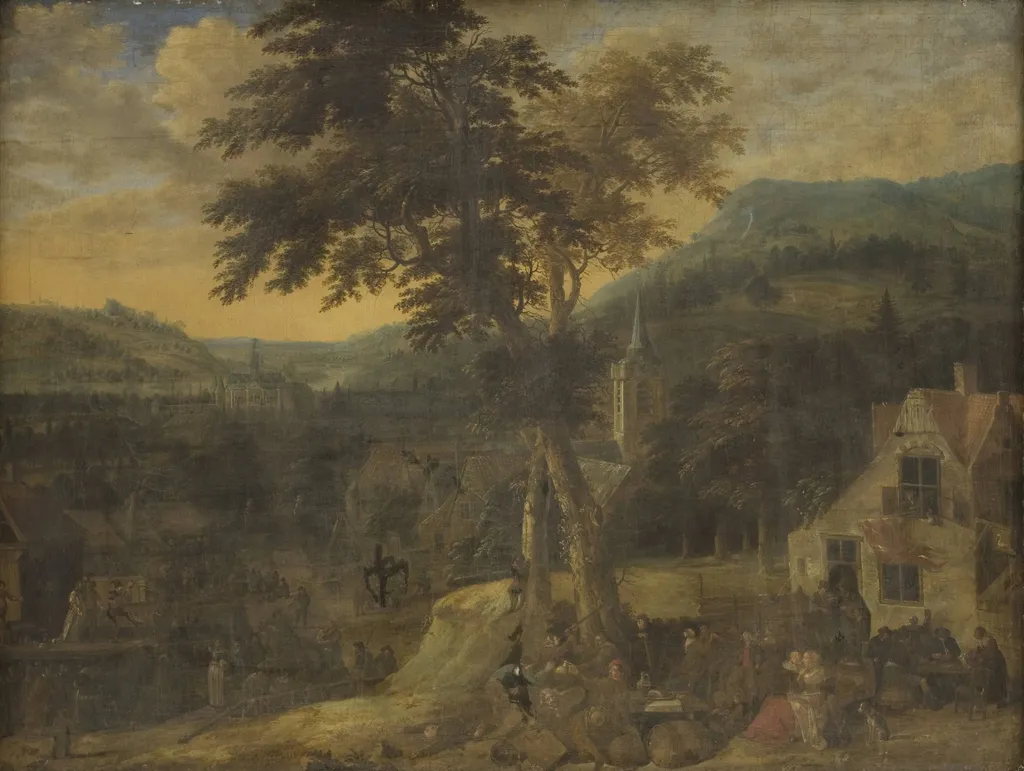
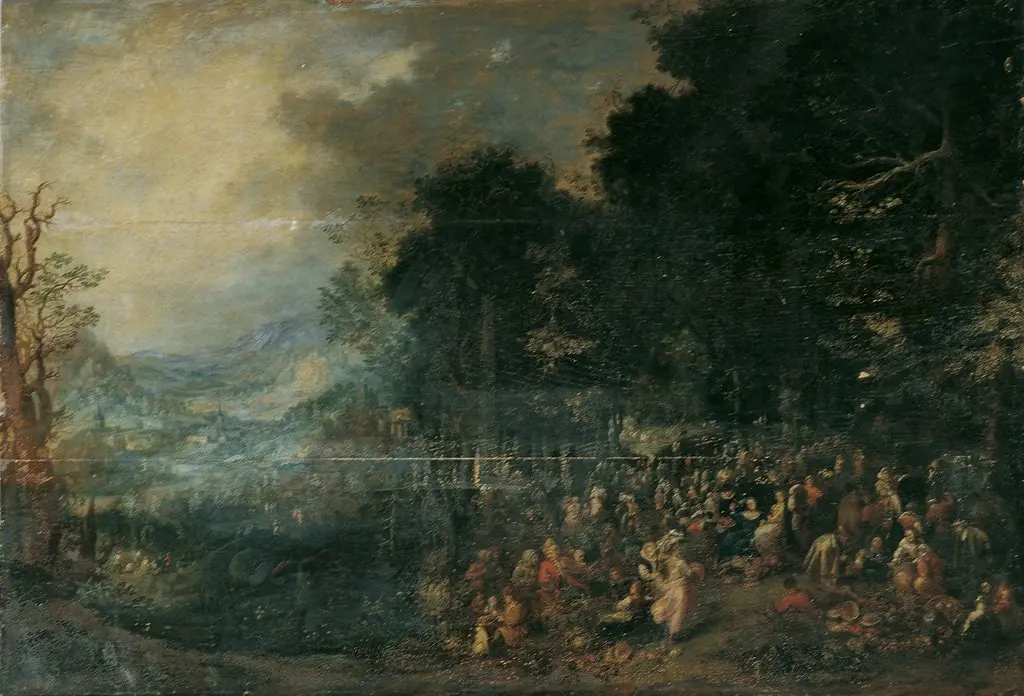
A Village Celebration is a photography by Unknown. It dates from 1650 and is held in the collection of the Statens Museum for Kunst. Created around 1650, this oil painting portrays a communal gathering in a rural setting.
About this work
Overview
Created around 1650, this oil painting portrays a communal gathering in a rural setting. It is part of the collection at the Museum of Ethnography and reflects the artist’s consistent interest in depicting ordinary life. The scene is neither mythological nor aristocratic, focusing instead on the rhythms of village existence during a seasonal observance.
Subject & Meaning
The central tree, its trunk marked with a cross, serves as both a physical anchor and a symbolic focal point. Villagers gather beneath it, engaging in conversation, rest, and quiet movement. The presence of the cross suggests a fusion of religious tradition and folk celebration, implying that spiritual and social life were deeply intertwined in this community.
Technique & Style
The artist employs soft, muted tones to render the landscape and figures, avoiding dramatic contrasts. Brushwork is loose yet deliberate, capturing movement in clothing and posture without fine detail. The composition directs attention upward through the tree’s vertical form, while the distant hills and clouded sky create depth without idealizing the horizon.
History & Provenance
The painting entered the Museum of Ethnography’s collection in the early 20th century, likely acquired through regional donations or field collections. Its origins remain undocumented prior to this, though stylistic elements align with regional traditions of Northern European peasant life painting from the mid-17th century.
Context
This work emerged during a period when rural communities in Europe maintained strong seasonal rituals, often blending Christian observances with older customs. Unlike urban art of the time, which favored grand narratives, this piece reflects a local, unidealized view of daily life, offering insight into the cultural fabric of non-elite society.
Legacy
The painting contributes to a broader corpus of 17th-century vernacular imagery that prioritizes authenticity over ornamentation. While not widely known outside ethnographic circles, it remains a quiet testament to how ordinary people marked time, community, and belief through shared, unremarkable moments.
Artist & collection

 Domestic Scene
 Giacomo and Cardinal Marco, investing Andrea, Abbot of San Zeno, with his Benefice
 The Nymph of Fontainebleau
 Portrait of a Woman
 Madonna and Child with Saints in the Enclosed Garden
 Venus and Minerva
 Family Group of Four on Sofa
 Wall painting from Room H of the Villa of P. Fannius Synistor at Boscoreale
 Village Festival with Dancing Peasant Couple
 View of the Rhine river near Reineck
 Landscape with peasants at play
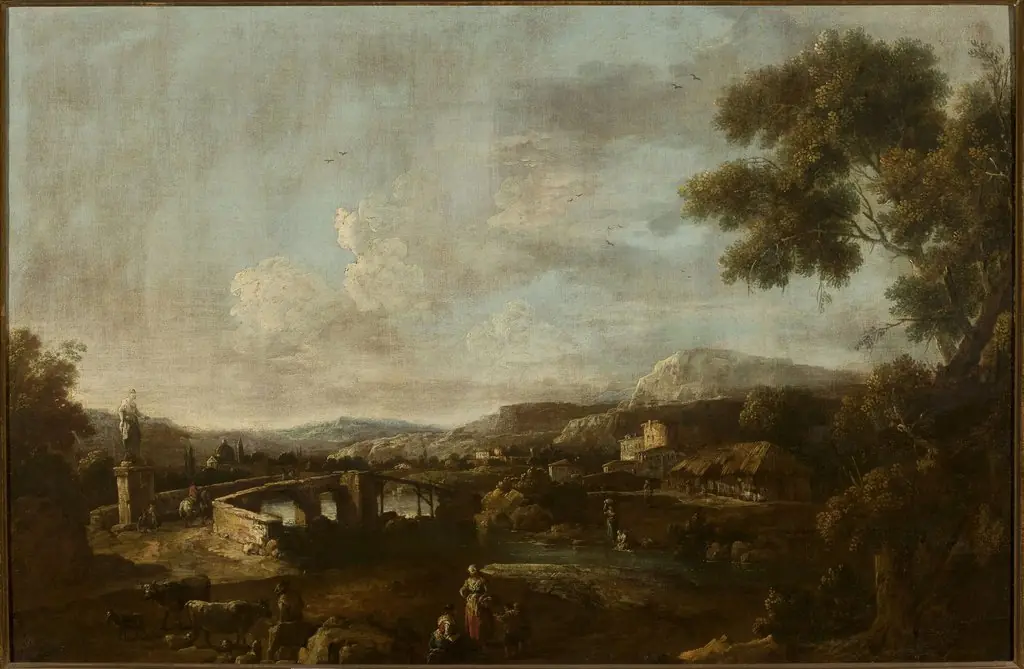 Landscape with staffage
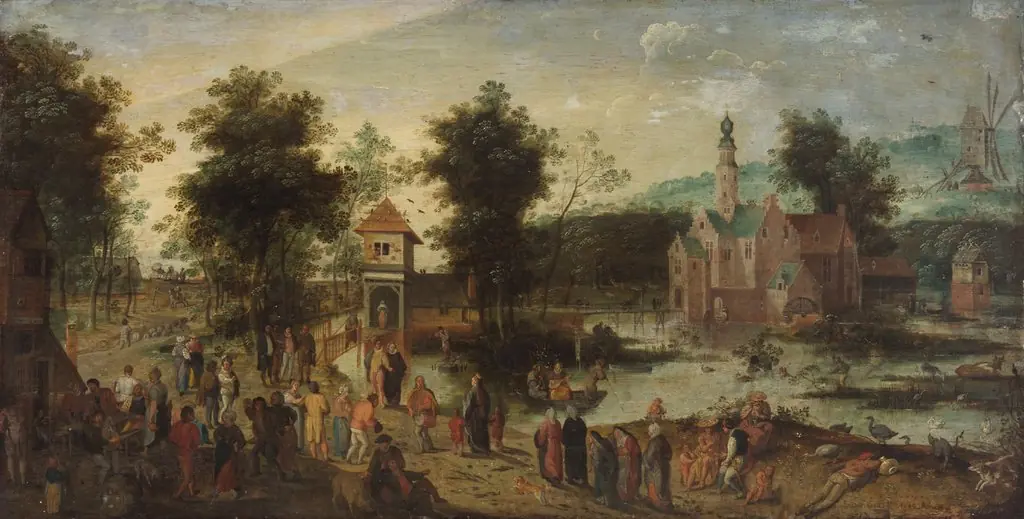 Landscape with castle and tavern
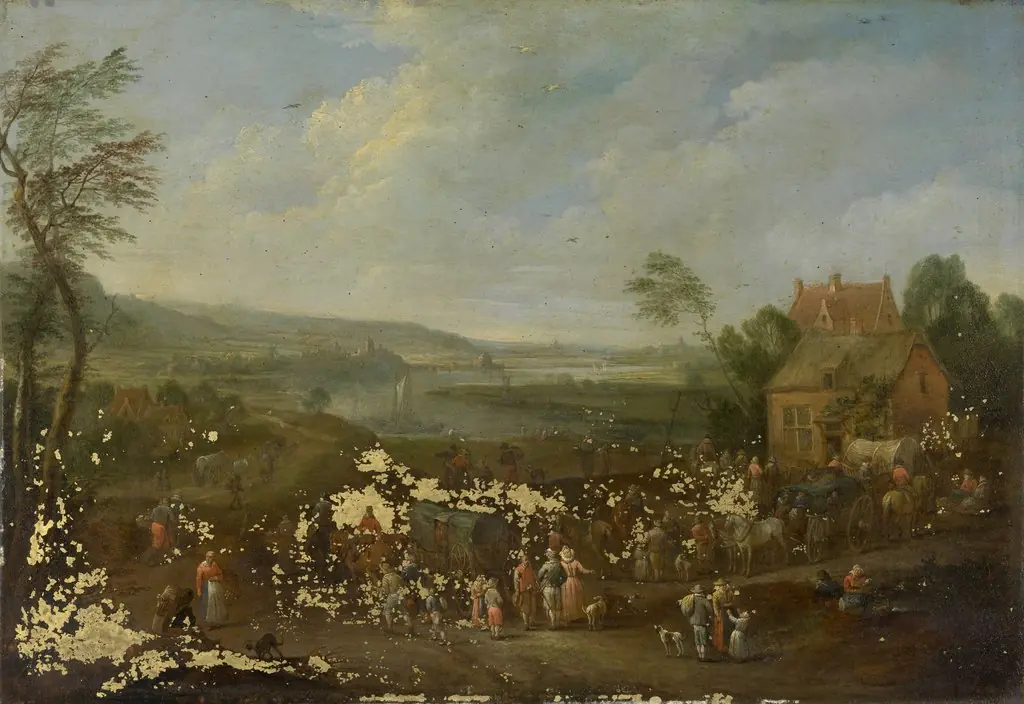 Landscape with Figures
 Hunter and Horsemen on a Wooded Road, with a Village in a Valley beyond
 The Baptism of the Moorish Chamberlain
 Landschaft mit Festgesellschaft
 Procesiune și călugăr binecuvântând