Artwork
View of the Forum Romanum and the Via Sacra. In the background the Capitol
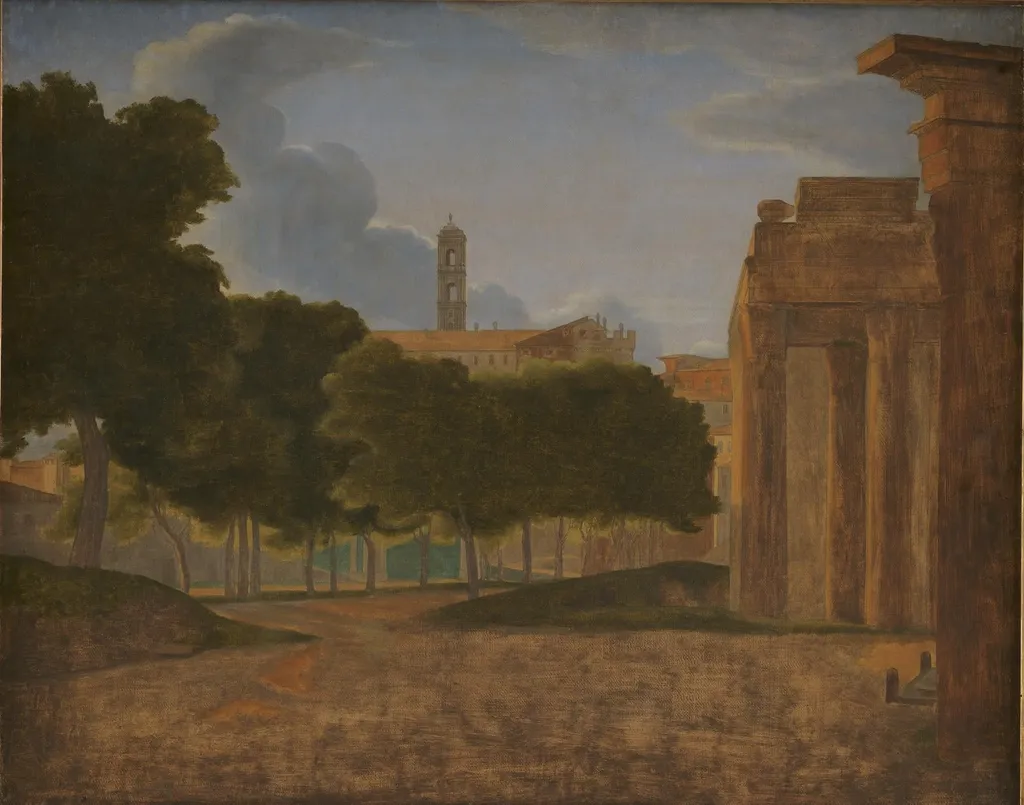
View of the Forum Romanum and the Via Sacra. In the background the Capitol is a photography by Unknown. It dates from 1750 and is held in the collection of the Statens Museum for Kunst. This cityscape, dated around 1750, depicts the Forum Romanum and the Via Sacra with the Capitol in the distance.
About this work
Overview
This cityscape, dated around 1750, depicts the Forum Romanum and the Via Sacra with the Capitol in the distance.
This cityscape, dated around 1750, depicts the Forum Romanum and the Via Sacra with the Capitol in the distance. Executed in oil or similar medium, the work captures the ruins of ancient Rome in a contemplative, subdued mood. It is currently held in the collection of the Museum of Ethnography, though its origin as a topographical view suggests a connection to early antiquarian interests rather than ethnographic study.
Subject & Meaning
The scene presents the Forum as a quiet, largely empty space, emphasizing decay and silence over activity. The ruined columns and crumbling walls evoke the passage of time, while the distant Capitol suggests the enduring presence of Roman authority. The absence of figures enhances the meditative tone, inviting reflection on the remnants of a lost civilization rather than its historical grandeur.
Technique & Style
The artist employs chiaroscuro to model form and depth, using strong contrasts between light and shadow to define architectural fragments and guide the viewer’s eye. Soft, diffused lighting unifies the composition, while the careful rendering of textures in stone and foliage adds tactile realism. The composition is structured with a clear foreground, middle ground, and distant horizon, creating a sense of spatial recession.
History & Provenance
The painting was likely produced during a period of renewed interest in Roman antiquities among European travelers and scholars. Though attributed to an individual identified as 38158_person, little is known of the artist’s background. Its presence in the Museum of Ethnography may reflect later institutional reclassification, as the work’s subject matter aligns more closely with topographical or antiquarian traditions.
Context
Created in the mid-18th century, the painting coincides with the Grand Tour era, when aristocrats and intellectuals visited Rome to study its ruins. Such views were often commissioned as souvenirs or scholarly records. This work, however, avoids dramatic embellishment, favoring quiet observation over romanticized spectacle, placing it within a more restrained branch of topographical art.
Legacy
Though not widely reproduced or celebrated in mainstream art history, the painting contributes to a quieter tradition of Roman landscape documentation. Its restrained aesthetic and attention to atmospheric detail offer insight into how ruins were perceived beyond spectacle — as quiet, enduring traces of the past, studied with sober curiosity rather than awe.
Artist & collection

 Domestic Scene
 Giacomo and Cardinal Marco, investing Andrea, Abbot of San Zeno, with his Benefice
 The Nymph of Fontainebleau
 Portrait of a Woman
 Madonna and Child with Saints in the Enclosed Garden
 Venus and Minerva
 Family Group of Four on Sofa
 Wall painting from Room H of the Villa of P. Fannius Synistor at Boscoreale
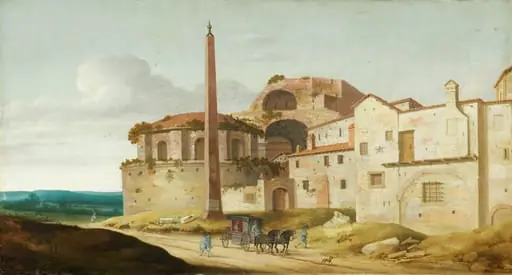 Church of Santa Maria della Febbre, Rome
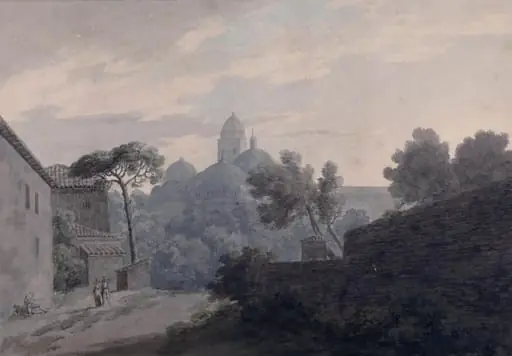 Sta. Giustina, Padua
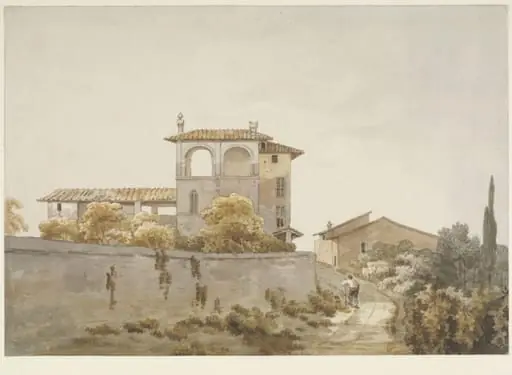 Italian villa
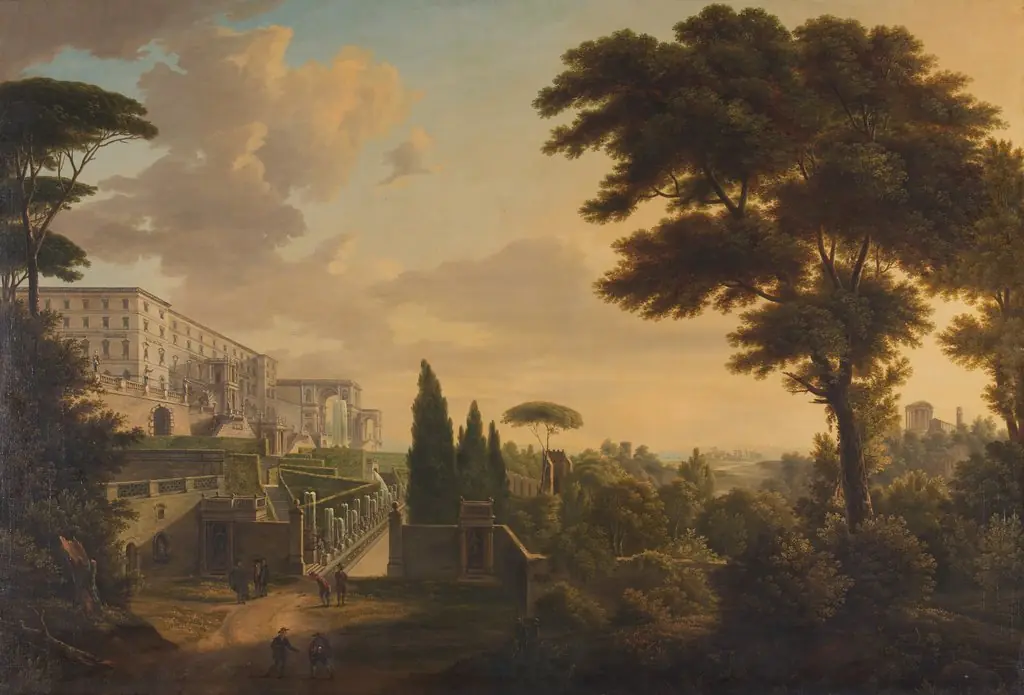 The Villa d'Este in Tivoli
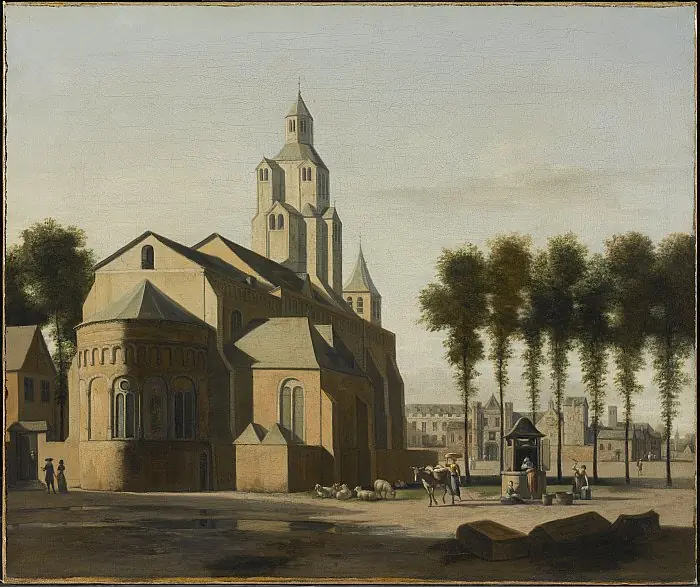 Church of Saint Cecilia, Cologne
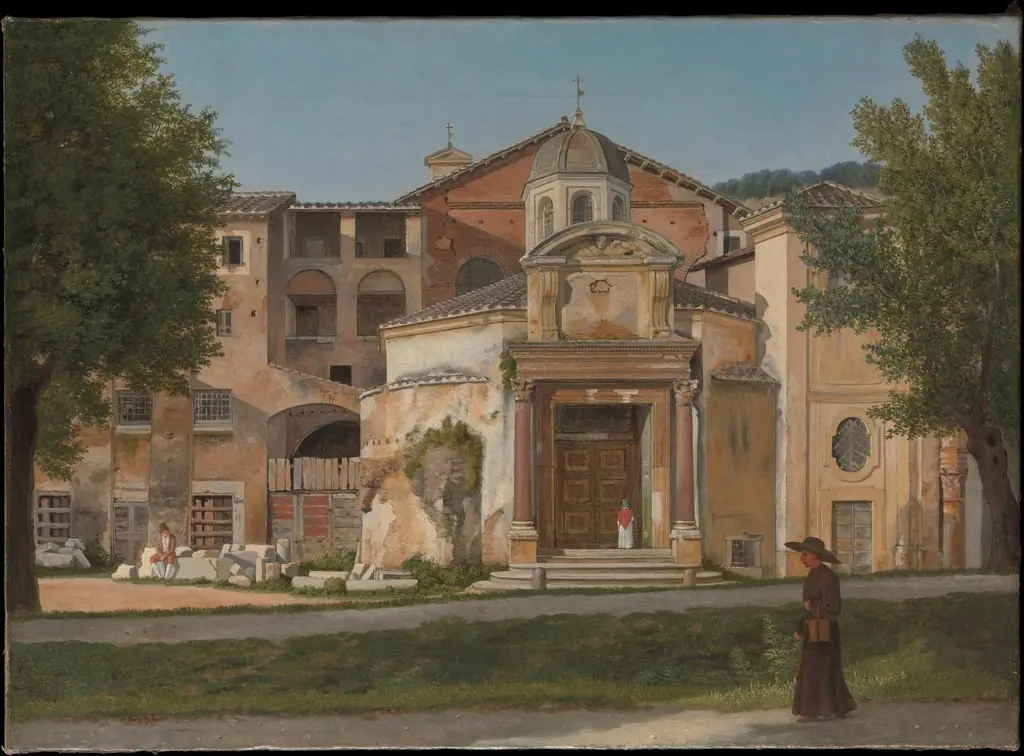 A Section of the Via Sacra, Rome (The Church of Saints Cosmas and Damian)
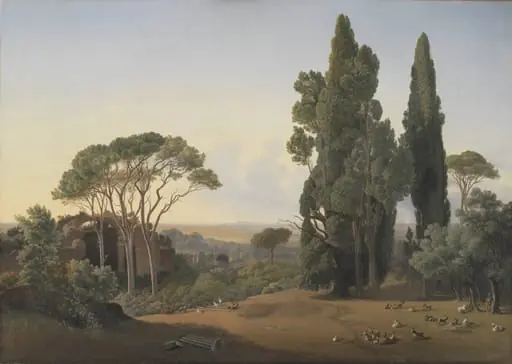 A View from Hadrian's Villa, Tivoli
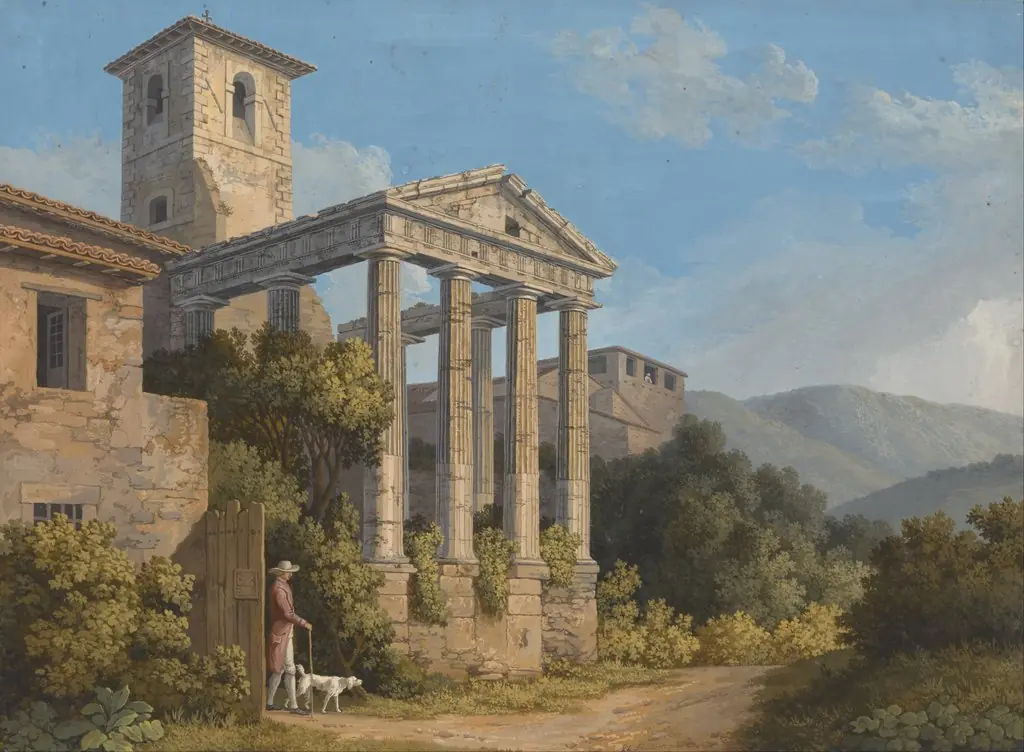 The Temple of Hercules in Cori near Velletri
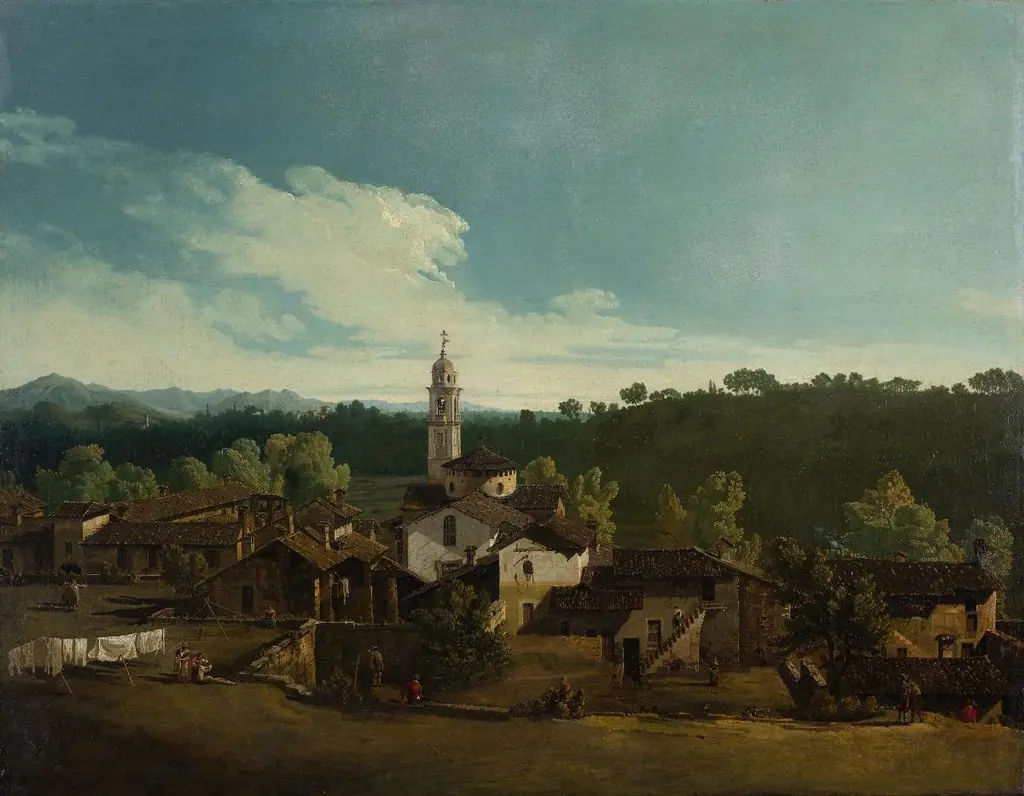 Veduta di Gazzada