Artwork
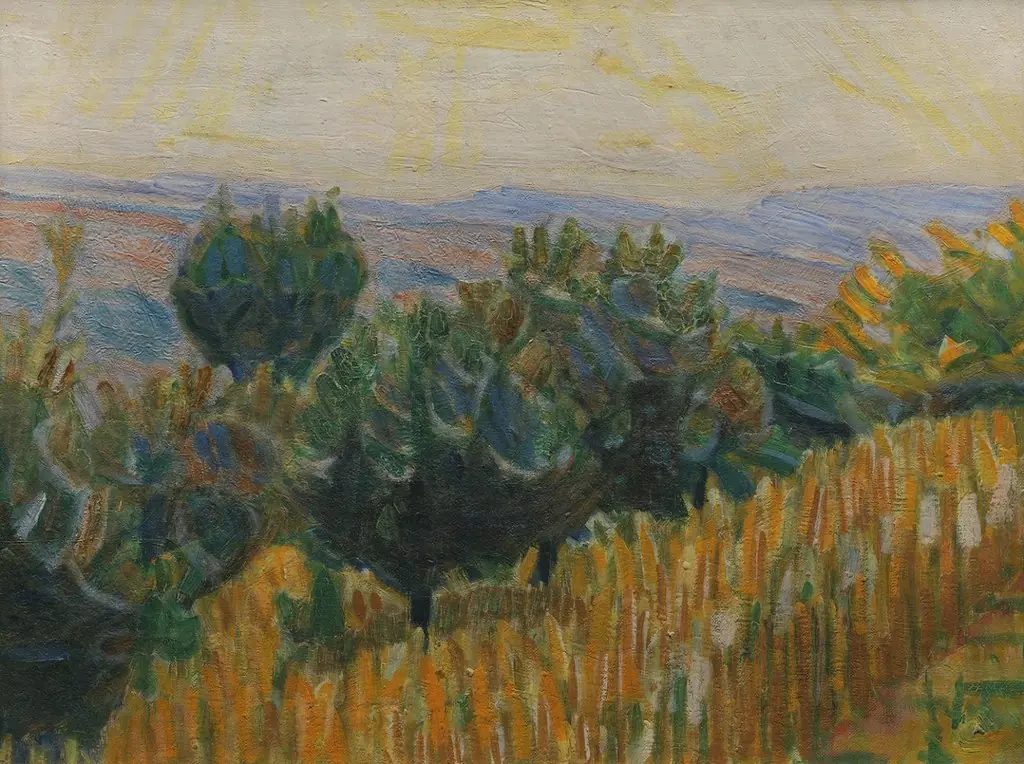
The Vine against the Light. A wheat field in the foreground. Villa Linda, Florence
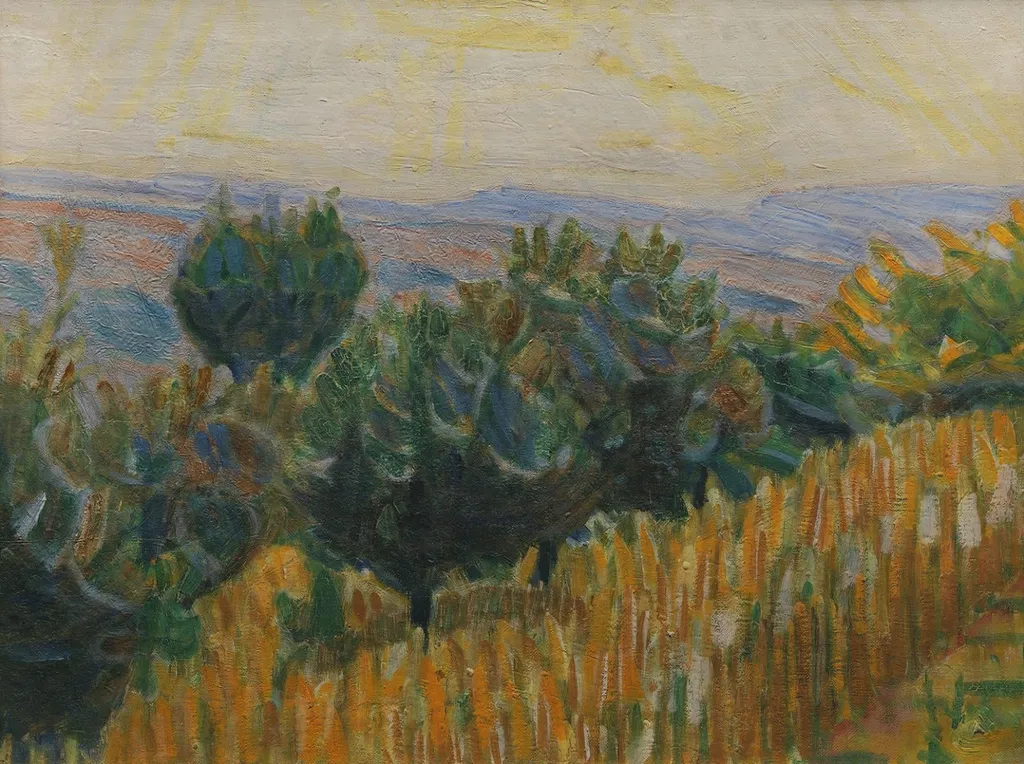
The Vine against the Light. A wheat field in the foreground. Villa Linda, Florence is a photography by Unknown. It dates from 1923 and is held in the collection of the Statens Museum for Kunst. Created in 1923 by the artist identified as 397_person, this image—titled *The Vine against the Light.
About this work
Overview
Created in 1923 by the artist identified as 397_person, this image—titled *The Vine against the Light. A wheat field in the foreground. Villa Linda, Florence*—is part of the collection of the Museum of Ethnography. The composition presents a tranquil rural vista, rendered in a balanced arrangement of foreground and background that draws the eye across the field toward a luminous horizon.
Subject & Meaning
The picture depicts a sun‑lit wheat field extending toward a trellised vine that climbs against a bright sky. The golden stalks and the delicate foliage of the vine create a visual dialogue between cultivated grain and climbing plant, suggesting a harmonious coexistence of agriculture and nature within the Tuscan landscape.
Technique & Style
Executed as a photographic image, the work relies on careful control of light and tone to emphasize the warm glow of the wheat and the subtle contrast of the vine’s leaves. The soft focus of distant hills and the muted sky contribute to an overall atmosphere of calm, while the clear detail in the foreground anchors the scene.
History & Provenance
The piece entered the Museum of Ethnography’s holdings after its creation in the early 1920s, though the precise acquisition path is not documented in the available records. Its presence in the museum aligns with the institution’s broader interest in visual representations of cultural and rural environments.
Context
Set near Villa Linda, a locale on the outskirts of Florence, the image reflects the early twentieth‑century fascination with pastoral Italy, a period when artists and photographers often sought to capture the enduring qualities of the countryside amid rapid modernization. The work thus serves as a visual record of the region’s agricultural scenery during that era.
Artist & collection

 Domestic Scene
 Giacomo and Cardinal Marco, investing Andrea, Abbot of San Zeno, with his Benefice
 The Nymph of Fontainebleau
 Portrait of a Woman
 Madonna and Child with Saints in the Enclosed Garden
 Venus and Minerva
 Family Group of Four on Sofa
 Wall painting from Room H of the Villa of P. Fannius Synistor at Boscoreale
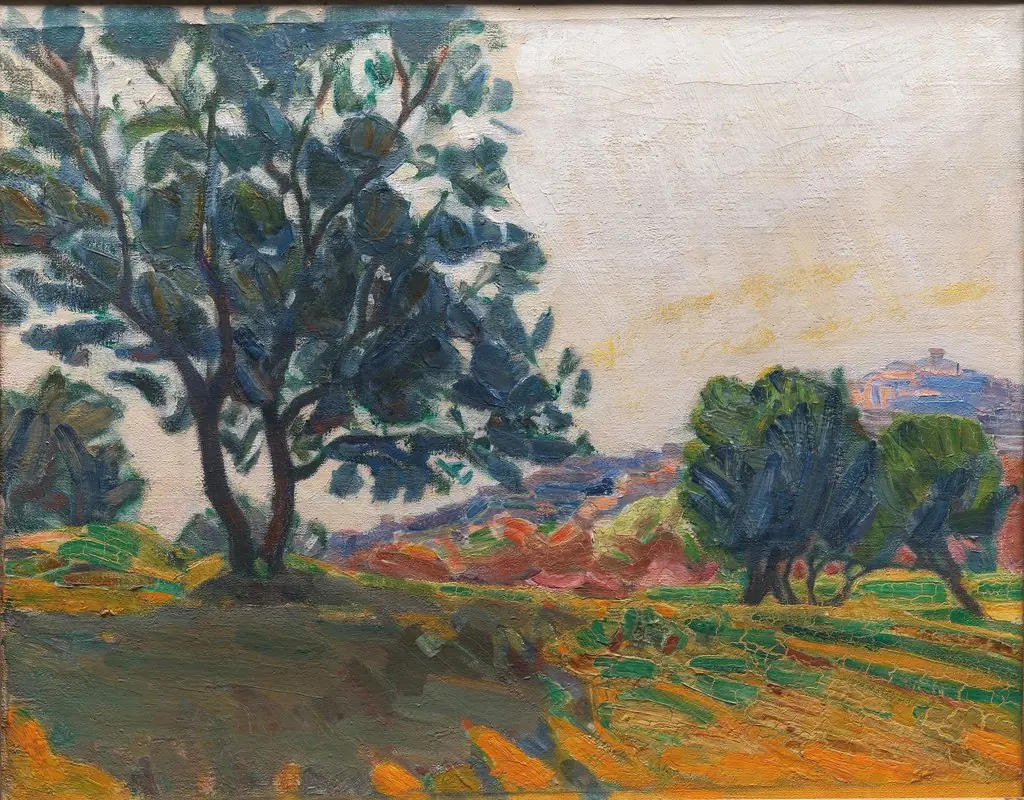 The Olive Grove. With Cagnes in the Background. Against the Light
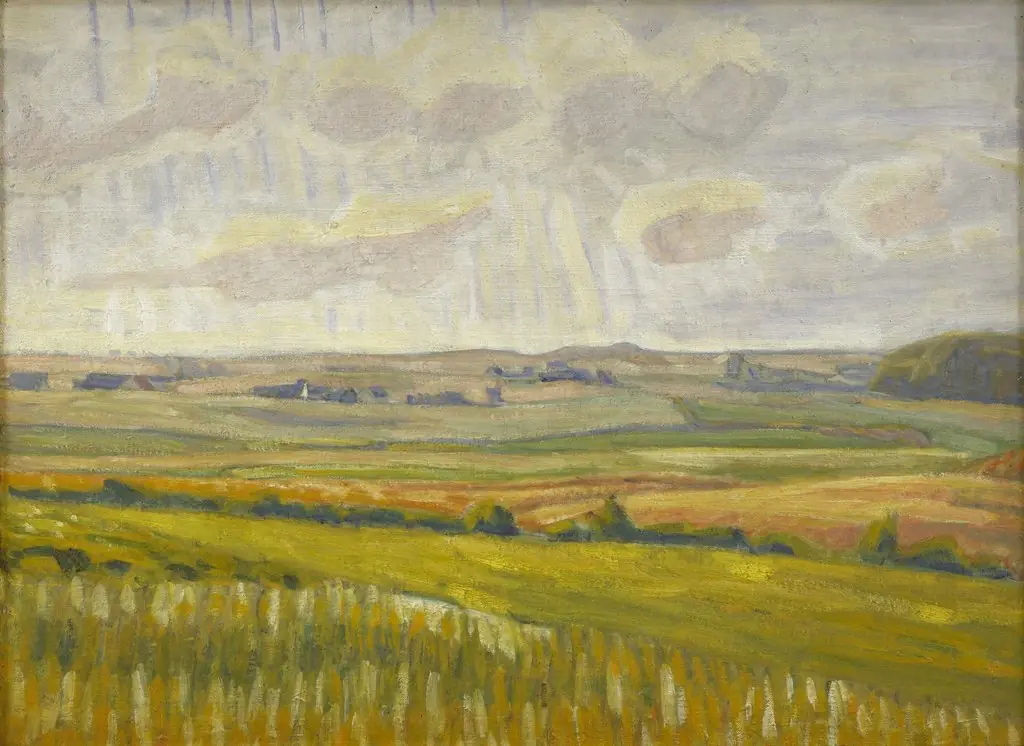 Asminderup bakker mod lyset
 Asminderup bakker mod lyset
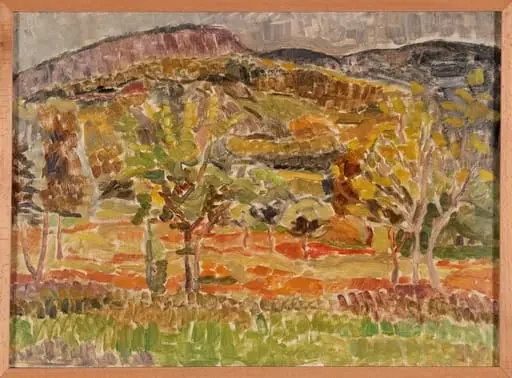 Outdoor study
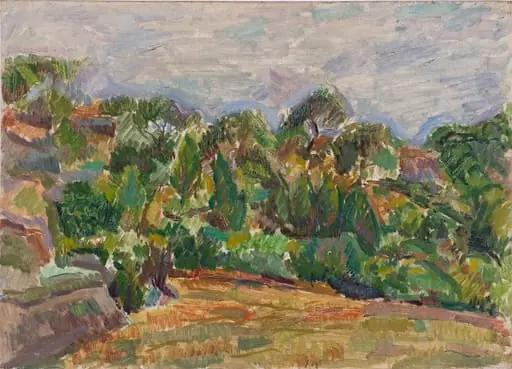 Outdoor study
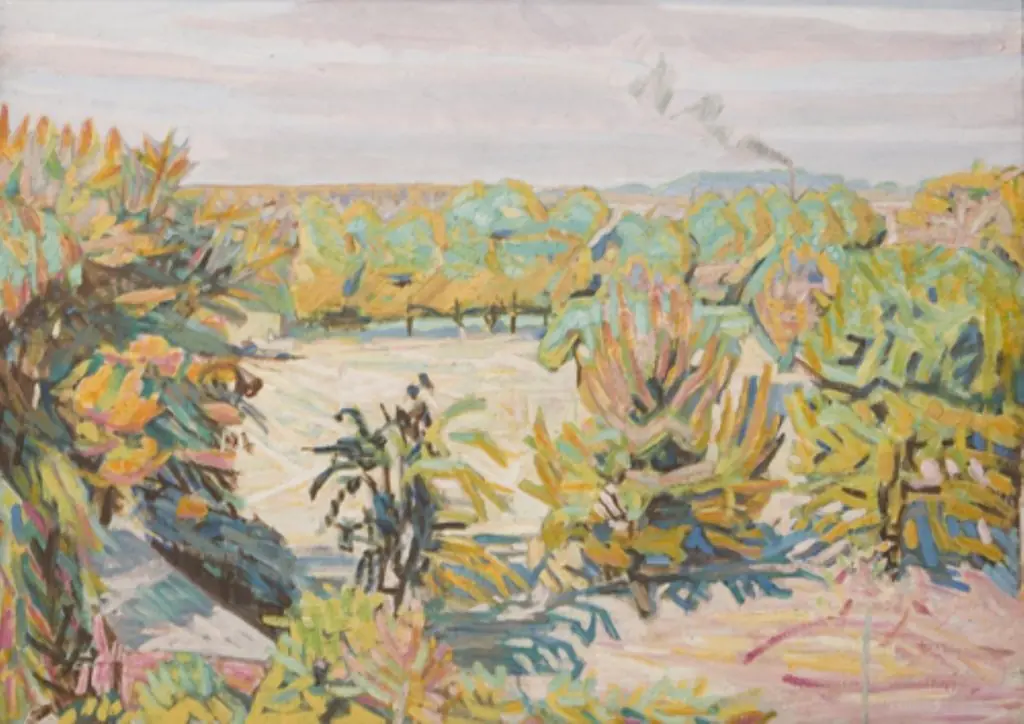 A Garden Seen from the Artist's Dwelling. Autumn
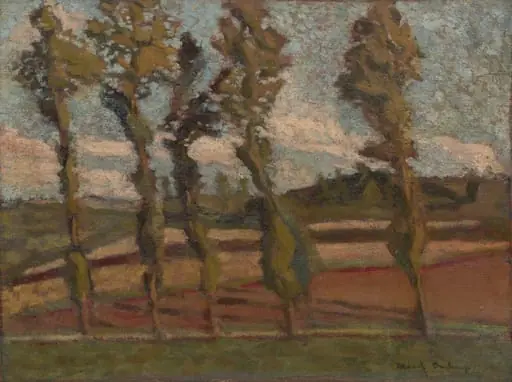 Untitled
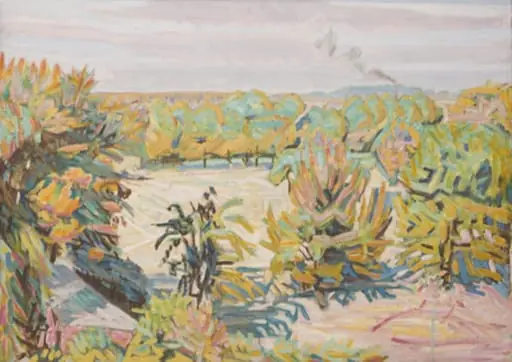 A Garden Seen from the Artist's Dwelling. Autumn
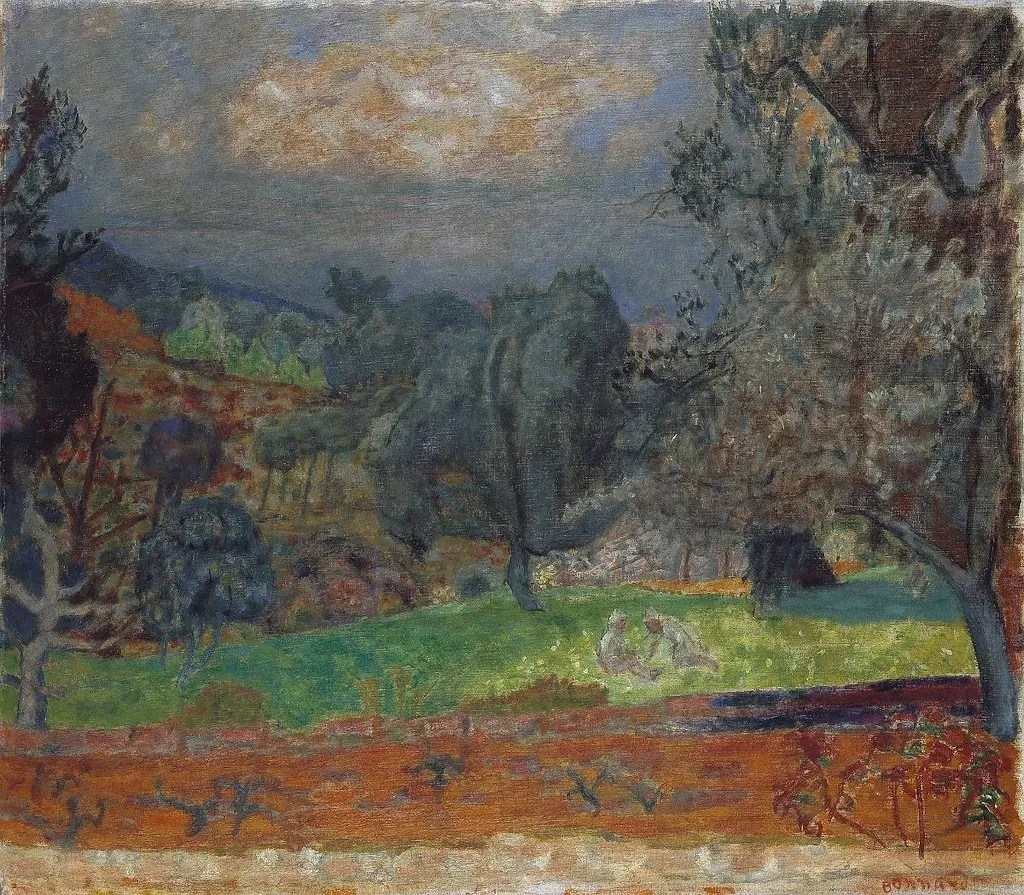 Paysage au soleil couchant. Le Cannet
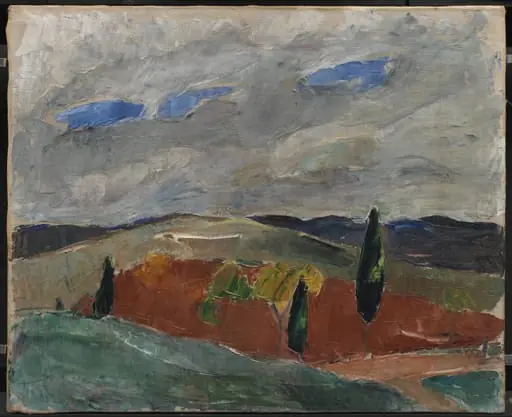 The Road to the Churchyard in Toledo
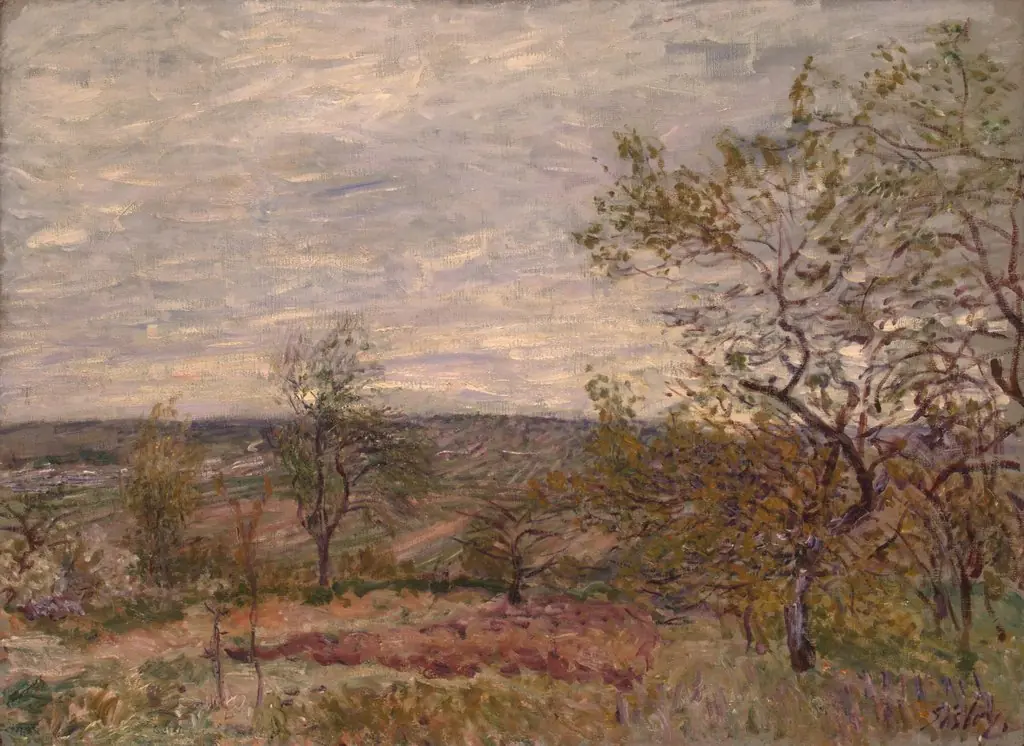 Windy Day at Veneux
 The Vine against the Light. A wheat field in the foreground. Villa Linda, Florence