Artwork
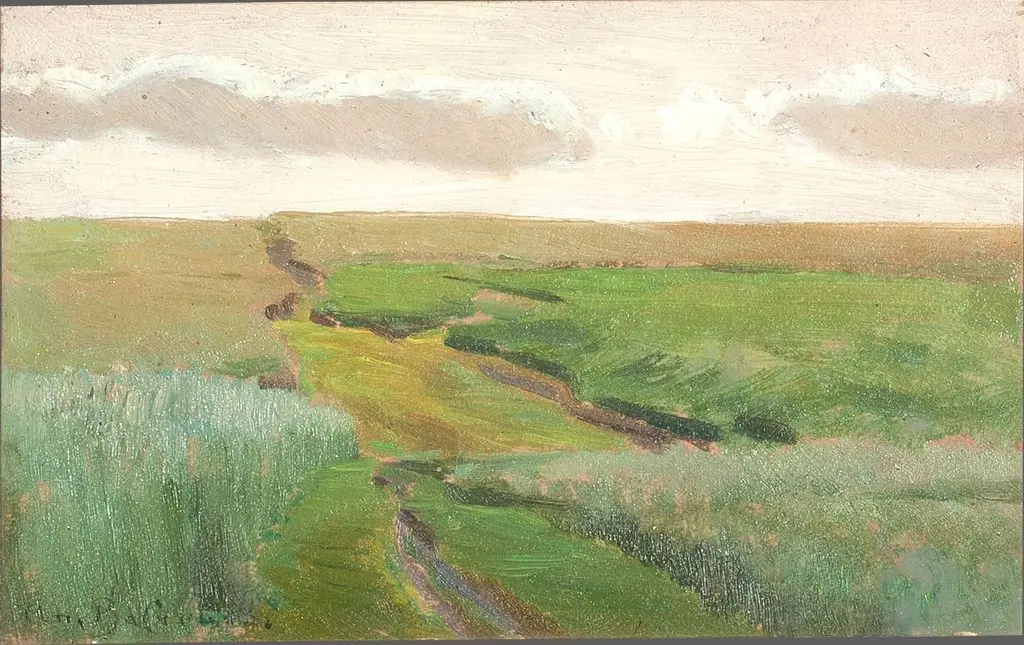
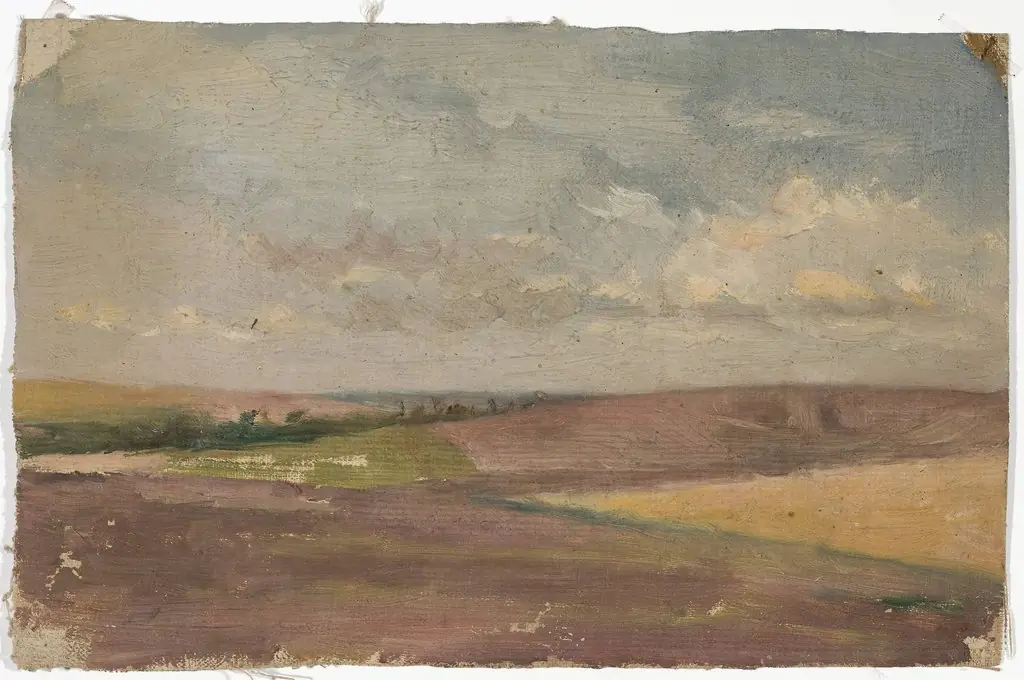
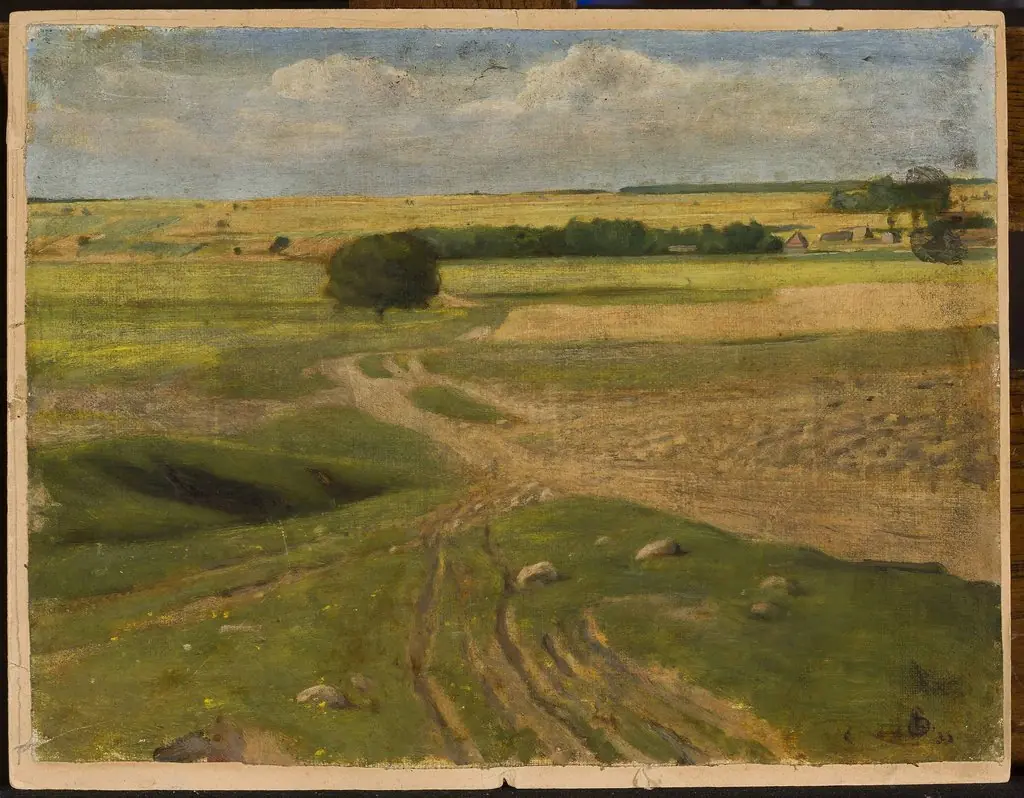
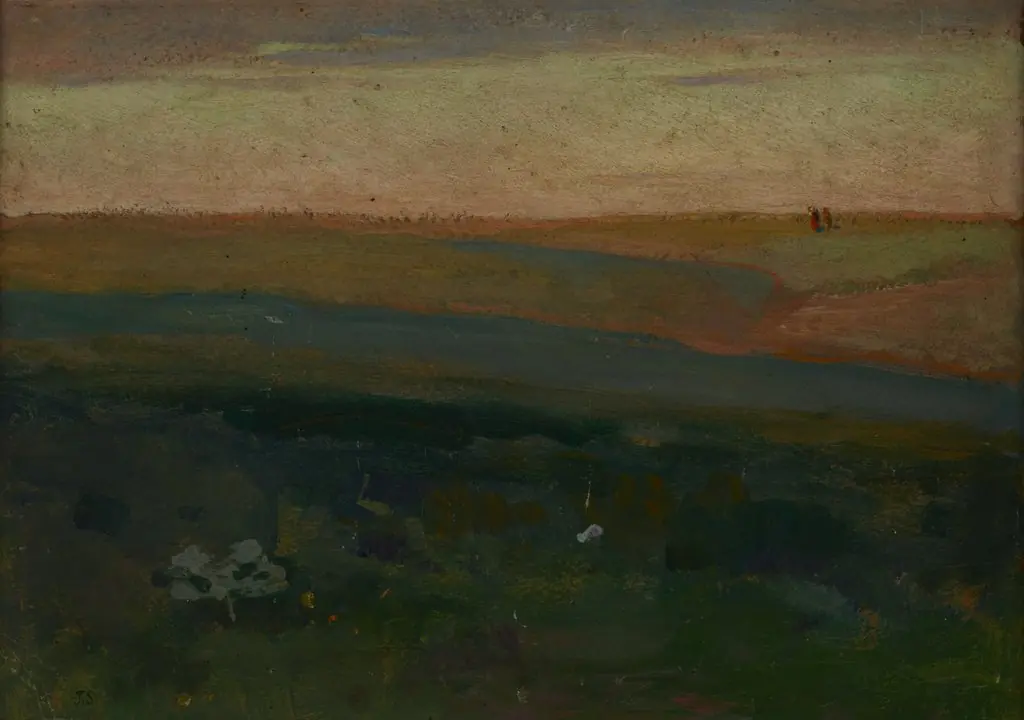
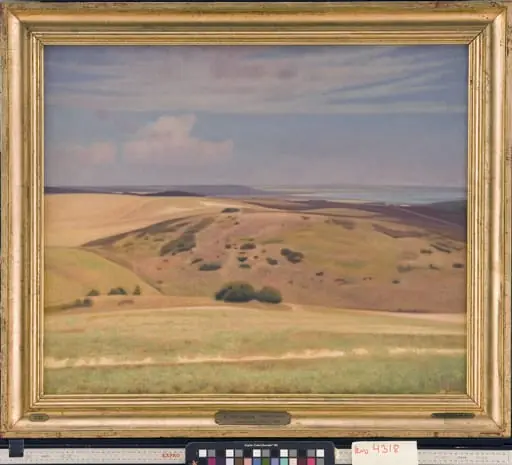
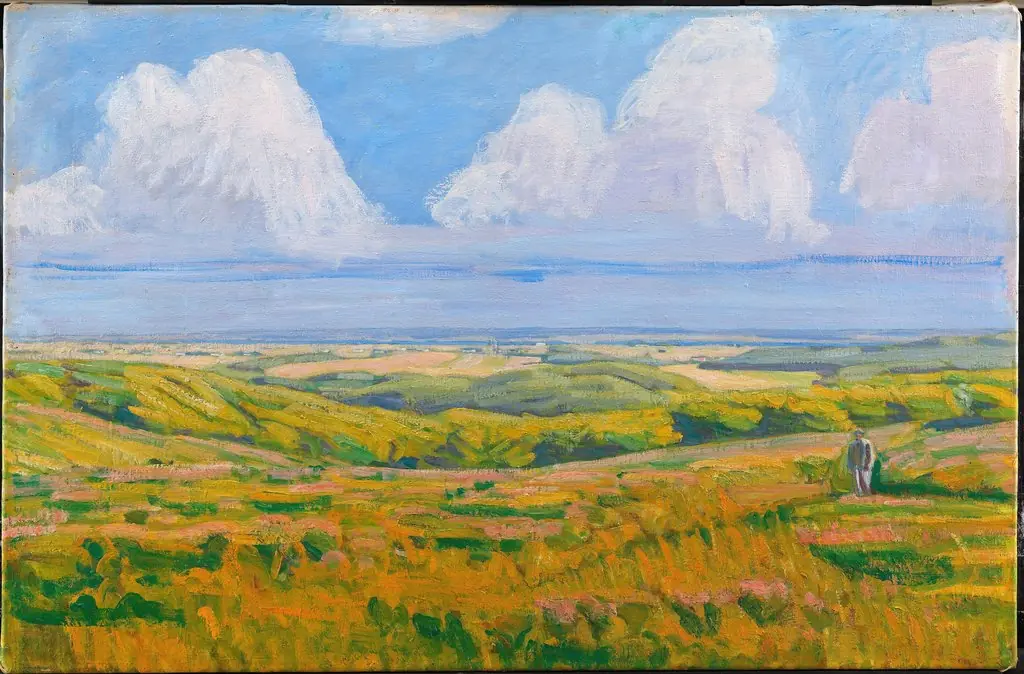
View from Korsdalen. Hammer Hills
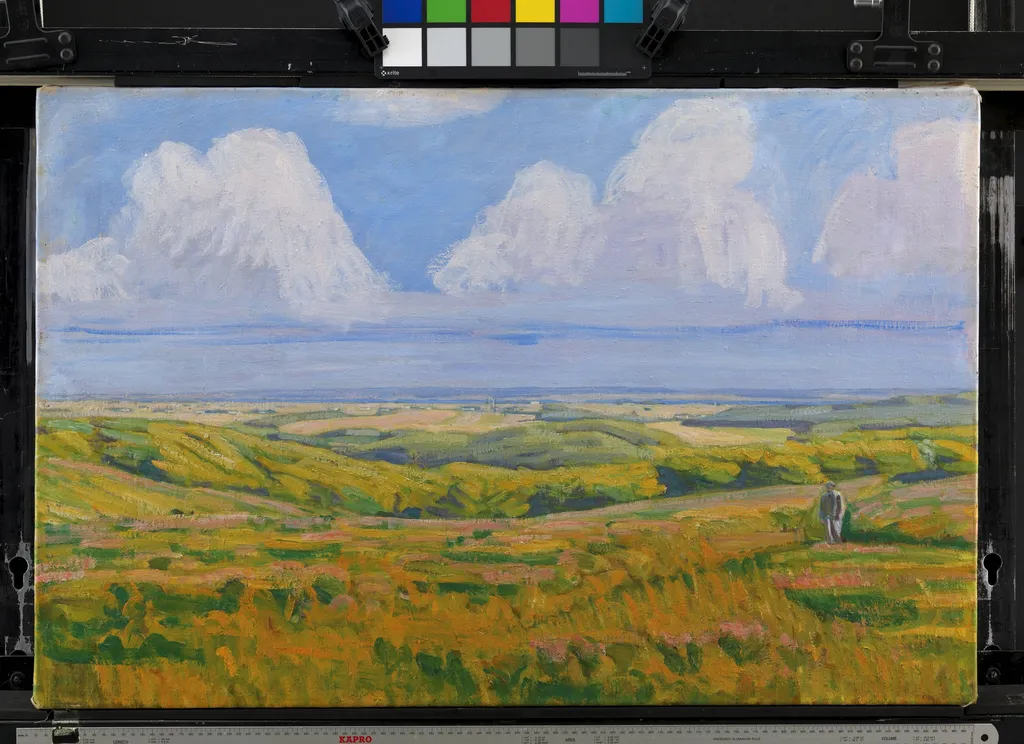
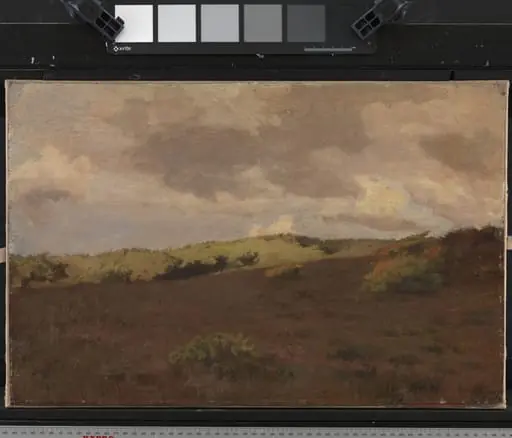
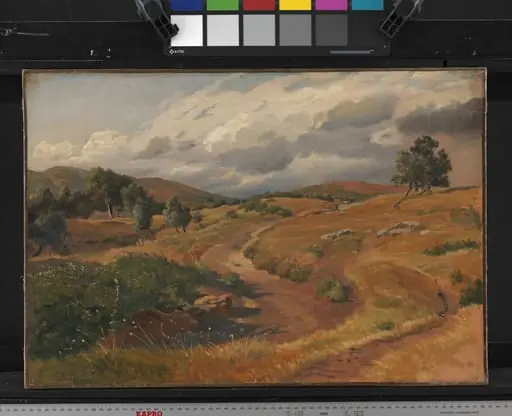
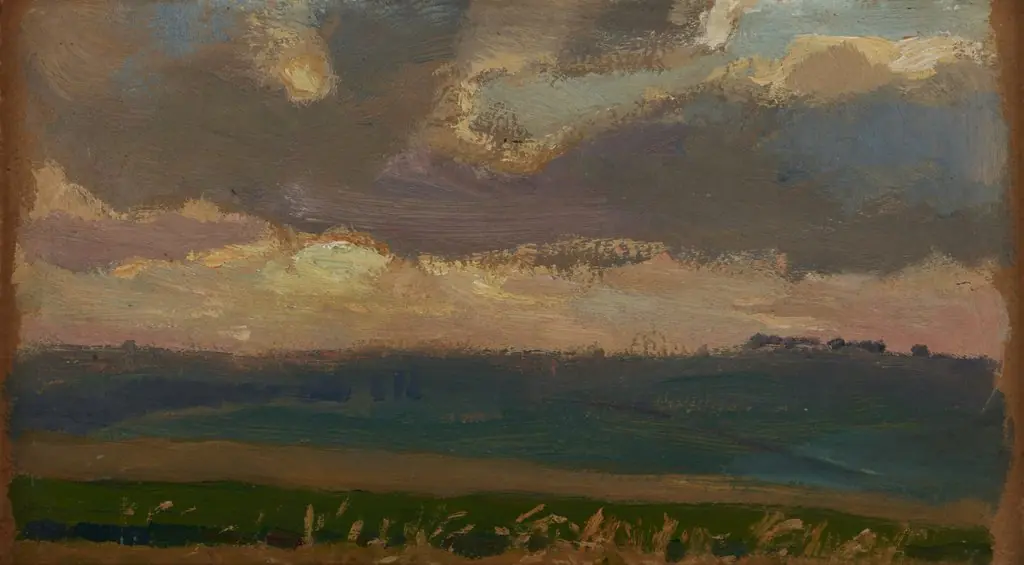
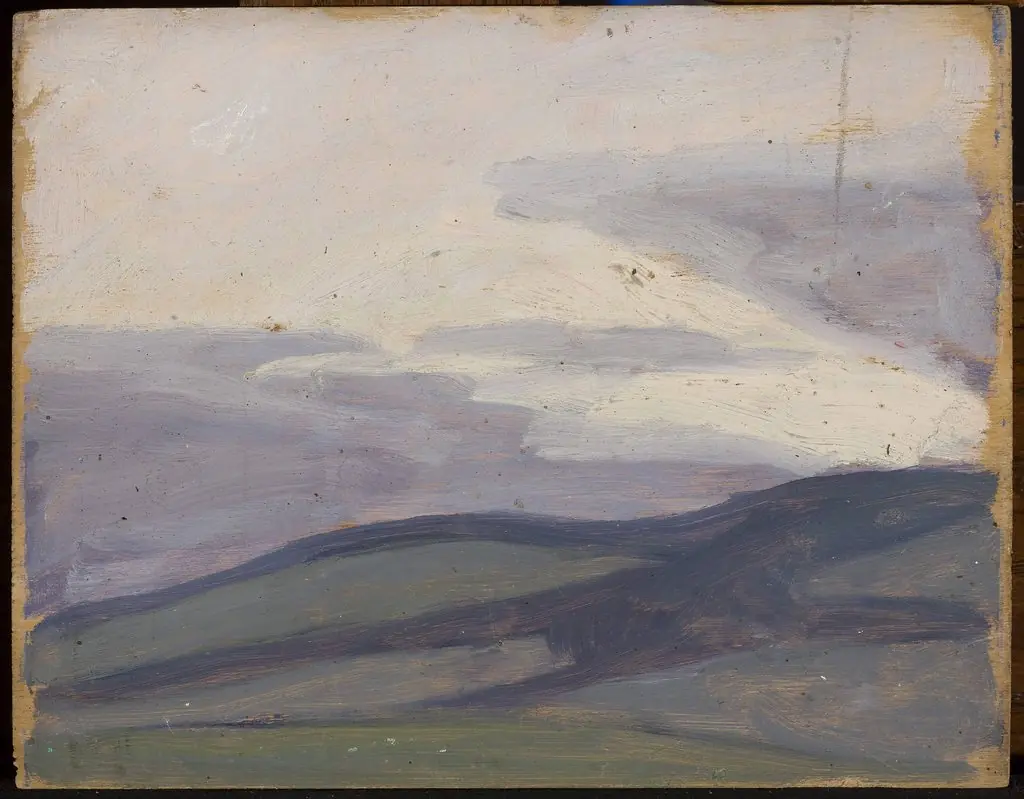
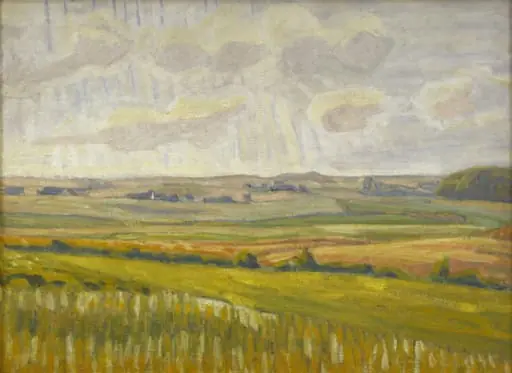
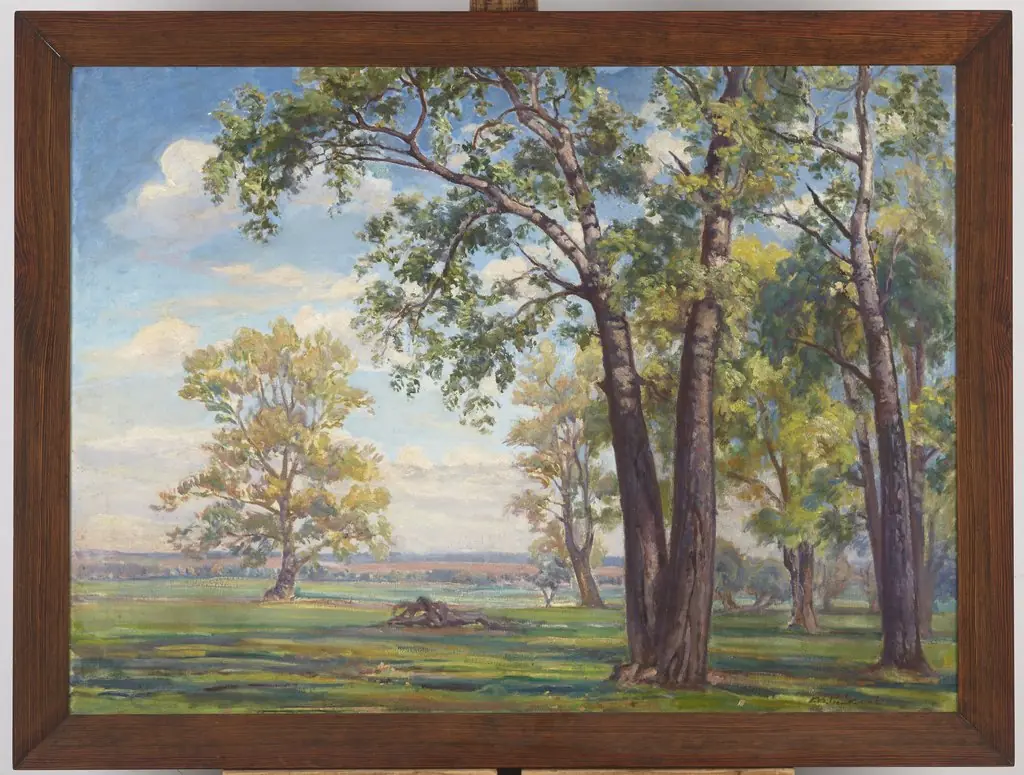
View from Korsdalen. Hammer Hills is a photography by Unknown. It dates from 1926 and is held in the collection of the Statens Museum for Kunst. Created in 1926, this photograph captures a broad expanse of the Hammer Hills as seen from Korsdalen.
About this work
Overview
The photograph is part of the collection at the Museum of Ethnography, where it serves as a record of regional topography and human presence within it.
Created in 1926, this photograph captures a broad expanse of the Hammer Hills as seen from Korsdalen. The image presents a panoramic view of undulating terrain, rendered in naturalistic tones of green, yellow, and brown. A solitary figure walks a faint path near the foreground, emphasizing the scale of the landscape. The photograph is part of the collection at the Museum of Ethnography, where it serves as a record of regional topography and human presence within it.
Subject & Meaning
The scene depicts a quiet, unpopulated rural landscape, with a single walker suggesting human interaction with the land without dominating it. The vastness of the hills and the looming clouds convey a sense of quiet solitude and natural rhythm. The figure’s small scale reinforces the dominance of the environment, reflecting a perspective common in ethnographic documentation that values context over individual narrative.
Technique & Style
The photograph employs a high vantage point to achieve a sweeping, horizontal composition. The use of natural light enhances the texture of the land, while the muted yet distinct color palette—greens, browns, and a cool blue in the distant hills—suggests atmospheric depth. The sharp focus across the frame indicates careful framing and exposure, typical of early 20th-century documentary photography aimed at preserving spatial relationships.
History & Provenance
The photograph was taken in 1926 and entered the collection of the Museum of Ethnography shortly thereafter. Its origins are tied to fieldwork conducted in the region, likely as part of broader efforts to document rural life and geography. It has remained in institutional custody since its acquisition, with no known prior private ownership or exhibition history beyond its archival role.
Context
Made during a period of growing ethnographic interest in Nordic landscapes, the image reflects a scholarly impulse to record environments as cultural settings. Unlike romanticized depictions of nature, this photograph avoids dramatic flair, instead offering a restrained, observational record. It aligns with contemporaneous efforts to classify and preserve regional visual data for anthropological study.
Legacy
The photograph endures as a quiet example of early ethnographic visual documentation. It contributes to a body of work that prioritizes geographical accuracy and contextual presence over artistic expression. Its continued presence in the Museum of Ethnography underscores its value as a historical reference for understanding landscape perception and rural life in early 20th-century Scandinavia.
Artist & collection

 Domestic Scene
 Giacomo and Cardinal Marco, investing Andrea, Abbot of San Zeno, with his Benefice
 The Nymph of Fontainebleau
 Portrait of a Woman
 Madonna and Child with Saints in the Enclosed Garden
 Venus and Minerva
 Family Group of Four on Sofa
 Wall painting from Room H of the Villa of P. Fannius Synistor at Boscoreale