Artwork
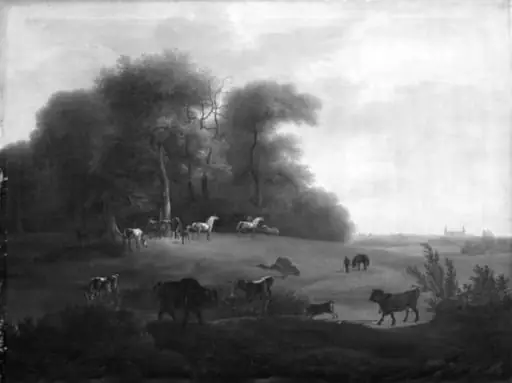
Landskab med køer. Småland
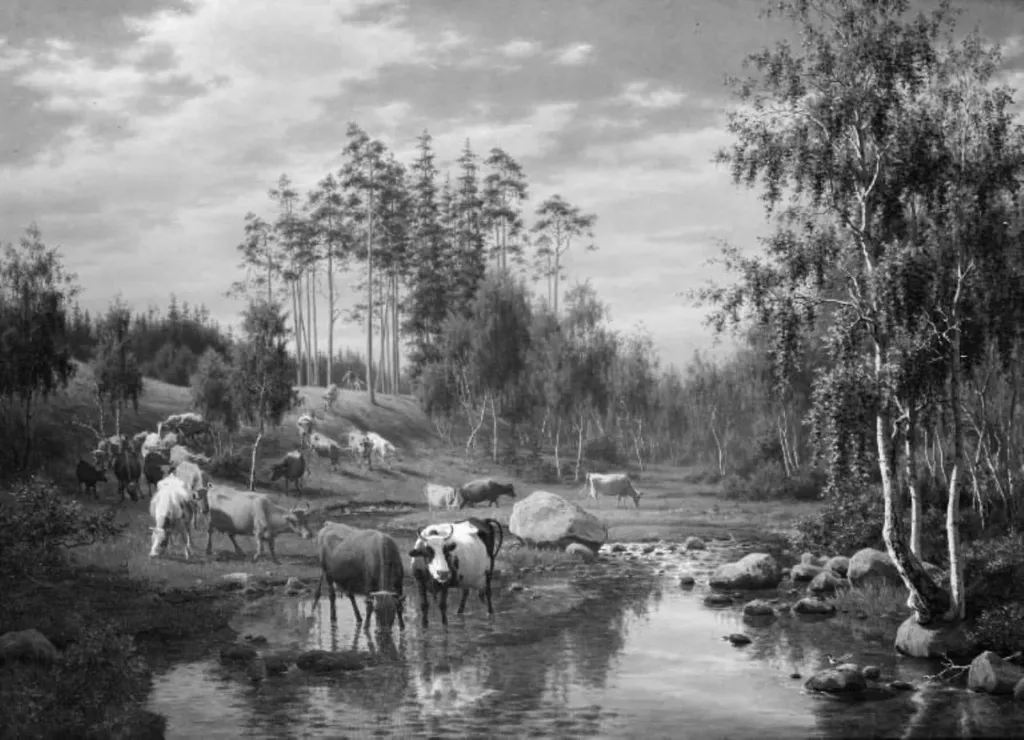
Landskab med køer. Småland is a photography by Unknown. It dates from 1850 and is held in the collection of the Statens Museum for Kunst. Landskab med køer.
About this work
Overview
Landskab med køer. Småland is a mid-19th-century landscape painting depicting a quiet rural scene in the Swedish region of Småland. Created around 1850, it presents a pastoral moment with cattle grazing near a stream. The work is part of the collection at the Museum of Ethnography, where it is preserved as an example of regional visual culture rather than fine art tradition.
Subject & Meaning
The painting centers on a small herd of cows in a natural setting, emphasizing their presence within the landscape rather than as symbols of wealth or labor.
The painting centers on a small herd of cows in a natural setting, emphasizing their presence within the landscape rather than as symbols of wealth or labor. The absence of human figures and the calm atmosphere suggest an observation of daily rural life, not an idealized pastoral fantasy. The scene conveys quiet continuity, reflecting the rhythms of agrarian existence in southern Sweden during the period.
Technique & Style
The artist employs soft, muted tones to render the terrain and livestock with subtle gradations of light. Brushwork is restrained, favoring naturalistic detail over dramatic effect. Each cow is individually rendered with slight variations in posture and coat texture, suggesting attentive observation. The composition avoids theatricality, grounding the scene in quiet realism rather than romanticized sentiment.
History & Provenance
The painting entered the Museum of Ethnography’s collection in the late 19th or early 20th century, likely as part of a broader effort to document regional Swedish life. Its attribution to the artist 531_person remains unverified in public records, and little is known about the creator’s background or other works. The piece’s preservation in an ethnographic context, rather than a fine arts institution, hints at its documentary intent.
Context
In mid-1800s Sweden, rural communities were undergoing gradual change due to industrialization and urban migration. Paintings like this one, though not widely exhibited, served as visual records of traditional ways of life. The focus on livestock and unaltered terrain reflects a regional interest in preserving the appearance of countryside existence, even as it began to fade from daily reality.
Legacy
The painting endures as a modest but deliberate record of rural Sweden’s visual environment. It contributes to the Museum of Ethnography’s mission of preserving everyday cultural expressions. While not widely studied or reproduced, it remains a quiet testament to the observation of ordinary life, valued for its sincerity over artistic ambition.
Artist & collection

 Domestic Scene
 Giacomo and Cardinal Marco, investing Andrea, Abbot of San Zeno, with his Benefice
 The Nymph of Fontainebleau
 Portrait of a Woman
 Madonna and Child with Saints in the Enclosed Garden
 Venus and Minerva
 Family Group of Four on Sofa
 Wall painting from Room H of the Villa of P. Fannius Synistor at Boscoreale
 Landskab nær Frederiksborg
 Landscape with cows. Småland
 Cows in a Field
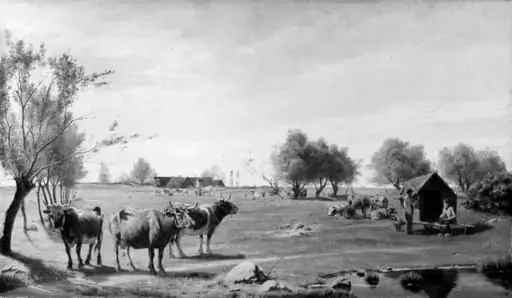 Cows in a Field
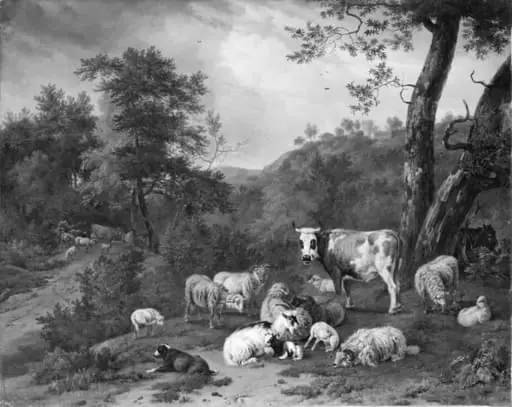 Wooded Country with Cattle
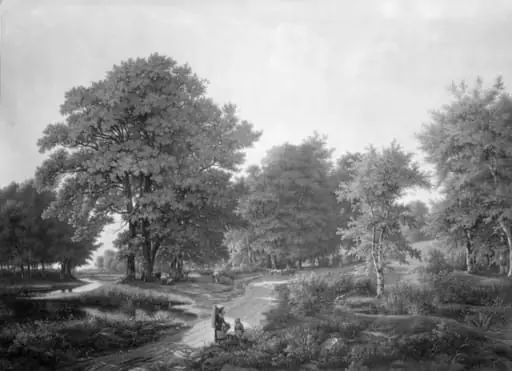 Skovparti på vejen mellem Helsingør og Hammermøllen
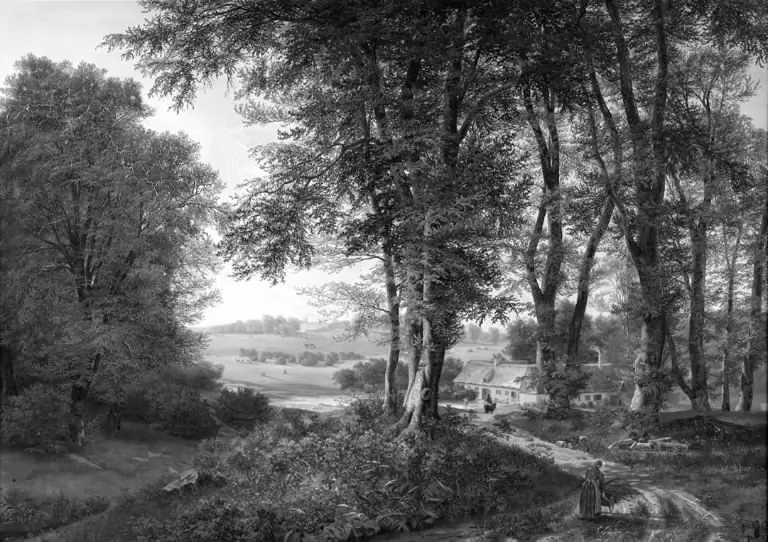 Landskab nær Frederiksborg
 Landskab fra Frijsenborg Dyrehave. Bygevejrsdag
 Landskab fra Frijsenborg Dyrehave. Bygevejrsdag
 Keld Skov ved Frederiksborg med en del af det kongelige stutteri. I forgrunden schweizer- og tyrolerkvæg